 English
 Español
 Português
 Deutsch
 Français
 Italiano
 Nederlands
 العربية
 日本語
 한국어
 ไทย
Quick Answer
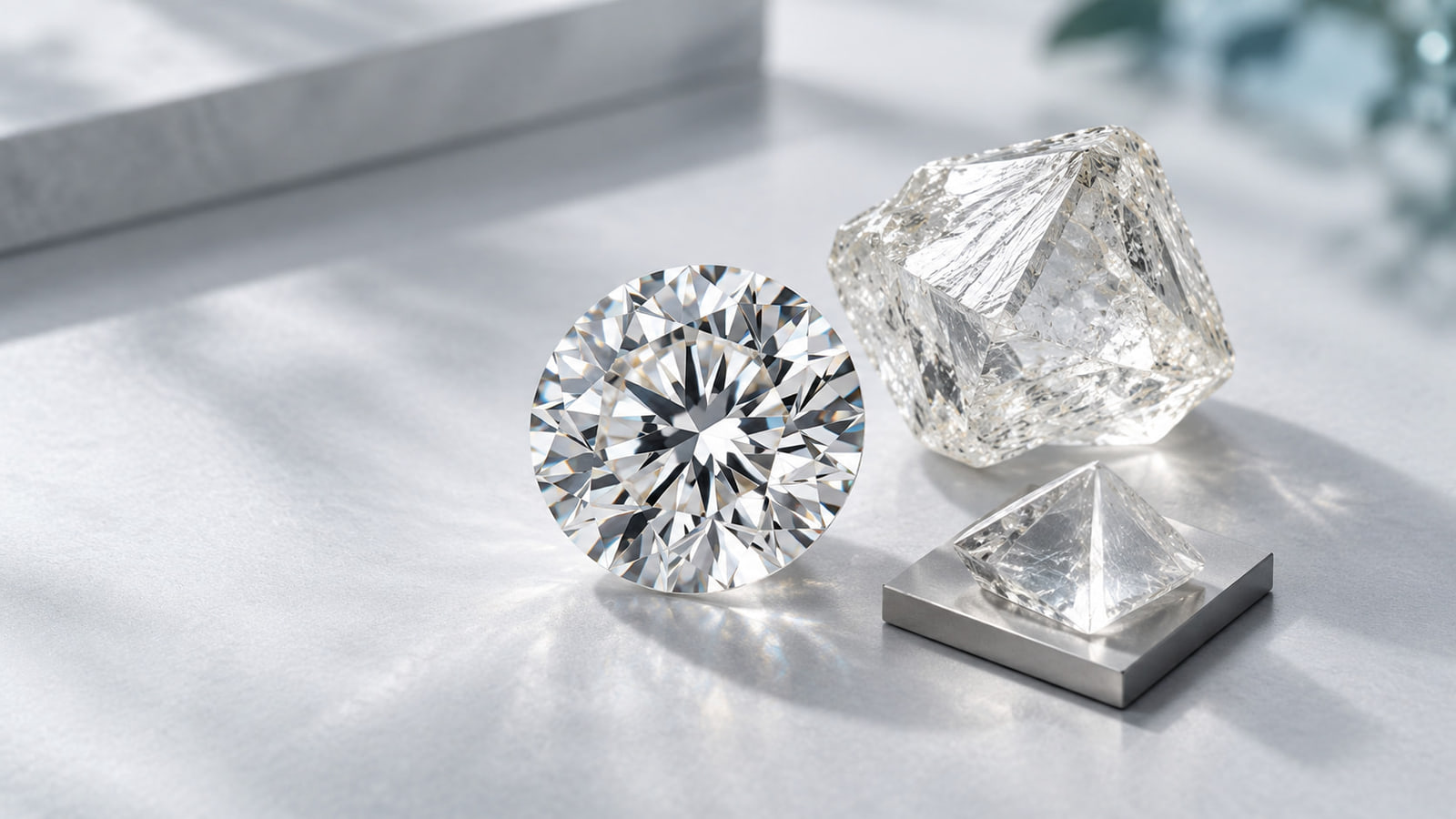
Are lab diamonds real diamonds? Yes. Laboratory-grown diamonds are diamond material produced through controlled growth rather than geological formation. They are not the same material as cubic zirconia or moissanite, which are diamond simulants. However, real diamond is not a complete product description because it does not communicate the laboratory-grown origin. Retailers should state laboratory-grown diamond clearly and support the actual stone’s identity and relevant quality information with an appropriate verification process. Appearance alone cannot reliably establish growth origin, and a customer’s use of genuine may not match the seller’s intended meaning. Explain material, origin and the exact product scope separately so the buyer understands what is being purchased before discussing size, design or price.
What Does Real Mean When a Customer Asks About Lab Diamonds?
Begin with a clarifying explanation rather than a technical argument. Diamond describes a material. Natural or laboratory-grown describes its origin. A simulant is a different material that can resemble diamond. GIA’s growth-process overview distinguishes laboratory-grown diamond from cubic zirconia and synthetic moissanite, which have different properties.
The word genuine can create the same ambiguity as real. A customer may use it to mean natural, while a salesperson uses it to mean not a simulant. Replace the ambiguous shorthand with the complete description. A laboratory-grown diamond can be diamond material without being a natural diamond, and both facts belong in the conversation.
Avoid dismissive language about other gemstones. Moissanite and CZ can be legitimate products when identified accurately. The purpose of education is to tell the customer which material is offered, not to imply that every alternative is fraudulent. Misdescription is the problem when a different material is sold as diamond.
Keep the explanation short enough for staff to use consistently: this is a laboratory-grown diamond, so the material is diamond and its origin is manufactured. Then show the actual product specification and relevant records. A clear first answer makes the subsequent discussion of design and value easier to understand.
Diamond Material Versus Diamond Simulant: Which Terms Belong Together?
Use a category map in training rather than relying on a list of marketing synonyms. The map should remain consistent across the supplier file, retail database and customer receipt. If a product contains several materials, the description should identify the relevant components rather than assuming one center-stone label covers the complete article.
The following comparison concerns identity and wording. It does not rank beauty, suitability or customer preference.
| Category | Material description | Origin description | Retail clarity requirement |
|---|---|---|---|
| Natural diamond | Diamond | Geological formation | Describe accurately; do not confuse origin with a grade |
| Laboratory-grown diamond | Diamond | Controlled manufacturing growth | State laboratory-grown origin clearly |
| Cubic zirconia | Zirconium oxide simulant | Usually manufactured for jewelry use | Call it cubic zirconia, not laboratory-grown diamond |
| Synthetic moissanite | Silicon carbide simulant | Manufactured gemstone material | Call it moissanite, not laboratory-grown diamond |
| Mixed-material jewelry | Several specified materials | Origin can differ by component | Identify center and accents without implying uniformity |
A phrase such as lab-created stone is incomplete if the customer needs to know which material it is. Ask the supplier for the full name before publishing it. Similarly, diamond-like appearance describes an impression, not a chemical identity or an origin result.
How Should Staff Answer a Real-or-Fake Question in Practice?
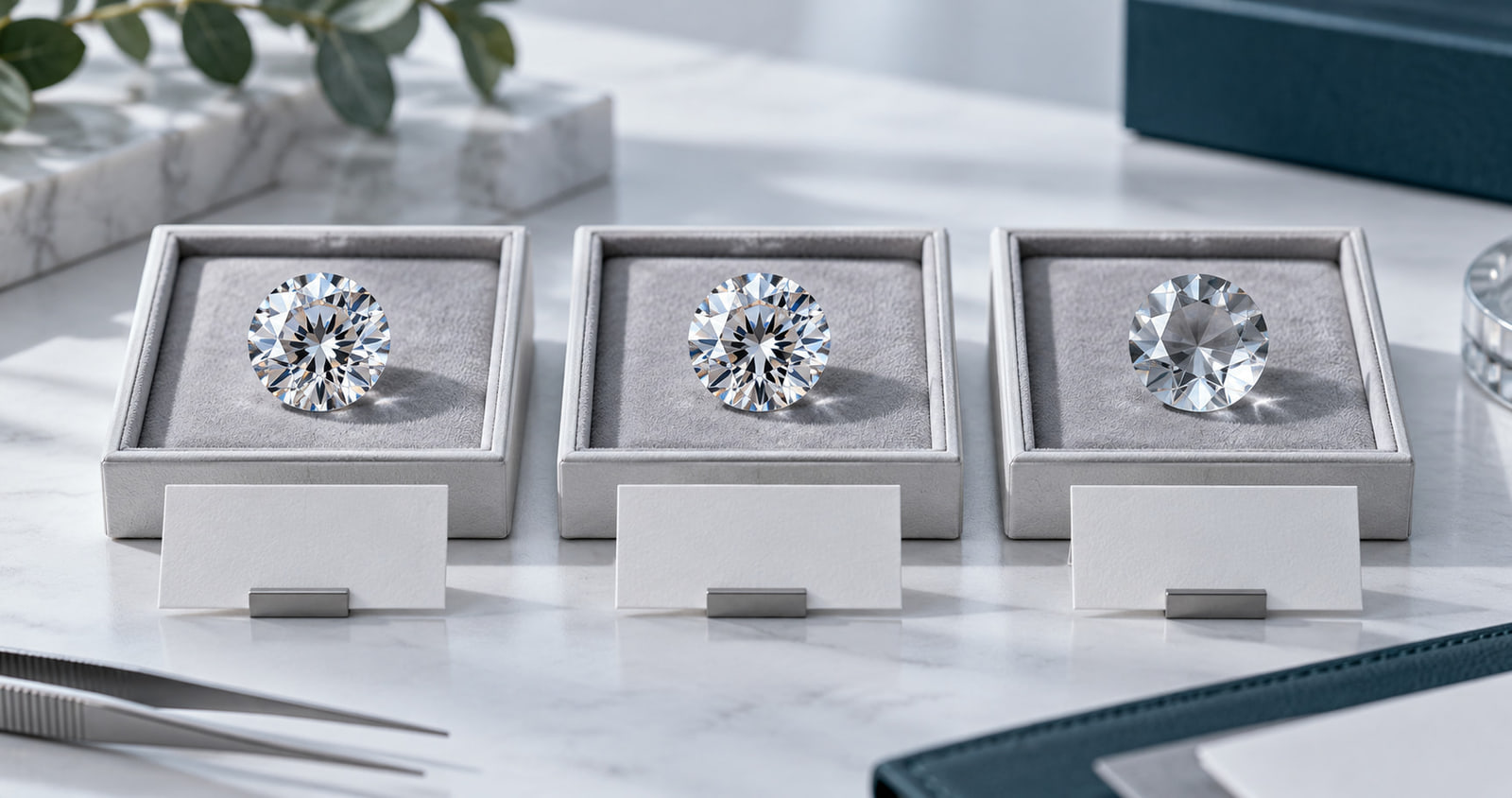
Consider a hypothetical customer comparing two solitaire pendants. One contains a laboratory-grown diamond and one contains CZ. The associate should first identify both materials, then explain the design, dimensions and service terms. It should not call both real stones and leave the customer to infer they are the same product category.
Now suppose the customer compares a natural diamond pendant with a laboratory-grown diamond pendant. Both contain diamond material, but origin differs. The associate should state that difference without implying the laboratory-grown stone is natural or that a natural stone has guaranteed future value. The customer can then choose according to their preferences and budget.
For a practical staff exercise, ask each associate to explain the three categories in one sentence and then identify the fields on the product card that support the explanation. Correct any script that substitutes genuine for a full origin description. Record the approved wording in the training file so new staff do not inherit an ambiguous shorthand.
MEITUO can help coordinate the supplier information needed for the laboratory-grown option. Start with loose center stones or melee and preserve the material and origin fields through the retail data workflow. Supplier coordination is most useful when the buyer knows which facts need to reach the customer.
How Can a Retailer Support the Identity Statement?
Use an appropriate identity and origin verification route for the goods. A visual impression, a low price or a basic screening result should not be expanded into a complete origin conclusion. Qualified laboratories and suitable instruments can establish information that ordinary unaided viewing cannot reliably determine.
Match the document to the actual goods and read its scope. GIA’s current laboratory-grown services distinguish the colorless to near-colorless quality assessment from colored-diamond services. A retailer should not assume every current laboratory-grown document uses the same format or traditional grade presentation. Review the actual service and record.
For a hypothetical shipment of 25 individually documented centers, reconcile all 25 item references to the seller list and supporting documents. If one reference conflicts, isolate that stone and resolve the discrepancy before sale. A valid report number found online is useful only when the physical goods and records are properly connected.
For small stones, define a suitable parcel and screening workflow instead of promising individual documents that were never ordered. The report comparison guide can help frame the service question. The evidence should support the claim actually made, with any limitations kept visible to the buyer and retail team.
A receiving exception should also reach the product-data team. If an item remains unresolved, block its listing rather than allowing a temporary internal label to become a customer claim. Once the discrepancy is settled, update the stock record and retain the evidence used for release. For multi-stone pieces, identify whether the conclusion concerns the center alone or all relevant components. This keeps a correct laboratory result from being applied more broadly than the actual examination or purchase scope supports.
Do Lab-Grown Diamonds Look and Sparkle Like Diamonds?
Laboratory-grown diamonds have diamond material properties, but the appearance of an individual stone also depends on cutting, proportions, condition and lighting. Do not turn a material statement into a promise that every specimen looks identical. Two diamonds can differ visibly even when both are correctly identified.
Show actual stones or clearly identified representative designs and explain what the customer is approving. For matched pairs, compare the members together. For bridal jewelry, link the appearance review to the final setting and the customer’s expectations rather than relying only on a catalogue grade.
Maintain the origin description in product titles, filters, mobile cards and checkout summaries. FTC jewelry advertising guidance supports accurate descriptions and disclosures. An educational paragraph should not be used to repair a headline that gives the wrong impression about the offered origin.
If a customer asks whether the stone is fake, answer the material question plainly, then state origin. Avoid a defensive sales pitch. The customer may simply need assurance that the product is not a simulant, or may specifically prefer natural formation. Both questions deserve an accurate answer before the retailer recommends a particular design.
How Should Buyers Qualify Suppliers in the USA, China and India?
Identity language needs to survive supplier records, receiving checks and customer-facing data. Ask each counterparty how it distinguishes diamond material, growth origin and simulants. The following market questions focus on that continuity, because a clear explanation at one stage is insufficient if later labels or product cards lose the distinction.
USA / ORIGIN LANGUAGE
How Should US Retailers Keep Real-Diamond Explanations Accurate?
A US retailer should preserve laboratory-grown wording wherever the product is presented, including abbreviated cards and marketplace feeds. Ask the supplier for complete material and origin fields rather than importing a headline that says only genuine diamond. The customer should understand the offered origin before reaching a long educational FAQ.
Train staff to separate material, origin and quality. A laboratory report can support specific information about a stone, while the retailer must still describe the complete article accurately. If a ring contains laboratory-grown diamond centers and different accents, identify the components instead of implying that one label covers every stone.
For distributor-supplied inventory, retain actual item references and the relevant document package. A seller’s trade status does not remove the need to match the goods to the description. If a customer uses real to mean natural, clarify the difference calmly and directly. The objective is an informed purchase, not persuading the customer that their origin preference is mistaken.
Stuller documents a trade-only US channel. Qualify the particular offer independently.
CHINA / DATA HANDOFF
What Should China-Based Sourcing Specify About Diamond Identity?
When a China-based supplier or coordinator offers several colorless gemstone options, request the complete material name on each line. A product photograph or the phrase lab-created stone is insufficient to distinguish laboratory-grown diamond from a simulant. Keep the material and origin fields explicit in sample labels, invoices and packing records.
For a jewelry program, confirm the identity of centers and accents separately. If the design allows alternative materials, quote them as distinct options and require a new approval before substitution. A shared metal component does not make the gemstone categories interchangeable.
MEITUO operates from Qingdao, Shandong, as a laboratory-grown diamond sourcing and supply-chain coordination partner. Its range includes centers, melee, side stones and matched options, with availability and documents confirmed per order. Ask for the information needed to support the retailer’s precise description. Do not infer that the company grows diamonds, issues independent reports or supplies every simulant category from its role as a sourcing coordinator.
GIA’s 2024 review documents Chinese HPHT melee production. This industry context does not verify a specific seller.
INDIA / ITEM CONTINUITY
How Should an India-Based Supplier Connect Identity and Actual Goods?
With an India-based seller, ask how the selected polished goods are linked to their origin description and supporting records. Clarify whether the company grows, cuts, selects inventory or coordinates export supply. A sales address or a laboratory location does not itself establish the material identity of every offered stone.
For individual centers, request actual references and measurements, then reconcile the document package before release. For parcels, agree the identification and screening scope suited to the goods. A report for one sample should not silently become proof for an entire later shipment without an agreed basis.
If the seller uses terms such as synthetic, genuine or created, ask for the full material and origin wording intended for the invoice. Translate that wording carefully into the customer-facing description rather than strengthening it for marketing. The buyer’s receiving and retail teams should see the same category information so an accurate supplier statement is not lost when goods are entered into stock or published online.
GreenLab lists Surat manufacturing and a Mumbai office. Distinguish those roles in any supplier comparison.
How Can MEITUO Support This Sourcing Decision?
MEITUO is a sourcing and supply-chain coordination partner in Qingdao, Shandong, China, serving jewelry brands, wholesalers, retailers and designers. For retailers explaining laboratory-grown diamond identity, its relevant role is helping buyers request clear product information and coordinate a selection that matches the intended customer description.
The product range includes loose center stones, melee, side stones, matched pairs and sets, and fancy-color options. MEITUO supports product selection, supplier coordination, quality-requirement confirmation and order follow-up. The buyer should specify which material, origin and document information must remain attached to each item or parcel through the order.
Availability, documents, MOQ, lead time, treatment information and shipping terms require confirmation per order. Contact [email protected] with the application and evidence requirements. MEITUO does not issue independent grading reports or replace a qualified laboratory’s work. Its coordination helps organize supplier responses; the retailer should verify the actual goods and approve the final customer wording before sale.
What Should Your Purchasing Brief and Acceptance Record Contain?
Make material and origin the first two fields in the purchase brief. Define the quantity structure, dimensions and supporting service needed for the intended product. Keep any alternative material on a separate quotation line and require written approval before a substitution changes the customer description.
At receiving, reconcile labels and documents before goods enter mixed inventory. At publication, check that product cards and checkout summaries preserve the approved origin wording. If a customer asks about real or genuine, use the complete category explanation rather than an ambiguous synonym. The following brief connects the supplier request to the evidence and retail language that will support the sale.
Please quote [quantity and assortment] explicitly as laboratory-grown diamond, with material and origin stated on all quote lines, labels and invoices. Provide actual dimensions, weights, item or parcel references and the available verification or laboratory service scope. Confirm treatment information, matching criteria and the process for resolving identity or document discrepancies. Our customer description will identify laboratory-grown origin clearly. Any simulant or natural-diamond alternative must be quoted separately and cannot be substituted without approval. State availability, MOQ, lead time, shipping terms and the evidence required before release to accepted stock.
FAQ: Are Lab-Grown Diamonds Real Diamonds? A Guide for Jewelry Retailers
Are Lab Diamonds Real or Fake?
Laboratory-grown diamonds are diamond material. They are manufactured rather than naturally formed, so the full description should state laboratory-grown origin. They should not be confused with simulants such as cubic zirconia or moissanite, which are different materials.
Does Genuine Diamond Mean Natural Diamond?
The word genuine can be ambiguous in a sales conversation. Ask for the complete material and origin description. A retailer should use natural diamond or laboratory-grown diamond as appropriate rather than relying on a shorthand the customer may interpret differently.
Are All Lab-Created Stones Diamonds?
No. Laboratory-created describes a production origin, not one material. A manufactured stone may be diamond, moissanite, cubic zirconia or another material. The supplier should state the full material name before the buyer approves a listing or purchase order.
Can Appearance Prove Laboratory-Grown Origin?
Ordinary unaided appearance cannot reliably establish growth origin. Use a suitable verification route and connect the results to the actual goods. Photographs help visual selection, but they do not replace material and origin identification.
Do Lab-Grown Diamonds All Sparkle Identically?
No. Cutting, proportions, condition and viewing conditions affect individual appearance. Material identity does not guarantee that every stone will meet the same visual preference. Inspect actual selections and evaluate matched items together when the application requires consistency.
What Is the Clearest One-Sentence Retail Explanation?
This is a laboratory-grown diamond: the material is diamond, and it was produced through a controlled growth process rather than natural geological formation. Follow that explanation with the actual product specification and relevant evidence, without implying natural origin.