 English
 Español
 Português
 Deutsch
 Français
 Italiano
 Nederlands
 العربية
 日本語
 한국어
 ไทย
Quick Answer
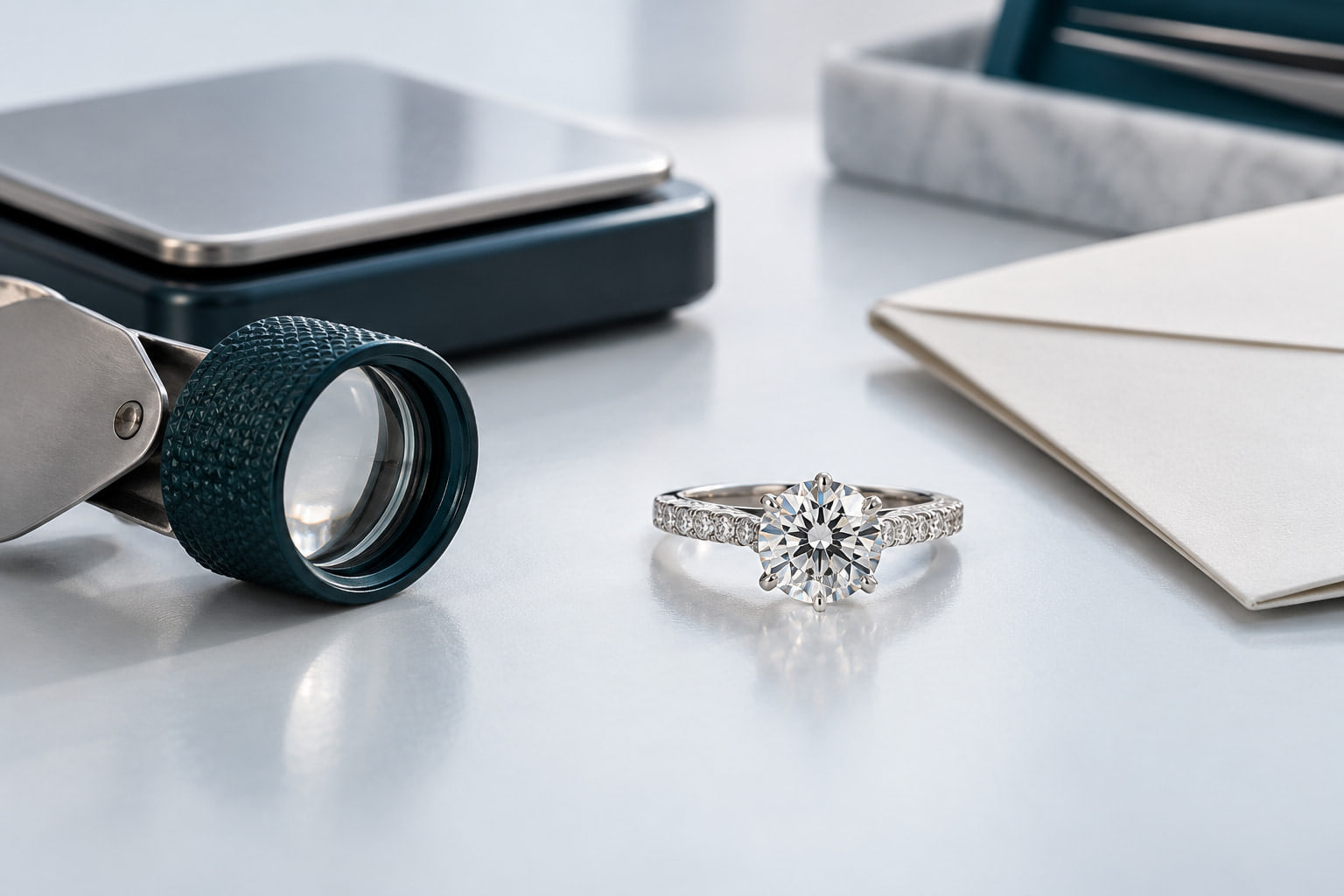
Can lab grown diamonds be appraised? Yes. A qualified appraiser can describe laboratory-grown diamond jewelry and provide an opinion of value for a stated purpose and date. An insurance replacement appraisal is different from a grading report, an invoice or an estimate of resale proceeds. Laboratory-grown jewelry can also be insured: Jewelers Mutual explicitly says it insures it, but acceptance and coverage depend on the actual application and policy. Retailers should supply clear material disclosure, item specifications, available grading documents, a detailed invoice and useful photographs. Ask the customer's insurer whether a receipt is sufficient or an appraisal is required. Never promise a claim payment, coverage start or replacement outcome merely because a document has been issued.
Appraisal VS Grading Report VS Invoice: Which Document Does What?
The Jewelers of America appraisal guide distinguishes an opinion of value from a grading report, which does not include value. Keep those functions separate in the customer package. A grading document can support identification and characteristics, while the appraiser evaluates the assignment and the insurer decides its documentation requirements.
| Record | Primary purpose | What it does not establish | Retailer action |
|---|---|---|---|
| Grading or identification report | Documents characteristics within a laboratory service scope | Insurance value or policy coverage | Connect the actual item to its report |
| Detailed invoice | Records the transaction and purchased item | An independent value opinion or automatic insurability | Describe origin, metal, stones and actual amount paid |
| Insurance replacement appraisal | Provides an opinion for a stated replacement purpose and date | A guaranteed resale price or claim payment | Use an appropriately qualified appraiser |
| Photographs and condition record | Show appearance and condition at handover | Complete gemological identity or policy acceptance | Capture useful views and retain originals |
| Insurance schedule or confirmation | Records the insurer-approved item and terms | Coverage beyond the policy wording | Customer checks dates, limits, exclusions and deductible |
Ask what problem the customer is solving. An insurance application, estate assignment and resale inquiry may require different bases and expertise. Do not relabel an insurance replacement figure as cash value simply because the customer wants a number.
If the report and invoice differ, resolve the discrepancy before adding an appraisal. A more elaborate document does not repair a wrong stone identifier or ambiguous origin description. The first requirement is a coherent item record that all parties can understand.
What Should a Retailer Provide for a Lab-Grown Diamond Insurance Application?
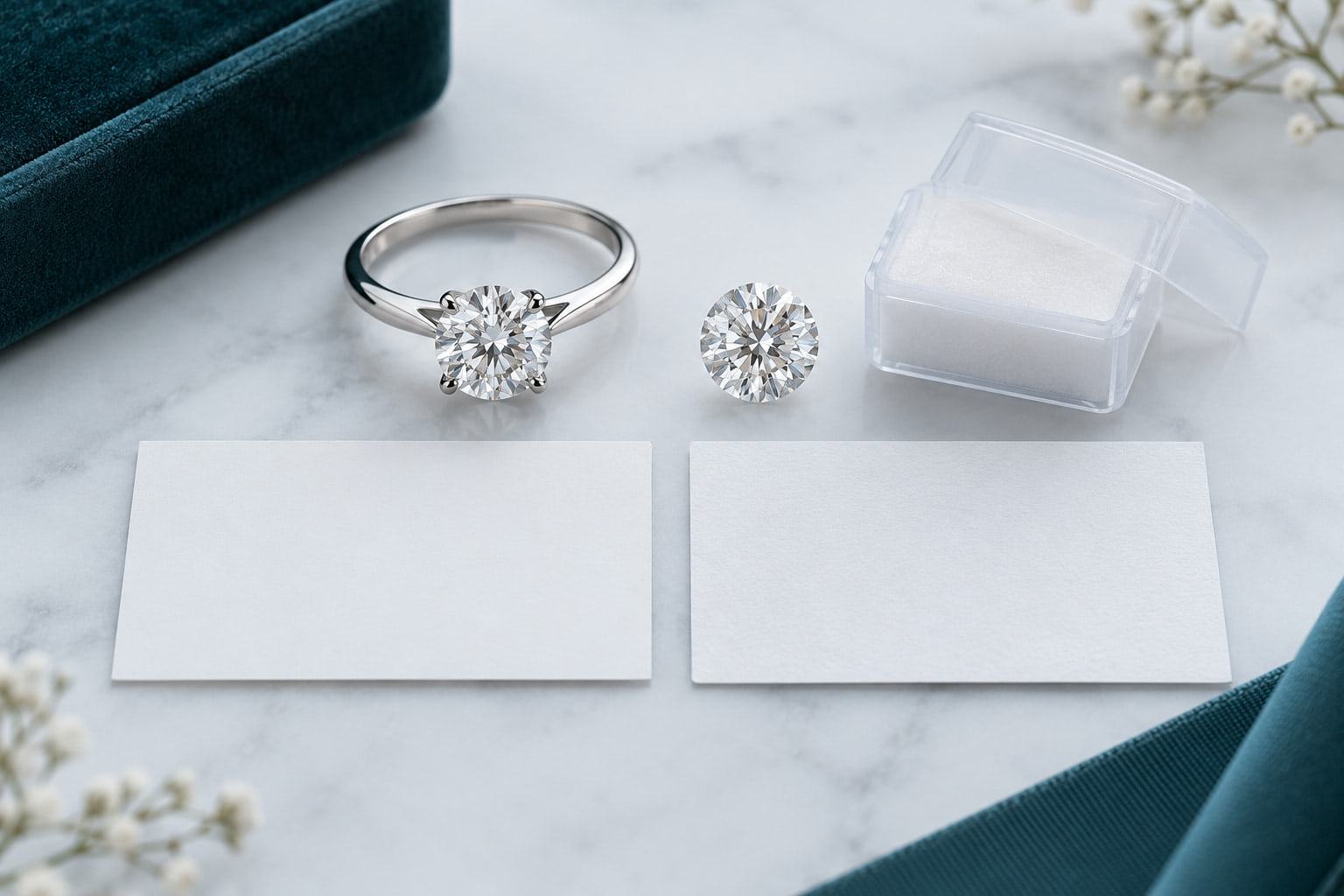
Prepare a clear finished-item description: ring, pendant or earrings; metal type and fineness as documented; center and side-stone details; laboratory-grown origin; and available identifiers. Distinguish a single center's weight from total diamond weight. If some weights or characteristics were estimated after mounting, the responsible document should say so rather than imply loose-stone measurement.
Attach the detailed sales invoice and available laboratory documents. Keep report numbers readable and connected to the correct item. An inscription reference can assist identification when present, but a photograph of a tiny number should not replace the rest of the description. Ask the appraiser what examination it requires for the assignment.
Capture the front, side, gallery and any distinctive design details. A simple neutral background and scale reference can be more helpful than a highly edited glamour image. Preserve photographs of the actual sold piece separately from marketing images of a similar design.
Use our independent-jeweler workflow to assign responsibility for the package. The sales team should know what it can issue, what comes from the laboratory, what requires an appraiser and what only the insurer can confirm. Send the customer one organized index instead of an unexplained collection of attachments.
When the customer package contains an error, issue a clearly identified correction rather than silently replacing the attachment. Record the original date, corrected field and reason, then tell the customer which version to submit. If the error affects a report-to-item connection, hold the handover until the physical item is reconciled. If it concerns only an address or spelling, preserve the item evidence while correcting the administrative record. This simple version history helps the appraiser and insurer avoid relying on two conflicting descriptions of the same piece.
How Should Retailers Discuss Replacement Value Without Implying Investment Value?
Describe the purpose before discussing the figure. Replacement value concerns the relevant cost of replacing the item under the stated appraisal basis. It is not automatically the price a customer could receive from a buyer tomorrow. The Jewelers of America explanation places insurance replacement and fair-market assignments in different contexts.
Do not inflate a figure to make the purchase look like an immediate bargain. An exaggerated appraisal can confuse the customer about resale and potentially increase insurance cost without improving the actual policy benefit. The appraiser should explain the valuation date, market and assumptions rather than produce a flattering multiple of the invoice.
Laboratory-grown stone offers, metal costs and manufacturing charges can change. Keep original purchase evidence and seek updated advice when the item or relevant costs change. Avoid inventing a fixed appraisal-validity period for every insurer. The customer should ask the chosen carrier about its update requirements and how changes are reflected in the insured amount.
For sourcing teams, preserve the inputs that help a later replacement search: actual dimensions, shape, documented characteristics, setting details and matched-stone relationships. Our loose diamond specifications and matched-set requirements are useful references for a replacement brief, but availability and equivalent options must be confirmed when needed.
How Does a Retailer Reconcile a Finished Ring Before Appraisal?
Hypothetical project, the Three-Record Ring Handover: a retailer sells a ring containing one documented 1.50 ct laboratory-grown center and twelve side stones recorded as 0.02 ct each before setting. The recorded side total is twelve multiplied by 0.02, or 0.24 ct; the combined recorded diamond weight is 1.74 ct. The customer-facing description should not call it a 1.74 ct center.
The package includes the center's laboratory document, a workshop stone schedule and the final invoice. If the workshop later replaced one side stone, the retailer checks whether the schedule was updated and whether the final total remains supported. The appraiser independently decides what examination and evidence are appropriate; the retailer's arithmetic is a reconciliation aid, not an appraisal.
Suppose the actual invoice is 2,400 hypothetical currency units, and a later appraisal gives a different replacement opinion. These figures need not be identical because purpose, date and market context may differ. The retailer should ask for an explanation of the basis rather than tell the customer the difference is instant profit. No hypothetical amount here represents a live price or guaranteed insurance value.
Before delivery, the sales associate checks the customer's name, item description, report reference and photographs against the actual ring. The customer then sends the requested package to the insurer and confirms acceptance and effective terms directly. A pending submission is not confirmation of coverage.
MEITUO can help coordinate a stone-sourcing record for the original purchase or a later replacement search. Ask for documents and dimensions available for the particular order, while keeping the appraisal assignment with a qualified appraiser and coverage questions with the insurer. This division gives the customer a clearer handover and avoids promises outside the supplier's role.
How Do Sourcing Markets Affect Appraisal-Ready Records?
The final insurer may be in a different country from the stone seller or jewelry workshop. Supplier records should therefore be readable, item-specific and connected across the transaction. These panels concern evidence handover, not a claim that one country's documents secure worldwide coverage.
USA / Carrier-specific handover
What Should a US Retailer Confirm With Its Insurer and Trade Supplier?
US retailers can point customers to actual carrier information rather than repeat informal claims that laboratory-grown diamonds cannot be insured. Jewelers Mutual explicitly confirms insurability, while BriteCo discusses receipt and appraisal documentation. The customer still needs acceptance for the particular item and policy, including the effective date and terms.
Ask the stone or jewelry supplier for a detailed invoice that clearly identifies laboratory-grown origin and distinguishes center from total weight. A domestic trade seller can help with records and replacement options, but its location does not establish US growth origin or insurance coverage.
For a custom ring, establish what happens between loose-stone purchase, transit, setting and customer handover. The retailer should not assume the final personal policy covers every earlier stage. Keep the supplier invoice, workshop record and finished-item photographs connected so an appraiser or insurer can understand the sequence. Direct coverage questions to the carrier instead of converting a general website statement into a promise for the sale.
CHINA / Stone-to-jewelry records
How Should Chinese Sourcing Documents Connect to a Finished-Item Appraisal?
When the stone is sourced through China and the finished jewelry is assembled elsewhere, the paperwork should preserve the connection. For MEITUO's Qingdao sourcing role, ask for a clear stone schedule, available report references and measured dimensions for the proposed order. Do not describe the coordinator as an appraiser or insurer.
Agree a consistent English description of laboratory-grown origin and retain original documents where translations are used. If invoice terminology is too broad to identify the actual stone group, clarify it before dispatch rather than expecting a later appraisal to reconstruct the purchase.
For parcels of side stones or melee, distinguish the supplied lot information from individual center-stone reports. The final retailer should add workshop consumption and substitution records so the finished piece can be described accurately. Confirm which documents are available before the customer is promised them. A sourcing invoice can support the chain of information, but the receiving country's appraiser and insurer decide what additional examination and evidence they require.
INDIA / Complete-set evidence
Which Records Should Follow an Indian Center-and-Side-Stone Purchase?
An Indian supplier may provide a documented center and separately described side stones. Ask whether the commercial office and selection operation use the same item references. Greenlab's official contact page lists Surat and Mumbai contacts, which helps establish who should answer technical and transactional questions without assuming every channel has identical services.
For a three-stone or halo project, request a schedule that distinguishes the center's report from the side-stone description. Record individual dimensions where fit or matching matters. A single total weight on an invoice may be insufficient to explain the finished design to a later appraiser.
Before export, confirm that approved replacements or substitutions are reflected in the final records. Preserve the packing reference through receiving and setting. The buyer should then give the finished-item appraiser the complete schedule rather than ask it to rely on a seller's promotional description. Indian supply origin or a report issued there does not determine coverage under a customer's policy in another country.
Can Lab-Grown Diamonds Be Insured Without an Appraisal?
Requirements vary. BriteCo states that it accepts a detailed receipt in its documentation discussion, while Jewelers Mutual confirms laboratory-grown diamonds are insurable and discusses appraisal support. These are carrier statements, not a promise that every application or item qualifies under every policy.
Have the customer ask the insurer what is needed for the exact item, value and location. Useful questions include whether an appraisal or detailed receipt is required, how a loose stone is treated before mounting, whether transit or setting is covered, and when coverage becomes effective. Avoid answering those from assumptions about a different customer's policy.
If the customer changes the mount, adds stones or materially alters the piece, update the item record and ask whether the insurer needs revised evidence. A center's unchanged report does not fully describe a redesigned finished ring. Keep the previous version so the chronology remains understandable.
At a later loss or damage event, provide the original records and any subsequent service history requested through the appropriate process. Do not promise that a new supplier can produce an identical stone immediately. Our repeat-order planning guide helps explain why dimensions and visual matching should be retained even when the original sale is complete.
What Documentation Support Can MEITUO Provide?
MEITUO is a sourcing and supply-chain coordination partner based in Qingdao, Shandong, China. Its work for jewelry brands, wholesalers, retailers and designers includes product selection, supplier coordination, quality-requirement confirmation and order follow-up. For appraisal-ready procurement, the relevant contribution is a clearly specified stone order and communication about available documents.
Buyers can discuss loose centers, melee, side stones, matched pairs and sets, and fancy-color options. Ask for the dimensions, report references, lot information and treatment details that can actually accompany the proposed goods. Documentation varies by item and order and should be confirmed before a retailer promises a particular customer package.
MEITUO does not issue independent grading reports, provide an insurance policy or establish an appraisal value through this sourcing role. Contact [email protected] with the stone schedule and documentation requirement, then arrange any appraisal and insurance confirmation separately. MOQ, lead time, availability and shipping terms need order-specific agreement, including for a later replacement search.
What Should a Retailer Ask for Before Promising an Appraisal Package?
Specify the product information needed for the finished-item record at the sourcing stage. Ask which fields will be measured loose, which are supplier declarations and which need a laboratory or appraiser. This avoids discovering after setting that an important measurement was never recorded.
Request an itemized stone schedule and document references before dispatch, then reconcile them at receiving and after setting. Keep any substitutions visible. Give the appraiser the actual finished piece and the records it requests, with permission and confidentiality handled through the retailer's normal process.
The following procurement brief is intended to improve record quality. It does not request a predetermined appraised value or imply that the supplier can bind insurance. Those distinctions should be equally clear to sales staff and customers.
Please quote laboratory-grown diamonds for [finished jewelry project] with [shape, dimensions, quantities and appearance]. Our retailer requires an itemized stone schedule, available laboratory report references, measured loose dimensions and clear origin descriptions. State which fields are measured, estimated or supplier-declared, and identify available treatment information. Keep centers, sides and melee distinct, including individual versus total weights. Obtain written approval for substitutions and update final records before dispatch. Confirm document delivery timing, MOQ, availability, lead time and shipping terms. We will arrange any finished-item appraisal and insurer confirmation independently; no predetermined valuation or coverage commitment is requested.
FAQ: Can Lab-Grown Diamonds Be Appraised? A Retailer Guide
Can Laboratory-Grown Diamond Jewelry Receive an Appraisal?
Yes. A qualified appraiser can inspect and describe it and provide an opinion for the stated assignment. Make laboratory-grown origin explicit and identify the valuation purpose and date.
Is the Laboratory Report an Appraisal?
No. A grading or identification report documents characteristics within its service scope and does not provide the same opinion of value. It can support the appraiser but does not replace the assignment.
Does an Appraisal Guarantee Insurance?
No. The insurer decides acceptance and coverage under the actual application and policy. The customer should confirm required documents, effective date, limits, exclusions and deductible directly.
Can a Detailed Receipt Be Enough?
Some carriers accept detailed receipts in relevant circumstances. Ask the chosen insurer what applies to the item rather than assuming a generic rule. Keep enough specification detail for the insurer to identify what was purchased.
Does Replacement Value Predict Resale Proceeds?
No. Those are different purposes and market contexts. Do not present an insurance replacement opinion as a guaranteed cash resale amount or evidence of investment return.
What if the Ring Is Redesigned Later?
Update the finished-item record and photographs and ask the appraiser or insurer what revised evidence is required. Retain earlier records so changes in stones, setting and condition remain understandable.