 English
 Español
 Português
 Deutsch
 Français
 Italiano
 Nederlands
 العربية
 日本語
 한국어
 ไทย
Quick Answer
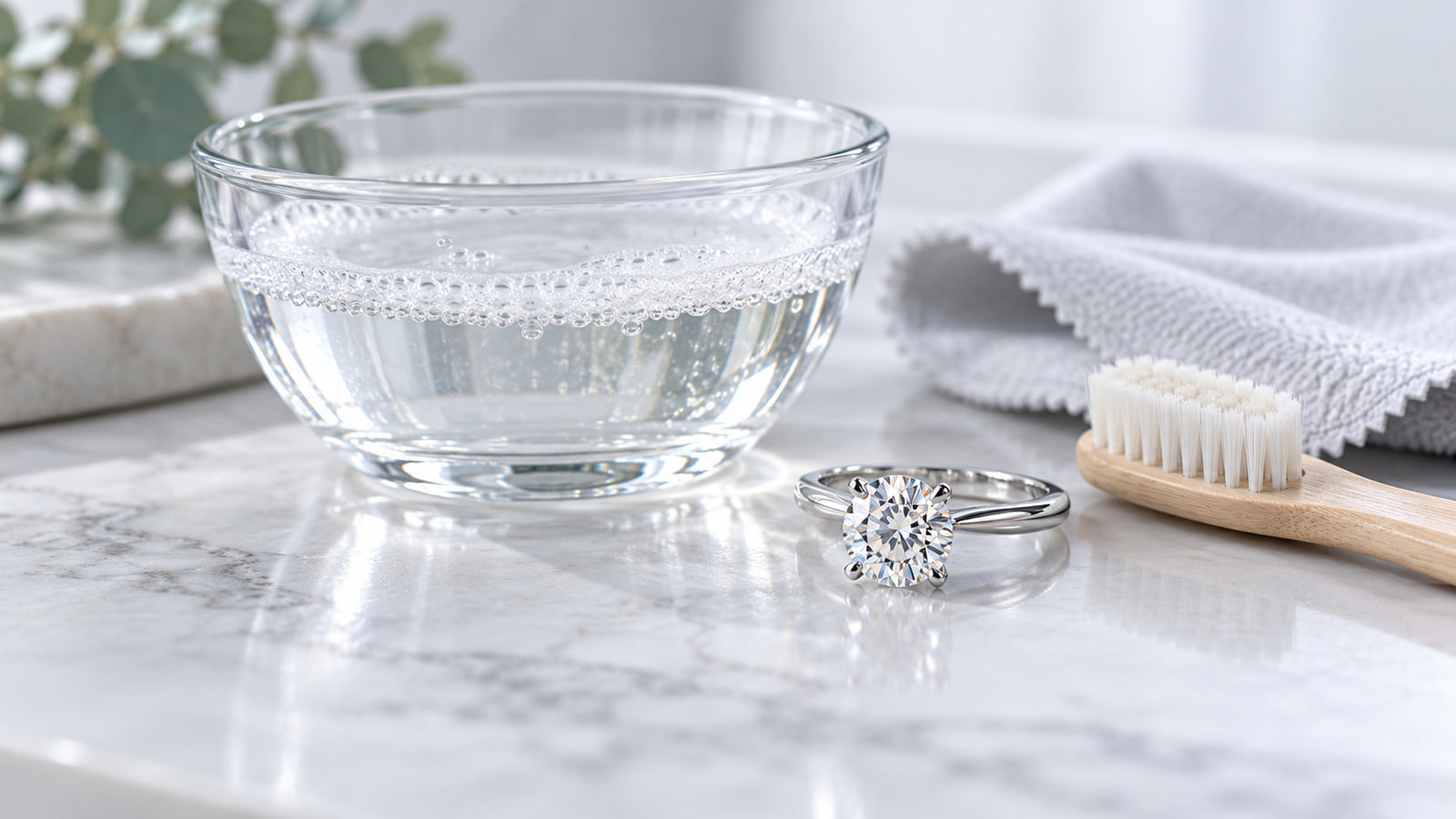
How to clean lab grown diamond jewelry starts with checking the setting, metal, other materials and known condition. For suitable sound jewelry, use lukewarm water with a small amount of mild detergent, a soft brush and gentle handling. Clean accessible areas without forcing bristles into fragile settings, rinse carefully over a bowl or protected surface, and dry with a soft lint-free cloth. Do not treat this as a universal recipe for every mixed-material or damaged piece. Stop if a stone moves, a prong is damaged, materials are uncertain or the surface has a coating or treatment requiring special care. Ultrasonic and steam cleaning should not be automatic home steps. Persistent dullness or suspected damage needs a qualified inspection rather than stronger chemicals or repeated aggressive cleaning.
What Should You Inspect Before Cleaning a Lab-Grown Diamond Ring?
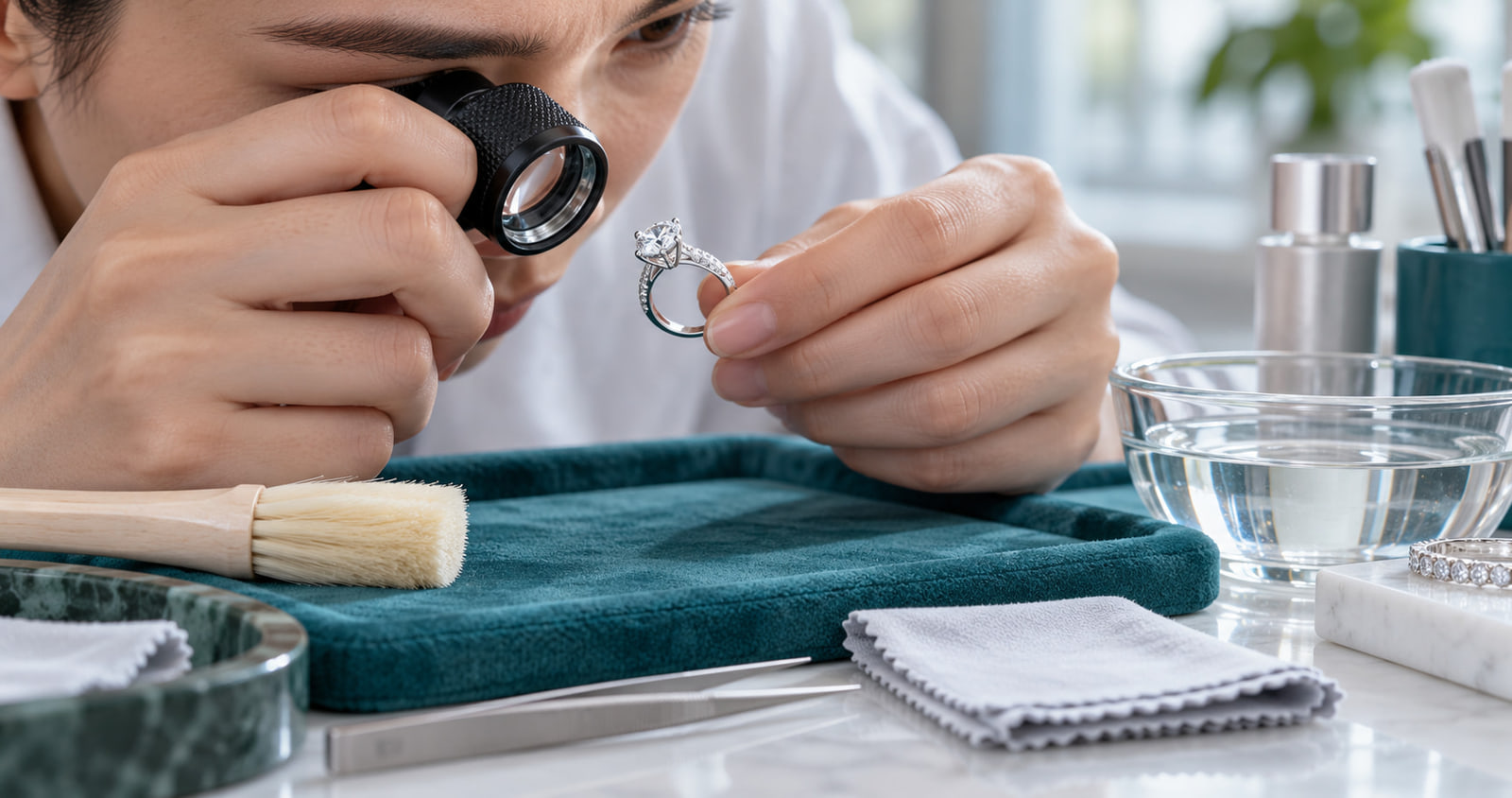
Start with the complete article. Identify the metal, any plating, all gemstones, adhesives or decorative materials, and any known treatments. A diamond-centered piece may contain components with different tolerances. If the information is unavailable, ask the retailer or a qualified jeweler before immersing or heating it.
Look for movement, bent or missing prongs, snagging, visible fractures and loose components. Do not deliberately stress the stone to test security. A customer who already notices movement should stop wearing the piece and arrange inspection. Cleaning is not the right first response to a setting that may release a stone.
Record the initial condition for a retail service job. Note the customer’s concern, prior repairs and products already used. Photographs can help preserve the intake record, but they do not replace physical inspection. Keep the customer’s identity and product reference attached to the piece throughout the service process.
GIA’s diamond-care guidance explains why professionals inspect jewelry before machine cleaning. The practical principle is broader: choose the method after assessing the object, not because a diamond has high hardness. Metal construction and other materials can be the limiting factors even when the diamond itself is sound.
Gentle Hand Cleaning Versus Ultrasonic or Steam: Which Is Appropriate?
For ordinary residue on suitable jewelry in sound condition, gentle hand cleaning is the conservative starting point. It allows the user to observe the piece and stop if a problem becomes visible. Machine methods belong in a condition-aware professional workflow rather than a universal escalation ladder for the home.
The table summarizes the choice. It does not certify that any particular mounted piece is safe for a method without inspection.
| Method | Useful role | Limits and precautions |
|---|---|---|
| Soft lint-free cloth | Light surface wiping and final drying | May not remove residue under a setting; avoid snagging |
| Mild detergent and lukewarm water | Gentle cleaning of suitable sound jewelry | Confirm all materials and treatments permit immersion |
| Soft brush | Reach accessible dirt around a setting | Do not force into fragile work or scrub aggressively |
| Commercial jewelry solution | Possible option when specifically suitable | Read product directions and confirm compatibility with the complete article |
| Ultrasonic cleaner | Professional option after appropriate inspection | Can loosen stones; not a default home recommendation |
| Steam cleaner | Professional option for suitable pieces | Heat, pressure and condition require assessment |
| Abrasive powders or harsh mixtures | No routine role in this home workflow | Can damage surfaces or other materials; do not improvise |
If the gentle method does not solve the appearance concern, pause. Repeated cycles or stronger chemicals may add risk without establishing the cause. A remaining symptom should trigger inspection, not an assumption that the jewelry simply needs harsher treatment.
What Is a Practical Gentle-Cleaning Sequence for Suitable Jewelry?
Prepare a clean bowl, lukewarm water, mild detergent, a soft brush and a lint-free cloth. Work over a protected surface away from an open drain. Remove clutter so a small earring back or component cannot be lost. Keep each customer’s article separate in a retail service setting.
If the inspected piece is suitable for immersion, use the mild solution to loosen ordinary residue. Follow any specific product-care instructions rather than inventing a universal soak time. Brush accessible areas gently, including the underside where practical, without prying at prongs or forcing the brush into tight decorative work.
Rinse carefully using clean water over a bowl or another controlled setup. A rinse should not become an opportunity to lose a stone or small component down a sink. Dry gently with a suitable lint-free cloth, then allow inaccessible moisture to clear before evaluating the appearance. Do not use an appearance judgment while the piece is still wet as the final result.
Inspect again after cleaning. If a stone appears loose, a component has shifted or the dullness remains unexplained, stop and arrange qualified review. For retailers serving independent-jeweler customers, provide a short written record of the method used and any unresolved condition observation. The service outcome should describe what was done and seen, not promise that every future problem has been prevented.
How Does Cleaning Differ for Rings, Earrings and Mixed-Material Jewelry?
Consider a hypothetical service intake with three items: a sound single-stone diamond ring, a pair of diamond studs with detachable backs, and a diamond pendant containing an unidentified decorative inlay. The ring may be suitable for the gentle workflow after inspection. The studs require the fronts and backs to remain paired and controlled. The pendant needs material clarification before immersion.
For rings, accessible pavilion areas can collect residue, but the setting must be secure before brushing. For earrings, separate detachable components only when appropriate and keep them in a controlled container. Do not interpret a clean diamond face as proof that the back and setting are also clean or secure.
For mixed-material pieces, let the most sensitive component guide the method. A diamond’s hardness does not establish the tolerance of an inlay, adhesive, plating or another gemstone. If the buyer lacks the relevant information, a qualified jeweler should select the service route. Avoid blanket instructions that treat every diamond-centered piece as chemically identical.
This distinction also matters when developing everyday collections or bridal designs. Ask the supplier for care information specific to the final article. MEITUO can help coordinate relevant stone information for a sourcing program, while the finished-jewelry supplier should identify the other materials and construction details.
What Should a Retailer Include in an Aftercare and Supplier Handoff?
Give customers a short sequence they can follow and a clear stop condition. Identify suitable routine care, separate storage and the symptoms that require inspection. Avoid unsupported exact service intervals for every design; the retailer or qualified jeweler can set an appropriate plan for the actual piece and use pattern.
For loose-stone procurement, preserve relevant treatment and condition information so it reaches the setting workshop and aftercare team. Review loose centers and side stones as parts of a complete article, not as a substitute for the finished supplier’s care instructions.
For matched pairs, explain how a lost or damaged member will be assessed for replacement. Cleaning and maintenance records can help preserve the item history, but they should not be used to promise that an equal-weight replacement will automatically match. Dimensions and appearance still need review.
Keep service claims precise. If the retailer offers inspection, cleaning or workmanship support, state the actual terms. A care card should not silently create an unlimited warranty. When customers report persistent cloudiness, record the condition and escalate the unresolved appearance rather than telling them that all laboratory-grown diamonds behave the same or that cleaning will certainly restore every piece.
How Should Buyers Qualify Suppliers in the USA, China and India?
Care information comes from several sources: stone records, finished-article construction and current condition. Identify which supplier can answer each question before writing an aftercare card. The following market checks keep those responsibilities separate and help retailers avoid applying a generic diamond-cleaning statement to an unsuitable mixed-material or damaged piece.
USA / AFTERCARE CONSISTENCY
What Should US Retailers Align Between Supplier Care Notes and Service Promises?
A US retailer should compare the supplier’s care notes with the complete jewelry it sells. Loose-stone information may not cover metal finishes, adhesives or additional gemstones in the finished article. Ask the finished supplier or bench partner for instructions that identify those limits before publishing a universal cleaning card.
For a cleaning service, establish intake identification, condition recording and an escalation route for loose stones. If the retailer uses a trade distributor for replacements, preserve the original item references and ask how a matched replacement will be selected. A clean appearance does not establish that the setting is secure.
Customer wording should separate routine gentle care from professional equipment. Do not imply that buying a home ultrasonic is the required next step when a soft brush fails to solve a symptom. Align any free cleaning offer with the inspection and exclusion terms the retailer actually applies. The supplier’s sales channel does not determine whether a particular used piece is safe to clean.
Stuller documents a trade-only US channel. Qualify the particular offer independently.
CHINA / MATERIAL INFORMATION
What Care Information Should China-Based Sourcing Pass to the Buyer?
For a China-based sourcing arrangement, identify whether the counterparty supplies loose stones or complete jewelry. Loose-stone information should include relevant treatment and condition details available for the order, while finished-jewelry care also needs the metal, finishes, other materials and construction information. Ask the appropriate supplier for each part rather than expecting one generic diamond note to cover everything.
If a sample is approved, retain its care specification with the bill of materials. A later change in plating, accent material or assembly method may require a revised instruction even when the diamond specification stays the same. Make those changes subject to buyer review.
MEITUO coordinates laboratory-grown diamond sourcing from Qingdao, Shandong. It can help organize stone-specific supplier questions and order follow-up, with availability, documents and treatment information confirmed per order. The buyer should obtain complete-article care guidance from the responsible finished supplier or qualified jeweler. Do not infer that sourcing coordination includes a universal cleaning guarantee for every mounted design.
GIA’s 2024 review documents Chinese HPHT melee production. This industry context does not verify a specific seller.
INDIA / TREATMENT AND CONDITION
What Should an India-Based Supplier Disclose for Care-Sensitive Goods?
With an India-based polished or jewelry supplier, ask what information is available about treatments, initial condition and the complete article. Clarify whether the company supplies loose stones, sets them or coordinates another workshop. The party responsible for the final construction should identify care limitations related to metal, finishes and additional materials.
For matched earrings, retain pair references and the actual dimensions so a later service issue can be traced to the correct goods. If the supplier offers cleaning or repair support, ask how the piece is inspected before work and what records the buyer should provide. Do not assume that the same process applies to every design.
Agree how care instructions are updated when a product specification changes. A new finish or decorative component can matter even if the central diamond is unchanged. The useful supplier response is specific to the goods and service scope, rather than a broad statement that diamond is hard. Retailers should keep the approved care note connected to the production bill of materials.
GreenLab lists Surat manufacturing and a Mumbai office. Distinguish those roles in any supplier comparison.
How Can MEITUO Support This Sourcing Decision?
MEITUO is a sourcing and supply-chain coordination partner in Qingdao, Shandong, China, serving jewelry brands, wholesalers, retailers and designers. For a care-conscious sourcing program, its relevant role is helping the buyer request available stone information and keep quality requirements connected to the order.
Its range includes loose center stones, melee, side stones, matched pairs and sets, and fancy-color options. MEITUO supports product selection, supplier coordination, quality-requirement confirmation and order follow-up. Buyers can request the treatment and condition information relevant to the selected goods, then pass that information to the setting workshop and aftercare team.
Availability, documents, MOQ, lead time, treatment information and shipping terms require confirmation per order. Contact [email protected] with the stone assortment and intended jewelry application. Complete-article cleaning decisions also require information about metal, other materials and condition. MEITUO does not replace a qualified jeweler’s inspection or guarantee that a single cleaning method is safe for every mounted piece.
What Should Your Purchasing Brief and Acceptance Record Contain?
For a new collection, request care-relevant information while the specification is still being approved. Identify who supplies the final instructions and who reviews them after a material or construction change. Preserve the approved note with the product data so customer service does not rely on an unrelated generic care card.
For a used article, record condition and history before deciding how to clean it. Keep the item identified, use a suitable method and document any unresolved observation. Stop when security or material compatibility is uncertain. The brief below is for sourcing the information behind a care workflow, rather than authorizing an uninspected piece for any particular equipment.
Please provide [stone assortment or finished jewelry specification] with available treatment and condition information. For mounted goods, identify metal, finishes, additional gemstones, inlays, adhesives or other care-relevant materials. Supply product-specific cleaning guidance and state which methods require professional inspection or are unsuitable. Confirm how the care note changes after any substitution or construction revision. Provide actual item or pair references, document scope, quality criteria, MOQ, availability, lead time and shipping terms. Identify the party responsible for finished-article care instructions and the process for reviewing loose settings or unresolved appearance concerns before service.
FAQ: How to Clean Lab-Grown Diamond Jewelry: A Retailer’s Care Guide
What Is the Best Way to Clean a Lab-Grown Diamond Ring?
For suitable sound jewelry, gentle cleaning with lukewarm water, mild detergent and a soft brush is a conservative starting point. Inspect the setting and all materials first, rinse over a controlled surface and dry gently. Uncertain or damaged pieces need qualified advice before cleaning.
Can I Use an Ultrasonic Cleaner at Home?
Do not treat it as a universal home method. It can loosen stones, and condition or other materials may make it unsuitable. A qualified professional should inspect the jewelry and select an appropriate method rather than relying on the diamond’s hardness alone.
How Should Lab-Grown Diamond Earrings Be Cleaned?
Inspect the settings and identify all materials first. For suitable pieces, use the gentle workflow and keep detachable backs controlled and paired. Clean accessible areas without forcing the brush into delicate work, then rinse and dry carefully. Stop if a stone or component is loose.
Should a Diamond Piece Be Cleaned With Harsh Household Mixtures?
No improvised harsh mixture is part of this routine workflow. Chemicals can affect metals, finishes or other materials even when the diamond is stable. Use a suitable mild method or obtain product-specific professional guidance when compatibility is uncertain.
What if the Jewelry Still Looks Dull After Cleaning?
Do not assume stronger cleaning is the answer. Dry the piece completely and inspect under consistent lighting. Persistent dullness can involve inaccessible residue, optical appearance or condition. A qualified examination should determine the next step when the cause remains unclear.
Does a Care Card Replace Setting Inspection?
No. A care card explains suitable routine handling, while a physical inspection evaluates the actual condition and security. Seek service if a stone moves, a prong is damaged or the piece suffers a significant impact, even if routine care has been followed.