 English
 Español
 Português
 Deutsch
 Français
 Italiano
 Nederlands
 العربية
 日本語
 한국어
 ไทย
Quick Answer
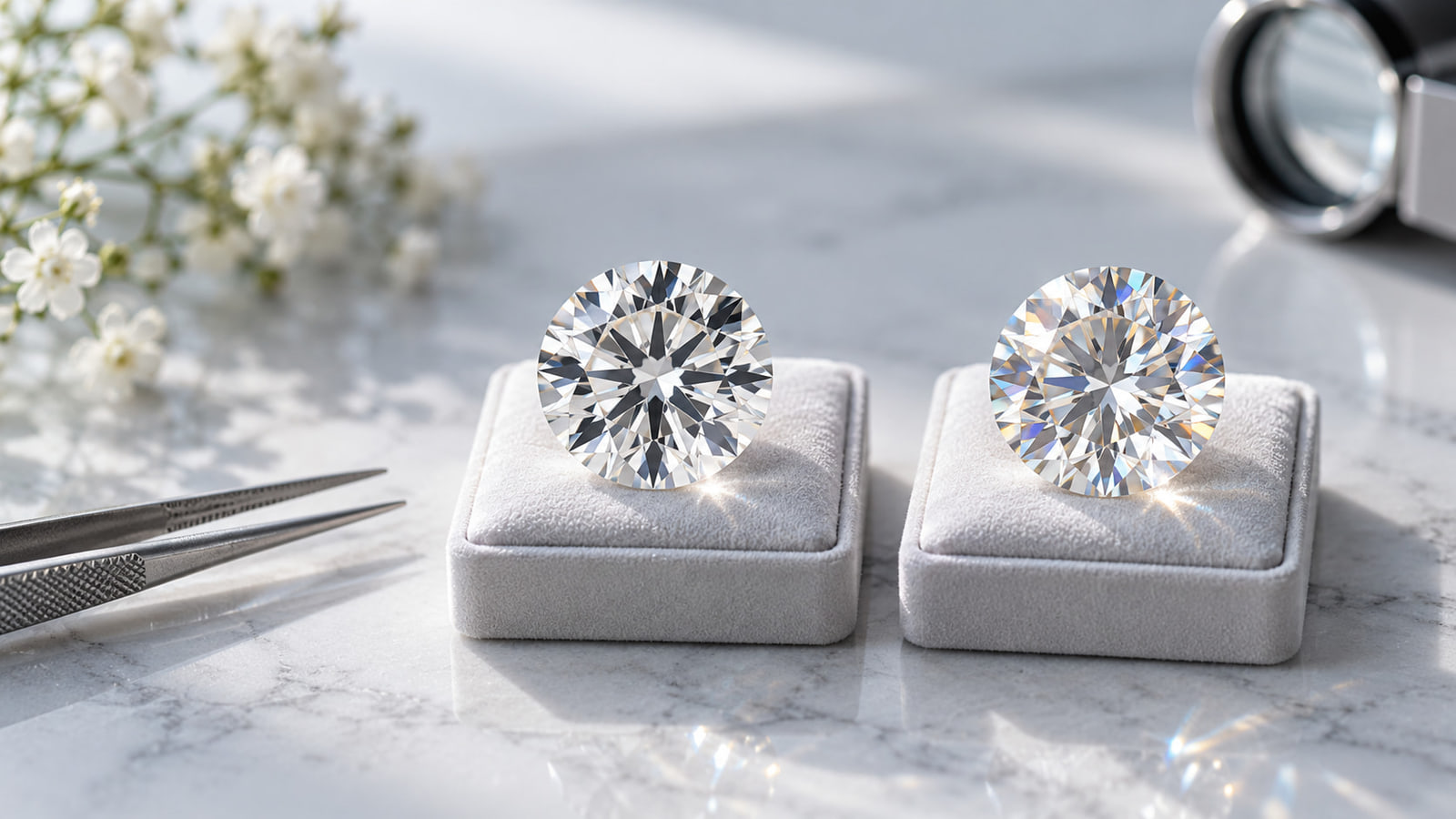
Lab grown diamonds vs cubic zirconia is a comparison between different materials. Laboratory-grown diamond is diamond: crystalline carbon produced through a controlled growth process. Cubic zirconia, commonly shortened to CZ, is a diamond simulant made from zirconium oxide. It can resemble diamond but is not a laboratory-grown diamond. Choose between them by the product promise, appearance, wear expectations, dimensions and budget of the finished collection. Do not use visual resemblance or a shared factory origin to merge their descriptions. A buyer should specify material identity on the quotation, invoice, packaging and product listing, and obtain appropriate verification for the goods purchased. Equal millimeter size is also different from equal carat weight, so dimensions must accompany any comparison.
Is Cubic Zirconia a Lab-Grown Diamond?
No. The word laboratory describes where something was made; it does not make every laboratory-created gemstone the same substance. Lab-grown diamond and CZ differ in composition and properties. GIA distinguishes diamond from simulants such as cubic zirconia and synthetic moissanite. A supplier’s phrase synthetic stone therefore needs clarification before a purchase order can be accepted.
Create separate material fields in the catalogue. A useful hierarchy is product type, gemstone material, origin description, size and supporting documents. This prevents a salesperson from shortening laboratory-grown cubic zirconia into laboratory-grown diamond. A SKU title is not sufficient if the inventory database silently groups both materials under diamond.
Avoid describing CZ as fake in customer communication. It is a legitimate jewelry material when accurately identified. The problem is misrepresentation, not the existence of a lower-cost category. Equally, laboratory-grown diamond should not be described as natural diamond merely because its material is diamond. Material identity and growth origin are separate facts.
Train staff with complete sample labels. For example, one sample can read laboratory-grown diamond center, while another reads cubic zirconia center. If a finished piece contains multiple gem materials, identify each relevant component rather than letting the main stone description imply that all accents are the same material.
Lab-Grown Diamond Versus CZ: Which Differences Affect a Collection?
A useful comparison examines the finished product and the supporting workflow. A factory sample shown under spotlights does not settle material identity or long-term suitability. Compare actual samples in the intended setting and retain the sample reference alongside the written specification. Neither a photograph nor a price is a material test.
Do not promise identical optics. Different materials can produce a different balance of brightness and colored flashes. Shape, faceting, lighting and viewing distance also affect the impression. Let the customer’s intended aesthetic determine whether a difference matters, while keeping the material description explicit.
| Buying criterion | Laboratory-grown diamond | Cubic zirconia |
|---|---|---|
| Material | Crystalline carbon, laboratory-grown origin | Zirconium oxide, a diamond simulant |
| Naming rule | Disclose laboratory-grown origin clearly | Identify as cubic zirconia; do not call it diamond |
| Weight comparison | Use measured stone weight plus millimeters | Order by dimensions where design fit matters; weight is not interchangeable |
| Collection role | Suitable when the customer wants diamond material | Suitable when the product proposition explicitly accepts a simulant |
| Verification | Origin and quality documentation appropriate to the purchase | Material identification appropriate to the purchase |
| Care communication | Consider setting, condition and any treatments | Provide material-specific and setting-specific care |
| Stock control | Dedicated diamond category and references | Separate CZ category and references |
The table is not a ranking of brands or a promise that every specimen performs alike. It defines the information needed to buy and describe two different product categories consistently.
How Do Millimeter Dimensions Prevent Diamond-Versus-CZ Mistakes?
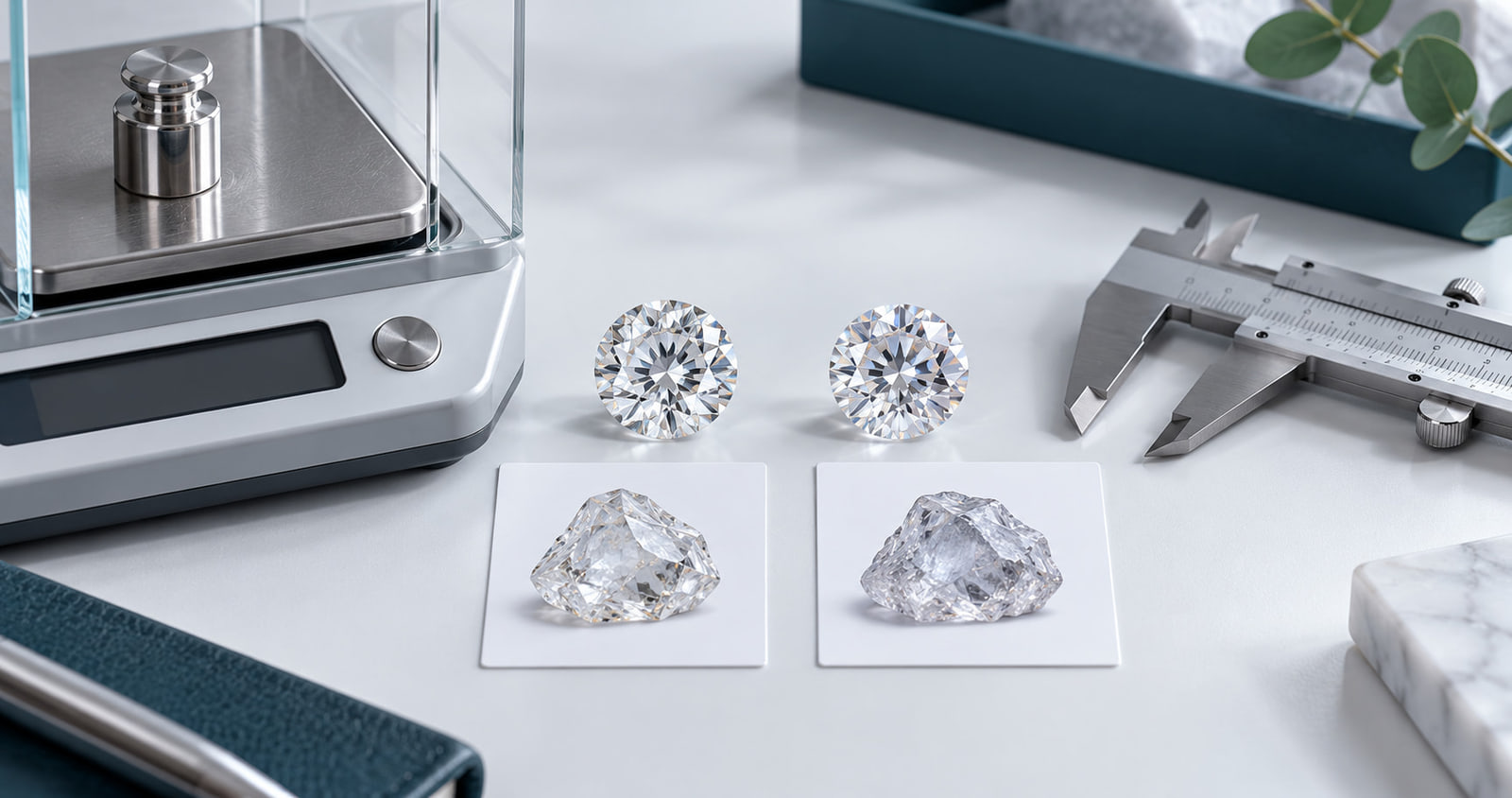
Consider a hypothetical retailer developing 60 solitaire pendants with a 6.5 mm setting seat. The design team asks for two sampling routes: laboratory-grown diamond and CZ. The buyer should order both routes around the seat geometry and tolerance, then evaluate profile and depth with the setter. Asking for the same carat weight in both materials would not establish equivalent fit.
Create two separate bills of materials, even if the metal component is shared. Record the center material, diameter or length and width, depth range, stone count and approved visual sample. Price the complete finished article only after labor, packaging and inspection responsibilities are defined. A lower stone charge can be offset by different rejection rates or assembly requirements in that particular project; measure those rather than assuming them.
For the diamond route, review loose laboratory-grown centers. For a multi-stone design, do not silently substitute CZ accents into a diamond listing. Specify the accents separately and check lab-grown melee options when the product promise requires diamond throughout.
After sample approval, preserve the dimensional limits in the production order. The approved sample should not become a vague instruction to supply something similar. Any change of material requires a revised description and commercial approval, not simply another stock reference.
How Should a Retailer Verify Material Identity on Receiving?
Begin with chain-of-custody controls. Compare the purchase order, invoice, parcel labels and piece count before mixing goods into existing inventory. Keep CZ and diamond samples in separate labeled containers. Photograph a discrepancy while the original packaging is still available. This preserves useful evidence if the seller supplied the wrong category.
Select a verification route appropriate to the goods and risk. A specialist can choose tests that distinguish simulants from diamond; establishing laboratory-grown versus natural origin is another step. A basic screening result should not be expanded into a claim about all origin or treatment details. Review report service differences when independent documentation is part of the diamond purchase.
For a hypothetical 300-piece fashion line, the receiving procedure should state which goods are checked, how samples are selected and what happens after an unexpected result. A test on one showroom sample does not establish the identity of all future deliveries. If material identity fails, isolate the relevant lot and resolve the scope before assembly or sale.
Document the result as observed, including the instrument or service, operator and limitations where relevant. Do not relabel an unresolved parcel based on visual confidence. MEITUO can help coordinate supplier questions for the diamond portion of a program, including the identity and document requirements the buyer wants confirmed before release.
What Should Product Listings Say About Diamond and Cubic Zirconia?
State the material close to the product name and keep it consistent in filters, descriptions, invoices and customer service scripts. For a US-facing listing, consult FTC jewelry advertising guidance on truthful gemstone descriptions. A disclosure hidden in a long FAQ does not help a shopper who has already formed the wrong impression from the headline.
Use positive and specific language. A CZ fashion pendant can be sold for its design, scale and accessible purchase price without claiming diamond identity. A laboratory-grown diamond pendant can explain its diamond material and manufactured origin without implying natural formation. Neither route needs unsupported claims about investment returns or universal ethical superiority.
An online store should also audit image filenames, feed attributes and marketplace categories. A correct paragraph can be undermined by an automated diamond filter that includes CZ products without qualification. Keep comparison pages clear about whether they discuss loose stones, a pair of earrings or a complete metal-and-stone article.
Connect the description to the intended use. Everyday fashion applications may prioritize a different balance of materials and budget from bridal collections. Ask customers what they want the stone to be, rather than assuming similar appearance makes identity irrelevant. A clear explanation reduces later disputes about what was purchased.
How Should Buyers Qualify Suppliers in the USA, China and India?
For diamond-versus-CZ programs, supplier qualification starts with material separation. Ask how sample labels, bills of materials, production bins and invoice fields preserve identity. The following market questions focus on those controls and on actual dimensions, rather than assuming a seller’s location proves which gemstone material it supplies.
USA / CATEGORY CONTROL
What Should US Retailers Ask a Supplier About CZ and Diamond Labels?
A US retailer comparing diamond and CZ programs should request separate quotations with complete material names. Ask the seller whether its downloadable catalogue, barcode labels and invoice descriptions preserve the distinction. If an inventory feed abbreviates everything as stone, build a controlled mapping before importing it into a retail platform.
Check the proposed customer wording against the actual bill of materials. A pendant with a laboratory-grown diamond center and CZ accents needs a description that does not imply all stones are diamond. Ask who supplies product data and who corrects a wrong attribute after shipment. The retailer remains responsible for the wording it publishes.
For an in-store sample tray, keep visible labels on both the tray and individual product cards. Customers should be able to compare the aesthetic without losing track of identity. A domestic distributor can simplify purchasing communication, but its address does not verify the material. Retain the seller’s written specification and the receiving checks used for that order.
Stuller documents a trade-only US channel. Qualify the particular offer independently.
CHINA / BILL OF MATERIALS
How Should China-Based Sourcing Keep Two Material Programs Separate?
A buyer sourcing finished jewelry or loose goods through China-based counterparties should name the material in every sample request. Do not assume that a photograph of a colorless solitaire communicates diamond rather than CZ. Ask the counterparty to repeat the material, dimensions and quantity on the sample label, approval sheet and production invoice.
If one workshop offers several gemstone options, require distinct bills of materials and separate lot labels. A shared metal design can be useful commercially, but it should not become a shared unidentified stone bin. Any substitution should trigger a revised customer description and buyer approval before assembly.
MEITUO coordinates laboratory-grown diamond sourcing from Qingdao, Shandong. For the diamond part of a collection, request available center, melee or matching options and the documents relevant to the order. Do not infer that MEITUO manufactures CZ or offers every simulant category. Confirm the actual supply scope, supplier roles and acceptance plan in the written response before comparing complete finished-product costs.
GIA’s 2024 review documents Chinese HPHT melee production. This industry context does not verify a specific seller.
INDIA / MATERIAL VERIFICATION
What Should an India-Based Supplier Confirm for a Diamond Comparison?
When an India-based seller provides a diamond option beside a simulant option, ask which company supplies each material and which party invoices the finished selection. A trade contact can coordinate multiple sources, so the buyer should not infer a common growing, cutting or verification route from a single sales presentation.
For an assortment of matched earrings, request measurements for each member and a pair-level visual record. A statement of equal weight does not establish matching across different materials. Keep the diamond and CZ development samples under separate references, even if the same setting is used to compare the designs.
Agree what happens if receiving inspection identifies a different material from the invoice. Define isolation, retesting and replacement responsibilities before the first production shipment. The useful comparison is the seller’s documented process for that product, rather than a national reputation. A laboratory location or a report logo should not be represented as proof of the whole supplier’s identity controls without checking the goods and service actually involved.
GreenLab lists Surat manufacturing and a Mumbai office. Distinguish those roles in any supplier comparison.
How Can MEITUO Support This Sourcing Decision?
MEITUO is a sourcing and supply-chain coordination partner in Qingdao, Shandong, China. It serves jewelry brands, wholesalers, retailers and designers purchasing laboratory-grown diamond products. In a diamond-versus-CZ decision, its relevant contribution is helping the buyer define and source the diamond option clearly, with the requested assortment and quality requirements.
Its product scope includes loose center stones, melee, side stones, matched pairs and sets, and fancy-color options. A retailer can use that scope to develop a diamond bill of materials without silently extending a simulant specification into a diamond order. Product selection, supplier coordination, quality-requirement confirmation and order follow-up should all refer to the actual material and intended application.
Availability, documents, MOQ, lead time, treatment information and shipping terms must be confirmed per order. Send [email protected] the design dimensions, stone categories and acceptance criteria. Any independent identification or assessment remains the work of the relevant service provider; MEITUO does not issue independent grading reports.
What Should Your Purchasing Brief and Acceptance Record Contain?
Make the first line of the brief a material statement. Follow it with dimensions, not only carat weight, and identify all accents separately. Ask for a sample reference that will remain linked to the production specification. Include the customer-facing description in the approval package so procurement and marketing are working from the same facts.
At receiving, preserve material separation until identity and quantity checks are complete. Escalate conflicting labels before the goods reach a setting bench. If the commercial team changes the material to meet a budget, revise the product data and sample approval as well. A transparent category change can be a valid design decision; an undocumented substitution creates a different problem.
Please quote laboratory-grown diamond for [design and quantity], with center dimensions [range], depth limits [range] and accent specification [details]. Identify gemstone material on every quote line, sample label and invoice. Provide available document types, relevant treatment information and the proposed receiving-verification workflow. Confirm whether the sample reference can be retained as the production approval reference. State permitted dimensional variation, matching criteria, MOQ, lead time, shipping terms and discrepancy remedies. Any alternative material, including cubic zirconia, must be quoted separately and must not be substituted without written approval and revised product information.
FAQ: Lab-Grown Diamonds vs Cubic Zirconia: Material Differences for Buyers
Is Cubic Zirconia the Same as a Lab-Grown Diamond?
No. CZ is a zirconium oxide simulant; laboratory-grown diamond is diamond material produced by a controlled growth process. Both may be manufactured, but that shared fact does not make them chemically or commercially interchangeable. Describe the actual material.
Should Matching Carat Weights Produce Matching Sizes?
Do not assume so across different materials. Use measured length, width or diameter and depth, then check the setting geometry. Weight alone is not a design-fit specification, and even stones of the same material can differ in face-up dimensions.
Can a Retailer Offer Both Categories?
Yes, provided product data, samples, stock controls and customer explanations distinguish them. Each category can serve a different product promise. Keep the material visible at selection and purchase rather than relying on an obscure disclosure after the customer has chosen.
Does a Low Price Prove That a Stone Is CZ?
No. Price is a commercial fact, not material identification. Obtain a complete written specification and use an appropriate verification route. An expensive stone can also be incorrectly described, so high price is not proof of diamond identity.
Can a Photograph Establish the Material?
No. Lighting, editing, faceting and the setting can alter appearance. Use photographs for design and visual approval, but obtain suitable material verification separately. Preserve the exact sample and stock references so the evidence remains linked to the goods.
How Should a Mixed-Material Piece Be Described?
Identify the main stone and relevant accents accurately. A diamond center should not imply diamond accents if the accents are CZ. Keep the bill of materials, product headline, detailed description and invoice consistent so the customer understands the complete article.