 English
 Español
 Português
 Deutsch
 Français
 Italiano
 Nederlands
 العربية
 日本語
 한국어
 ไทย
Quick Answer
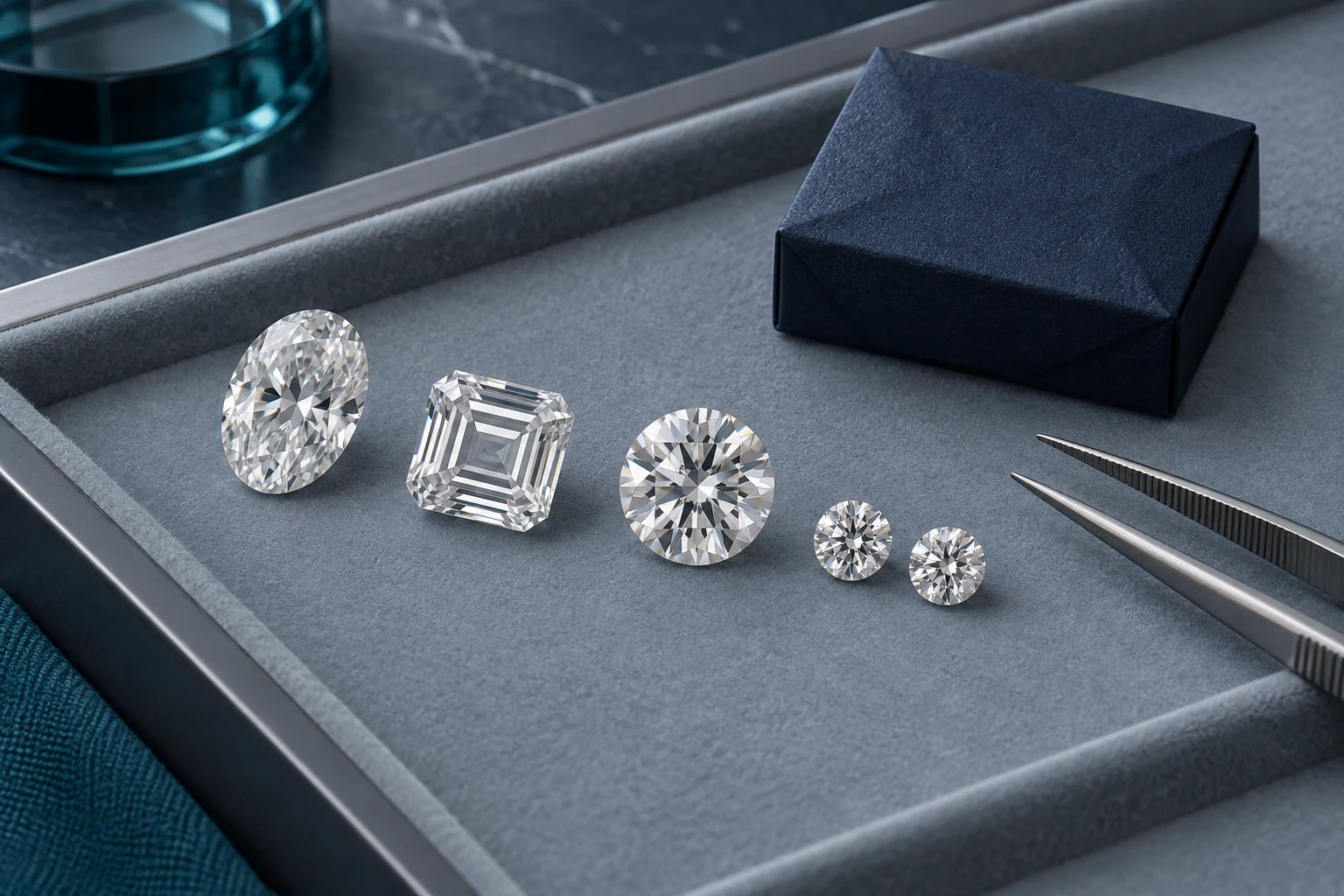
To buy lab-grown diamonds wholesale, start with the jewelry you want to sell and the customer you want to serve. Define the stone’s role, shape, measurements, quality range, quantity and documentation needs before comparing prices. Then evaluate representative samples, compare the full order cost and agree how repeat supply will work. A focused first order gives you more useful information than a wide assortment with no clear collection strategy. MEITUO helps you connect these decisions through product selection, low-MOQ sourcing, supply-chain coordination and practical brand support, with single-order dropshipping available for suitable projects.
Start With Your Collection, Then Choose the Diamonds
A wholesale purchase should begin with a product decision rather than a supplier’s longest stock list. An engagement-focused brand, an everyday jewelry retailer and a manufacturer buying accent stones have different priorities. The first may need a convincing center-stone selection and clear documentation. The second needs a coherent range that customers can understand quickly. The third needs stones that work consistently within a repeatable design. Write down the finished item, intended customer, selling channel and target retail position before you shortlist diamonds. These decisions make the sourcing conversation more specific and prevent an attractive unit price from determining the entire collection.
For your first range, choose a small group of designs that share a customer purpose. For example, an illustrative everyday collection might connect a pendant and matching studs through the same shape language. You can then decide which specifications should stay consistent and where customer choice adds value. A collection built around a clear use case is easier to photograph, explain and replenish than an assortment assembled from unrelated offers. This is a planning approach, not a rule that every brand should sell the same products or carry the same number of styles.
Separate what you need to validate from what you already know. You might have an approved setting but an unresolved stone size, or a strong audience response to a shape but no decision on quality range. Put those open questions into the sample request. When you speak with MEITUO, share the commercial idea as well as the technical details. We can connect your intended collection to loose diamonds, melee, side stones or matched selections and help you choose a manageable starting point. If you already have the design, your next task is to turn it into a usable specification.
| Your buying situation | Decide first | Useful sourcing direction |
|---|---|---|
| Engagement collection | Center-stone appearance and customer choices | Individually selected loose stones |
| Everyday studs or pendants | A recognizable range and workable price position | A focused selection with repeat options |
| Multi-stone designs | Setting fit and appearance together | Matched pairs, coordinated sets and side stones |
| Pavé or halo production | Millimeter sizes and consistent lots | Melee selections with agreed sorting requirements |
Write a Diamond Specification Suppliers Can Quote
The most useful specification describes how a stone needs to perform in your product. Include shape, measurements, carat weight or range, color and clarity requirements where applicable, quantity and whether matching is required. Add the stone’s position in the finished piece and any setting constraints. Carat weight measures mass, while dimensions describe physical size; stones with the same weight can have different measurements and face-up appearance. IGI explains this distinction. For a setting-led order, record both rather than treating a weight description as a fit guarantee.
Distinguish essential requirements from preferences. A manufacturer using an existing mounting may have a firm dimensional limit, while a brand developing a new design may have room to adjust the setting. Mark the fixed requirement clearly and explain what can change. The same applies to quality ranges: do not request the highest label in every field simply because it appears safer. Decide which characteristics support the appearance, documentation and retail positioning you intend to offer. Your supplier can then propose relevant options instead of guessing which trade-offs you will accept.
Use one dated version of the specification for each quotation round. If you change the stone size, matching scope or documentation request, update the same brief and ask for a revised offer. Otherwise, you may end up comparing a current quote against an earlier product definition. For a mixed order, give every line a reference and quantity unit. Pieces, pairs, sets and total carats are different purchasing units; the quote should identify which is being priced. A clear brief also gives your designer, purchasing contact and receiving team a common reference when the first order arrives.
| Specification field | What to state | Why it changes the buying decision |
|---|---|---|
| Product and stone role | Center, accent, side stone, pair or set | Determines which characteristics need priority |
| Shape and measurements | Outline, length, width and depth as relevant | Connects the selection to design and setting fit |
| Weight and quality | Target ranges and report terminology | Gives the quotation a defined product basis |
| Quantity and unit | Pieces, pairs, sets or total carats | Prevents misleading unit-price comparisons |
| Matching and documentation | Appearance criteria and requested report scope | Makes extra selection or documentation visible |
| Timing and destination | Required date and delivery location | Helps plan the supply and transport discussion |
Choose Between Individual Stones, Parcels and Matched Sets
Wholesale does not describe one fixed way to buy. You can select individual center stones, order a parcel for production or source a matched set for a particular design. The right format depends on where variation matters. A customer choosing a prominent center stone may want to review the specific item. A manufacturer assembling a pavé design may need a consistently sorted lot instead. If your product requires two stones to look alike, matching becomes part of the purchased outcome rather than a task you assume can be completed after delivery.
An individually documented stone gives you an item-level reference, but it does not automatically solve collection-wide consistency. A parcel may simplify purchasing, but its description still needs to define the characteristics that matter to your production. Ask how the selection is organized and what information accompanies the lot. For matched pairs and sets, explain whether the visual relationship, dimensions, outline or another characteristic has priority. Agreement on a broad grade range is not the same as agreement on how the stones should look together in a finished piece.
Choose the format before asking for the lowest possible unit price. A lower-priced parcel that requires extensive internal sorting can consume time your team has not budgeted. Equally, individually selecting every small accent stone may add work that does not improve your actual product. MEITUO supports product selection and quality-requirement coordination across these buying situations. Bring a design image or mounting reference where possible, then agree what the selection should achieve. You can explore our matched diamond selections and melee diamonds once the required format is clear.
| Compare | Individually selected stones | Parcels and matched selections |
|---|---|---|
| Best starting point | An identifiable stone for a specific item | A production need or coordinated appearance |
| Main decision | Whether that individual item fits the brief | Whether the selection meets the agreed lot or set requirements |
| Information to request | Item reference, relevant media and documentation | Lot description, quantity unit and matching or sorting scope |
| Internal work to plan | Individual review and item tracking | Lot review, production allocation and repeat consistency |
Use CVD and HPHT Information in the Right Context
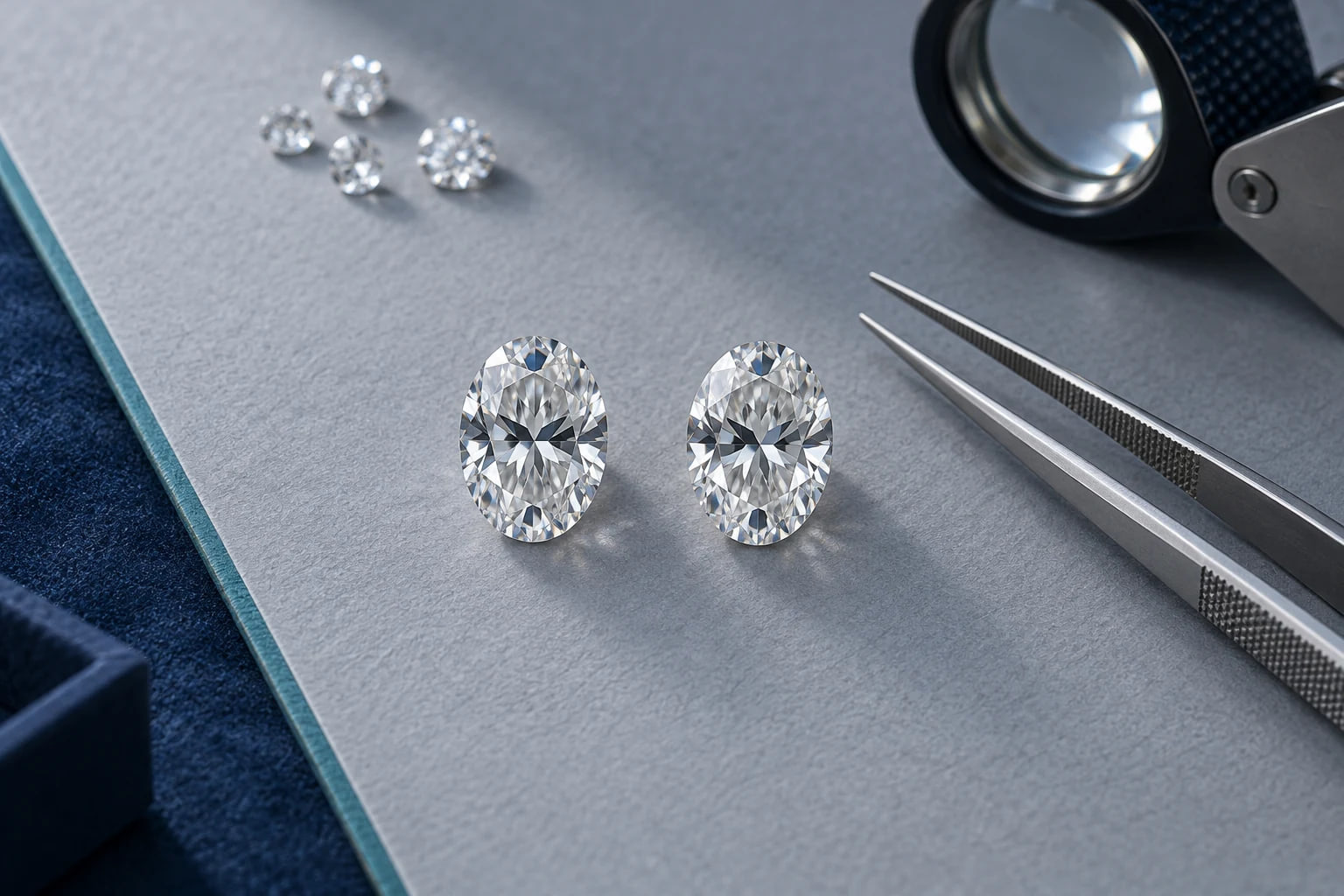
CVD and HPHT describe diamond growth methods, not a complete purchasing specification. When these details matter to your product proposition or customer documentation, include the requirement in your brief and ask how it will be supported. Do not assume that knowing the growth method tells you the stone’s appearance, setting suitability or commercial value. Those decisions still depend on the particular product, the information supplied and your intended use. A useful sourcing conversation keeps the growth description alongside the other characteristics rather than allowing one label to replace the rest of the selection.
Read comments about growth and treatment as they are written on the actual report. IGI states that growth-process and treatment information can be included upon request; you should therefore check the report product and its comments instead of assuming that every document contains identical information. See IGI’s report description. If your brief requires a specific disclosure, make that requirement explicit before choosing the stone. Where wording is unclear, ask for clarification or the appropriate laboratory service rather than rewriting the comment into a stronger claim for your own product page.
For your retail presentation, keep product identity and supporting information consistent from the supplier record to the customer-facing listing. If you offer multiple sourcing options, maintain an item-level record of what applies to each one. A generic statement copied across a collection can become inaccurate when the supplied products differ. The practical aim is straightforward: choose a stone that meets your collection needs and describe it using information you can support. Your brand can build its story around design, appearance, service and customer experience without claiming that a growth-method label guarantees all of those qualities.
Read the Report Product, Not Just the Laboratory Name
When you request a report, specify what information you need and confirm which service provides it. IGI’s laboratory-grown diamond reports and GIA’s current laboratory-grown diamond services do not use one interchangeable format. GIA currently lists a Quality Assessment for eligible colorless to near-colorless loose laboratory-grown diamonds using Premium or Standard classifications. Its colored-diamond report services have a different scope. Review GIA’s current services. An older comparison chart or a supplier’s shorthand may not describe the document you will actually receive.
Keep the report number and item reference connected throughout the order. Use the issuing laboratory’s official verification service and compare the returned record with the document provided. GIA offers Report Check, and IGI provides verification from its report service page. A successful database lookup establishes that the laboratory has a record with that information; relating the delivered stone to the record still requires appropriate item checks. The report is useful evidence about the examined product, while your order confirmation defines the commercial agreement with the supplier.
Avoid creating a direct grade conversion between different assessment systems unless the issuing organizations provide one. For purchasing, a more useful comparison is whether the offered documentation gives you the information needed for the product and selling channel. Record any additional viewing, matching or setting requirements separately. You may still need representative media or a sample to make those decisions. If you are buying a mixed order, identify which lines require individual reports and what information is expected for the remaining lots. This gives the supplier a clear documentation scope without treating every category of stone as the same buying task.
| Documentation question | Practical buying action |
|---|---|
| Which report or assessment is included? | Ask for the service name and a relevant sample format |
| Which item does it describe? | Keep the item reference and report number linked |
| Can I verify the record? | Use the issuing laboratory’s official verification service |
| Does it cover my purchase requirements? | Record appearance, matching and setting needs separately |
| Can I compare two different systems directly? | Compare scope and product suitability without inventing grade equivalence |
Approve Samples That Represent the Order You Intend to Buy
A sample should answer a purchasing question. If your uncertainty concerns how a pair will look together, review the pair. If you are choosing a quality range for an everyday collection, compare relevant options in the setting or presentation you intend to use. A single attractive loose stone may not tell you enough about a matched assortment or a repeat production lot. Explain the decision you want to make when requesting samples, then connect the sample references to the proposed bulk selection. That makes the review useful to both your team and the supplier.
Keep the viewing conditions reasonably consistent when you compare alternatives. Different backgrounds, lighting or image processing can make supplier videos difficult to judge side by side. Ask for comparable views where available and use physical samples when the decision warrants them. Record what you approve in plain language: the outline works with the design, the pair appears consistent, or the size suits the mounting. If a sample is modified or replaced, update the approval reference. Otherwise, a later discussion about “the approved sample” may refer to different objects for different people.
For a first order, agree the next step before the sample review ends. You might approve the selection, refine one requirement or narrow the collection to the most convincing designs. Include your production or setting contact when their input affects fit. MEITUO’s low-MOQ sourcing support can help you connect this learning to a focused initial purchase rather than a broad commitment made before the collection is ready. Product-specific quantities, customization and schedules can be discussed together as the range takes shape. The outcome you want is a clear purchasing decision with a reference you can use again.
Compare the Complete Order Cost, Not an Isolated Stone Price
A meaningful price comparison starts with the same product definition. Check that both offers use the same quantity unit, quality basis, matching scope and documentation request. Then identify the charges included in each total. Shipping, packaging, documentation, insurance and other order-related costs may appear separately or be included in the quoted amount. Do not add an included charge twice. If two suppliers quote different delivery scopes, align those assumptions before deciding which offer works better for your business. The lowest headline number may describe a different purchasing arrangement.
For budgeting, separate the cost of the diamond order from the cost of running the finished jewelry business. The planner below allocates the entered order charges across the purchased quantity. It does not calculate customer acquisition, jewelry manufacturing, customer returns or net profit. If your team needs to budget these items, keep them in the collection’s wider commercial model. This separation makes the procurement decision clearer: you can see what it costs to acquire the specified stones, then decide whether the finished offer has enough room for the other costs it must support.
Consider an illustrative cost example, separate from current wholesale prices or a MEITUO quotation. Thirty stones at an assumed USD 120 each, plus USD 90 freight, USD 60 documentation and USD 150 of other charges, create an order total of USD 3,900, or USD 130 per stone. Compare the actual offer using your own known charges. If a charge is unknown, resolve it before treating the result as a final budget. Use the comparison to ask better questions and compare equivalent offers, rather than to infer a market price from a sample calculation.
Choose a Stock, Low-MOQ or Single-Order Supply Approach
Holding stock can support your own presentation and fulfillment process, while a low-MOQ launch lets you learn from a smaller commitment. Single-order dropshipping can place purchasing closer to an individual customer order. These approaches serve different operating needs; none removes the work of choosing a clear offer, presenting it accurately and serving your customer. Decide who holds the goods, who approves the product, how the order moves between partners and what your customer is told. The supply model should support the promise you can actually deliver through your store or sales team.
Compare the working-capital implications alongside the operational responsibilities. An inventory order commits cash earlier and requires a plan for the assortment you hold. A smaller opening order preserves more flexibility but still needs a workable replenishment process. A dropshipping arrangement calls for clear item information and coordination around each customer order. MEITUO supports low-MOQ selection and one-piece or single-order dropshipping, together with product materials, packaging and logistics coordination. We help you connect these services to a focused collection rather than treating access to more products as a complete business strategy.
Your first model does not have to become a permanent rule for every product. You might hold a small core range for presentation, source selected options to order and expand the held assortment as demand becomes clearer. Write down the purpose of each category so the team understands why it is being purchased that way. A useful review considers sales feedback, service workload and the cash tied up in the range. For a deeper discussion of partnership models, explore our small-batch launch and dropshipping solutions.
| Compare | Hold a defined inventory | Start with low MOQ | Supply individual orders |
|---|---|---|---|
| Main use | Support your own stock-led offer | Validate a focused opening range | Connect purchasing to customer orders |
| Cash decision | Fund the selected assortment in advance | Limit the first product commitment | Budget product and service costs per order |
| Main coordination task | Stock allocation and replenishment | Samples, launch feedback and follow-up buying | Item information, packaging and delivery handoff |
| Useful review question | Which held products justify reordering? | What did the first purchase help us learn? | Can the customer promise be supported consistently? |
Build Your Product Presentation While You Source
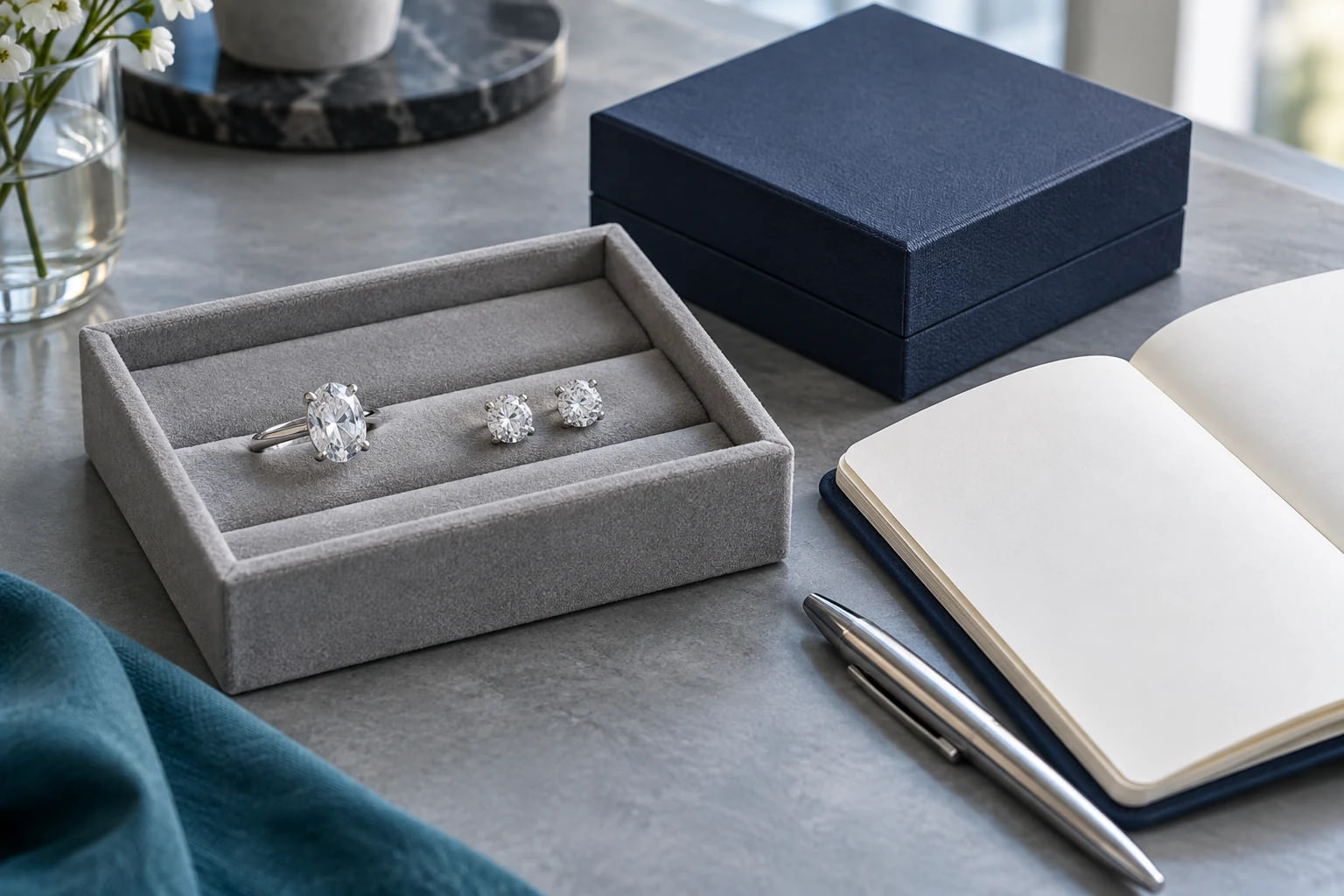
An approved product still needs a clear customer-facing explanation. Decide which photographs, videos, specifications and documentation details your sales channel requires before the order is complete. A center-stone listing, a finished-jewelry collection page and a trade product sheet need different information. Ask for the available materials and connect them to the exact product or relevant selection they describe. Where imagery shows a representative design rather than the supplied item, make that relationship clear in your own presentation. Good materials reduce uncertainty when a customer compares options or asks a follow-up question.
MEITUO supports online product materials, including product images, video, specification copy and collection presentation resources. We also support packaging and brand customization so you can connect the product selection with a recognizable buying experience. Use those resources within your own positioning: who the collection is for, why the designs belong together and what service the customer can expect. The support helps you prepare the offer, while your business remains responsible for the customer relationship, selling-channel requirements and final presentation. A consistent product story is more useful than adding every available image to a page.
Keep a simple material register linked to your product references. Record which assets you may use, what each asset represents and which details change when a product option changes. This helps avoid a familiar sourcing problem: the sales team keeps using an earlier image or specification after the purchased selection has been revised. When the first order is ready, review the product page or trade sheet against the final order information. That small alignment step makes the handoff from purchasing to selling more reliable and gives you a repeatable way to launch the next collection.
Make Your First Order the Foundation for Repeat Supply
The value of a first order is partly the information it creates. Keep the agreed specification, item or lot references, sample decision, quote version and final delivery information together. After the order has been reviewed or used in production, record what worked and what needs adjusting. A repeat request can then describe the previous purchase accurately instead of asking a supplier to remember an informal conversation. This matters especially when a design relies on coordinated appearance or a mounting requires particular measurements. Reordering a familiar product still benefits from a clear reference.
Define how changes will be discussed. If an equivalent option is proposed, identify which characteristics must remain fixed and who can approve the difference. If a customer order depends on a specific item, keep that requirement visible. For replenishment planning, compare your actual purchasing and sales cycle with the timing communicated for the next order. Avoid building your own customer promise around an unconfirmed availability assumption. Your team and the supply partner should work from the same current information as quantities, designs or destinations change.
Finish the first cycle with a commercial review rather than an automatic expansion. Which products generated useful customer conversations? Which required too much explanation or coordination? Which specifications proved important, and which choices made the range harder to manage? Use those observations to improve the next brief and focus the next purchase. We support ongoing supply coordination so your collection can develop through clearer requirements and more informed buying decisions. Our bulk replenishment solution explains the partnership context; this guide gives you the purchasing record that makes the discussion concrete.
Turn Your Buying Plan Into a MEITUO Sourcing Brief
MEITUO is a lab-grown diamond sourcing and supply-chain partner for jewelry brands, wholesalers, retailers, designers and other business buyers. We bring product selection, supplier coordination, quality requirements and order follow-up into one connected conversation. You can discuss loose center stones, melee, side stones, matched pairs and coordinated selections in relation to the jewelry you want to sell. Our role is to help you connect the product details to a workable purchasing plan and carry those details through the order.
For a developing collection, we support low-MOQ selection, competitive supply-chain pricing, single-order dropshipping, product materials, packaging, brand customization and logistics coordination. Choose the support that fits your business stage. You might need a focused sample selection before committing to a range, or a more organized process for repeat purchases of an established design. Share your customer group, intended product, specifications, quantity and delivery destination. We can then discuss the relevant selection and service requirements together. Use our contact form to organize that starting point and prepare a message for our team.
Share the details you know. Product quantities and project scope can be confirmed in conversation.
Wholesale Buying Questions
What Should I Decide Before Contacting a Lab-Grown Diamond Wholesaler?
Start with the jewelry you intend to sell, your customer group and the stone’s role in the design. Then describe shape, dimensions, quality requirements, quantity unit, documentation and destination. You do not need every detail finalized before the first conversation. Mark unresolved questions so the supplier can propose relevant options. A focused brief is more useful than requesting a general price list without a product or collection context.
Is There One Standard Minimum Order Quantity for Wholesale Lab-Grown Diamonds?
There is no single MOQ stated by this guide for every product and service. MEITUO supports low-MOQ selection and single-order dropshipping, while the relevant quantity discussion depends on the item, selection work and project. Tell us whether you are requesting samples, a first collection or replenishment. That gives the conversation a practical basis and lets you compare offers using the same quantity and service scope.
Should I Buy Diamonds by Carat Weight or Millimeter Size?
Record both when both matter to the design. Carat weight describes mass, while millimeter measurements help you evaluate physical dimensions and setting fit. A center-stone offer may emphasize individual weight and documentation; a melee requirement may begin with the dimensions needed for production. Use the intended jewelry to decide what must be fixed, then confirm the quantity unit used in the quote.
Should I Choose CVD or HPHT Diamonds for My Collection?
Choose the specific product against your appearance, design, documentation and budget requirements. A growth-method label alone does not answer those questions. If the method or treatment disclosure is part of your product proposition, include that requirement in the brief and check the relevant supporting information. Keep the final product description aligned with the actual item or lot you source.
Can I Compare Current GIA and IGI Lab-Grown Reports Using the Same Grade Table?
Do not assume that the report products or classifications are interchangeable. Review the current service and the actual document offered. This guide links to each laboratory’s service information so you can check scope directly. For your purchasing decision, identify the information you need, connect the report to the item and keep additional appearance or matching requirements in the order specification.
How Much Should I Budget for My First Wholesale Order?
Use the actual unit price and quantity, then add the order charges you will pay that are not already included. The planner in this guide shows how to allocate those entered costs across the order; its defaults are hypothetical. Keep a separate budget for the finished jewelry, marketing and customer service. Your first purchase should support a clear learning or sales objective rather than use all available cash simply to increase assortment breadth.
Can MEITUO Help Me Prepare Product Materials and Branded Packaging?
Yes. We support product images, video, specification copy, collection presentation resources, packaging and brand customization. Explain your intended channel and collection identity so the materials can support a coherent offer. During planning, connect each asset to the relevant item or design and confirm the product-specific customization, quantities and timing together with the sourcing requirements.
What Should I Keep After Approving My First Order?
Keep the final brief, quote version, sample or item references, agreed changes and delivery information together. Add feedback from receiving, setting or customer conversations as it becomes available. This record helps you request a repeat selection, discuss an alternative and improve the next purchase. It also keeps product information consistent between the person buying the diamonds and the team presenting the jewelry to customers.
Sources and Editorial Notes
Technical statements draw on the primary sources below, reviewed on October 27, 2026. The collection, budgeting and workflow recommendations are our practical buying guidance. They are not laboratory findings or market statistics. Service descriptions follow MEITUO’s company materials and current partnership scope.
- IGI: Laboratory Grown Diamond Report. Report information, growth and treatment comments, and official verification access.
- GIA: Laboratory-Grown Diamond Services. Current Quality Assessment and colored laboratory-grown diamond report services.
- IGI: The 4Cs, Carat Weight. The distinction between carat weight and physical dimensions.
- GIA: Report Check. Official report verification entry point.
The order planner uses user-entered assumptions and is not a quotation.