 English
 Español
 Português
 Deutsch
 Français
 Italiano
 Nederlands
 العربية
 日本語
 한국어
 ไทย
The diamond comparison guide
Lab-Grown vs
Natural Diamonds.
Choose With Clarity.
The diamond beauty you want, with more room in your budget. Understand the science, compare the details, and explore a more accessible diamond choice with MEITUO.
01 / Understand the choice
What Is a Lab-Grown Diamond?
And What Makes It Different?
A laboratory-grown diamond is diamond created through a controlled growth process. A natural diamond forms through geological processes. The origin changes; both belong to the diamond material category.[1]
Start with what you want the finished piece to do. You might want an expressive engagement ring, a carefully matched pair of earrings, a memorable gift, or a commercially repeatable jewelry collection. In each case, the right comparison goes beyond a headline carat weight. It should connect the look, the documentation, the design and the complete purchase cost.
Lab-grown diamonds are a compelling alternative when the priority is diamond appearance at a more accessible price. Natural diamonds remain a meaningful choice for people who specifically value geological provenance and natural rarity. This guide helps you make that distinction, then turns it into a practical purchasing brief.
02 / The complete VS table
Lab-Grown vs Natural Diamonds:
What Stays, What Changes.
Compare material properties and buying priorities side by side. Equal material values do not mean every individual stone has equal quality.
Swipe horizontally to compare all four columns →
| What to compare | Lab-grown diamond | Natural diamond | What it means for you |
|---|---|---|---|
| Material identity | Diamond grown in a controlled production environment | Diamond formed through natural geological processes | Both are diamond; origin is different. |
| Primary chemistry | Carbon · C | Carbon · C | Not cubic zirconia or moissanite. |
| Crystal structure | Diamond cubic crystal structure | Diamond cubic crystal structure | The arrangement of carbon creates diamond properties. |
| Mohs hardness | 10 | 10 | Excellent scratch resistance; neither is chip-proof. |
| Refractive index | Approximately 2.42 | Approximately 2.42 | A material constant, not a sparkle score. |
| Specific gravity | Approximately 3.52 | Approximately 3.52 | Comparable material density. |
| Everyday appearance | Depends on cut, color, clarity and condition | Depends on cut, color, clarity and condition | Origin cannot reliably be judged by casual viewing. |
| Formation route | CVD or HPHT growth technology | Formation at depth, then geological transport | Two distinct origin stories. |
| Growth timescale | Commonly weeks; varies with production goals | Ancient geological formation; many stones over a billion years old | Age is not a measure of optical performance. |
| Price positioning | Generally lower for comparable specifications | Typically commands a natural-origin premium | Compare real, current, like-for-like quotes. |
| Individual characteristics | May contain growth features, inclusions or color nuances | May contain inclusions, color zoning or other features | Inspect the actual stone, not just the category. |
| Origin identification | Specialist screening and laboratory testing | Specialist screening and laboratory testing | A basic thermal tester cannot prove origin. |
| Documentation | A laboratory-grown report or assessment, when ordered | A natural-diamond report, when ordered | Report scope and terminology depend on the laboratory. |
| Resale planning | Do not assume a reliable resale return | Do not assume retail purchase price will be recovered | Treat a jewelry purchase as consumption, not a promised investment. |
| Environmental assessment | Depends on energy, operations and traceability | Depends on mine, operations and traceability | A blanket category label does not establish impact. |
| Best-fit priority | Diamond appearance, budget flexibility and design choice | Natural provenance, geological history and rarity | Choose the value that matters to your purchase. |
Material and identification references [1] [2]; appearance [4]; durability [5]; reporting [6] [7]. Price is a category-level observation, not a quote.[3]
03 / The material behind the beauty
Carbon. Crystal Structure.
Diamond Properties.
Both origins have the defining properties of diamond. The arrangement of carbon atoms is central to those properties; “made of carbon” alone is not enough to describe a gemstone.[2]
Each row has its own display scale; values are not comparable between rows. Mohs is an ordinal scale, not a linear strength measure. These are material reference values, not tests of the pictured stones.[2]
The useful buying distinction is between a material property and an individual quality result. A refractive index does not tell you whether a particular stone has attractive proportions. A hardness value does not tell you whether the setting protects a pointed tip. An origin description does not replace a review of the actual appearance.
For that reason, MEITUO's sourcing conversation should begin with the intended use and an acceptance standard. For one ring, that might mean a preferred outline and a face-up video. For a wholesale parcel, it might mean a measurement range, matching rules and a defined screening or reporting scope.
04 / How diamonds are made
Three Routes.
One Gemstone Material.
Explore CVD, HPHT and natural formation. The illustrations explain the principle; the purchasing checks focus on the stone you will receive.
CVD: Carbon Grows Onto a Diamond Seed.
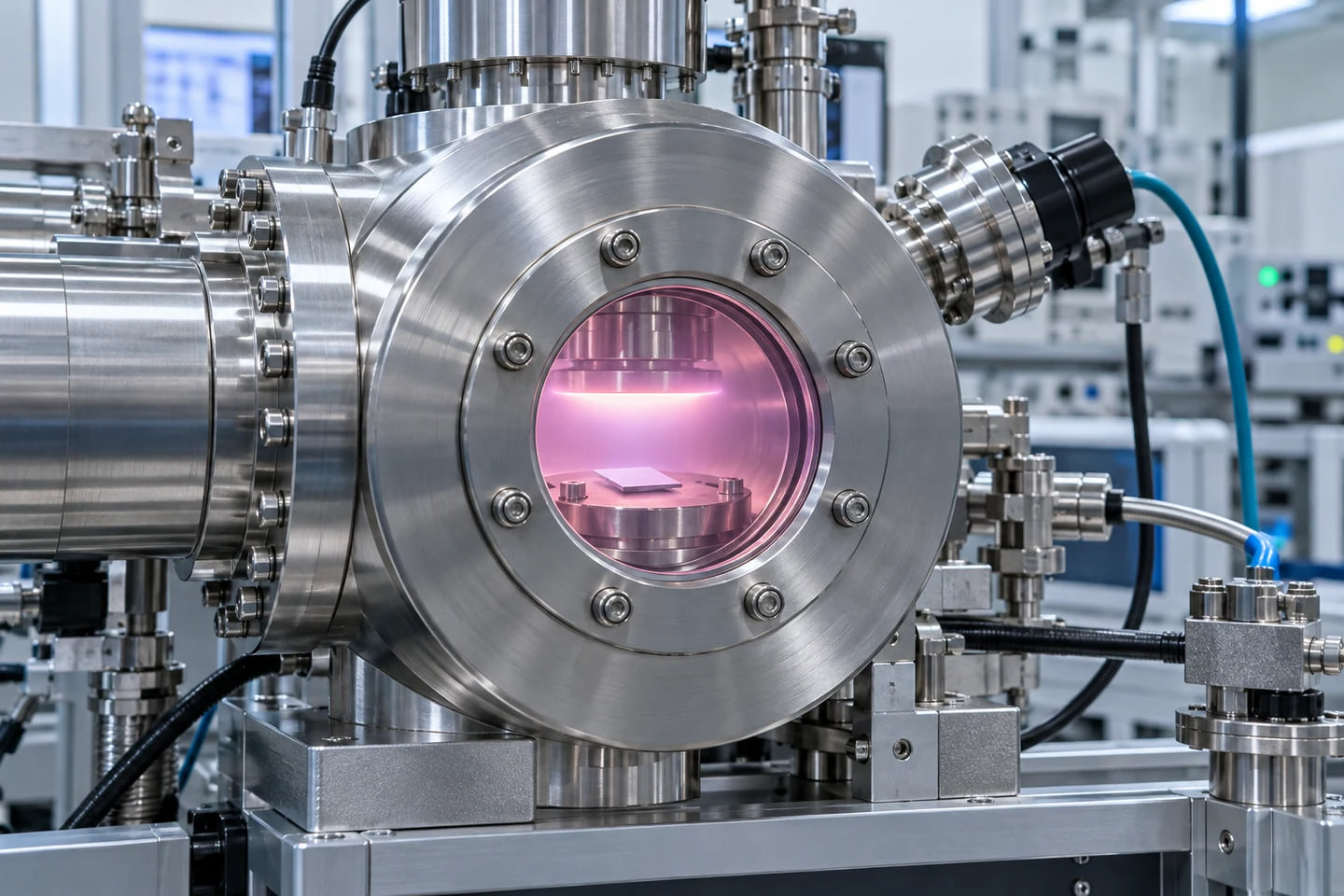
Chemical vapor deposition uses a prepared diamond seed in a controlled chamber. A carbon-containing gas and hydrogen are activated into a plasma; carbon builds onto the seed as diamond. The rough crystal is subsequently evaluated and fashioned into a gemstone. This is crystal growth, rather than a coating applied to a finished imitation.[3]
Diamond Seed
A prepared diamond plate provides the growth surface.
Activated Gas
A carbon-containing gas mixture is energized inside a chamber.
Crystal Growth
Carbon joins the seed as additional diamond material.
Evaluation & Cutting
Rough is assessed, cut, polished and documented.
CVD describes how the crystal grew. Any subsequent color treatment is a separate disclosure. Process diagram is conceptual, not to scale.
HPHT: Controlled Pressure and Heat.
High-pressure, high-temperature growth uses a small seed, a carbon source and a metallic solvent or catalyst under controlled pressure and heat. Carbon reaches the seed and crystallizes as diamond. It is another production route to diamond material, rather than a different gemstone species.[9]
Seed & Carbon
A seed and carbon source are placed in a growth cell.
Pressure & Heat
A press establishes the controlled growth environment.
Carbon Crystallizes
Dissolved carbon feeds the growing diamond crystal.
Finishing & Checks
The rough is evaluated, cut, polished and checked.
HPHT growth is distinct from HPHT treatment after growth. A CVD-grown diamond can also receive post-growth HPHT treatment.
Natural: A Geological Origin.
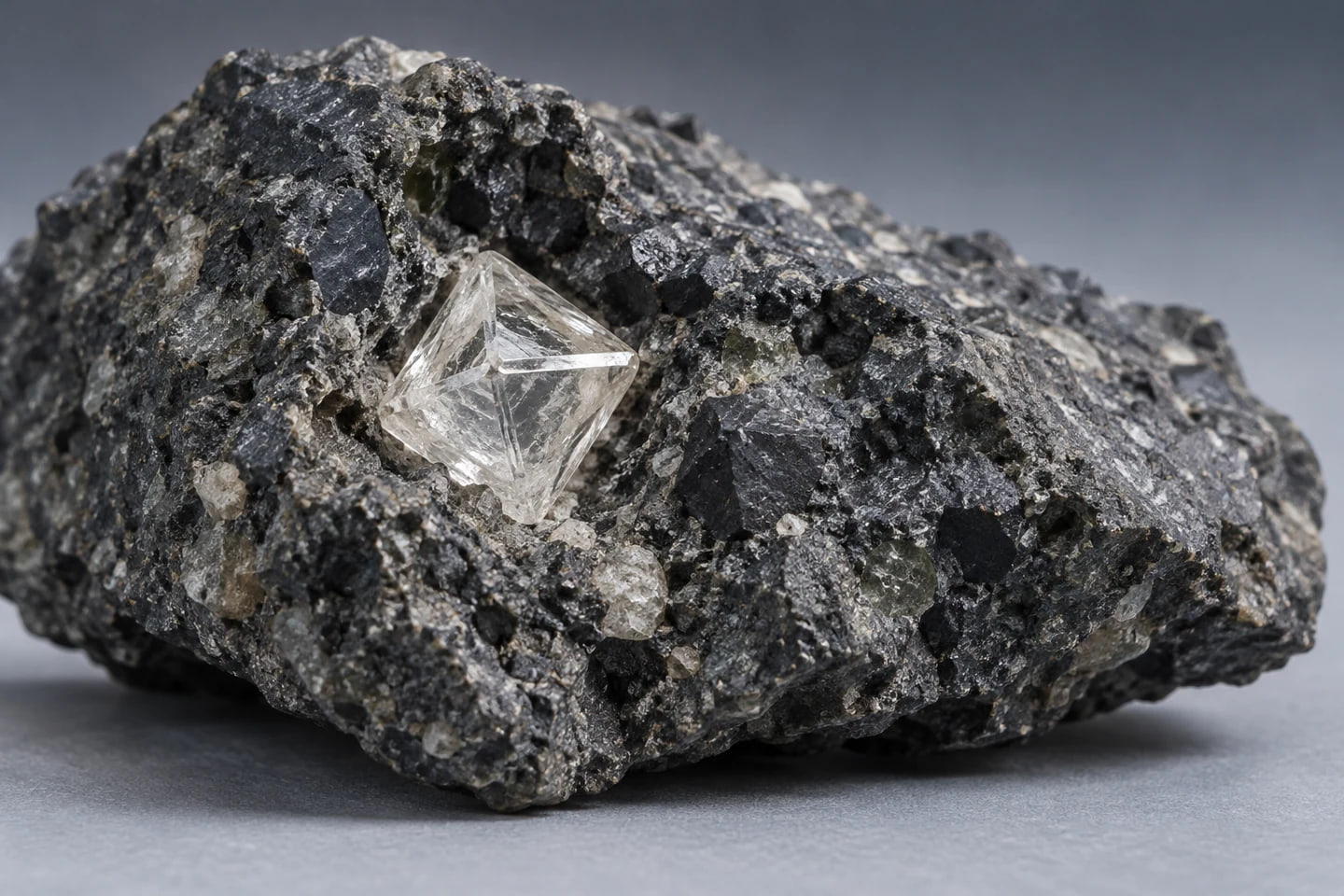
Natural diamonds originate through geological processes at depth. Some are carried toward the surface by volcanic events and are later recovered from primary deposits or secondary deposits. The time attached to their origin refers to geological history; it is not a polishing or jewelry manufacturing timescale.[1]
Geological Conditions
Carbon crystallizes under suitable conditions at depth.
Transport & Deposits
Geological processes move and concentrate material.
Recovery & Sorting
Diamond-bearing material is recovered and sorted.
Cutting & Reporting
Selected rough is fashioned and assessed.
Geological illustration simplifies multiple natural formation and deposit pathways. Ancient age is not a claim about how long each individual crystal grew.
After growth or recovery, rough still needs selection, cutting and polishing. A buyer is purchasing a finished result with an agreed description. Ask for growth method and any post-growth treatment to be disclosed where relevant; do not confuse the two. For repeat purchasing, keep those requirements in the written specification so they are checked at the selection stage rather than discussed only after delivery.[9]
05 / What your eyes actually see
Do Lab-Grown Diamonds
Look Like Natural Diamonds?
In casual viewing, origin is not a reliable visual distinction. The more useful question is how well the specific stone looks in the conditions where you will wear or sell it.[1]
The Diamond Look Comes From Material and Cut.
Brilliance describes the return of white light; luster is the appearance of reflected light at a surface. Lab-grown and natural diamonds share diamond optical properties, while the visible result also depends on polish, facet arrangement and lighting. A dull photograph can reflect the setup rather than the origin of the stone.[4]
Color Flashes and Sparkle Are Not Origin Badges.
Fire is the separation of white light into spectral colors. Scintillation includes flashes and changing light-dark patterns as the stone, viewer or light moves. Both diamond origins can show these effects. Compare movement, contrast and balanced patterning rather than assuming that more edited sparkle in an advertisement means a better diamond.[4]
Compare the Outline You Will Actually See.
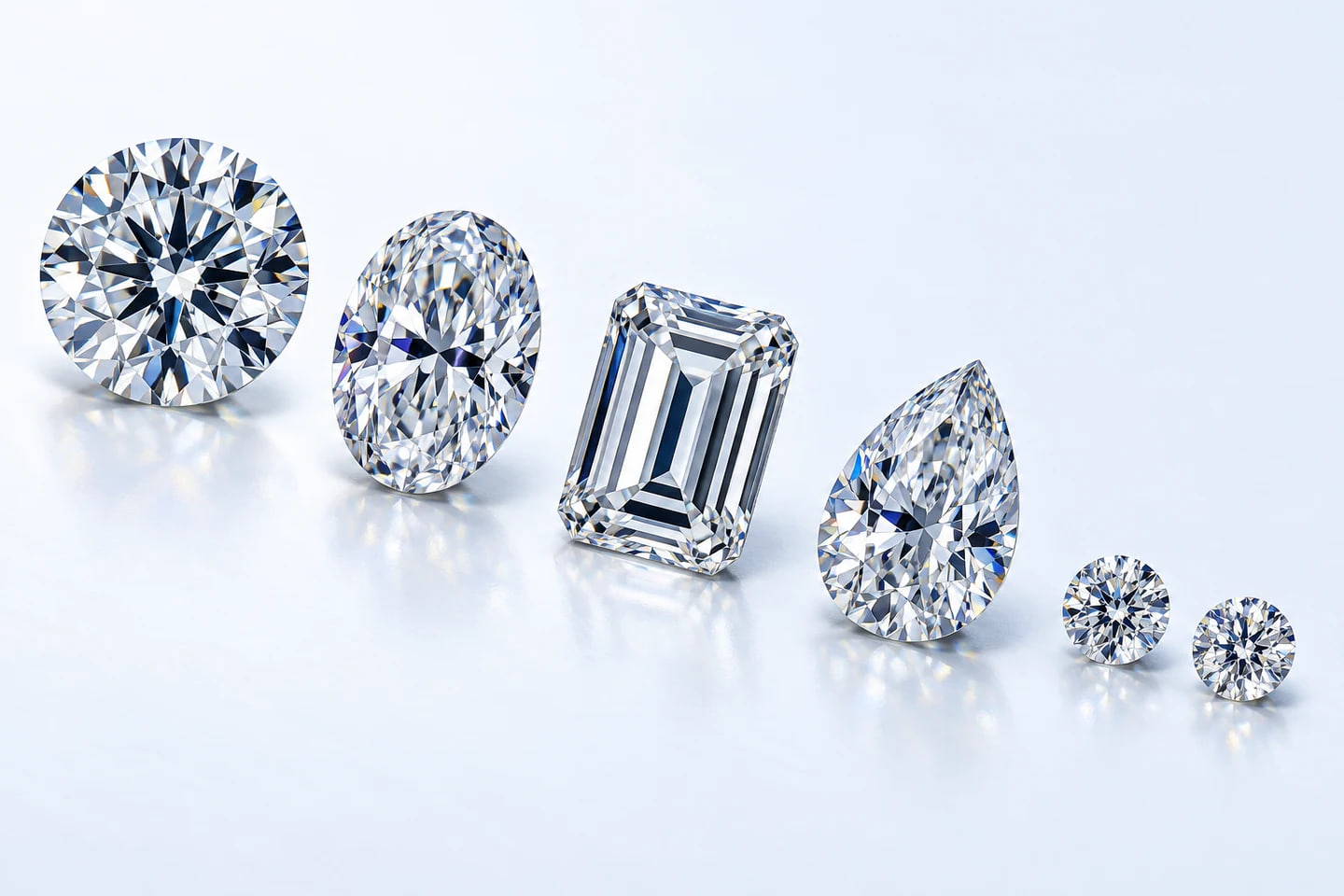
An oval, emerald cut and round brilliant can have very different looks at the same weight. For buying decisions, record millimeter measurements and the outline ratio alongside carat weight. Ask about symmetry, corners, tips and the setting dimensions; a beautiful loose stone still needs to suit the final jewelry design.
Hardness Is Not the Same as Toughness.
Both diamond origins are highly resistant to scratching, but diamonds can chip or fracture. Corners, points, very thin girdles and damaged settings deserve particular care. Choose a setting that suits the shape, avoid hard knocks, and arrange inspection if a stone becomes loose.[5]
Check Appearance Before You Commit.
Ask for a realistic selection view, not only an enhanced marketing image. Review the stone face-up and from the side, then relate its dimensions to the setting. For a batch, decide how visual matching will be judged. For an individual purchase, prioritize the characteristics you can actually see and enjoy.
06 / Price, value & the complete budget
Why Choose Lab-Grown?
More Room for Your Design.
Laboratory-grown diamonds generally trade for less than comparable natural diamonds. That makes them an attractive route to diamond jewelry when budget flexibility matters.[3]
The saving is most useful when it supports something you care about: a preferred stone size, a more distinctive shape, a custom setting, matched earrings, or a stronger starting assortment for your business. A low number on its own is not the full value proposition. Compare a stone that meets your brief and a supplier process you can understand.
MEITUO's source-focused approach connects your brief with China-based supply options and a clearly scoped quotation. Ask for source-factory pricing on the actual specification and quantity, then review what the offer includes. Sourcing, selection, reports, custom work, packaging and delivery can each affect the complete cost. The objective is a competitive, reviewable offer rather than an unqualified promise to be the cheapest.
Compare the Complete Quotation
Ask for offers with matching specifications, documentation and delivery scope. Review all included charges before comparing the totals.
Plan Around Your Design
Discuss your product, budget and priorities with our sourcing team. The actual selected goods and service scope determine the quotation.
Discuss Your BudgetMatch the Stone Specification.
Use the same shape, a close weight range, comparable face-up measurements and an agreed quality level. Include reporting scope and disclosed treatments. If the options differ, describe the difference before calling one a better deal.
Match the Complete Cost.
Compare stone-only against stone-only, or complete order against complete order. Include any setting, custom work, documentation, transport, insurance and destination charges that apply. Ask which costs are estimates and which are confirmed.
Separate Enjoyment From Resale.
A piece of jewelry can carry personal meaning without a guaranteed financial return. Review any resale or upgrade policy in writing. Choose a purchase you are comfortable owning; do not use an assumed future sale to justify an unaffordable order.
07 / From comparison to a real piece
A Diamond Choice That Fits
the Way You Buy.
Bring the comparison into an engagement ring, a gift or a repeatable product line. The selection standard should follow the final use.
Lab-Grown Diamond Engagement Rings
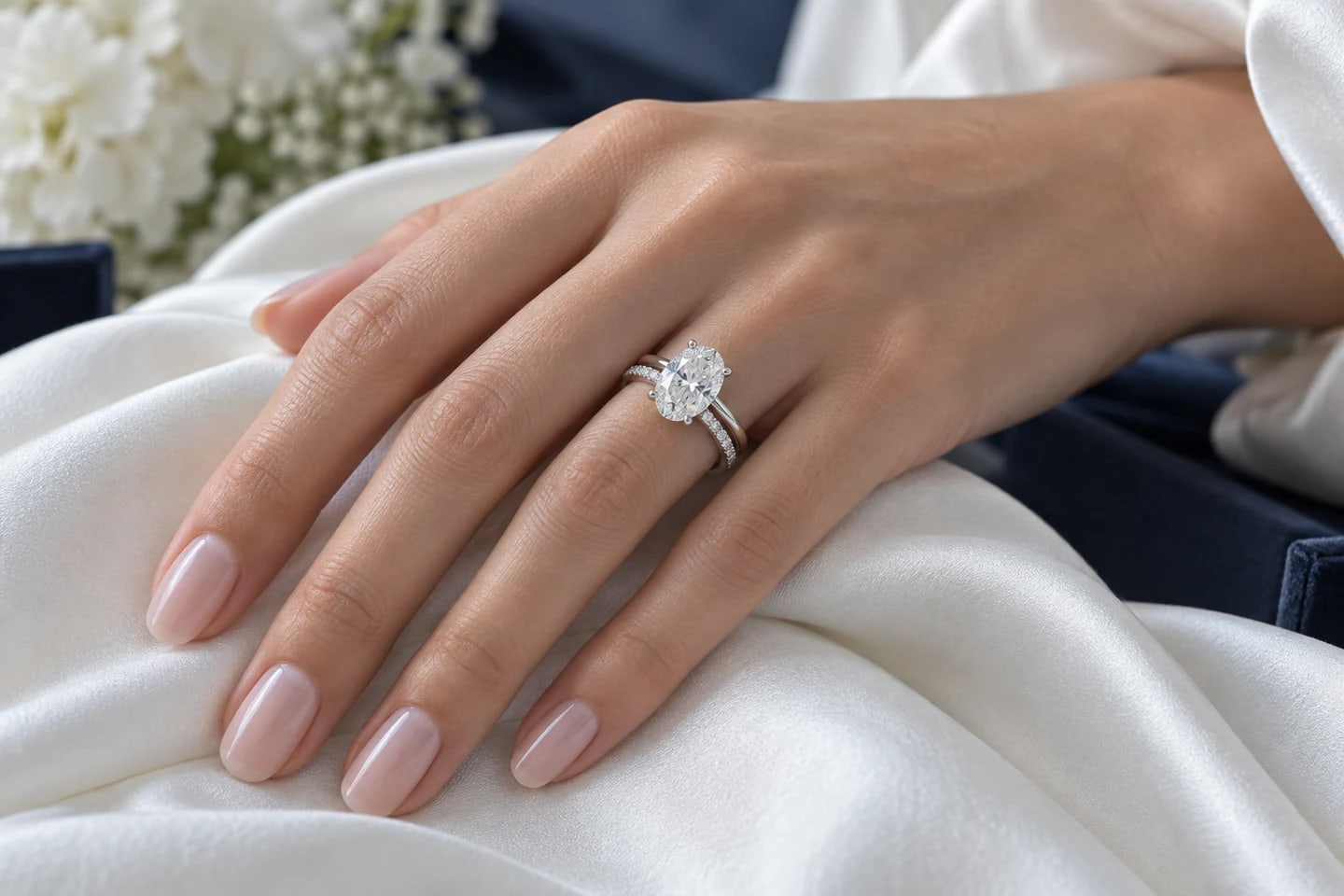
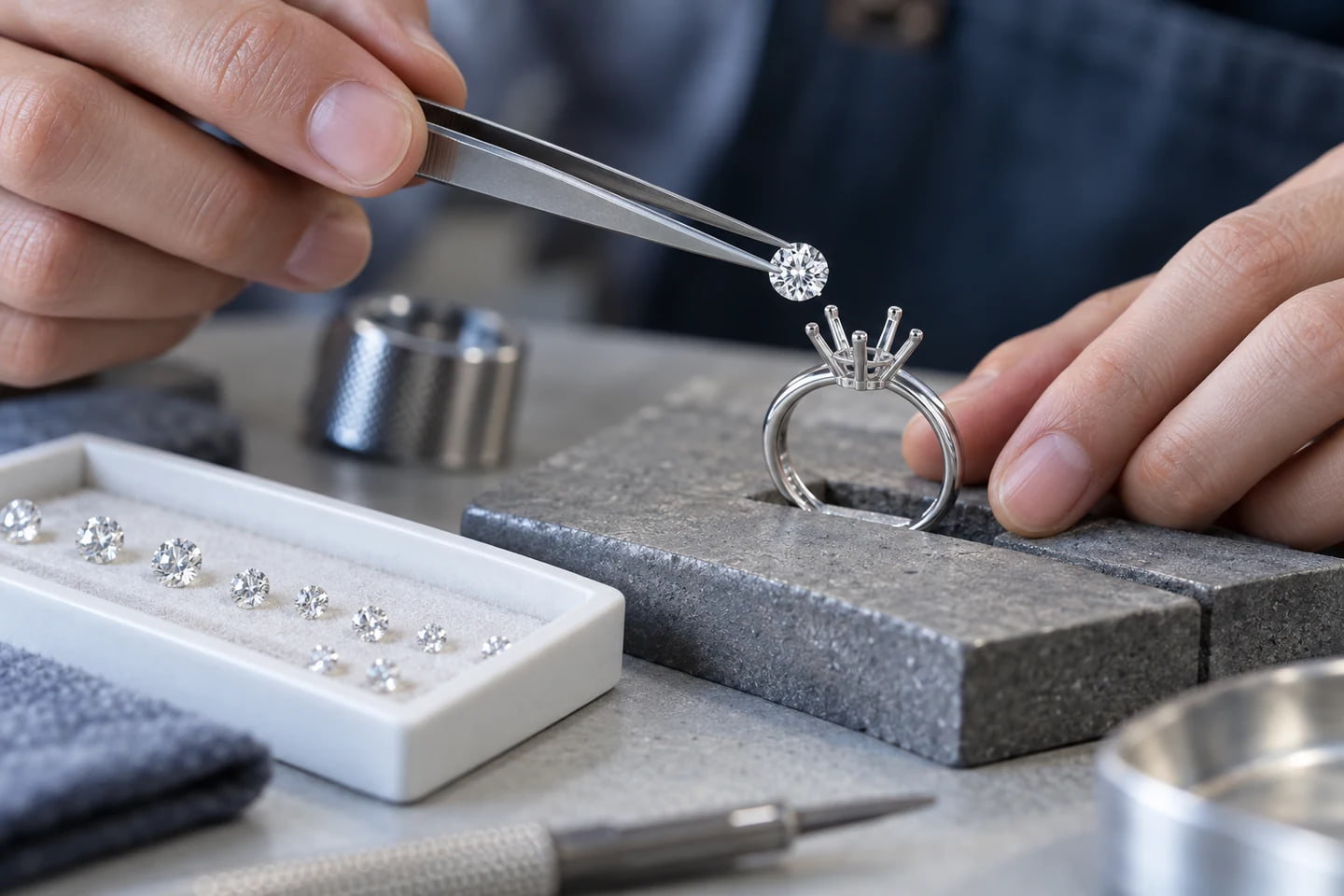
An engagement ring usually starts with a personal preference: a round silhouette, an elongated oval, a clean emerald cut, or a distinctive pear shape. Laboratory-grown center stones give buyers room to explore those preferences while keeping the full ring budget in view. Begin with the desired outline, comfortable setting height and everyday wear, then shortlist stones.
A larger stone is only useful if the proportions and setting work together. Ask for the actual millimeter spread, profile, video and setting compatibility before final approval. For a custom ring, agree on metal, ring size, prong style, finishing, engraving and the approval sequence. Request a separate allowance for design work, setting labor and delivery so the attractive stone price remains meaningful within the complete order.
Diamond Earrings, Pendants & Gifts
For earrings, a convincing match often matters more than chasing the highest individual grade. Request a pair that works together in outline, face-up dimensions, color appearance and light behavior. For a pendant, consider how the silhouette hangs, how much metal is visible and whether the design will be worn alone or layered with other pieces.
Retail customers can begin with one pair or one center-stone brief for feasibility review. Jewelry designers and small retailers can request coordinated center stones and accents for a focused collection. A documented reference selection helps later reorders, although every new parcel still needs approval. For gifts, packaging, delivery privacy and any personalization should be agreed in writing before the order is confirmed.
Custom Jewelry & Wholesale Collections
A collection brief has different priorities from a one-off purchase. It needs repeatable sizes, sensible grades, matching rules and a cost structure that supports the finished design. MEITUO can discuss loose center stones, melee accents, side stones and matched sets, with the final supply scope confirmed against the product and supplier capabilities.
Start with a pilot selection and a written acceptance checklist. Define stone count, total weight conventions, size tolerance, color band, clarity expectations and the evidence required before dispatch. If finished jewelry or private packaging is requested, confirm manufacturing scope, sampling, intellectual property arrangements and quality responsibilities separately. The goal is a selection that can be reviewed and reordered with less ambiguity, rather than a long list of grades without a workable design.
08 / MEITUO supply & partnership
Source-Focused Value.
Services Shaped Around Your Order.
From one personal project to a wholesale assortment, start with a clear brief. MEITUO coordinates China-based sourcing and discusses the services your purchase needs.
Wholesale Lab-Grown Diamonds
Build a request around the shapes, sizes and quantities you actually sell. We can discuss parcels, calibrated accents, center-stone assortments and matched sets through our China-based sourcing network. Specify whether you need individual reports, parcel-level documentation or reference samples, and ask for a current quote with the validity period stated.
Retail & Individual Purchases
A clear individual brief can be reviewed alongside trade enquiries. Share your target budget, shape, desired face-up size and jewelry plan. Request a shortlist with actual stone information rather than a generic stock image. Purchase availability, any minimum, payment, returns and after-sales terms are confirmed for the particular order before you commit.
Custom Diamond & Jewelry Sourcing
Bring a reference, drawing, measurement requirement or collection idea. We can coordinate a feasibility discussion covering stone selection, matched accents and the requested jewelry services. Custom cutting, finished settings, engraving or private packaging require a project-specific scope. Agree on the sample, approval stages and which changes affect price or schedule.
Lab-Grown Diamond Dropshipping
Request an order-by-order fulfillment plan rather than assuming every item can ship the same way. Discuss stock confirmation, dispatch evidence, neutral or branded packaging, recipient privacy, tracking, insurance and delivery exceptions. A pilot order should establish the packing standard, handover point, returns address and responsibility for loss, damage or an incorrect item.
Regional Distribution & Agency
We welcome a discussion about your territory, channels, customer profile and support needs. Start with a practical assortment and a pilot cooperation plan. Any exclusivity, sales target, marketing authorization, credit, warranty handling or territory protection requires a written agreement. An enquiry does not establish a protected region or automatic agency rights.
Selection, Documentation & Coordination
Ask us to coordinate the agreed selection information, report references, visual evidence, packing details and reorder record. Third-party testing, special screening, insurance and destination requirements should be defined in the brief. Confirm exactly what is included and which services carry a separate cost; a useful quotation makes those boundaries easy to understand.
Service enquiry pathways are shown above. Product availability, minimum quantities, pricing, service fees, destination coverage, timing and contractual terms are confirmed in the written offer. Source-focused sourcing does not imply ownership of a diamond-growth facility.
09 / A clearer sourcing process
Turn “Good Value” Into
a Specification You Can Approve.
Define the Purchase
Tell us who the order is for, the destination, quantity and budget. Add shape, weight or measurements, color and clarity preferences, growth-method restrictions and documentation needs. If you already have a natural-diamond quote, share the specification rather than only the price. That gives the comparison a usable starting point.
Compare Actual Options
Review the offered stone or parcel, supporting videos, measurements, report references and disclosed treatments. Decide whether a sample or independent inspection is appropriate. For matched items, approve them together. If an option changes, repeat the relevant approval instead of treating a similar grade as an automatic substitution.
Confirm the Full Landed Scope
Separate stone cost from setting, reports, packaging, transport, insurance and destination charges. Agree on currency, payment schedule, quotation validity, delivery responsibilities and the response to a failed inspection. For wholesale and dropshipping, document shortage, damage and customer-return handling before the first shipment is booked.
Approve, Dispatch & Record
Confirm the final selection and any custom details in writing. Request the agreed dispatch evidence and tracking information. Keep the specification, report references, approved imagery and packaging requirements as a reorder file. This creates a useful purchasing record even when future availability, pricing or lead time changes.
10 / Plan the offer for your market
Build Demand Through
a Focused Local Offer.
The following are market-entry considerations, not sales statistics or a forecast. Test the assortment and service model with your own customer data.
Serve Value-Conscious Buyers With Clear Origin Disclosure.
For a US-facing offer, make “lab-grown diamond” prominent in the product name and near the buying decision. The FTC guidance calls for a clear disclosure that the stone is not mined. Avoid presenting a natural-diamond report beside a laboratory-grown item in a way that could confuse the buyer. [8]
For your assortment plan, test a focused engagement and gift range before expanding. Ask local customers which shapes, budgets and service questions matter, then use actual enquiry and conversion data to guide replenishment. Do not treat a country label as proof of demand for a specific carat size. Confirm import, tax and consumer-sale requirements with the relevant local advisers.
Pair a Transparent Product Story With a Complete Purchase Scope.
A useful Europe or UK sales page explains origin, documentation, materials in a finished item and the actual delivery proposition. Translate the buying information for the intended audience and explain what is included in the price. If environmental performance is part of the pitch, request evidence for the specific source rather than relying on a generic laboratory-grown label.
For an assortment test, compare a restrained everyday range with a small bridal selection and measure which enquiries progress. Review local rules for distance sales, customization, returns, precious-metal descriptions, privacy and imports before launch. These are operational planning points, not a claim that every market shares the same buying behavior or legal requirements.
Explore Occasion-Led Collections With Local Partner Input.
A regional partner can help test gifting, bridal and custom design concepts against its own customer base. Present several stone sizes and design directions, then record which combinations receive serious enquiries. Private viewing materials, consistent product information and a reliable customization process may be more useful than a broad catalogue with no purchasing guidance.
Confirm language, preferred communication, local documentation and delivery arrangements during a pilot. Distribution terms should explain the territory, customer ownership, brand usage and after-sales responsibilities. No sales-volume or regional-demand claim is implied here: the purpose is to design a testable route to market with a partner who understands its customers.
Build a Compact, Repeatable Online Assortment.
For an online retailer or designer in Asia-Pacific, start with a small selection that is easy to explain and fulfill. Consistent stone imagery, millimeter dimensions, matching criteria and clear origin descriptions help customers compare options. Offer a controlled custom enquiry path for requests outside the initial range instead of listing every possible combination as available stock.
Use a pilot period to measure enquiries, approval rates, fulfillment exceptions and repeat orders. Review packaging, destination charges, screening needs and return logistics by country. The region includes very different markets; a shared website structure can support them, while the commercial terms and local consumer information still need to be confirmed separately.
11 / A purchase you can explain
Keep the Value Story Strong.
Keep the Claims Specific.
Origin Should Be Easy to Understand.
Use “lab-grown diamond” consistently in the product name, description and order information. Buyers should understand the origin before comparing prices. For a retail partner, that clarity also makes customer conversations easier and reduces the chance that an appealing photograph creates the wrong expectation.[8]
Environmental Claims Need Evidence.
Do not infer a carbon footprint or a universal environmental advantage from the growth label alone. Energy source and production practices matter. If this is part of your buying decision, request evidence tied to the actual source and clarify what a certificate covers. A grading document and an environmental assessment answer different questions.[3]
Value Includes the Buying Experience.
A useful supplier relationship makes selection, approval, delivery and follow-up easier to manage. Ask how a shortage is handled, how a custom change is approved and who responds to a delivery problem. These practical details can matter as much as a small difference in the initial stone quotation.
12 / Questions before you choose
Lab-Grown vs Natural Diamond FAQs.
Are Lab-Grown Diamonds Real Diamonds?
Yes. Laboratory-grown diamonds are diamond material with a manufactured origin. They should be described clearly as lab-grown so a buyer understands what is being offered. Moissanite and cubic zirconia are different materials and should be compared as separate gemstone choices, rather than being grouped into the same product category. [3][8]
Can You Tell Lab-Grown and Natural Diamonds Apart With the Naked Eye?
Casual visual inspection is not a reliable origin test. Do not rely on a photograph, sparkle level or a basic thermal tester to establish natural versus laboratory-grown origin. For a purchase that requires confirmation, use appropriate professional screening or a laboratory assessment and match the documentation to the actual stone. [1]
Why Are Lab-Grown Diamonds Usually Less Expensive?
IGI describes laboratory-grown diamonds as trading below comparable natural stones. A controlled production route and different supply economics support their value proposition, while natural origin has its own market premium. The amount you save is determined by current comparable offers, not a fixed percentage that applies to every shape, grade or seller. [3]
Will a Lab-Grown Diamond Lose Its Sparkle or Turn Cloudy?
Origin alone is not a reason to expect a beautiful stone to become dull in ordinary wear. Surface deposits and the condition of a jewelry setting can affect the appearance you see. Ask a qualified jeweler about cleaning and inspection for your specific item, particularly when the piece includes other gemstones, delicate settings or disclosed treatments. Judge the initial transparency and appearance before buying.
Are Lab-Grown Diamonds as Hard as Natural Diamonds?
Both have diamond hardness, conventionally 10 on the Mohs scale. This is resistance to scratching, not a promise that a stone cannot chip or break. Protect points, corners and girdles; remove jewelry for activities that expose it to hard impacts. Ask a jeweler to inspect any loose prong or visible damage. [2][5]
Is CVD Better Than HPHT?
Neither label is a complete quality grade. Ask for the actual stone information and evaluate the appearance and documentation against your brief. Also distinguish the initial growth method from any later treatment. If the project requires a particular method or treatment restriction, state it before reviewing a shortlist. [9]
Should I Choose an IGI or a GIA Document?
Choose documentation that fits the purchase, and read the actual format. IGI offers laboratory-grown diamond reports. Since October 1, 2025, GIA uses an overall Premium or Standard assessment for its D-to-Z laboratory-grown service; this is not identical to a traditional natural-diamond grading report. Check the issuing laboratory, issue date, reference number and scope. [6][7]
Does a Lab-Grown Diamond Have Resale Value?
Do not build your buying decision around a guaranteed resale return. Ask any prospective reseller for its current written purchase policy and an actual offer, including fees. The same discipline is useful when buying natural diamonds: a retail price and a future secondary-market offer are different transactions. MEITUO does not promise appreciation or a buyback value.
Can MEITUO Supply One Stone, Wholesale Parcels or a Custom Order?
Send the scope you need: an individual stone, a matched pair, a parcel, a custom selection or a jewelry project. We will discuss feasibility, available sourcing options, documentation and the commercial terms for that order. State whether your budget covers only the stone or also the setting, reports, packaging and delivery.
How Do I Request Dropshipping or a Regional Agency Arrangement?
Choose the relevant service in the enquiry brief and describe your channel, destination and expected order pattern. For dropshipping, include packaging and delivery requirements. For an agency discussion, include the proposed territory and customer base. Pilot scope, service responsibilities and any exclusive rights must be agreed in writing; they are not created by submitting the enquiry.
13 / Explore your options
Find the Lab-Grown Diamond
Format for Your Project.
14 / Start with your priorities
Your Diamond.
Your Budget.
A Clearer Starting Point.
Tell MEITUO what you want to create or supply. Build a brief for an individual purchase, wholesale diamonds, a custom project, dropshipping or regional cooperation.
Include the details you already know and leave the rest for discussion. A useful first response should clarify the sourcing scope, the information needed for selection and the terms that need to be confirmed. No payment or order commitment is created by preparing this brief.
Share the details you know. Product quantities and project scope can be confirmed in conversation.
Sources & editorial method
A Comparison Grounded in Gemology.
Scientific and reporting references were checked on 27 October 2026. The page separates material facts from buying advice and illustrative planning scenarios. Compare current quotations for the actual offered goods. No promise of appreciation is made.
Material identity, geological origin and laboratory identification.
Carbon chemistry, refractive index, specific gravity and Mohs hardness.
Growth methods, visual similarity and relative price positioning.
Brightness, fire, scintillation, proportions and craftsmanship.
The distinction between scratch resistance and toughness.
Origin identification, report information and treatment comments.
Premium and Standard assessment introduced October 1, 2025.
Clear laboratory-grown origin disclosure and accurate product descriptions.
Growth characteristics and post-growth treatment context.