 English
 Español
 Português
 Deutsch
 Français
 Italiano
 Nederlands
 العربية
 日本語
 한국어
 ไทย
YOUR PARTNERSHIP OPPORTUNITY
The MEITUO Partnership, in Brief
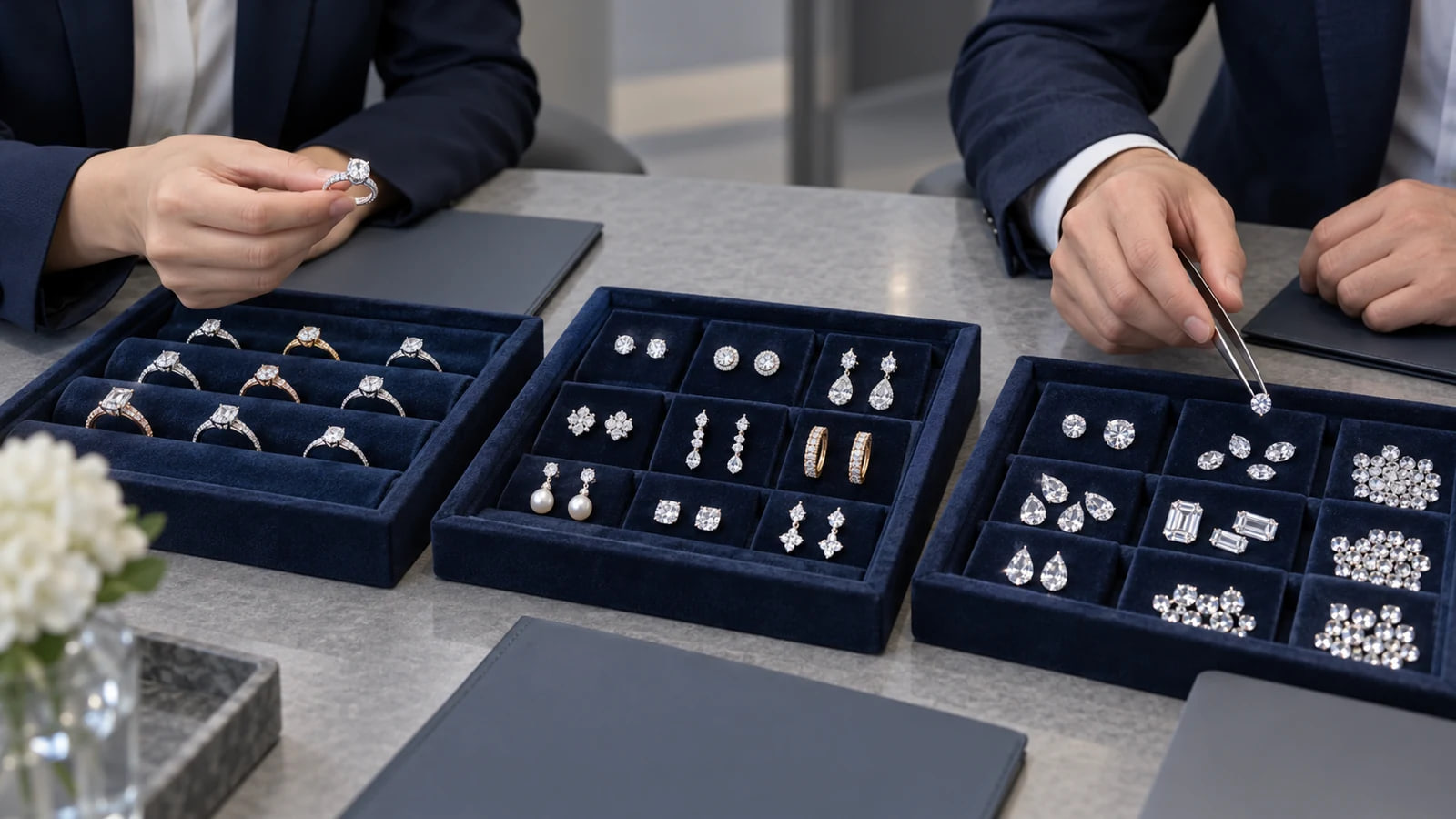
We support jewelry retail chains with coordinated lab-grown diamond sourcing, competitive source-side pricing, low-MOQ collection tests, repeat supply and product presentation resources. Your team can develop a coherent category proposition, explore selected additions and align the store experience with the brand you already operate. We also support product images and video, specification copy, packaging, logistics coordination and brand customization. The opportunity is to give customers a useful reason to consider your collection while keeping assortment decisions tied to store roles, customer demand and contribution. We help organize the product and service resources behind that commercial plan.
01Lab-Grown Diamonds Give Retail Chains a Focused Category Opportunity
An established retail chain does not need another category simply to increase the number of products in its stores. It needs a collection that makes the existing customer relationship more valuable. Lab-grown diamond jewelry can support a new purchase occasion, a clearer price progression or a fresh reason to revisit the brand. Signet's fiscal 2026 reporting recognizes lab-grown products within its merchandise mix. [1] For your chain, the practical interpretation is to evaluate the role this category could play in your own stores, rather than assuming another retailer's performance will transfer to your customer base.
We help you turn that evaluation into a focused product proposition. Our sourcing coordination and low-MOQ selection allow your team to explore a considered range without giving every possible style the same purchasing commitment. Begin with the customer occasions that your current assortment serves less clearly. A gift-led pendant family, an everyday diamond addition or a selected bridal range may each support a different business objective. The strongest choice is the one your stores can explain consistently and your customers can recognize as a relevant extension of the brand they already know.
Category development becomes more useful when it connects central planning with the realities of individual stores. Different locations can serve different shopping missions, even under one brand identity. We support sourcing and product information around your selected direction, allowing your team to decide how the collection should appear across the network. Use a deliberate category story rather than a uniform allocation made only for administrative convenience. That keeps the commercial purpose visible as the offer moves from a buying discussion into a sales conversation, helping the new range earn a defined place within your established retail business.
02Build Lab-Grown Diamond Retail Demand Around Recognizable Shopping Missions
Customers enter a jewelry store with very different levels of intention. One wants a meaningful gift within a chosen budget, another is comparing a diamond purchase and another is browsing for something that fits everyday style. Your assortment should make those missions easier to navigate. We help you connect diamond selection with product roles that your team can present clearly: an accessible introduction, a distinctive centerpiece or a complementary item that gives an existing customer another reason to buy. The aim is a useful choice structure, not a larger wall of similar products that makes the decision harder.
A retail chain can create value through consistency across locations and channels. A customer should recognize the collection in an online image, understand its purpose in a store conversation and experience the same brand through packaging. We support the product resources and presentation elements behind that continuity. Your team brings its customer insight, merchandising judgment and service culture. Together, those elements can make the offer easier to understand and more compelling than a proposition based only on a product specification. Any brand premium should be supported by that complete experience rather than treated as automatic.
Plan the relationship between entry products and more substantial purchases carefully. A lower opening price can bring someone into the collection, but the next choice needs a reason beyond being more expensive. Shape, design identity, occasion and the perceived usefulness of the piece can help explain the progression. We support relevant sourcing options and the materials needed to present them. Use customer conversations to refine that architecture over time, particularly where shoppers hesitate or struggle to see differences. A collection that helps people choose can serve your stores more effectively than one assembled around availability alone. Keep that customer logic visible in central buying decisions.
03Control Assortment Expansion Without Weakening the Store Offer
Inventory pressure multiplies when a category expands across several stores. A reasonable commitment in one location can become a substantial network decision, particularly when each store receives the same breadth before demand is understood. We support low-MOQ selection so your team can develop a more deliberate category test. The purpose is to learn which product roles deserve broader placement and which may be better suited to selected locations or customer orders. That learning should shape expansion before a wider range becomes embedded in the purchasing plan and starts competing with established categories for attention.
Assortment duplication can also hide commercial weakness. Several similar products may divide demand without giving customers a meaningful additional reason to choose. Review whether each item plays a clear role in the price architecture or collection story. We help with relevant supply options and product information, while your retail team decides which combinations make the category more useful. A tighter range can make staff conversations, online presentation and replenishment decisions clearer. The benefit comes from improving the offer, not merely reducing the number of products for the sake of a smaller purchasing total.
Margin pressure deserves equal attention. A collection can produce attractive sales value while requiring substantial packaging, promotion, delivery and operating resources. Our competitive source-side pricing helps your team work from a clearer product cost foundation. Use that efficiency to support a viable customer proposition and a realistic contribution plan. When considering network expansion, distinguish the cost of testing a category from the ongoing cost of supporting it. That makes the next purchasing decision more meaningful: it is a choice about where the range strengthens your retail business, rather than an assumption that greater distribution will solve every product or presentation issue.
04Choose a Lab-Grown Diamond Collection Model for Your Store Network
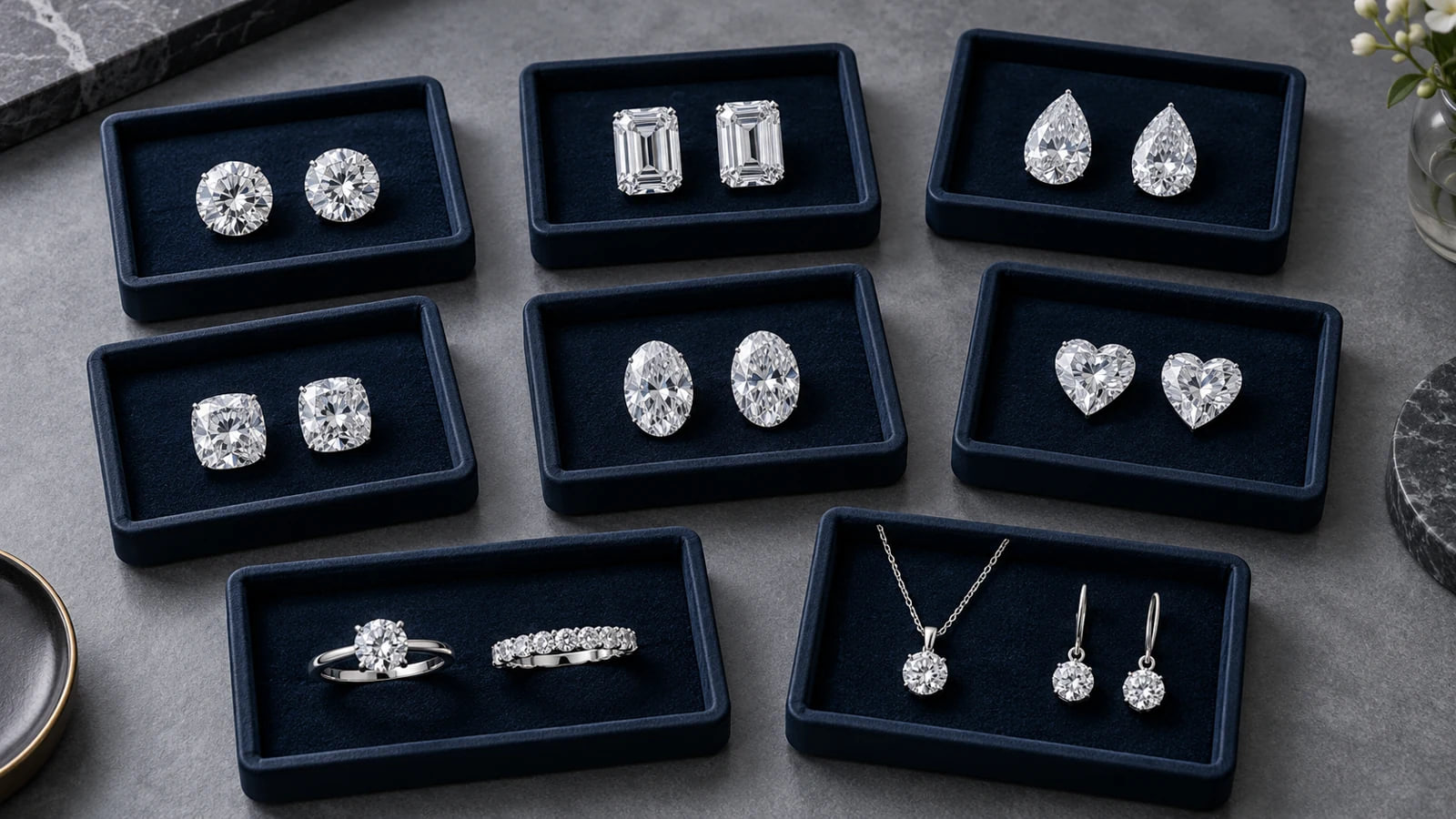
A chain-wide core range and a selected-store collection have different commercial roles. A core range makes the brand proposition recognizable across the network and can simplify the customer story. A selected-store range allows you to match a product opportunity with a specific location, audience or shopping mission. We support sourcing and purchasing for either route. The right balance depends on what your stores need to accomplish, how customers move between channels and which products genuinely benefit from broad presentation. Avoid making the range universal before the commercial reason for universal placement is clear.
Consider a layered architecture rather than treating every store as a complete catalog. A compact core can express the category, while selected additions give relevant locations more depth. Customer-order support can extend choice without requiring the same held range everywhere. We support individual orders and coordinated supply alongside low-MOQ selection, giving your team options for that structure. The chain remains responsible for the service model it offers customers, but the sourcing relationship can support a more flexible assortment plan than buying every possible variation for each location at the same time.
Use the comparison below to decide which products deserve which role. The question is not whether one route is universally better; it is how each contributes to your customer proposition and resource allocation. A recognizable core should remain easy to explain, and an extended range should add meaningful choice rather than visual noise. We help you develop relevant product and presentation resources around those decisions. Review the architecture as your own customer evidence develops, keeping central brand consistency and local relevance in the same discussion. That allows a collection to grow through useful differentiation instead of simply becoming larger across the whole network.
| Assortment layer | Customer purpose | Commercial support |
|---|---|---|
| Recognizable core | Understand the category quickly | Coherent selection and collection materials |
| Selected-store depth | Find options relevant to a local shopping mission | Targeted low-MOQ additions |
| Customer-order extension | Choose beyond the visible assortment | Single-order support and coordination |
| Brand collection refresh | Discover a new reason to revisit | Relevant sourcing, presentation and packaging |
Chain-wide core vs selected-store depth
| Commercial choice | Chain-wide core | Selected-store depth |
|---|---|---|
| Primary purpose | Recognizable category proposition | Relevance to a particular shopping mission |
| Range focus | A coherent compact selection | Additional product roles with a clear audience |
| Purchasing approach | Core continuity and repeat supply | Focused low-MOQ development |
| Customer benefit | Familiarity across the network | More relevant choice where it matters |
A layered assortment can combine both routes. We support a coherent sourcing and presentation relationship while your team decides which product roles belong broadly and which deserve selected placement. Keep the customer reason for each layer clear, so distribution decisions improve the offer rather than simply spreading the same purchasing assumption across more stores.
05Our Lab-Grown Diamond Sourcing Supports Retail Price Architecture
We integrate supply resources and coordinate purchasing priorities to support competitive source-side pricing. For a retail chain, that work becomes valuable when it helps create a coherent price architecture across the collection. Your entry item, central offer and more substantial purchase should each have a clear commercial role. We help you explore relevant product options within that structure, rather than treating each quotation as an isolated buying decision. Your team can then decide where pricing efficiency should strengthen value perception, create contribution room or support the service experience that differentiates your brand.
Low-MOQ selection gives category development a more flexible starting point. You can explore a new product story or a selected extension without committing the same depth across the entire network. As the role of the range becomes clearer, we support repeat supply and relevant additions through the coordinated relationship. That continuity helps your buying team connect a test with a future program instead of restarting the supply discussion whenever the collection changes. The value lies in keeping product learning and purchasing decisions connected, with a more manageable route from exploration to broader commercial use.
An effective supply partnership also respects the retail brand you have already built. We work with the intended collection and purchasing objectives so the product support strengthens your existing proposition. A pricing advantage should not force the chain into a message that conflicts with its customer relationship. You may choose to emphasize accessible design, a stronger gift experience or a more useful product progression. We help with the source-side resources behind that choice. Your business decides how the available commercial room serves the brand, using full contribution economics and customer relevance rather than headline price alone to guide the next step.
06Make Your Lab-Grown Diamond Retail Collection Recognizable Across Channels
A collection needs a shared story before it can be presented consistently across several locations. We support online product materials including images, video, specification copy and collection presentation resources. These can give your central team a clearer foundation for the product story and help individual stores communicate the same essential proposition. Your own brand voice and merchandising judgment remain the guide. The objective is to make the range recognizable and understandable while allowing the customer conversation to respond naturally to the person in front of the store team.
Connect the materials to the shopping mission rather than distributing product facts without context. A gift collection needs to help customers choose with confidence; an everyday range needs to show why the piece fits frequent wear; a more substantial purchase needs a clear explanation of its role in the assortment. We help organize the relevant product resources so your team can build those messages coherently. When an online image and an in-store conversation support the same reason to buy, the collection has a stronger identity than a set of styles promoted separately in each location.
Packaging and brand customization extend that identity beyond the point of sale. We support these elements so the customer can experience a coherent presentation when the item is given or opened. A chain with a clear existing identity should use customization to reinforce that recognition, not add unnecessary visual complexity. Tell us the collection's intended impression and how it fits your broader retail experience. We help develop the supporting resources while your team leads promotion and customer service. The materials make the offer easier to present; their commercial effect still depends on product relevance, consistent execution and the relationships your stores build.
07Connect Product Quality Packaging and Logistics With Your Retail Promise
Customers evaluate a retail brand through the whole purchase experience, including what happens after they decide on a product. We support quality coordination and relevant product information so the sourcing side reinforces the collection your team presents. That work should connect with the customer promise: a recognizable appearance, a clear product explanation and a presentation appropriate to the occasion. Your stores can then build their service around a more organized supply foundation. The benefit is practical consistency behind the range, helping the commercial story remain connected to the item the customer actually receives.
Logistics and packaging need to fit the way your network serves buyers. A store collection, a selected customer order and a gift purchase can involve different operating priorities. We support coordination around those needs rather than treating delivery as a separate conversation after the assortment has been chosen. Product-specific quantities, destinations, customization and schedules can develop with the program. Your team should use that understanding to shape clear customer communication and sensible internal planning. A more flexible assortment works best when the service experience is equally understandable to staff and customers across the relevant channels.
Use questions and feedback from the network to improve the proposition. If customers repeatedly need the same explanation, strengthen the shared materials. If a packaging detail is central to a gift story, make it part of the planned offer. If a product has a clearer role in selected stores, reflect that in the assortment architecture. We help with the sourcing, product resources and coordination behind those improvements. This keeps category management connected to the customer experience and gives your partnership a purpose beyond replenishing items. The collection becomes easier to develop because the product and service activities support the same retail objective.
08Expand Your Lab-Grown Diamond Retail Program Through Contribution and Learning
Begin the next stage of category development with a clear business question. You may want to introduce a new shopping occasion, improve a price progression or give selected stores a more distinctive range. Define the product role and customer proposition before deciding how widely to distribute the collection. We support the relevant selection, low-MOQ purchasing and materials behind that direction. Keep the test meaningful enough to teach your team something about the offer, while narrow enough that the result does not disappear inside a much broader assortment change across several unrelated shopping missions.
Review the contribution of your collection plan using current costs and realistic sales assumptions. Quantity can represent pieces sold across the relevant stores, while the remaining fields allocate the product and selling costs you want to consider. Fixed spending can represent the collection presentation or launch resources assigned to the test. The result is contribution after the listed assumptions, not store profit or a network performance forecast. This distinction helps your team discuss the real commercial question: whether the offer leaves enough room to justify support and whether a wider rollout is a useful next investment for the category.
Growth can come from improving the collection before increasing its distribution. A clearer product story, better materials or a more relevant complementary piece may do more for the proposition than allocating the same range to more locations. We support those additions and repeat supply as your direction develops. Compare the commercial case for deeper placement, selected expansion and a refined core rather than treating all growth as a larger purchase. Your own customer response and operating economics should guide the choice. A disciplined retail program uses supply-chain efficiency to support a stronger brand offer and makes broader commitment when that offer has a clear role.
Use this example to discuss a collection across the stores relevant to your program. Quantity represents assumed pieces sold, with retail price and listed costs entered per piece. Marketing can include an allocated share of promotional expense, while fixed spending can represent collection materials and launch activity. The default figures are hypothetical USD planning inputs, not a MEITUO quotation or a performance forecast for a store network. The result is contribution after the listed variable costs and fixed spending. Store occupancy, payroll, taxes, returns and other unlisted overhead remain outside the calculation. Use a consistent allocation method when comparing a chain-wide core with a selected-store extension so the discussion stays commercially useful.
Review whether the collection remains viable when the selling mix, promotional expense or product cost changes. A positive result shows room after the listed assumptions, but it does not establish store profit or prove demand across every location. A negative result points to a proposition or cost structure that needs attention before a wider rollout. Consider whether a clearer assortment, stronger customer presentation or different allocation would be more useful than increasing volume. Compare the cost of improving the offer with the cost of broader distribution. Your own store evidence and full operating economics should guide the next commitment, while our sourcing and service support helps build the product foundation behind it.
Develop Your Next Retail Collection With MEITUO
We support retail chains through coordinated lab-grown diamond sourcing, competitive source-side pricing, low-MOQ collection development and repeat supply. Our role is to connect the product resources with the customer proposition and purchasing priorities of your retail business, helping a new category or extension fit the brand you already operate.
We also provide online product materials, packaging, logistics coordination, single-order support and brand customization. Bring us the shopping mission, assortment role and commercial objective your team wants to develop. We help organize relevant products and supporting services so your next collection has a clearer foundation for presentation, delivery and considered expansion across the stores where it can create value.
Read Our Company ProfileTell us about your next retail category opportunity
Share the customer occasion, assortment role and store network priorities behind your collection. Include whether you want a recognizable core, a selected-store test or an extension supported through customer orders. Tell us where product pricing, presentation, packaging or logistics coordination would strengthen the offer. We can work with your team on relevant sourcing, low-MOQ development and repeat supply, connecting the product resources with a clear commercial purpose for your retail brand.
Share the details you know. Product quantities and project scope can be confirmed in conversation.
Your Partnership Questions, Answered
Can We Test a Lab-Grown Diamond Collection in Selected Stores?
Yes. We support low-MOQ selection and coordinated purchasing so your team can explore a focused category proposition without assigning the same breadth to every location. Start with a clear shopping mission and a reason the selected stores are relevant. We help with product options and presentation resources. Use the learning to decide whether the next step is refinement, deeper placement or broader distribution.
How Can We Keep the Collection Consistent Across Stores?
Build a shared product story and a clear role for each assortment layer. We support images, video, specification copy and collection presentation materials, giving your team a common foundation. Your brand voice and store service remain central. A recognizable core can work alongside selected local depth when both support the same category proposition rather than becoming unrelated ranges with competing explanations.
Does Every Store Need the Complete Range?
A complete range in every location is only useful when it serves the customer and commercial objective. A core assortment, selected-store additions and customer-order options can play different roles. We support sourcing and individual orders around your chosen structure. Let the shopping mission and your own store evidence guide allocation, rather than treating uniform distribution as the default requirement for a recognizable category.
How Does MEITUO Support Retail Pricing?
Our supplier integration and coordination support competitive source-side pricing. We help you explore product options within the collection architecture, allowing your team to decide how cost efficiency supports customer value, contribution or the brand experience. Include the full selling and operating context when making that decision. A favorable sourcing price creates useful commercial room but does not replace the need for a coherent retail proposition.
Can We Use Our Own Packaging and Brand Direction?
We support packaging and brand customization so the collection can reinforce your existing retail identity. Explain the impression you want the purchase to create and how the range fits the broader brand. We help with relevant presentation resources and coordination. Customization is most useful when it strengthens a recognizable product story and a clear customer occasion, rather than adding complexity without a commercial purpose.
Can Customer Orders Extend the Assortment Beyond Visible Stock?
We support single-order purchasing and delivery coordination as part of the product arrangement. This can give your team another route to selected customer needs alongside a held store range. Define the role clearly in the retail offer and align customer communication with the actual arrangement. Your stores should understand when an item belongs in the core assortment and when an extended option is the more useful route.
How Should We Evaluate a Wider Rollout?
Look at the collection's customer role, store experience and full commercial economics. The model helps explore contribution after selected costs, but it does not replace your own store evidence or account for every overhead. Consider whether refinement would strengthen the offer before increasing distribution. We support relevant additions and repeat supply as your direction develops, helping the next purchasing decision follow a clear retail objective.
What Should Our Category Brief Include?
Share the shopping mission, target customer, existing brand position and intended assortment layers. Tell us which stores or channels the collection should serve and where sourcing, presentation or packaging support would help. We can work on a relevant product direction and purchasing approach. A useful brief connects the collection with the retail outcome your team wants to pursue rather than beginning with an unlimited list of styles.
Market Sources and Further Reading
Market references checked October 27, 2026. We combine the observations below with our own partnership recommendations; third-party results are not MEITUO partner performance claims.
- Signet Jewelers Fiscal 2026 Annual ReportCompany-reported category context, not a forecast for other retailers.
Financial illustrations use hypothetical inputs and do not guarantee revenue, profit or brand premium.