 English
 Español
 Português
 Deutsch
 Français
 Italiano
 Nederlands
 العربية
 日本語
 한국어
 ไทย
Quick Answer
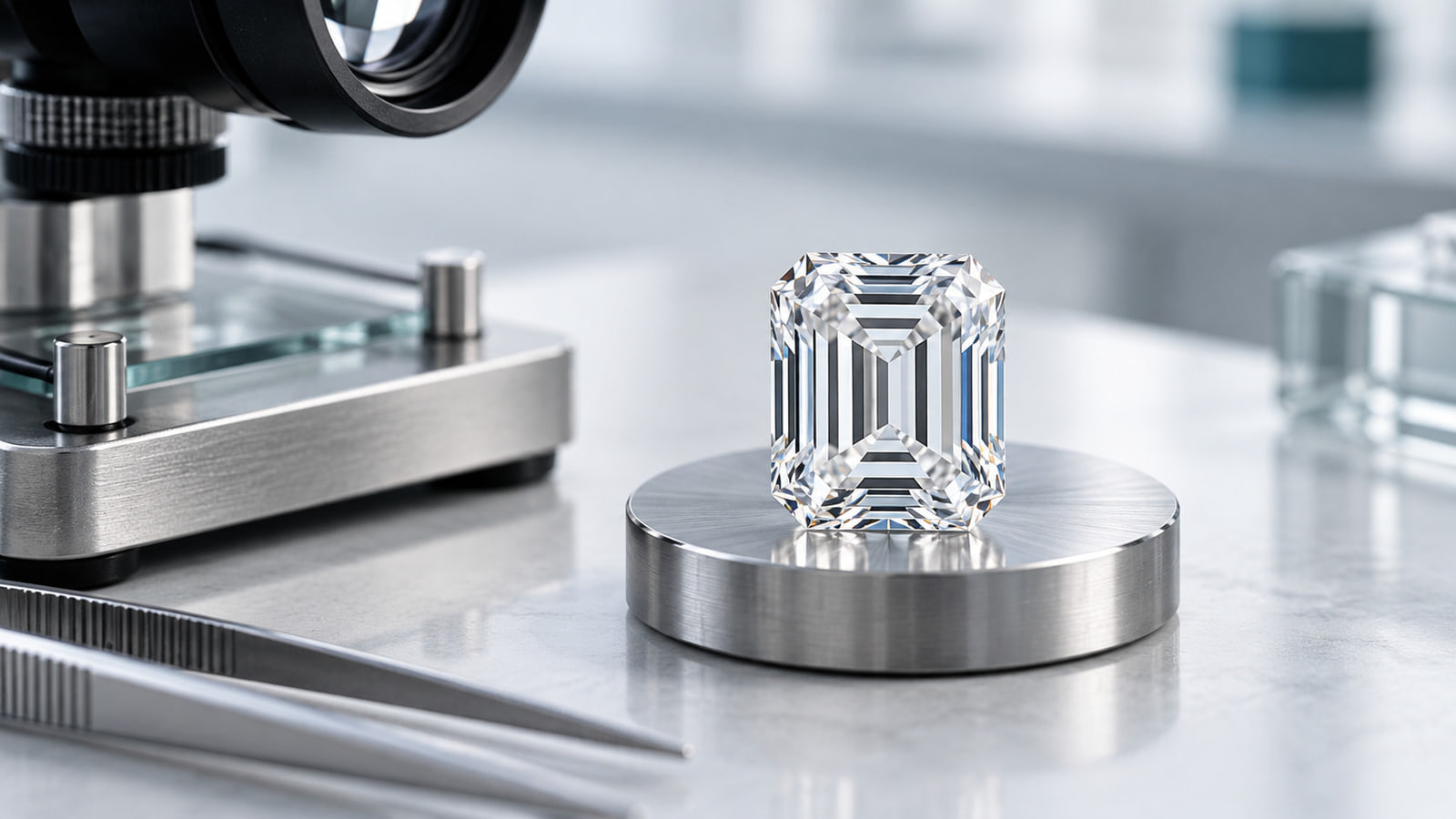
A Type IIa lab grown diamond label describes an impurity classification, not a complete quality grade. Type IIa refers to the absence of measurable nitrogen and boron within the relevant classification methods. It does not prove laboratory-grown origin, guarantee D color or flawless clarity, establish no post-growth treatment, or replace an examination of the actual finished stone. The most reliable buying decision combines the correct document scope with observations of the actual item and a written acceptance rule. Keep unresolved points visible before payment or setting. A supplier’s confident description is useful context, but the purchase record should distinguish confirmed facts from information that still needs verification.
What Does a Type Iia Lab Grown Diamond Label Tell a Buyer?
Purity is an easy word to misunderstand in sales copy. A classification based on particular detectable impurities does not mean a stone lacks every possible defect, inclusion, strain feature or visible nuance. Natural diamonds can also be Type IIa. Keep type, origin, treatment, color, clarity and cut in separate record fields so the scientific label does not expand into unsupported product promises.
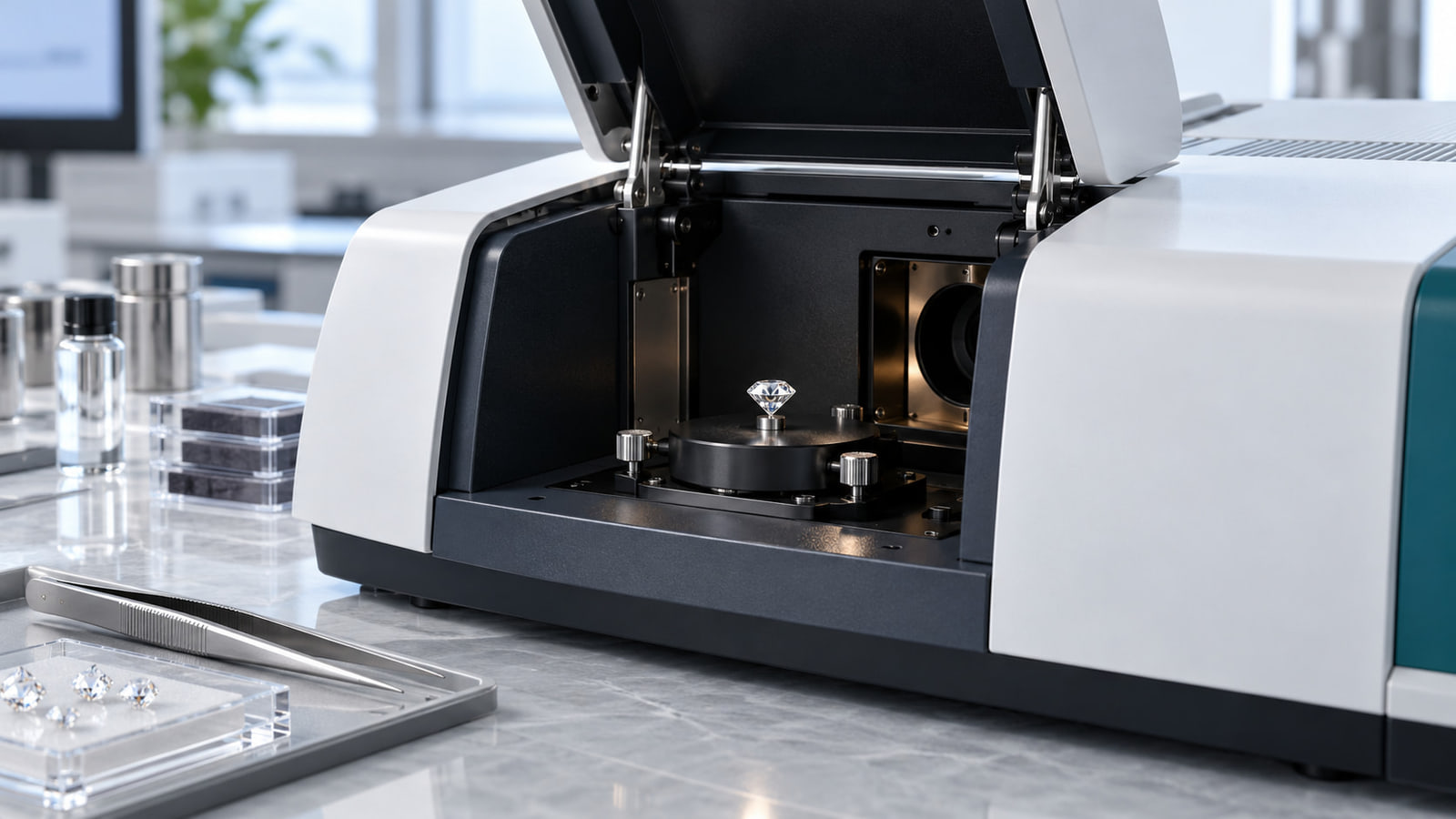
GIA’s diamond-type explanation defines Type IIa by no measurable nitrogen or boron and notes that these diamonds can exhibit color. Its classification discussion uses infrared spectroscopy rather than an ordinary visual judgment. See GIA: Digging into diamond types.
Impurity Classification Versus Finished Quality Evidence
Type IIa is not a competing quality tier above the usual purchase criteria. It is a classification field with a defined meaning. The comparison below separates what it can support from the independent conclusions a buyer still needs about origin, treatment, appearance and suitability. Avoid letting a technically correct narrow statement expand into a broad sales guarantee.
| Decision | Type IIa statement | Independent procurement conclusions |
|---|---|---|
| Chemical classification | Addresses specific detectable impurities | Does not assign complete optical quality |
| Origin | Does not alone distinguish grown from mined | Requires appropriate origin identification |
| Clarity | Does not mean inclusion-free | Use actual clarity information and inspection |
| Treatment | Does not establish treatment absence | Request separate evidence and disclosure |
Which Type Iia Checks Belong in the Buying Brief?
The following selection checks connect the topic to an actual purchase decision. Record the requirement, evidence and unresolved question against the same stock identifier so the supplier and receiving team review the same candidate.
Evidence attribution. Confirm who made the Type IIa statement and by what examination. Request a stone-linked laboratory statement if the claim is mandatory. Ask who made the claim and how it is linked to this stock, not merely the supplier’s usual range.
Origin separation. Confirm whether laboratory-grown identity is independently established. Request an appropriate original report or identification result. Natural and laboratory-grown origin must be established independently of the impurity class.
Claim boundaries. Confirm whether pure is being used to imply unrelated qualities. Request copy approved against the evidence actually held. Avoid using pure to imply absence of every defect, treatment or inclusion.
Finished quality. Confirm transparency, hue, inclusions and dimensional fit. Request ordinary procurement inspection independent of type classification. Inspect finished appearance and dimensions even when classification is independently documented.
Apply the relevant checks to individual loose centers or matched pairs and sets according to the actual order. Preserve the approved reference and flag substitutions for review before they enter the packing list.
For brand product teams, MEITUO can coordinate the distinction between a scientific claim and an ordinary selection preference. State why Type IIa matters before requesting it, so supplier follow-up targets substantiation rather than a decorative catalog phrase.
Classification methods have detection boundaries. No measurable nitrogen or boron in this context should not be rewritten as absolute absence of every foreign atom. The procurement statement should preserve the scientific wording supplied by the examination source. A simplified marketing explanation can be accurate without escalating a limited classification into a claim of perfect chemical purity.
Origin and type occupy different axes. A buyer asking whether a stone grew in nature or a laboratory needs origin identification; a buyer asking about the impurity class needs a different statement. Combining those questions into Type IIa lab-grown is acceptable only when both parts are supported, not when one part is inferred from the other.
Quality also occupies separate axes. A classification does not choose the outline, establish a particular clarity grade or measure whether a paired layout is coherent. Those questions belong to actual finished-stone selection. A genuine type statement can be relevant to an educational product story while adding little to a designer’s practical decision between two candidates.
Treatment history must remain independent as well. If the collection excludes post-growth processing, the buyer should define accepted evidence and ask that question directly. Do not treat a type statement as an answer merely because the supplier uses pure nearby. Maintaining separate fields makes it much easier to see what information is established and what is still missing.
For downstream copy, read every claim as a customer would understand it. A sentence implying guaranteed superior brilliance or flawless condition can go beyond the underlying classification even if the label itself is correct. Keep the original source available, remove unsupported inferences and inspect the actual stones under ordinary purchasing criteria before releasing the collection.
How Does Type Iia Review Work in a Real Ordering Sequence?
Hypothetical worked B2B example. A hypothetical brand requests twenty Type IIa laboratory-grown centers for an educational collection. One seller provides the phrase in a stock title but no stone-linked classification evidence. Another provides a suitable documented route. The brand asks for the evidence it needs before deciding whether to retain the scientific claim. It does not treat the label as a substitute for selecting attractive stones.
For the educational collection, the brand should decide whether classification is a central product requirement or merely a proposed story. If central, it needs candidate-linked evidence it can retain and explain accurately. If optional, the buyer may choose attractive documented laboratory-grown stones while omitting a scientific claim that would otherwise require additional substantiation.
Neither seller’s Type IIa wording should shortcut ordinary selection. The brand still reviews outline, transparency, condition and setting fit. A classification statement can be genuine yet irrelevant to why one finished stone is better suited to a design. Keeping the questions separate protects the educational explanation from becoming a blanket quality guarantee.
Carry the accepted decision into repeat-order planning; where the product depends on several stones, retain the pair or set approval with the candidate schedule.
How Should Buyers Resolve a Type Iia Mismatch?
Identify the source of the Type IIa claim. Is it a stone-linked laboratory statement, a supplier declaration or an assumption based on growth method? Keep those categories visibly different. If the order makes classification mandatory, agree the evidence required before selecting candidates. A generic explanation of CVD production does not establish the type of the particular stone delivered.
Read the classification separately from origin, treatment and grading fields. No measurable nitrogen or boron is not the same as no detectable defect of any kind. Do not populate flawless, D color, untreated or natural origin from a Type IIa field. Each of those would require its own relevant evidence, and ordinary appearance inspection remains necessary regardless of the classification.
Review downstream copy before the claim reaches customers. Phrases implying absolute purity or automatic superior brilliance can exceed what the classification supports. If the available documents do not substantiate the requested scientific wording, decide whether to obtain an appropriate examination or remove the claim. The product may still satisfy the collection’s ordinary quality requirements without carrying a type-specific marketing statement.
For the ordering record, connect the findings to the RFQ fields and preserve the relevant side-stone specification when companion stones are included.
What Should Buyers Ask Type Iia Suppliers in the USA, China and India?
Supplier geography can change communication and handling, but it does not settle Type IIa. Use these localized questions to understand the seller’s role, where the actual stock sits and who can supply the evidence required for this particular order.
USA / trade channels and handoff
Can a US Seller Substantiate Type Iia Separately From Its Ordinary Quality Description?
For US product listings, ask the seller what evidence supports Type IIa for the actual candidate. A scientific phrase in a title may reflect a supplier declaration or an assumption about the growth route. If classification is central to the collection story, request stone-linked support before the marketing team builds claims around it.
Keep the classification separate from laboratory-grown origin and ordinary quality description. A seller should not use Type IIa as shorthand for flawless, D color or untreated. Buyers can select attractive stones without making those unsupported inferences, and a genuine classification does not remove the need for actual appearance and condition review.
For retail education, choose precise wording that explains the limited meaning of the label. If the evidence is insufficient, remove the optional claim or arrange an appropriate examination. A US sales channel may make follow-up easier, but it cannot transform an unsupported stock description into an independent scientific result for the customer.
Stuller’s US resources identify a trade channel, not independent substantiation of every type-specific sales claim.
CHINA / sourcing coordination
Can a Chinese Sourcing Contact Identify the Evidence Behind a Type Iia Export Claim?
For China sourcing, tell the coordinator whether Type IIa is a mandatory specification or a proposed marketing angle. These lead to different purchasing choices. A mandatory claim needs accepted evidence for the actual stone; an optional claim can be omitted when it adds unsupported complexity without improving the collection’s physical requirements.
MEITUO in Qingdao can ask suppliers to identify the source of the statement and coordinate follow-up. It should not be represented as the laboratory performing spectroscopic classification. Keep its sourcing role visible and ask who issued any stone-linked result. A broad catalog claim about CVD inventory is not the same as examining a specific candidate.
Before export, review the final description alongside origin, treatment information and quality criteria. Ensure that pure does not silently become a promise of no inclusions or automatic superior brilliance. Preserve the underlying document and stock mapping if the claim is retained, and record any decision to supply an otherwise suitable stone without type-specific marketing wording.
For its stated business role and Qingdao base, see MEITUO’s company introduction.
INDIA / manufacturing and export handoff
Can an Indian CVD Seller Document Diamond Type Without Treating It as a Universal Inference?
For an Indian CVD offer, resist the assumption that the growth abbreviation alone proves Type IIa for every candidate. Ask whether the seller has an actual classification result or is describing a common association. If the buyer requires the label, agree what evidence satisfies the requirement and how it will remain linked to polished stock.
The classification should not be used to bypass final selection. Review transparency, visible hue, inclusions, dimensions and condition independently. A candidate can carry a scientific type statement while still being unsuitable for the intended jewelry. The seller should know which finished-quality criteria are mandatory rather than treating the label as a blanket approval.
For documentation, preserve the original issuer and wording. If a trader assembles stock from several sources, request candidate-level clarity on which claims are substantiated. A supplier’s familiar location or ordinary CVD product range cannot fill missing evidence. Decide whether additional examination is justified or whether the collection should proceed without the type-specific claim.
For verified local context, GreenLab lists Surat manufacturing and a Mumbai office; the type claim still needs its own evidence.
How Does MEITUO Support Type Iia Procurement Claims?
MEITUO is a sourcing and supply-chain coordination partner in Qingdao, Shandong, China, serving jewelry brands, wholesalers, retailers and designers. For Type IIa procurement claims, its useful role is to turn the buyer’s collection requirement into an actionable supplier request: confirm who made the Type IIa statement and by what examination, organize available evidence and follow up on unresolved selection questions.
Its sourcing scope includes loose center stones, melee, side stones, matched pairs and sets, and fancy-color options. If Type IIa is mandatory, ask MEITUO to identify the supplier’s supporting examination record while keeping origin, treatment information and finished-quality requirements separate from the classification claim. The final acceptance criteria should remain with the buyer’s approved brief and the evidence supplied for the actual order.
MEITUO does not replace an independent grading or identification laboratory. Available stock, documents, treatment information, MOQ, lead time and shipping terms need confirmation per order. Send the intended application and Type IIa requirements to [email protected] so selection and order follow-up can start from specific questions.
What Should a Type Iia RFQ Specify?
Say whether Type IIa is mandatory and define the accepted evidence. Ask which examination or original document supports the statement for each supplied candidate. Keep laboratory-grown origin as a separate requirement and request treatment information independently. Do not let a supplier answer a classification question with a generic claim that all its CVD diamonds are pure.
List the actual finished-quality criteria beside the scientific claim: appearance, dimensions, condition and the relevant document scope. State the wording you intend to use downstream so the seller can identify unsupported inferences before approval. If the evidence is unavailable, request either an appropriate examination proposal or a revised offer without the claim. Record that choice explicitly rather than filling the gap by assumption.
Please quote laboratory-grown diamonds for [jewelry application] in [shape and quantity], with [weight range] and [dimensions or tolerance]. Our priority is stone-linked Type IIa evidence if mandatory, separate origin identification, independent quality criteria and approved wording for downstream claims. Supply available evidence linked to each stock line or clearly identified parcel. State [accepted document service], current stock location, proposed substitutions and any information you cannot confirm. Please separate product and service inclusions, confirm MOQ and lead time for this order, and provide [shipping destination and terms]. We require written approval before substitution or dispatch and a mutually agreed process for discrepancies identified at receiving.
FAQ: What Does a Type Iia Lab Grown Diamond Label Tell a Buyer
Does Type Iia Mean a Diamond Has No Defects?
No. The classification concerns particular measurable nitrogen and boron impurities. It does not establish the absence of every inclusion, lattice defect, strain feature or visible nuance. Finished quality and condition need separate examination and acceptance criteria.
Does Type Iia Prove Laboratory-Grown Origin?
No. Natural diamonds can also fall within the classification. Use appropriate independent origin evidence for the actual stone. A buyer should not populate an origin field from a type statement or assume that a common CVD association establishes every candidate’s identity.
Can Type Iia Replace a Clarity Grade?
No. Impurity classification and clarity answer different questions. Read the actual clarity or assessment information and inspect the candidate for the application. Do not convert Type IIa into flawless, eye-clean or another quality promise it does not establish.
Does Type Iia Mean No Post-Growth Treatment Occurred?
No. Treatment history is a separate question requiring appropriate information. State any policy on subsequent processing explicitly and identify accepted evidence. The impurity label cannot resolve that requirement merely because the sales description also calls the stone pure.
Should Every Collection Require a Type Iia Statement?
Only if it serves a defined product need and can be substantiated. Otherwise, the label may add documentation work without answering the actual design requirements. Choose whether to obtain suitable evidence or omit the optional claim while preserving ordinary origin and quality checks.
What Evidence Should Accompany a Mandatory Type Iia Claim?
Agree a stone-linked statement from an appropriate examination source, including the issuer and original wording. Keep it separate from origin identification and grading information. A generic process explanation or supplier assumption should not silently satisfy a mandatory classification requirement.