 English
 Español
 Português
 Deutsch
 Français
 Italiano
 Nederlands
 العربية
 日本語
 한국어
 ไทย
Quick Answer
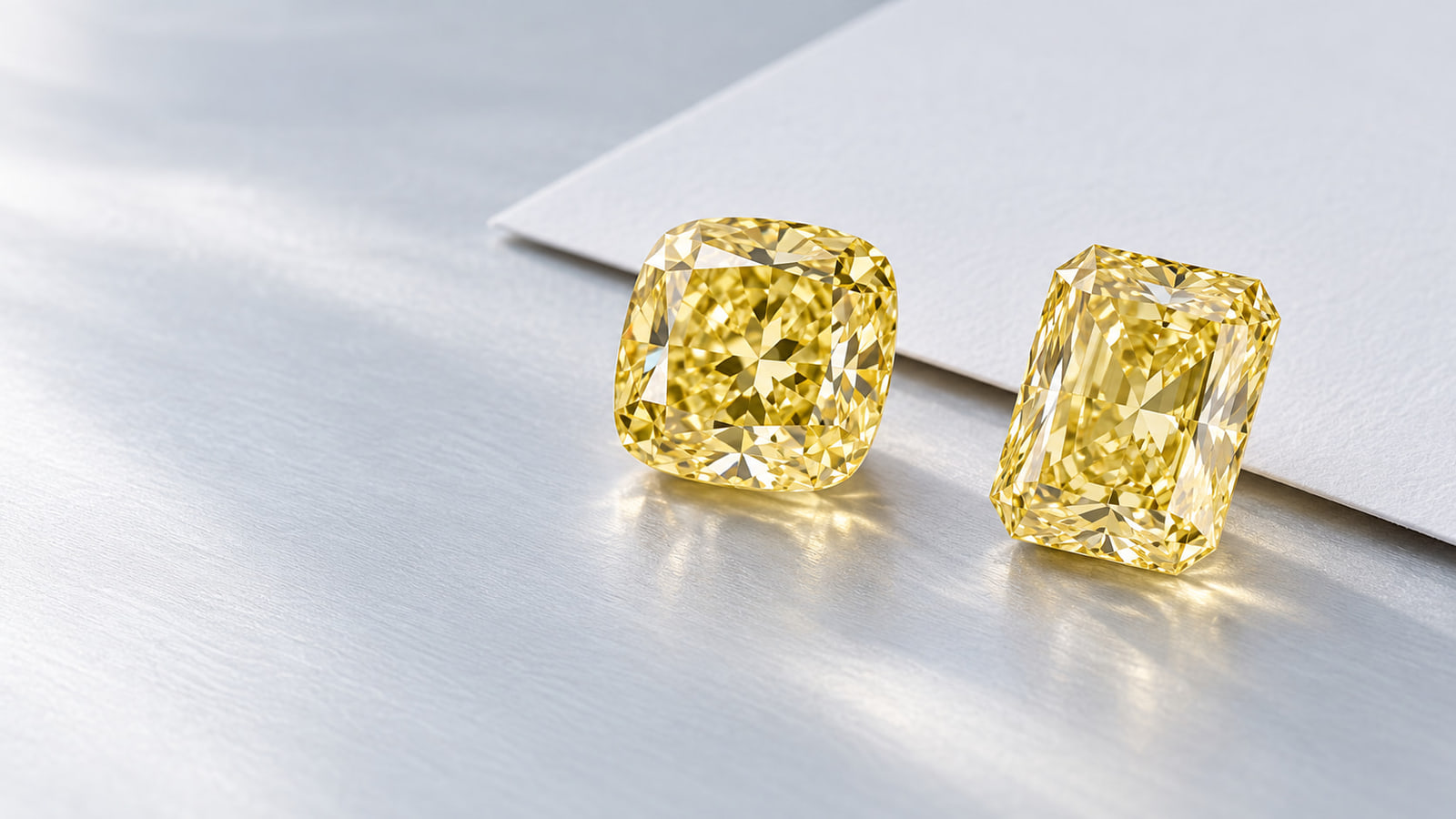
Can yellow diamonds be lab grown? Yes. Laboratory-grown diamonds can be produced in yellow colors, and buyers should distinguish the diamond’s growth origin from the origin or modification of its color. Do not assume that every yellow stone has the same growth route, treatment history or appearance. Specify the intended hue, intensity, distribution, shape and matching requirement, then request the relevant colored-diamond documentation and supplier information for the actual goods. A generic yellow label is insufficient for a repeatable collection. Evaluate clean, dry stones under consistent neutral lighting and review the intended setting, because the metal and design can influence the perceived color. For pairs and sets, approve members together and define how replacements or later parcels will be matched.
How Can Laboratory-Grown Diamonds Be Yellow?
Laboratory-grown diamond can occur in colors as well as colorless or near-colorless material. GIA’s growth-process overview explains that nitrogen can contribute yellow color in HPHT-grown diamonds. That technical context should not be expanded into a claim that every offered yellow stone has one identical cause, production history or treatment status.
Keep three questions separate. Is the material diamond? Is its growth origin laboratory-grown? What information is available about its color and any post-growth treatment? A supplier’s answer to the first two does not automatically settle the third. Request the actual information needed for the order rather than infer it from the appearance.
Do not equate yellow with a particular fancy-color description without appropriate evidence. A casual sales word and a laboratory color description serve different roles. If a specific grade or color term is contractually required, identify the relevant service and use the actual record for the selected stone.
For a design program, define what the buyer sees and accepts as well as the terminology. The desired yellow may be subtle, strong or modified by another hue. A clear color brief helps the supplier select relevant goods and prevents a nominally correct label from concealing a visibly unsuitable assortment.
Single Yellow Center Versus Matched Pair Versus Parcel: What Changes?
Color buying becomes more demanding when stones must read as a coordinated design. A single attractive yellow center can be acceptable on its own while failing to match another stone. A parcel can also have an average impression that hides individual outliers.
The following comparison shows why the quantity structure belongs in the color brief. It does not rank shapes or imply that a report guarantees an identical visual match.
| Decision field | Single center | Matched pair or set | Small-stone parcel |
|---|---|---|---|
| Approval unit | The actual individual stone | Members viewed together in intended orientation | Agreed parcel and sampling or sorting workflow |
| Color target | Defined hue and intensity preference | Target plus permitted member-to-member variation | Target plus acceptable distribution and outlier limits |
| Dimensions | Fit the specific setting | Fit each seat and the overall layout | Meet the application’s calibrated bands |
| Visual evidence | Clean actual-stone views | Labeled pair or sequence layout | Representative and outlier evidence under agreed conditions |
| Documents | Chosen colored-diamond service where required | Relevant records plus visual matching approval | Appropriate parcel information; do not assume individual reports |
| Replacement | Reapprove the new center | Review the full pair or set after change | Define how a later parcel will match the collection |
A report can provide useful color information, while visual matching remains a separate application decision. Keep both approvals in the order file when the design depends on consistency.
How Should Buyers Approve a Yellow-Diamond Earring and Pendant Collection?
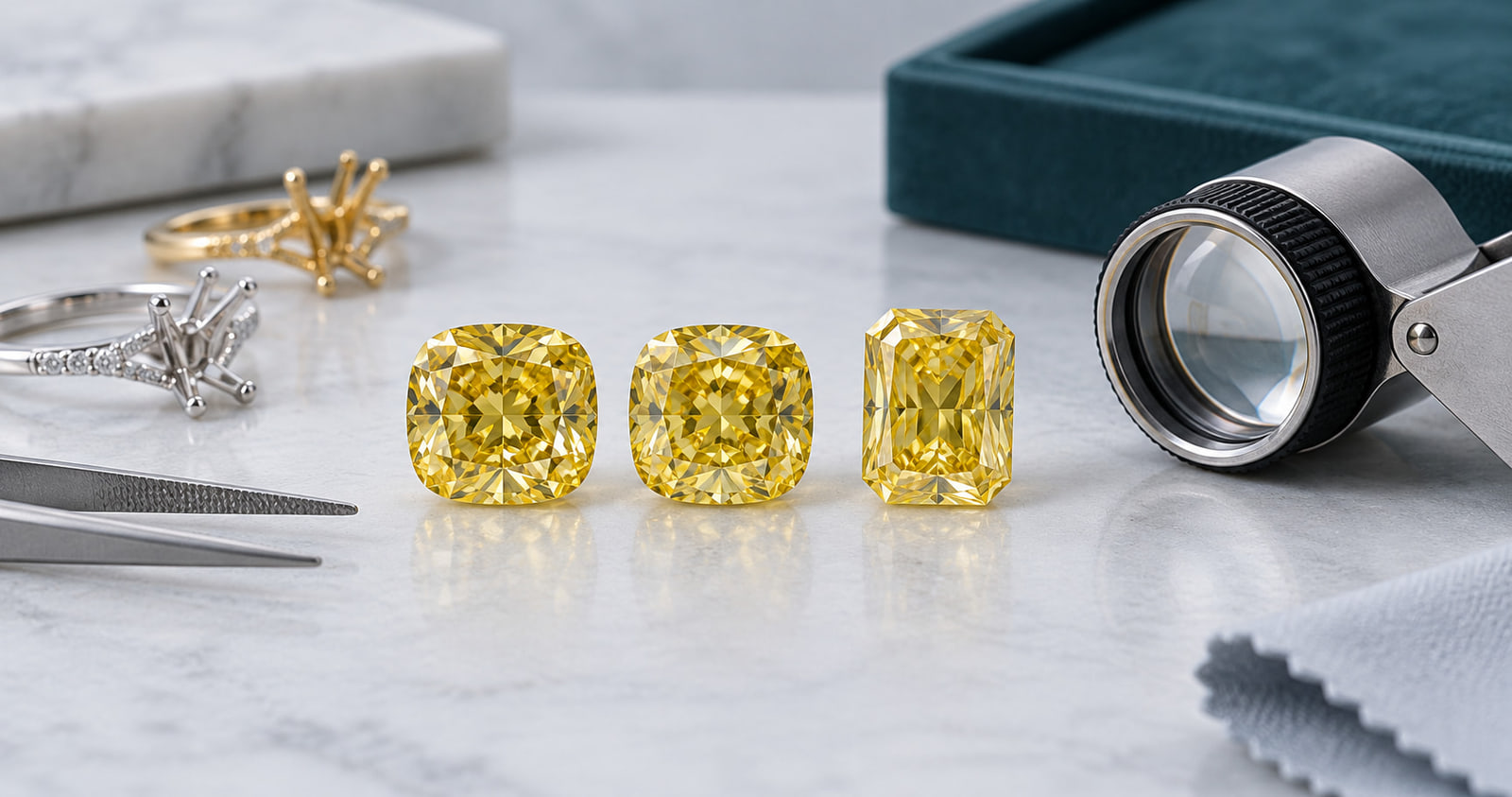
Consider a hypothetical launch of 20 earring pairs and 10 pendants using yellow cushion centers. The earring order needs 40 stones approved as 20 pairs, while the pendant order needs 10 individual centers. Ordering 50 yellow stones without the pair structure would leave the retailer responsible for discovering whether enough compatible members exist.
Define the intended face-up color reference, dimensional bands and allowed variation. Request a labeled layout for every pair and a separate list for pendant centers. Keep the actual item references attached to the visual record. If one pair member changes, reapprove the pair rather than accept the replacement solely because its weight is similar.
Review small white-metal and yellow-metal setting samples with the actual design direction. The purpose is to understand the perceived result, not to use metal color to conceal a mismatch. Approve the final setting context before photography and preserve the clean neutral-light record as a separate baseline.
For the sourcing request, review yellow laboratory-grown diamonds and matched options. MEITUO can help coordinate the assortment and supplier questions. The buyer should retain final approval of the actual pairs and singles so the quantity, color and design requirements remain connected.
Which Reports and Treatment Questions Apply to Yellow Lab-Grown Diamonds?
Select a colored-diamond service appropriate to the goods and information required. GIA’s current laboratory-grown service page lists distinct colored-diamond reports, including a full colored report and a color-identification option. These are separate from its colorless to near-colorless quality assessment. Confirm eligibility and current scope directly for the proposed submission.
Ask what the record states about growth type and post-growth treatment, and match it to the actual stone. Do not assume that an omitted supplier spreadsheet field proves no treatment. If using another laboratory, read that service’s scope and request the comments the buying decision requires.
Keep the report’s color description intact in the internal file. Marketing can explain it in clear language, but should not silently strengthen it into a different color term or imply natural origin. A laboratory-grown yellow diamond should remain clearly described as laboratory-grown wherever offered.
For smaller goods, confirm what documentation is practical and actually included. A report for one center does not certify the color or treatment history of every accent in the same collection. Review fancy-color melee separately and define its parcel-level information and acceptance workflow. Documentation and visual matching should support one another rather than substitute for each other.
How Should Retailers Inspect Yellow Color and Repeat-Order Consistency?
Inspect clean, dry goods under a consistent neutral-light setup and retain the reference conditions. Compare the actual selection with the approved target and examine outliers rather than relying only on the parcel’s overall impression. Different photographs can make the same stone look different, so avoid comparing an edited promotional image with an unedited receiving photograph as if the lighting were identical.
For a matched set, view members together in the intended orientation. Confirm dimensions and any sequence requirements. For side stones, approve how the yellow center and surrounding stones read as a complete layout. A color decision can depend on the design even when each individual stone is acceptable.
Record what happens if the shipment fails the agreed color or matching limits. Is the remedy reselection, replacement, return or further assessment? Preserve the original goods and evidence before any setting or alteration. The supplier should know the review period and who can approve a proposed alternative.
For brand collections, define a repeat-order reference and identify which variation is acceptable. Do not promise identical future color from a generic yellow label. The repeat-order guide can help preserve the target, assortment structure and approval responsibilities across later purchases.
How Should Buyers Qualify Suppliers in the USA, China and India?
Yellow-diamond sourcing requires the same color and matching target across channels. Ask who selects the actual goods, what documentation is available and how singles, pairs and parcels are approved. The following market questions focus on color-information continuity and assortment control rather than assuming a seller’s location establishes treatment history or visual consistency.
USA / COLOR AND DESCRIPTION
What Should US Retailers Request for Yellow Diamond Assortments?
A US retailer should ask the seller for explicit laboratory-grown origin, the actual color description and the document scope for the proposed yellow stones. If the offer concerns earrings or a set, request member-level measurements and pair or layout approval rather than only total weight and a yellow label.
Confirm that the customer description preserves the distinction between growth origin and color information. A yellow diamond listing should not imply natural origin or a particular treatment history without evidence. Keep the document reference and actual visual approval attached to the selected goods, especially when the customer has chosen a particular hue or outline.
For distributor stock, ask whether replacements can be selected against the original reference and what happens if one pair member becomes unavailable. A domestic seller can offer a convenient channel, but the buyer still needs current allocation and actual goods. Review the final setting context before photography so the retail image and product description communicate the approved design rather than an enhanced color impression.
Stuller documents a trade-only US channel. Qualify the particular offer independently.
CHINA / ASSORTMENT MATCHING
How Should China-Based Sourcing Specify Yellow Color Consistency?
For a China-based sourcing program, define the yellow target with a visual reference, dimensions and acceptable variation. Ask whether the seller is selecting existing polished goods or coordinating further production or sorting. The buyer should know when actual-stone approval becomes possible and which proposed quantities are already matched.
Keep growth information, treatment information and visual matching as separate request fields. A general statement about HPHT production does not establish the history or appearance of every yellow stone offered. For small colored goods, define parcel labels and the sorting or inspection workflow relevant to the intended setting.
MEITUO is based in Qingdao, Shandong, and coordinates laboratory-grown diamond sourcing, including fancy-color options. Confirm availability, documents, MOQ, lead time, treatment information and shipping terms for the particular assortment. Its address should not be presented as the growing or cutting location of every stone. Approve actual pairs, sets or parcel references before release rather than relying on a generic yellow stock description.
GIA’s 2024 review documents Chinese HPHT melee production. This industry context does not verify a specific seller.
INDIA / COLOR DOCUMENTS
What Should an India-Based Seller Show for a Yellow Polished Selection?
With an India-based polished seller, clarify the role of the counterparty and request actual yellow-stone references. Ask which color description comes from a laboratory record and which is the seller’s visual description. If the goods are still being cut or selected, preserve the remaining approval milestones rather than treating the final color assortment as already accepted.
For a coordinated collection, request a labeled layout under consistent conditions and review the intended setting context. Equal weights or matching report terms do not automatically establish the visual match the designer needs. Any changed member should trigger a renewed pair or set review.
Confirm the available growth and treatment information, relevant document services and export terms. A manufacturing address or corporate office is not itself evidence for a stone’s color history. The useful supplier response identifies what is known about the actual goods, what documentation is included and which limits remain. Keep those distinctions visible when the retailer translates the offer into customer-facing yellow-diamond copy.
GreenLab lists Surat manufacturing and a Mumbai office. Distinguish those roles in any supplier comparison.
How Can MEITUO Support This Sourcing Decision?
MEITUO is a sourcing and supply-chain coordination partner in Qingdao, Shandong, China, serving jewelry brands, wholesalers, retailers and designers. For yellow laboratory-grown diamonds, its useful role is helping buyers define a color-sensitive assortment and coordinate the supplier information and selection approvals needed for the design.
The product range includes loose center stones, melee, side stones, matched pairs and sets, and fancy-color options. MEITUO supports product selection, supplier coordination, quality-requirement confirmation and order follow-up. A buyer can request yellow singles, pairs or other assortments with distinct dimensional and visual requirements rather than treating the color name as a complete specification.
Availability, documents, MOQ, lead time, treatment information and shipping terms require confirmation per order. Send [email protected] the intended hue reference, application and matching criteria. MEITUO does not independently grade color or guarantee identical future assortments. The buyer should approve the actual goods and relevant laboratory service, with sourcing coordination supporting rather than replacing those decisions.
What Should Your Purchasing Brief and Acceptance Record Contain?
Define the color target, quantity structure and setting context before asking for offers. Request actual references, the available growth and treatment information, and the document service required for the order. Keep visual matching approval separate from document review, because each answers a different question.
At receiving, use the agreed neutral-light reference and inspect the actual singles, pairs or set layout. Isolate any outlier before setting and follow the documented remedy. Preserve the approved reference for later orders without promising that a generic yellow category will repeat perfectly. The following brief gives the supplier a concrete color and assortment problem to answer.
Please propose [quantity of singles, pairs or sets] yellow laboratory-grown diamonds for [application], with hue reference [reference], intensity preference [details], dimensions [ranges] and permitted variation [limits]. Provide actual item or parcel references, clean neutral-light views and labeled matching layouts. State available growth and treatment information and the relevant colored-diamond document service. Confirm how setting metal and design context will be reviewed without replacing the neutral reference. Include MOQ, availability, lead time, shipping terms and color-discrepancy remedies. No member substitution, color-description change or additional treatment is authorized without written approval.
FAQ: Yellow Lab-Grown Diamonds: Color, Treatment and Sourcing Checks
Can Yellow Diamonds Be Laboratory-Grown?
Yes. Laboratory-grown diamonds can be produced in yellow colors. The buyer should still verify material, laboratory-grown origin and the information available about color and treatment for the actual goods. A yellow appearance alone does not establish the full production history.
Are All Yellow Lab-Grown Diamonds Untreated?
Do not assume so. Ask for the relevant growth and treatment information and read the selected document service. An omitted supplier field is not proof of no treatment. Keep the actual record connected to the stone or parcel being purchased.
Is Yellow a Complete Color Specification?
No. Define hue, intensity, distribution and the intended visual reference. For pairs or sets, add member-to-member variation and layout requirements. A broad color name can include goods that look noticeably different in the same design.
Can a Report Guarantee That Two Stones Match?
A report provides information within its service scope, but visual matching is a separate application decision. Review the actual members together under consistent conditions and preserve a labeled pair or set approval. Similar report terms do not automatically establish an acceptable visual match.
Why Review the Setting Metal?
The surrounding design can influence perceived color. Compare the intended setting context while retaining a neutral-light baseline for the loose goods. Do not use the metal color to conceal a mismatch or replace the actual color specification.
How Should a Replacement Yellow Stone Be Approved?
Review the replacement with the remaining members and the original reference. Confirm dimensions, appearance and relevant documents before acceptance. An equal-weight yellow stone is not automatically interchangeable in a matched pair, graduated set or established collection.