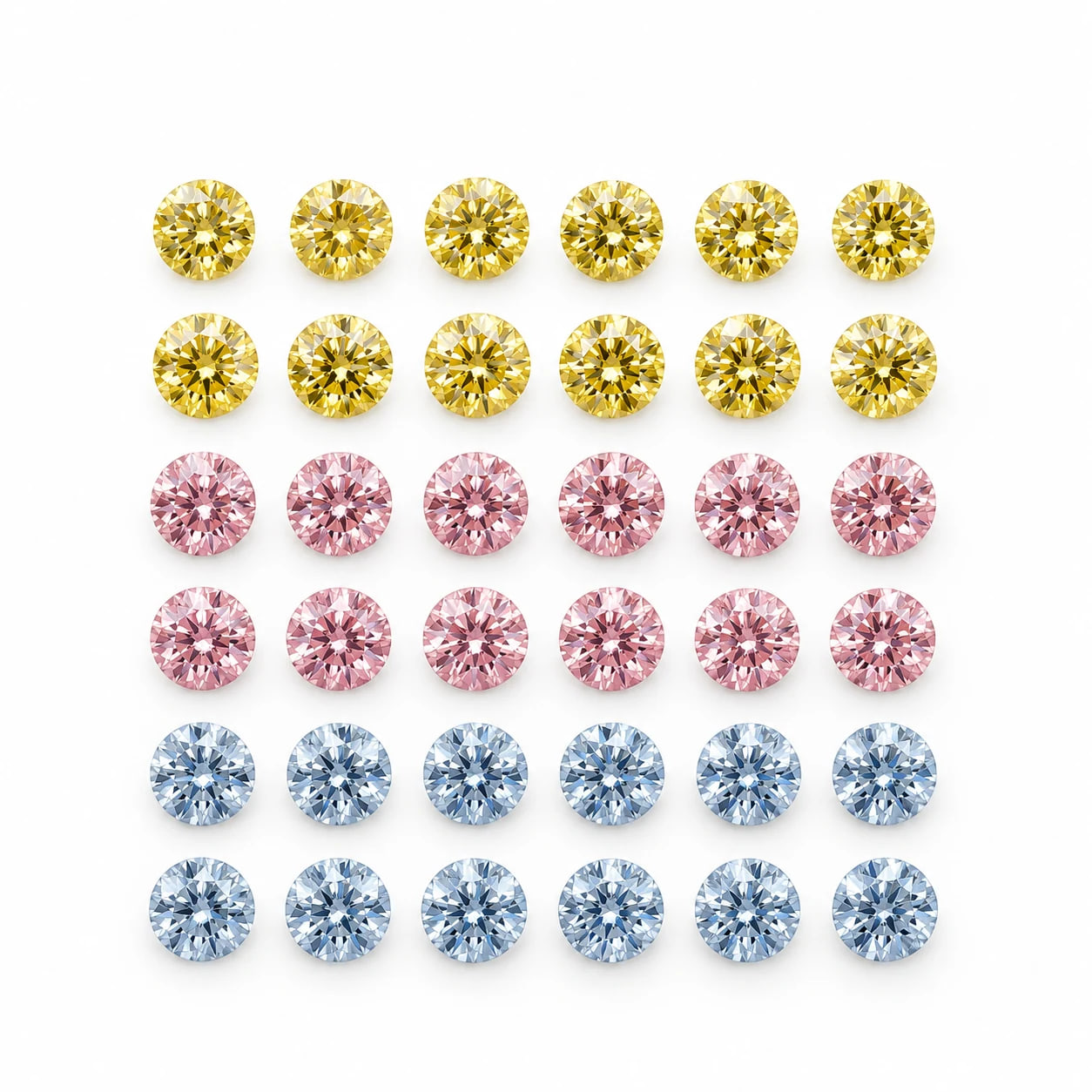
Preferences are a brief, not a live inventory selection.
A product brief, not just a grade list
Understanding Yellow Lab-Grown Diamonds
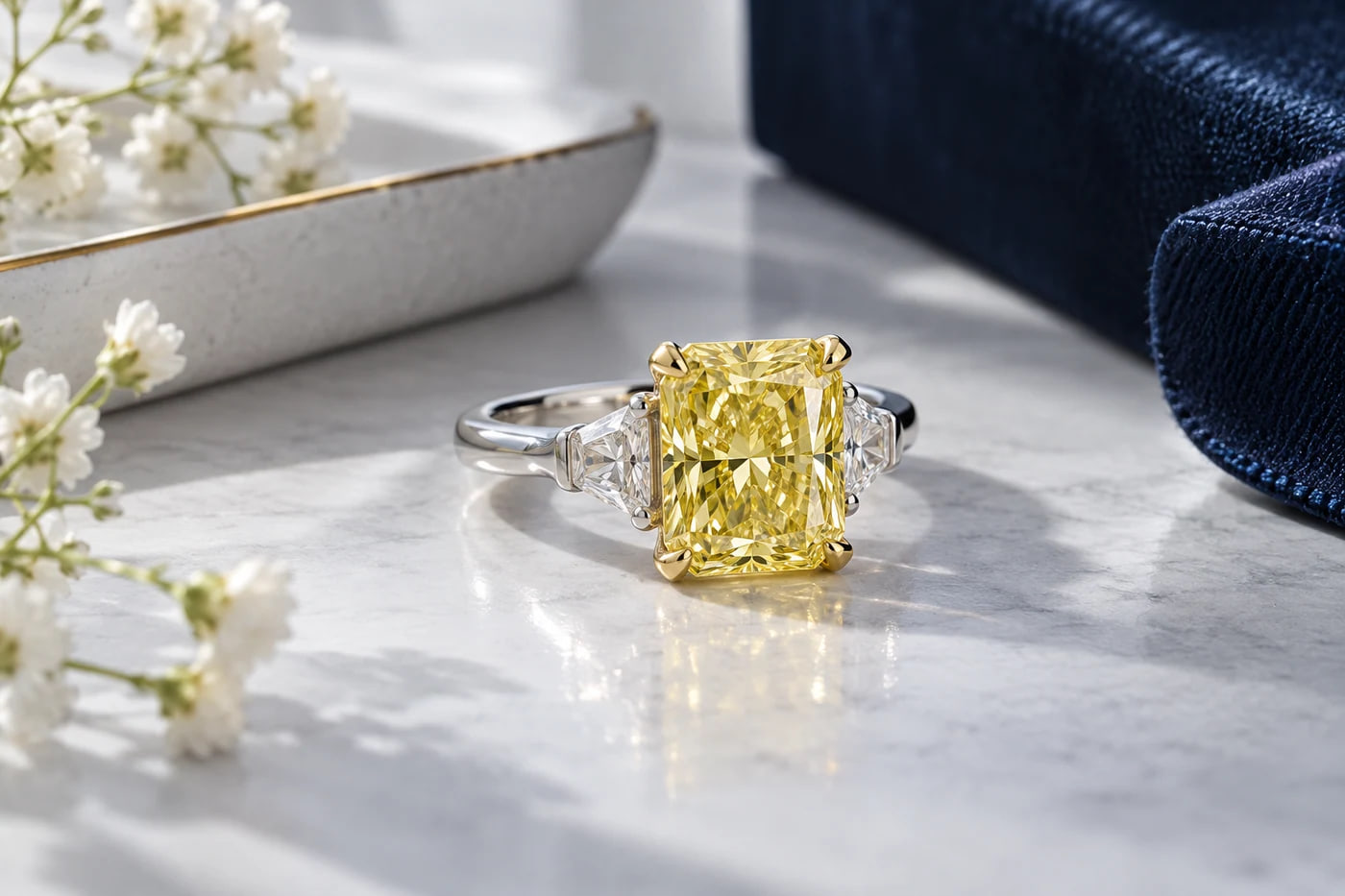
Yellow lab-grown diamonds can bring a clear color direction to a jewelry design, but the word yellow does not describe every hue, intensity or face-up appearance. The reference stone on this page is a rectangular radiant-cut yellow diamond; other outlines need their own sourcing review. Begin with the intended setting, color reference, dimensions and report requirements rather than assuming that all yellow stones will look alike. Compare the actual proposed diamond in consistent conditions, and keep any formal color description tied to the evidence supplied. MEITUO coordinates a stone-specific sourcing discussion, with growth, treatment information, availability and commercial terms confirmed before the selected goods are approved.
01 / Define the actual requirement
Yellow Lab-Grown Diamonds Specifications
Separate the product description, sample values and information that must be confirmed for the actual selected goods.
Reference requests and example values; not measurements of an available inventory item.
Material
Laboratory-grown diamond
Reference shape
Rectangular radiant cut with clipped corners
Illustrative weight request
2.00 ct per stone; example target, not an available inventory item
Illustrative dimensions
9.00 × 6.50 × 4.20 mm; sample configuration for the brief
Reference color
Yellow visual direction; no laboratory intensity grade assigned to the illustration
Color assessment
Review hue, tone, saturation and face-up distribution under agreed conditions
Clarity / finish
Use the actual proposed stone’s documented information
Other shape requests
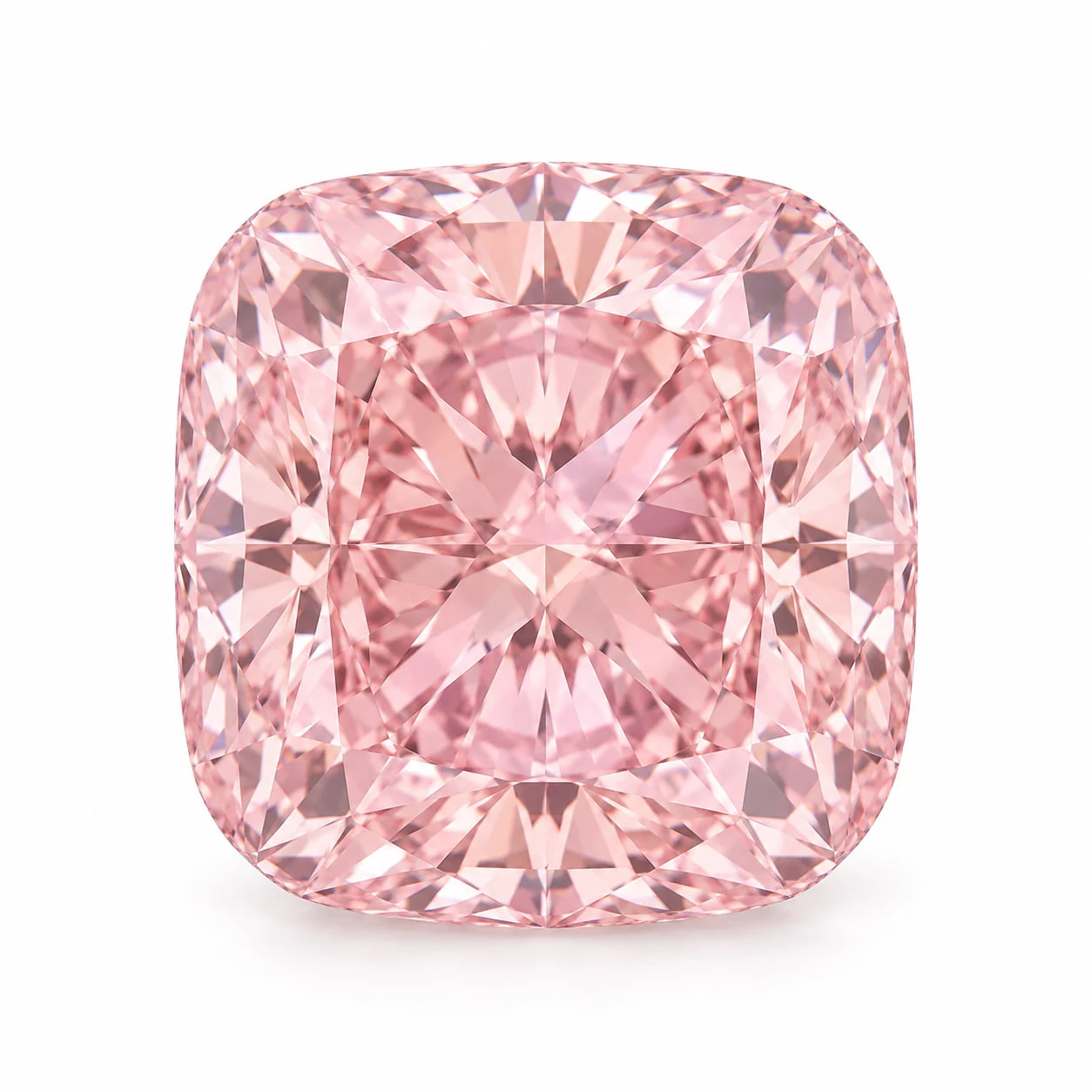
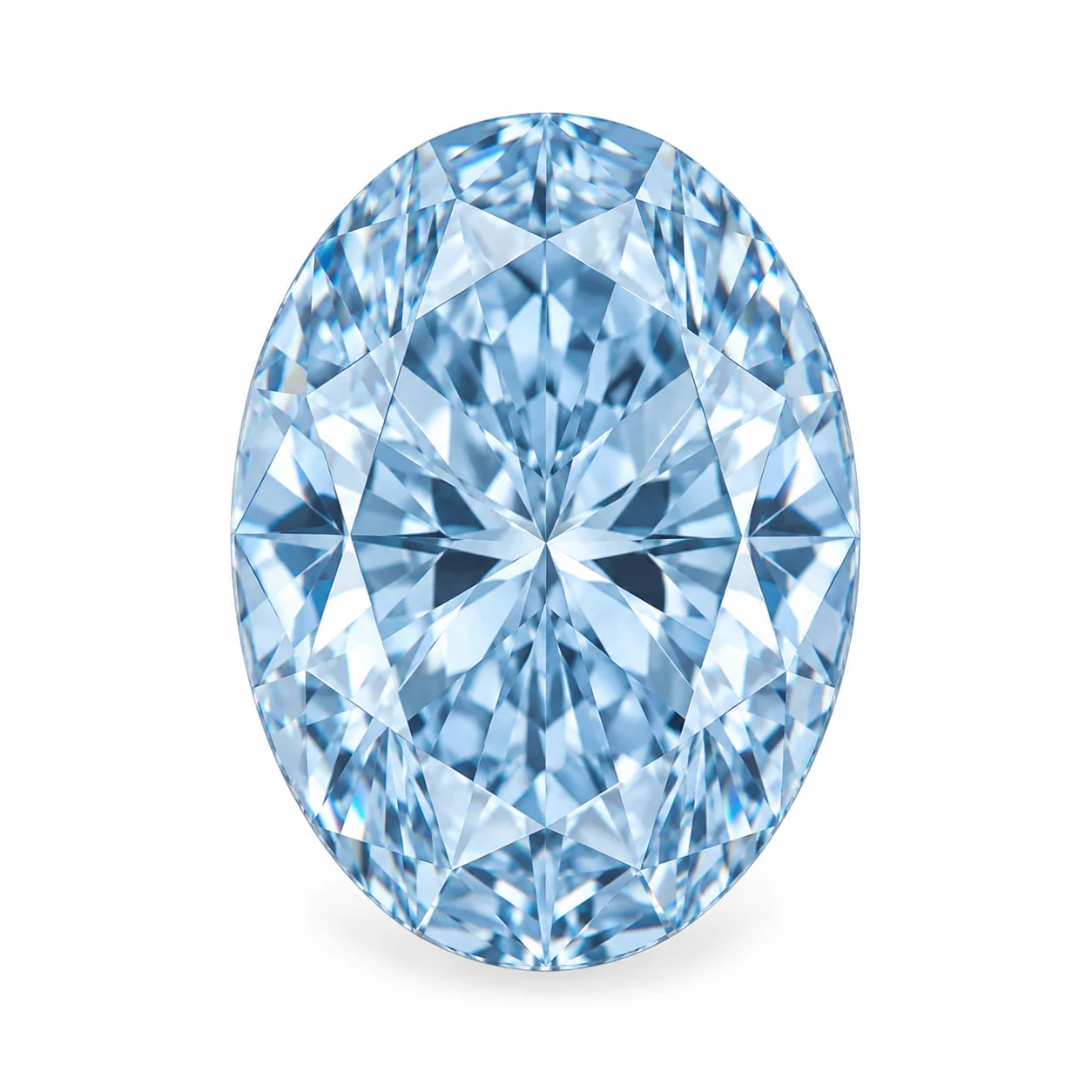
Cushion, oval or another defined outline, subject to individual confirmation
Growth method
Confirm CVD or HPHT for the proposed goods
Documentation
Confirm the available laboratory report or batch documentation
Post-growth treatment
Confirm disclosed treatment information for the proposed goods
Order unit
Individual loose stone; any matched-pair requirement quoted separately
MOQ / price / lead time
Confirmed only in the quotation for the agreed specification
Read the actual document and confirm correspondence to the selected goods.
Growth method
Confirm CVD or HPHT for the proposed goods
Documentation
Confirm the available laboratory report or batch documentation
Post-growth treatment
Confirm disclosed treatment information for the proposed goods
IGI and GIA services have their own report formats. Use the actual issuing laboratory's wording rather than adding a blanket quality claim. IGI report background · Current GIA services
Define purchase units, measurements and the approval basis before comparing quotes.
Illustrative weight request
2.00 ct per stone; example target, not an available inventory item
Order unit
Individual loose stone; any matched-pair requirement quoted separately
MOQ / price / lead time
Confirmed only in the quotation for the agreed specification
Provide the color reference, setting concept and the desired report information.
02 / Choose against the design
How to Choose Yellow Lab-Grown Diamonds
Use these product-specific checks to make your quotation request more precise.
01 / SELECTION CHECK
Distinguish Yellow From a Complete Grade
Use a visual reference to explain the direction, but retain the laboratory’s actual wording where a report is supplied. Do not convert a photograph or a general yellow label into a formal intensity description.
02 / SELECTION CHECK
Review the Intended Metal Context
The setting and surrounding stones can influence how a color combination is perceived. Explain the intended metal and neighboring colors, then compare the proposed stone using consistent lighting rather than judging it from a single screen image.
03 / SELECTION CHECK
Choose the Radiant Outline Deliberately
A rectangular radiant can vary in length-to-width ratio and corner proportions. Describe the silhouette your design needs and check the face-up dimensions against the mount, instead of letting a target carat weight stand in for shape fit.
04 / SELECTION CHECK
Keep Treatment Information With the Stone
Color appearance is not a record of growth method or post-growth treatment. Ask for the actual disclosure and supporting document information for the selected diamond, and preserve those details with the product description you intend to publish.
03 / Plan from the finished design
Applications for Yellow Lab-Grown Diamonds
The finished setting or production workflow determines which measurements and matching decisions belong in the enquiry.
APPLICATION 1
Radiant Yellow-Diamond Rings
For a yellow radiant center, define the rectangular outline and the relationship to the metal and any colorless accents. Review the proposed stone in the full design context before approving the setting and final product description.
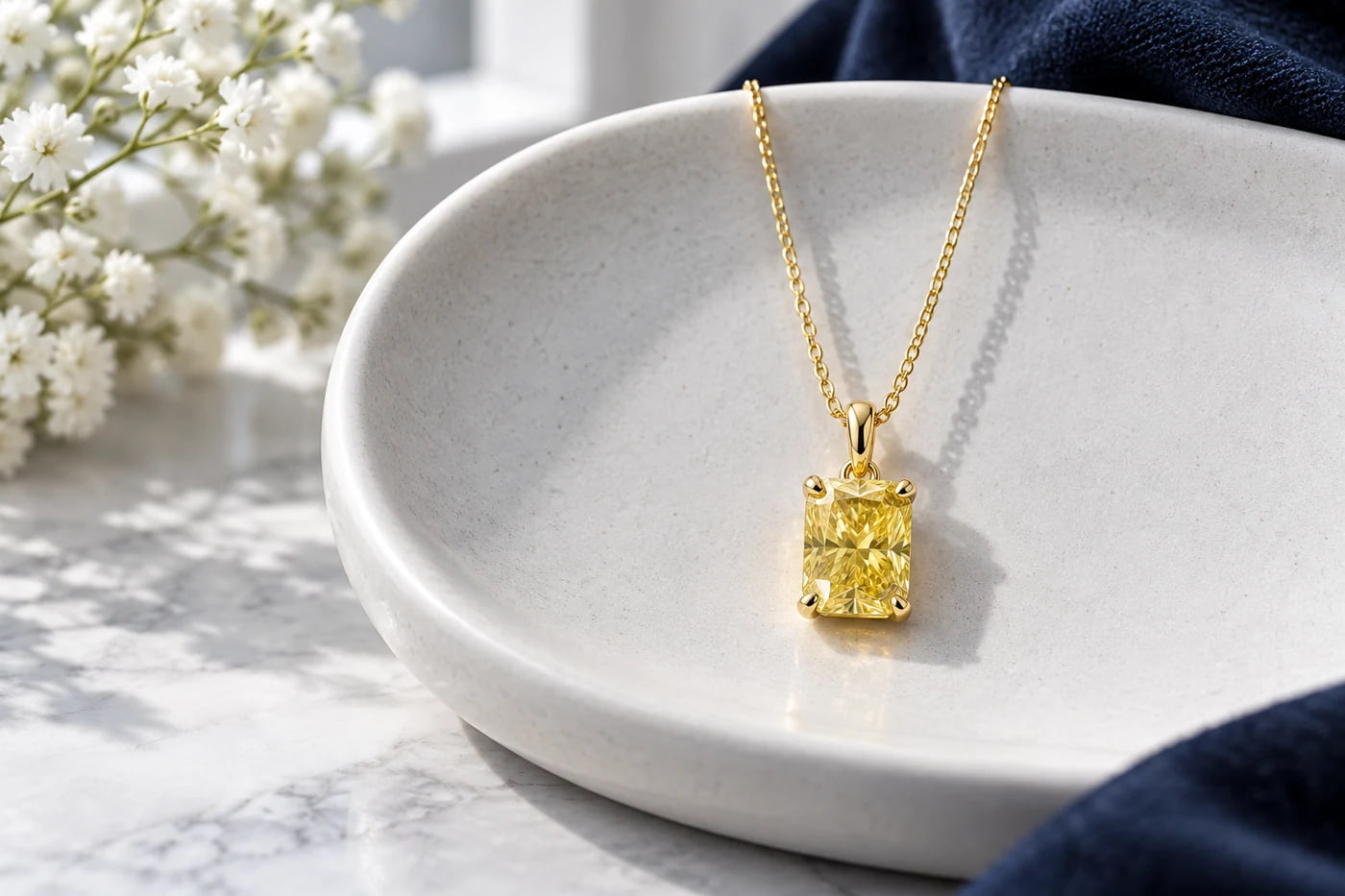
A pendant places the face-up color and outline at the center of the composition. Include the intended orientation, visible metal and approximate design scale, and confirm the actual dimensions before the mount is produced.
A small brand can use a yellow reference to guide several pieces, but each new diamond needs its own comparison. Record which variation is acceptable and distinguish a coordinated appearance goal from a promise of identical color grades.
Select a yellow focal stone whose appearance fits the client’s design and can be described accurately.
Include in the RFQ: Provide the color reference, setting concept and the desired report information.
02
Designers and Small Brands
Coordinate a color direction across pieces without assuming every new stone will be visually identical.
Include in the RFQ: State the metal, neighboring colors and accepted variation within the collection.
03
Jewelry Workshops
Fit the selected radiant outline into the actual ring or pendant mount.
Include in the RFQ: Send the rectangular seat dimensions, corner requirements and approval sequence.
05 / Qualitative procurement scenarios
Market Buying Considerations for Yellow Lab-Grown Diamonds
Use a specific business scenario to prepare an enquiry. These examples do not assert national preferences, market size or confirmed orders.
Editorial buying scenarios, not national demand rankings or company sales data.
Market
Buying scenario
RFQ focus
United States
Custom yellow-center ring proposals
Radiant outline, color reference and document wording
United Kingdom
Bespoke color-and-metal combinations
Intended metal, adjacent stones and color approval
Australia
Made-to-order color collections
Selected-stone approval, mount fit and required date
United States · Custom Yellow-Center Ring Proposals
For a US-facing jewelry proposal, the useful comparison is between actual stones that suit the same design brief. Keep the chosen diamond’s reported description linked to its imagery and dimensions. This is a buying scenario, not a statement about national color popularity or market growth.
United Kingdom · Bespoke Color-and-Metal Combinations
A bespoke jeweller can begin with the complete color composition rather than the gemstone name alone. Share the metal and neighboring stones, then review the actual yellow proposal under consistent conditions. The formal product description should reflect the evidence supplied for that stone.
Australia · Made-to-Order Color Collections
For a made-to-order piece, complete the yellow stone’s visual and dimensional approval before committing the mount. If the design will repeat, retain the reference and discuss acceptable variation. New stones require a fresh selection; repeat availability is not established by this illustration.
06 / A practical comparison
Yellow Fancy-Color vs Near-Colorless Diamonds
Compare the properties that change the purchasing decision, then review the actual selected stones or parcel.
Choose against the actual design, documents and offered goods rather than a blanket better-product claim.
Buying point
Yellow color brief
Near-colorless brief
Appearance objective
An intentional yellow color direction
A desired low-color appearance
Color information
Use the actual reported fancy-color wording where supplied
Use the actual report’s applicable color information
Design reference
Hue relationship to metal and neighboring stones
Brightness and appearance within the intended setting
Comparison method
Actual color reference and consistent viewing
Actual grading data and consistent viewing
Shared requirements
Document correspondence, dimensions and treatment disclosure
Document correspondence, dimensions and treatment disclosure
08 / Before you source
Yellow Lab-Grown Diamonds Buying FAQ
Is the Illustrated Yellow Diamond a Fancy Intense or Fancy Vivid Grade?
No formal intensity grade is assigned to the illustration. Yellow is the visual direction for this reference. Use Fancy Intense, Fancy Vivid or another formal description only where the actual supplied report or evidence supports that wording for the selected diamond.
Are Yellow Lab-Grown Diamonds Available in Radiant Cut?
Submit a radiant-cut request with the desired weight, dimensions, color reference and documentation requirements. The exact proposed stones and availability must be confirmed. The generated rectangular radiant image is a design reference, not a reserved stone or a statement that every yellow radiant specification is stocked.
Can a Yellow Diamond Be Described Using D–F Color Grades?
Do not replace an actual fancy-color description with a colorless-range label. Follow the applicable information in the supplied document and explain the stone’s identity clearly. A color reference, a laboratory color assessment and a commercial grade range are different kinds of information.
How Should I Compare Two Yellow Stones?
Review hue, tone, saturation and visible distribution under consistent conditions, alongside the actual dimensions and report data. Include the intended setting context. Images captured under different lighting or displayed on different screens do not provide a controlled comparison of the two diamonds.
Does Yellow Color Prove the Growth Method or Treatment History?
No. Visual color alone should not be used to infer how a diamond was grown or treated. Confirm the growth and treatment information available for the actual proposal, retain the supporting disclosure, and keep the published description consistent with that evidence.
Can I Order a Coordinated Yellow Pair or Collection?
State that coordinated appearance is part of the request and define the comparison reference. Each diamond needs its own selection and documentation review, with matching criteria agreed for the pair or collection. Do not assume identical color from nominal grades or from one previously approved stone.
09 / Prepare the next conversation
Build Your Yellow Brief
Start with the fixed requirements and explain where the sourcing selection can vary.
Provide the color reference, setting concept and the desired report information.
YOUR PREFERRED REQUIREMENT
Yellow Lab-Grown Diamonds
Continue to our contact form with your selected specifications and send your requirements directly to our sourcing team.
Open NavigationClose NavigationSearch results: {count}No matching products. Try another shape or category, or email us below.Loading products…Product search is temporarily unavailable. Browse Products or email [email protected].Explore the Diamond Product Catalogue{label} · {count} Product Group{label} · {count} Product Groups{count} product groups{count} of {total} applications across all areas{label} · {count} Applications{count} of {total} partner solutions{count} min read{count} shape{count} shapes{count} resource{count} resources{count} guide{count} guidesCompany News Will Appear Here.No Matching Resources.No company news has been published in this collection yet. Explore our existing buying resources while future updates are prepared.Try another search term or explore all resources.Please include at least 10 characters in your message.Please complete your name and email.Show Diamond Comparison GuideMinimize Diamond Comparison GuideFit to ScreenZoom 2×Image {index} of {total}: {name}Local preview: copy the preview address for use on this device. Social sharing is available on the public website.Copy Preview LinkCopy LinkPreview address copied. It is accessible on this device.Guide link copied.Copy this address from your browser: {url}Share options closed.Sharing cancelled. You can also copy the link.Use Copy Link or one of the other sharing options.
 English
 Español
 Português
 Deutsch
 Français
 Italiano
 Nederlands
 العربية
 日本語
 한국어
 ไทย