 English
 Español
 Português
 Deutsch
 Français
 Italiano
 Nederlands
 العربية
 日本語
 한국어
 ไทย
Quick Answer
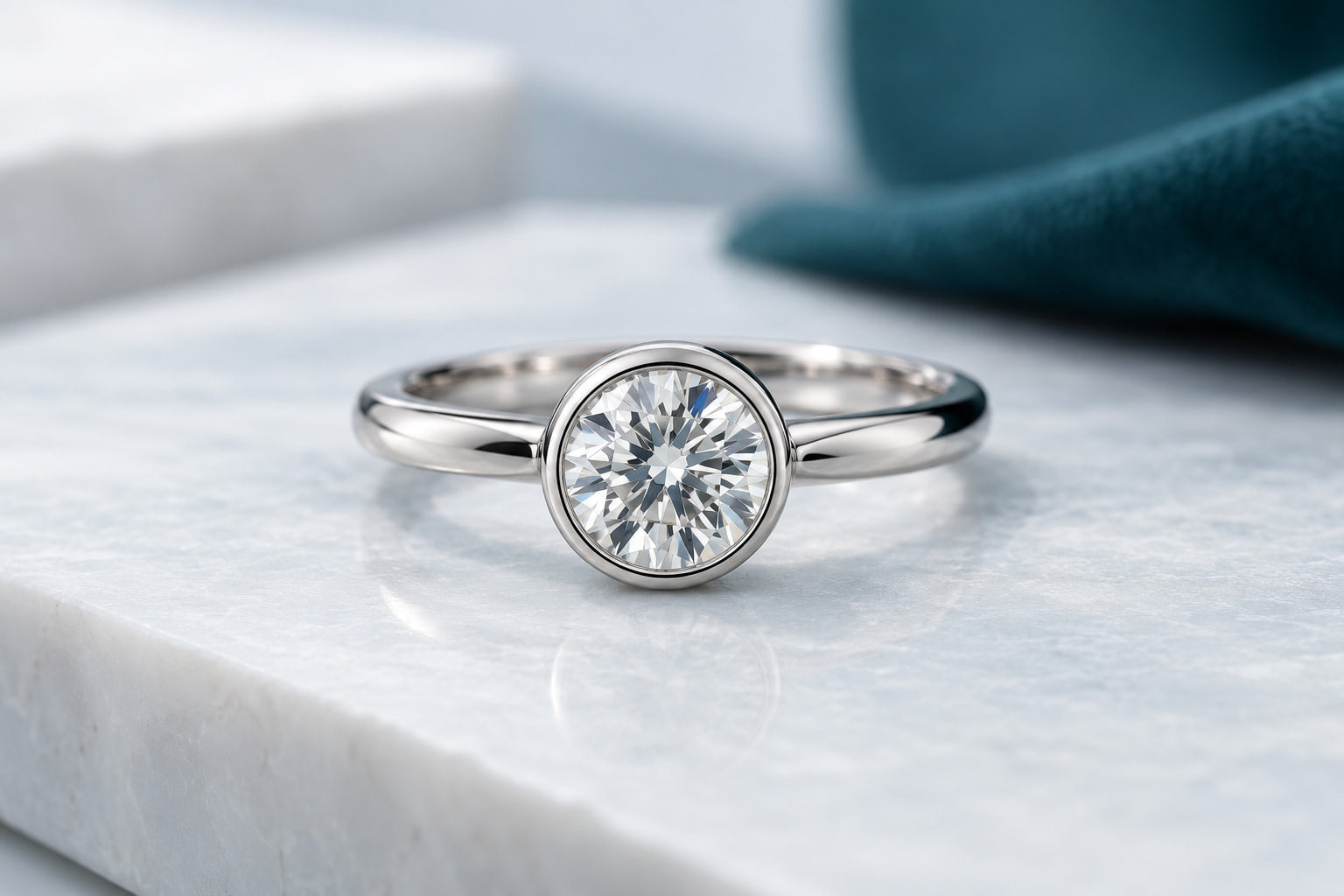
A lab grown diamond bezel solitaire ring needs a stone-specific fit brief: actual outline, dimensions, depth and the maker's approved seat and rim design. A continuous-looking bezel is not a universal size container for every diamond in the same carat category. Ask the producer to show the intended rim coverage, side profile and setting sequence, then review the finished sample against that drawing. Select replacement stones by the actual accepted geometry rather than weight alone. Keep visible rim width separate from any engineering requirement for the underlying metal. The buyer can approve appearance and incoming stone condition, while the jewelry maker must define and verify the construction, setting and finishing of the completed ring.
Why Should Bezel CAD Follow the Actual Stone Outline?
Provide the stone's measured length, width and depth, plus clear outline images. For non-round shapes, show corner fullness, tips and other features the maker needs to represent. Two stones can share nominal dimensions while differing in outline details. The producer should determine what physical stone information or scan is needed before freezing the seat drawing.
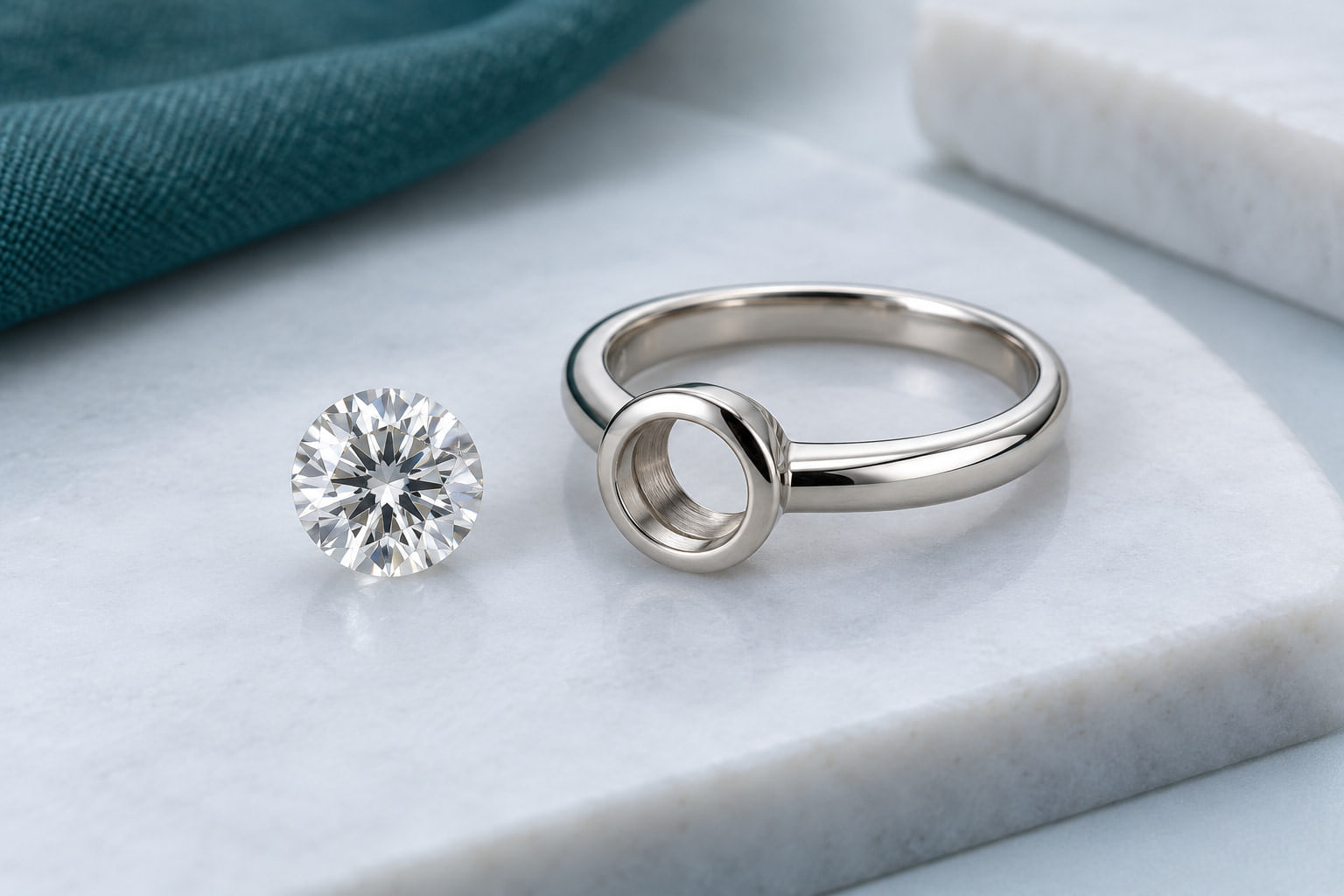
Do not treat the visible outer rim as the seat specification. The finished top view shows the composition, while the underlying geometry determines how the maker constructs and sets the ring. Ask for a section drawing and a clear explanation of the intended sequence. A buyer need not invent technical dimensions to request that explanation.
Approve the stone-to-rim relationship at actual scale. A wide-looking rim may be deliberate in a bold design; a narrow-looking rim may be deliberate in another. Neither aesthetic choice establishes a universal safety threshold. If the producer changes its construction to achieve the appearance, it should identify and verify that change.
The loose center-stone range is a starting point for selection. Once the maker approves a specific seat and outline, use that actual requirement rather than treating all centers in the same weight band as interchangeable.
Visible Rim VS Underlying Seat: What Should the Buyer Document?
| Decision | Visible rim appearance | Underlying seat and setting geometry |
|---|---|---|
| Main question | What metal border does the buyer intend to see? | How does the producer construct and retain the actual stone? |
| Useful evidence | Actual-scale top and oblique views | Maker's drawing, stone measurements and setting plan |
| Buyer role | Approve proportion, consistency and finish | Review the proposal and assign technical verification |
| Producer role | Reproduce the accepted visual reference | Define and verify the construction and process |
| Change trigger | Different border or visible outline | Different stone, seat, metal geometry or setting sequence |
This comparison prevents a common procurement mistake: quoting a tiny visible border as though it were a complete engineering specification. A drawing dimension can be a design target without proving how the finished setting performs. Ask the producer to state what its measurements represent.
For full and partial bezel concepts, show exactly where the rim continues and where it stops. Do not call an interrupted design continuous in the technical record. The scope here is the bezel's rim-and-seat relationship, rather than a generic ranking against every prong style.
How Should Selection, CAD and Finishing Be Sequenced?
Agree the approval sequence with the actual producer. One project may select a specific center first and then finalize the seat. Another may use an accepted dimensional family for a repeatable design. The buyer should know which approach is being used and how the maker handles outliers. Do not allow a broad stock label to substitute for the agreed fit window.
Before setting, record stone condition and identity. Ask the maker which surfaces are finished before the diamond is installed and which finishing operations remain afterward. This is a request for its process explanation, not an instruction to use a particular technique. Changes to that sequence should be communicated if they affect the accepted appearance or inspection access.
After setting, compare the rim around the entire outline. Look for an unintended thick area, an irregular transition or a visibly different corner treatment. Ask the producer to distinguish a finishing issue from a mismatch between the actual stone and the intended geometry. The remedy should address the cause rather than merely polishing until the difference becomes less visible.
The scope guide for loose stones and finished jewelry helps assign responsibilities. A sourcing partner can provide selection evidence; the producer needs to own the seat, setting sequence and final verification.
Define how the outline is referenced in the inspection record. For a round, the buyer may compare several clock positions; for an oval, compare ends, shoulders and long sides; for a cushion, identify the corners separately. This makes a description such as uneven rim actionable. It also prevents the team from averaging away a local feature that dominates the finished appearance.
Where the stone has a deliberately unusual outline, ask the designer whether the rim is intended to follow that variation or present a more regular outer silhouette. Those are distinct aesthetic directions. The producer should explain the resulting geometry before the buyer chooses one. Do not assume that a perfectly regular outer border is the only acceptable design for every stone.
For non-round stones, record which end or corner corresponds to the drawing origin. That simple orientation reference helps the maker compare outline evidence consistently throughout seat approval and final inspection.
Hypothetical Example: A Border Calculation Exposes a Substitution
An invented round bezel concept has a simplified 8.4 mm outer face diameter around an accepted 8.0 mm stone outline. The front-view difference is 0.4 mm across the whole diameter, or 0.2 mm per side when centered. These figures describe an illustrative visible border only. They are not metal-wall requirements or setting tolerances.
A supplier then proposes an 8.2 mm stone while keeping the same outer face. The simplified border becomes 0.1 mm per side. The nominal stone weight category may sound comparable, but the visual composition has changed. The buyer cannot approve the substitution merely because the center appears larger or because the price is attractive.
The team asks the maker to present options: retain the original stone window, revise the outer outline, or develop a separately approved rim appearance. If the outer face grows to 8.6 mm around the 8.2 mm outline, the simplified border returns to 0.2 mm per side, but the ring's overall top is now larger. That creates a new proportion decision.
The producer must still assess the real three-dimensional seat and setting geometry for any option. The buyer chooses the revised larger outline only after reviewing its actual-scale sample and side profile. The project records the center measurements, drawing revision and finished visual reference together. A transparent border calculation has therefore exposed the design consequence without pretending to certify the construction.
Which Channel Can Support Stone-Specific Bezel Selection?
Ask each seller whether it can provide the actual outline evidence the maker needs. A loose center offer, an empty bezel and a completed ring are different scopes. Compare them against one accepted fit brief rather than a carat label alone.
USA / Actual stone before final seat approval
What Should a US Bench Receive Before Bezel Selection?
Stuller offers loose lab-grown diamonds through a US channel. A retailer using a separate bench should confirm whether the maker needs the physical center or other actual geometry evidence before approving the bezel. A stock weight category is not automatically a seat specification.
Ask the bench to distinguish its visible rim target from its construction requirements. The retailer can then compare the intended appearance with a sample without inventing technical wall dimensions. If a supplier proposes another center, send its actual measurements and outline to the bench before accepting it.
For repairs, preserve the original center identity and bezel revision. A replacement may require more than finding an equal-weight stone, and the maker should assess the existing rim before promising reuse. Keep the commercial return terms distinct from permission to set or alter a stone. That distinction matters when the retailer buys a loose center from one business and has another business complete the ring.
CHINA / Geometry-linked alternatives
How Should Chinese Coordination Handle a Bezel Outline Change?
For China-facing sourcing, provide the maker's accepted center window and outline evidence requirements. MEITUO's Qingdao team can coordinate loose options, but it should not have to infer a bezel seat from a promotional photograph. Identify whether the project follows a specific center or a controlled repeatable geometry.
Ask alternatives to state actual length, width, depth and outline differences. If a proposed stone changes the visible border, have the maker present the resulting design options before the coordinator allocates it. Keep the old and revised drawings distinct so the workshop does not use an accepted stone with an obsolete seat reference.
For dispatch, preserve identities where centers are assigned to individual CAD files. If the order uses a common dimensional family, label that family and record any accepted exceptions. Do not merge an outlier into the main allocation on the assumption that the setter will make it fit. The buyer and producer should approve any such exception before it reaches the setting stage.
INDIA / Outline evidence and accepted exceptions
What Should an Indian Center Offer Show for a Bezel?
Greenlab lists Surat manufacturing and Mumbai corporate contacts. For an Indian center inquiry, request the actual outline and dimensions required by the bezel producer. Nominal weight can narrow a search, but it cannot establish how the finished rim will follow the stone.
For fancy shapes, ask for clear views of corners, tips and edge fullness rather than a generic shape label. If the seller offers multiple centers for one repeat design, compare whether their outline variation falls within the maker's accepted family. A visually attractive outlier may deserve a separate design, not automatic inclusion in the common parcel.
Before export, identify accepted exceptions individually and preserve their connection to the relevant drawing. Agree how a delivered mismatch will be remedied before setting. The supplier should know whether it is fulfilling an approved geometric window or proposing a new bezel concept. This makes the response useful to the actual producer without attributing construction validation to the loose-stone seller.
What Should Bezel Receiving and Final Inspection Examine?
At loose-stone receiving, compare actual measurements, outline and condition with the accepted record. If the stone differs, pause the seat allocation until the maker reviews it. An unexpectedly full corner or deeper profile may matter even when headline length and width appear close. Preserve the original evidence so the discussion concerns the delivered object.
At final inspection, review the rim around the full outline and compare the side silhouette. Ask the producer to complete its retention and finishing checks. GIA notes that impact can damage diamonds during setting. Condition records before and after the process help identify when a concern appeared; they do not establish blame without further assessment.
Check that the final sales image represents the accepted rim. If the campaign uses an earlier thinner-border prototype, update it or explain the actual supplied version accurately. A buyer should not approve the physical ring and leave incompatible product data in circulation.
For service, ask the producer how it assesses removal or replacement in this specific bezel. Do not assume the rim can be opened and reused without inspection, or that any equal-weight center will fit. The repeat-order record should preserve the actual geometry and service decisions.
When a rim concern appears, photograph the same region before and after any proposed remedy. Note whether the concern is border width, surface finish, alignment or stone condition. A request to make the bezel cleaner is too vague to preserve the decision. The maker should identify the work proposed and whether it changes the accepted outline or requires another setting operation.
For a replacement center, compare the proposed outline with both the original stone record and the setting as it now exists. The original CAD file describes the earlier design, while the used ring may require a new assessment. The buyer should understand whether the service quotation retains the old head, rebuilds part of it or supplies a new one, and how that choice affects the final visual reference.
How Can MEITUO Support a Bezel Solitaire Stone Brief?
MEITUO is a sourcing and supply-chain coordination partner in Qingdao, Shandong, China, serving jewelry brands, wholesalers, retailers and designers. Its product range includes loose centers, melee, side stones and matched sets. For a bezel solitaire, the buyer should provide the accepted outline and dimension window, along with the jewelry maker's required evidence for seat approval.
The team can support product selection, supplier coordination, quality-requirement confirmation and order follow-up. Buyers can ask for alternatives to be identified by actual geometry rather than only a nominal carat category. Any stone change that affects the rim or seat should return to the producer and buyer for review before allocation.
Contact [email protected] with the center brief, quantity and drawing revision. Confirm availability, documents, MOQ, treatment information, lead time and shipping terms for the particular order. The bridal application scope provides context; it does not replace the producer's responsibility for bezel construction, setting sequence or completed-ring verification.
What Belongs in a Bezel Solitaire RFQ?
Attach actual stone dimensions, outline images and the maker's seat reference. State the intended visible rim appearance separately from technical construction requirements. Identify whether the quote concerns a specific center, a controlled dimensional family or an alternative requiring new CAD. Include the accepted side profile as well as the top view.
Require proposed substitutions to show their effect on both stone and outer setting dimensions. A supplier should not decide that a larger outline is an automatic improvement. Separate loose supply, mount, setting and finishing charges so the buyer can understand who owns each approval and what work is included.
Use the RFQ guide for commercial terms and the shape-planning guide to organize outline language. The copyable brief below ties the diamond to a real bezel requirement while leaving technical construction and process verification with the actual jewelry maker.
Please quote [quantity] laboratory-grown centers for bezel solitaire drawing [revision]. Use [specific stone or dimensional family], actual outline evidence, length/width/depth windows and accepted appearance reference. The visible rim target is [reference]; underlying construction will be defined by the jewelry producer. Identify any alternative changing stone outline, outer setting dimensions or seat geometry for renewed approval. Separate loose supply, mount, setting and finishing charges. Confirm documents, treatment information, MOQ, lead time, packing identities and shipping terms. Provide pre-setting condition evidence and agreed remedies for mismatches. The maker will verify the actual seat, process and completed ring.
FAQ: Bezel Lab-Grown Diamond Solitaire Rings: The Fit Brief
Can Equal-Carat Stones Use the Same Bezel?
Not automatically. Actual outline, dimensions and depth must meet the maker's accepted seat requirements.
Is Visible Rim Width a Safety Specification?
No. It describes appearance unless the producer explicitly defines otherwise. The underlying construction needs its own technical assessment.
Should the Stone Be Selected Before CAD?
Agree the sequence with the producer. A specific-center design and a controlled dimensional-family design can use different approval workflows.
Can a Larger Center Be Substituted as an Upgrade?
Only after review. It may change the visible border, outer setting dimensions or seat geometry even within a similar weight category.
Does a Bezel Guarantee No Diamond Damage?
No. The maker must validate its process and inspect condition. Diamonds can still be damaged, including during setting.
Can the Old Rim Always Be Reused for a Replacement?
Do not assume that. The producer should inspect the actual setting and proposed replacement before confirming a service method.