 English
 Español
 Português
 Deutsch
 Français
 Italiano
 Nederlands
 العربية
 日本語
 한국어
 ไทย
Quick Answer
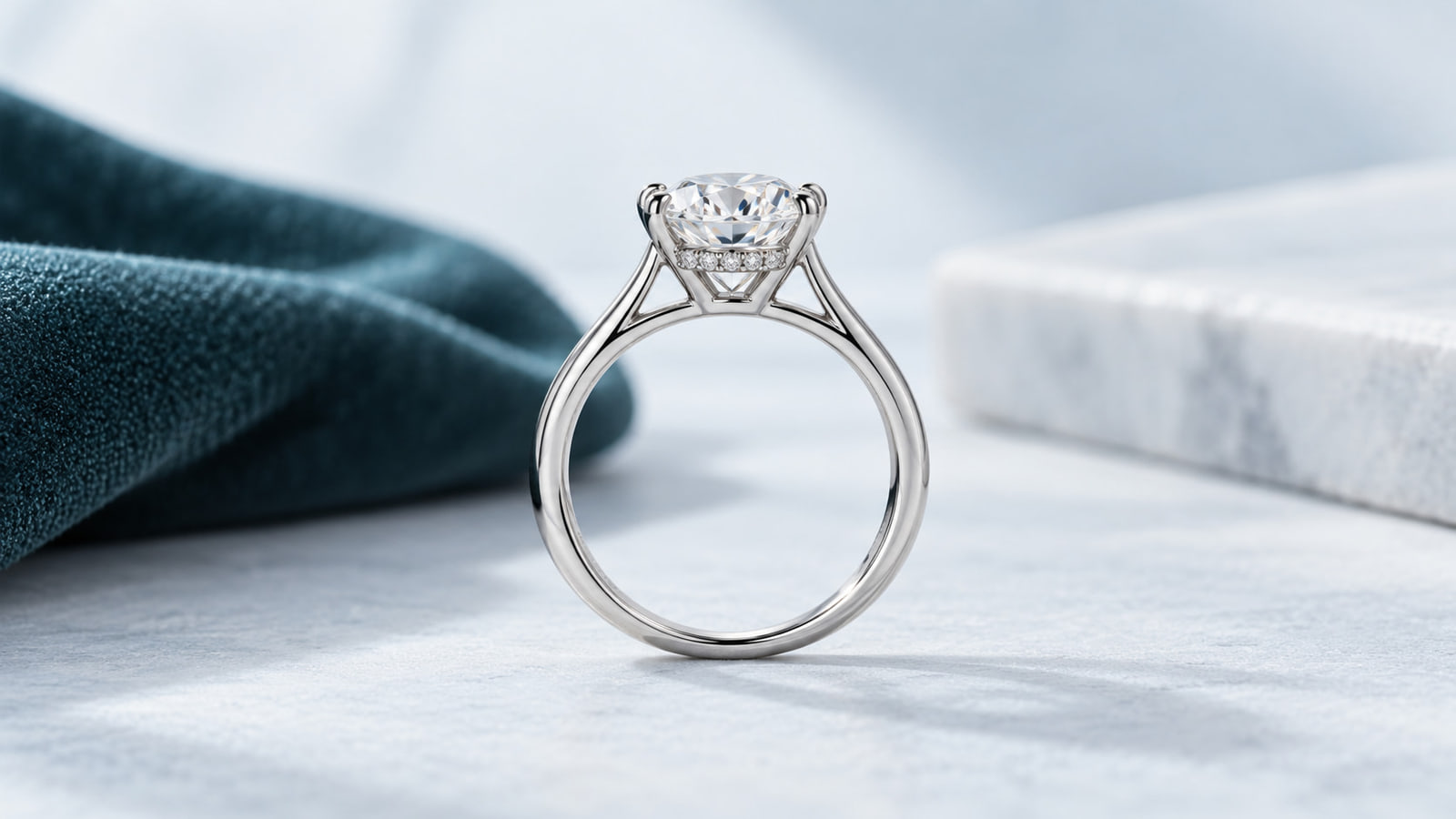
A hidden halo lab grown diamond engagement ring needs an under-center row map and a side-section drawing, not just a top-view render. Define where the melee sits relative to the center seat, gallery and prongs, then ask the maker to confirm the actual construction and access for inspection. A hidden halo differs from a visible face-up halo: its intended effect appears mainly from the side or oblique angles. Select each small-stone family against the approved seats and record any interrupted positions around structural elements. Review the finished ring after the center is installed, because earlier photographs may not represent the final visibility. Keep aesthetic approval, loose-stone acceptance and the producer's technical verification as linked but distinct responsibilities.
Where Should the Hidden-Halo Row Be Defined?
Ask the producer to show the center seat, gallery and accent row in one side drawing. Identify the row's intended height and orientation using the maker's drawing references. The buyer should understand whether the accents face sideways, upward at an angle or another specified direction. The hidden-halo label alone does not establish those details.
Show how the row approaches the prongs or other structural elements. If the pattern pauses at those locations, mark the interruptions explicitly. A continuous-looking side photograph may conceal them, and an oblique photograph may make a correct interruption appear like a missing stone. The inspection map should describe the actual construction rather than an idealized uninterrupted ring of diamonds.
Distinguish the center's pavilion and depth from the visible side effect. A deeper center may lead the maker to revise the head, but the buyer should not assume that it creates room for the same hidden row. The producer must explain the actual relation between the seat, gallery and accents.
The bridal application brief should identify an under-center halo rather than a face-up frame. That boundary keeps the stone map focused on side visibility and gallery interfaces, instead of repeating a general center-stone selection guide.
How Should Under-Center Melee Positions Be Scheduled?
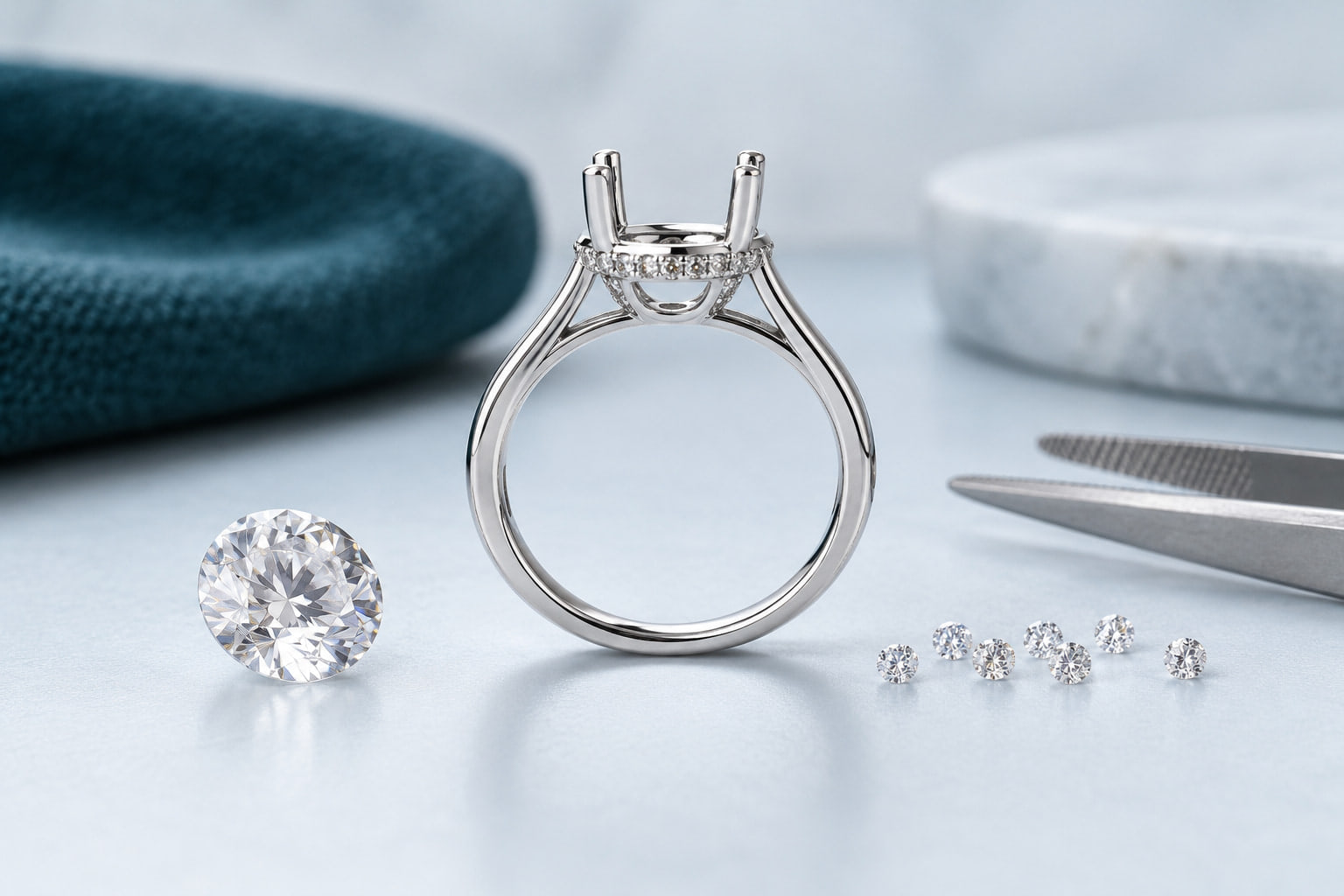
Number the row by quadrants or another reproducible reference tied to the head. Identify each stone-bearing position and each intentional gap. List diameter or actual shape dimensions, depth window, quantity and appearance reference by family. If the row changes size near the prongs, show those groups separately.
The melee range provides a sourcing category, while the producer supplies the actual seat requirements. Do not infer a universal hidden-halo stone size. A row selected for one head can require different dimensions in another, even if both use a center with the same nominal weight label.
Ask how the maker intends to set and inspect the small stones relative to the center installation. The sequence affects what evidence can be obtained at each stage. The buyer can request photographs of the row before the center obscures part of the gallery, followed by final views afterward. Neither stage alone necessarily records the complete finished condition.
For matching, compare the small stones as a side row under consistent conditions. A generic loose-parcel image does not show their intended distribution. Preserve the actual reference and position map through packing so the workshop does not redistribute different families simply because all the stones are small and visually similar when loose.
Include the intended inspection direction on the map. A quadrant label is useful only when the reviewer knows which side of the head it identifies. Use an agreed front reference and keep that orientation through pre-setting and final photographs. If a ring is turned over or mirrored in an image, label the view rather than forcing the reviewer to guess.
For multiple accent rows, assign each a separate identifier. A hidden row below the center and a row on the shank are not interchangeable simply because their loose stones share a dimension family. The consumption record should show where stones were mounted, and the final evidence should show which row is being reviewed.
Keep the center installation stage identified in every inspection image. A pre-center photograph and a completed-ring view answer different questions, so their dates and component revisions should remain distinguishable.
Which Channel Can Support an Under-Center Row?
Ask suppliers to identify whether they supply the small diamonds, produce the head or assemble the completed ring. Hidden-halo expertise should be demonstrated through the actual row schedule and final evidence, not inferred from a broad engagement-ring catalog.
USA / Side evidence and service access
What Should a US Retailer Show for a Hidden-Halo Listing?
Stuller offers loose lab-grown diamonds through a US channel. A retailer can source centers or accents through trade channels while using a separate head producer. The final hidden row still needs its own position and side-view record.
Ask the maker which views demonstrate the accepted feature after the center is installed. Product images should show that actual version rather than a generic top-only ring photograph. If a customer later reports a missing accent, have a professional reconcile the ring with the map; visibility from one phone angle is not enough to identify an omission.
For service, ask which party can inspect the row and how it accesses the relevant seats. Keep the center and head revisions in the retailer's record so a repair request does not default to the current catalog version. A convenient local bench is valuable when it receives the actual construction information, not merely the phrase hidden halo.
CHINA / Position-specific small stones
How Should Chinese Coordination Pack Hidden-Halo Families?
For China-facing sourcing, send the under-center map with its structural interruptions marked. MEITUO's Qingdao team can coordinate the loose families once the jewelry producer provides their actual windows. A request for a small amount of accent weight does not identify which positions must be filled.
Ask whether the same selected family covers all quadrants or whether some positions near prongs need a separate group. Keep that distinction in quotation and packing labels. If the producer changes the head, request a revised map before combining old and new stone allocations. Similar-looking loose melee can still belong to different accepted seats.
Agree how shortfalls are reported before dispatch. A missing position family should not be replaced with an arbitrary same-weight parcel and left for the setter to resolve. Preserve the appearance reference and map revision through workshop handover. This helps the buyer distinguish a sourcing mismatch from a later change in gallery geometry or final visibility when the completed ring is reviewed.
INDIA / Selected count and quadrant matching
What Should an Indian Melee Offer Show for an Under-Center Row?
Greenlab lists Surat manufacturing and Mumbai corporate contacts. For an Indian melee inquiry, provide the hidden row's actual size families and usable counts. The supplier should understand that the stones form a side-view sequence below a separately selected center.
Ask for consistent appearance across the scheduled quadrants and identify any distinct positions. A general stock video of small rounds does not establish the selected row's matching. If the offered parcel needs further sorting, confirm who performs it and whether the quoted count is before or after selection.
Before export, retain group identities and the accepted reference. Agree how an out-of-window or visibly mismatched stone will be replaced against its actual position family. The loose seller need not validate the finished head, but its allocation should support the producer's map. This creates a clear handover between selected melee and the staged inspection evidence required after setting.
Identify the commercial contact responsible for reconciling those selected groups before shipment.
What Should Final Hidden-Halo Inspection Include?
Inspect the row after the center is installed, using the agreed side views and position references. Compare its intended visibility with the accepted sample. A row may be correctly mounted yet less visible from a particular angle; that is different from an omitted stone or an unintended change in row height. Describe the observation precisely before proposing a remedy.
Ask the producer to complete its retention and construction checks, including any areas difficult for the buyer to see. A buyer's photograph review is not an independent setting verification. GIA advises examination for loose stones before ultrasonic cleaning. For a hidden row, professional access and inspection instructions should therefore be part of the service discussion.
Review the gallery's relation to any intended companion band separately. The side row may create a new contact region even when the center's top outline is unchanged. Have the maker assess the actual combination rather than inventing a fixed clearance rule. Keep that paired-ring decision separate from the hidden halo's own row acceptance.
For repeat orders, preserve the center-seat revision, row map and accepted side appearance together. The repeat-order guide helps organize records, while the producer determines which head changes require renewed inspection or sample approval.
Separate three kinds of discrepancy in the review notes. A visibility difference means a scheduled position is not clear from the chosen angle. An allocation difference means the mounted family does not match the map. A construction concern means the producer needs to inspect the actual setting. These categories lead to different evidence and remedies; calling all of them a missing halo stone can produce unnecessary work or leave the actual issue unresolved.
When the maker corrects one position, retain its final record with the same quadrant reference. The buyer can then see what changed without demanding an entirely new commercial shoot. The technical record needs an identifiable view of the corrected area and the producer's relevant final checks.
How Can MEITUO Coordinate Hidden-Halo Melee Requirements?
MEITUO is a sourcing and supply-chain coordination partner in Qingdao, Shandong, China, serving jewelry brands, wholesalers, retailers and designers. Its product range includes loose centers, melee, side stones and matched sets. A hidden-halo inquiry should supply the producer's under-center position map so the small stones can be selected for actual seats rather than a generic accent-weight target.
The team can support product selection, supplier coordination, quality-requirement confirmation and order follow-up. Buyers can request separate groups where dimensions change near structural elements and ask for service selections to remain linked to the relevant positions. The jewelry producer should define the head, setting sequence and final row-verification process.
Contact [email protected] with the row revision, center reference and quantities. Confirm availability, documents, MOQ, treatment information, lead time and shipping terms for the order. The melee buying guide can structure the loose requirement without implying that sourcing coordination validates the completed hidden-halo construction.
What Belongs in a Hidden-Halo RFQ?
Attach a side-section drawing, numbered row map and accepted center-seat reference. Identify intentional interruptions, small-stone families and the final views used for acceptance. State whether the design aims for a discreet side detail or a more visible oblique effect, using the actual sample rather than a subjective adjective alone.
Ask suppliers to separate loose melee, center stones, head components, setting and final verification. Require approval for any change to row height, orientation or stone-family dimensions. If a proposed center changes the head, ask the producer whether the hidden row remains represented by the accepted drawing before allocating the accents.
Use the RFQ guide for commercial structure and the loose center range for the separately identified focal stone. The copyable brief makes the under-center row traceable without treating a top-view image as complete evidence of the hidden feature.
Please quote laboratory-grown melee for hidden-halo head [revision], using the attached under-center position map and side drawing. Supply [counts by family] within [actual dimension windows], matching our row reference. Mark intentional interruptions and identify service selections separately. The center is [reference]; flag changes requiring a revised gallery or accent schedule. Separate loose supply, head, setting and final verification charges. Confirm documents, treatment information, MOQ, lead time, packing labels and shipping terms. No row-height, orientation or family substitution is approved without review. The jewelry producer will verify the final row after center installation against the agreed staged evidence.
FAQ: Hidden-Halo Lab-Grown Diamond Rings: Side-View Planning
Is a Hidden Halo the Same as a Face-up Halo?
No. Its intended detail sits below the center and appears mainly from side or oblique views. A visible halo frames the center in the main top view.
Can One Side Photograph Prove the Mounted Count?
No. Structural elements and viewing angle can obscure positions. Reconcile the actual ring with the position map and agreed staged evidence.
Must the Hidden Row Be Uninterrupted?
Not necessarily. Record the producer's actual stone-bearing positions and intentional interruptions instead of assuming a continuous circle.
Can a New Center Change the Hidden Halo?
Yes. Actual depth or a revised head may change the seat, gallery and row relationship. Ask the maker to assess the proposed combination.
Does a Hidden Halo Guarantee a Larger-Looking Center?
Do not promise that. Approve the actual side effect and show the supplied design honestly from the angles where it is visible.
What Should a Repair Request Identify?
State the row revision, quadrant or position, dimensions and retained appearance reference. Professional inspection should distinguish an obscured position from a true omission or damaged seat.