 English
 Español
 Português
 Deutsch
 Français
 Italiano
 Nederlands
 العربية
 日本語
 한국어
 ไทย
Quick Answer
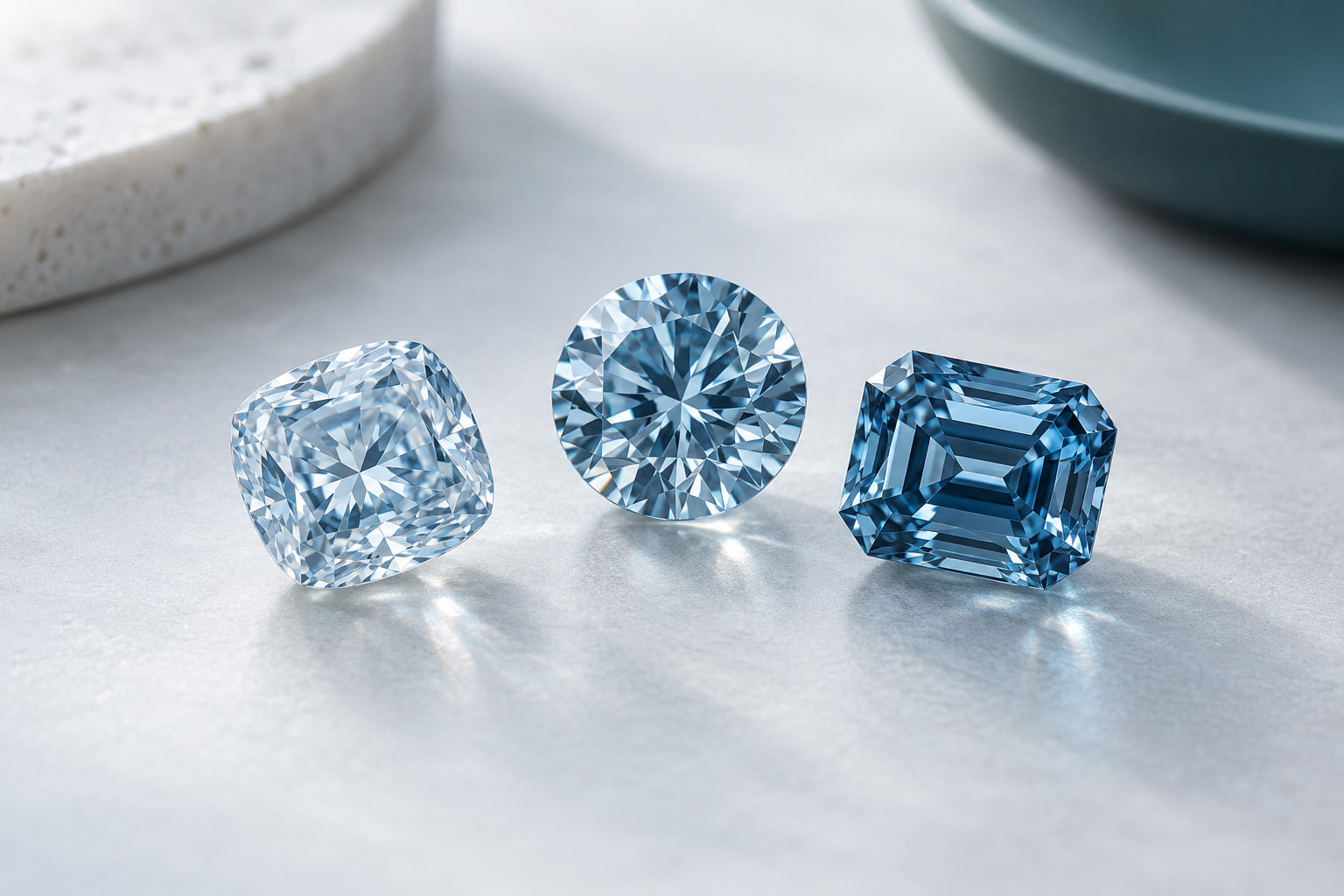
Blue lab grown diamonds should be selected by face-up hue, tone, saturation and distribution, then matched under consistent viewing conditions. Do not assume every blue stone has the same growth method, color mechanism or treatment history. Boron can produce blue in laboratory-grown diamond, particularly in relevant HPHT material, but a blue appearance alone does not identify the cause. Obtain explicit laboratory-grown identity and growth or post-growth information appropriate to the offered stone. Compare exact candidates beside a retained color reference, first loose and then with the intended metal. For pairs, inspect both stones together at the same angle and distance. Verify documents through the issuer, ask about any unusual color behavior, and keep process disclosure separate from the brand's visual acceptance decision.
Why Should Buyers Avoid Assuming All Blue Lab-Grown Diamonds Are Alike?
Blue is an appearance category, not a complete material history. GIA's laboratory-grown review discusses boron-related blue material and other color phenomena. The procurement implication is straightforward: the buyer should not infer a growth recipe or treatment status from a photograph or trade color name.
A later GIA study describes a CVD diamond with a blue band visible through the pavilion but not face-up. That example supports a limited distinction between an internal observation and the appearance used to sell a finished stone. It does not mean every blue or colorless candidate has that feature. Ask about the actual stone rather than assigning a mechanism from another specimen.
For the order, collect three separate statements: material identity, growth method if determined, and post-growth treatment information if assessed. Identify who supplies each statement and its scope. A seller's declaration may be useful commercial information, but it should not be described as an independent laboratory finding unless the actual document supports it.
If the brand requires a particular process profile, state it before selection and ask whether suitable evidence can be obtained. Do not buy an appealing blue first and later invent an untreated or as-grown story around it. A treatment-disclosed option may suit the product perfectly, provided the material and customer-facing description are accurate. The blue diamond category is a sourcing starting point, not proof of a specific process for every offered stone.
How Should Hue, Tone and Saturation Be Recorded for Blue Stones?
Use hue to describe the color direction, tone to describe relative lightness or darkness, and saturation to describe strength relative to a grayer appearance. A practical buying note might identify a cool blue with a restrained gray component and medium apparent darkness. That note is a preference description, not a substitute for a laboratory color designation.
Compare stones on the same neutral background under the same light, cleaned and positioned at the same angle. Avoid evaluating one candidate against white and another against dark teal packaging. Lock camera exposure and white balance where the equipment allows, and include the reference in the same frame. Screen differences mean remote media remain a selection aid rather than definitive physical color proof.
Inspect the face-up distribution across the center, ends and corners. A well-matched pair needs comparable apparent color in the orientations the design will present. A rectangular stone may concentrate appearance differently from a round one. Do not assume a shared color label makes different shapes interchangeable within a line.
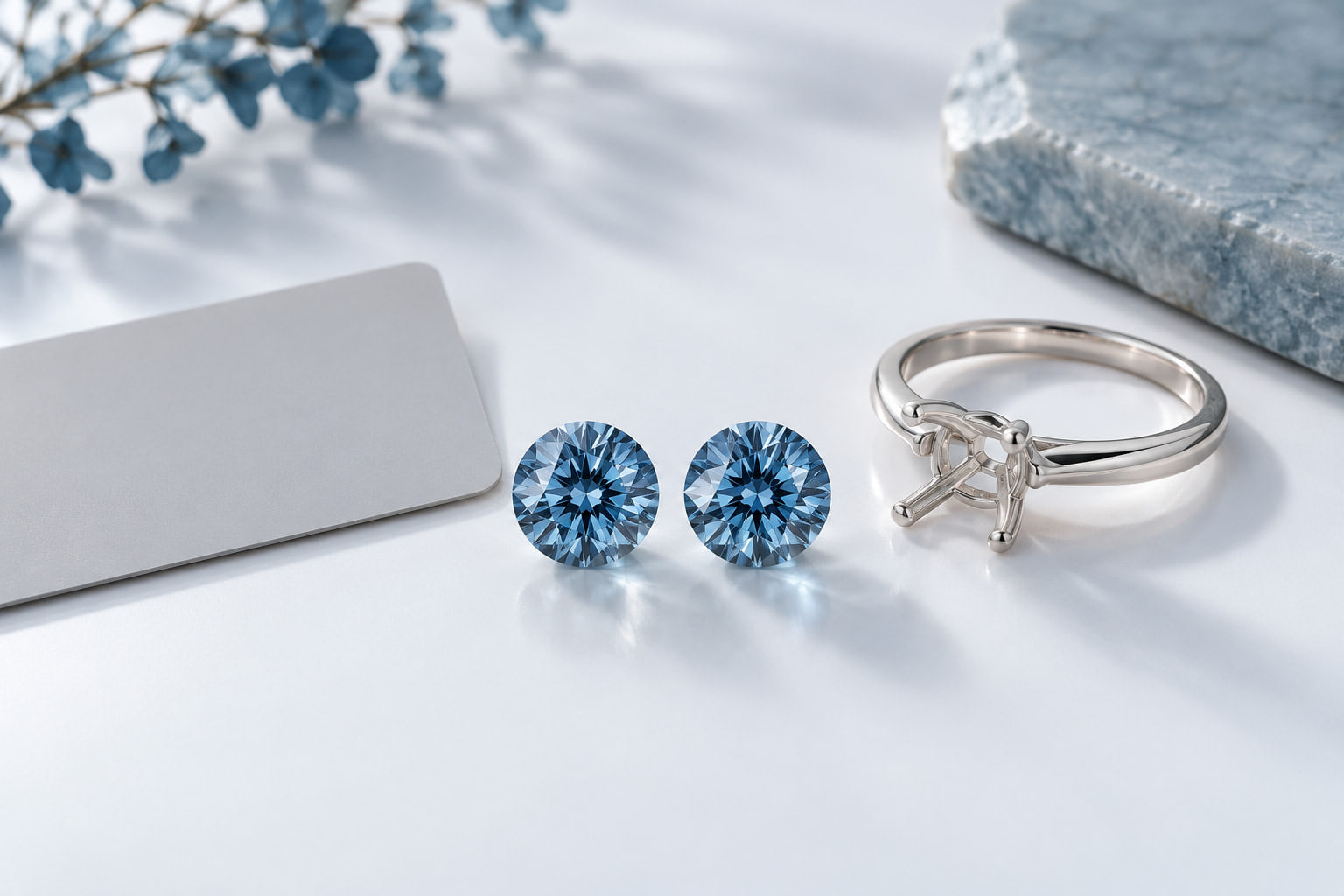
Then test with the actual metal sample or a realistic neutral fixture. White metal can provide a different visual context from yellow or rose metal. Record the result rather than promising that a metal will always intensify or neutralize the blue. For a coordinated ring and earrings, use one retained master family and compare complete components. The matching guide helps organize that evidence without claiming a universal color tolerance.
Control the master itself. Give a physical reference an identity and store its neutral comparison media with the order history. If the master is sold or replaced, compare the new reference with the old one before updating the collection rule. Otherwise the accepted shade can drift gradually as each new parcel is compared only with the most recently purchased stone. A buyer using photographs alone should retain the capture setup and acknowledge that an exact physical match may still need review. Keep any unusually dark or pale accepted exception separate from the master so one commercial accommodation does not quietly redefine the whole blue line.
Report Designation VS Visual Master: What Does Each Establish?
| Question | Laboratory document | Buyer color master and shared view |
|---|---|---|
| Material identity | Read the actual service findings | Cannot establish identity by appearance |
| Growth and treatment | May be assessed under the selected service | Cannot determine the process visually |
| Specific collection preference | A color category may contain visible variation | Defines the brand's accepted blue family |
| Pair coherence | Matching fields do not prove a visual pair | Shows actual candidates together |
| Mounting effect | Depends on what was submitted and assessed | Tests the intended design context directly |
The strongest purchase uses both forms of evidence. A beautiful color master cannot authenticate diamond or identify treatment. A valid report cannot decide which shade the brand wants beside its existing collection. Keep those approvals as separate fields so neither is used to cover a missing decision.
Ask whether the sample is a physical master, a retained stone or a photograph. A photograph is easier to distribute but less reliable across displays and lighting. For a recurring line, preserve a physical comparison route where practical. The matched fancy-shape category is relevant when blue color and shape must be controlled together.
How Can a Blue Earring Pair Be Approved Without a Fake Numeric Grade?
Hypothetical example: the Cool-Blue Pair Trial. A brand needs six pairs of blue round centers for white-metal earrings. It has twelve candidate pairs and a retained master. The team compares every pair loose on a neutral background and then in the intended setting orientation. It records three practical groups: six visually coherent pairs, four pairs needing physical review and two with obvious differences between their partners.
The numbers describe an invented selection exercise, not a supplier performance statistic. Six provisional pairs from twelve do not establish a market acceptance rate, and the four unresolved pairs cannot be counted as accepted. Each unresolved pair gets a concrete note such as left stone looks darker in the shared face-up view, rather than a fictional numerical saturation score.
Now compare the six provisionally coherent pairs with one another. They may make attractive individual earrings yet span two visibly different blue families. The brand can split them into two named shades or request replacements to maintain one line. The commercial requirement is six usable pairs in the chosen family, not twelve blue stones of similar report color wording.
MEITUO can coordinate the grouped media and candidate status, while the buyer makes the final color decision. If only five pairs remain within the chosen family, the launch plan needs one more approved pair or a smaller quantity. Do not hide the shortfall by mixing shades. Keep the exact paired identities and accepted metal context with the reorder record.
Which Reports and Color-Behavior Questions Should Blue Buyers Ask?
Select the service for the actual colored stone. GIA lists separate laboratory-grown colored-diamond services, including assessments of growth type and post-growth treatment within the stated service scope. Its Premium or Standard assessment for eligible colorless-to-near-colorless loose material should not be presented as the universal colored-stone report format.
IGI says growth and treatment comments are noted upon request. Obtain the actual document and ask for missing information before dispatch. Verify its identity online and match the offered stone to the report and inscription where available. A report number copied into a quote does not establish that the delivered pair is the same pair.
Ask whether the supplier or laboratory has noted any unusual color behavior and what normal handling conditions were used for assessment. GIA's research includes particular examples of reversible color phenomena, but buyers should not generalize those findings to all blue material or attempt heat or ultraviolet experiments themselves. Route an unexplained appearance change to a qualified laboratory, retaining the stone and its original documentation.
At receiving, repeat the established face-up comparison and inspect condition before setting. If color differs from approval, first reconcile identity, light and background. If a discrepancy persists, hold the affected stone for review. Do not modify customer-facing process claims to explain away a mismatch without evidence.
How Should Blue Diamond Buyers Compare Supplier Channels?
Choose a supplier who can provide both process evidence and shared color media. Access to blue stock is different from the ability to deliver a coherent blue pair or replenishable shade family. Ask who controls exact inventory and how long the buyer has to review it.
Agree on a replacement policy at the shade-family level. A future blue stone may satisfy the report category while looking different beside the retained partner. Clarify whether a repair can use a single matched replacement or may require a new pair, and preserve the physical reference route where practical.
US / Disclosure and shared pair review
What Should US Retailers Ask About Blue Color Evidence?
A US retailer should distinguish the client's preferred blue from the material and process description used in the sale. Stuller's trade category illustrates a distributor route, without proving US-grown origin or availability of a particular blue pair. Ask any actual seller for exact inventory, colored-stone documentation and the relevant process information.
For a customer choosing remotely, keep the color reference and candidate in one consistent view and explain the limits of display color. A physical review may be necessary when the shade must match an existing ring or remaining earring. Confirm whether the customer approves an exact pair or a general shade family. If a replacement differs, obtain fresh approval rather than relying on identical report wording. Retain the chosen metal context and verify the final delivered identities. Domestic logistics can simplify review, but the seller's written reservation and inspection terms determine what the buyer can actually do. Preserve the selected pair identities through the customer appointment.
CN / Evidence before shade claims
How Should China Sourcing Handle Blue Process Questions?
China sourcing should keep blue appearance and process evidence in separate fields. GIA's laboratory-grown review describes varied growth and color phenomena; it does not identify the mechanism of an offered Chinese parcel. Ask the actual seller which laboratory findings support its growth and treatment statements and which statements are supplier declarations only.
For Qingdao coordination, provide a neutral reference and require paired media under one setup. Do not let blue become an undifferentiated inventory label when the brand needs a cool grayish shade or a stronger blue family. If centers and accents come from different sources, compare the assembled layout before consolidation. Keep unresolved process questions open even when the color looks attractive. Conversely, a complete document does not make a visibly mismatched pair acceptable. Request an itemized list of accepted identities and shade groups so shipping cannot mix alternatives that were shown only for comparison. Require the final shade grouping on the packing record.
IN / Exact stock and colored reports
What Should Indian Suppliers Clarify for a Blue Collection?
An Indian growth, cutting or trading contact should identify which role it performs for the offered blue stones. GreenLab lists Surat and Mumbai contacts, illustrating possible contact points, without establishing blue stock or a particular process. Ask who controls the exact candidates and who can obtain the needed colored-stone document.
For a repeat shade family, request multiple actual stones beside the same master rather than an isolated dramatic photograph. If the seller offers different growth or post-growth routes, compare their disclosed evidence and actual appearance independently. Do not infer that all blue CVD material or all blue HPHT material behaves identically. Ask for a clear route to laboratory review if unusual behavior or an unexplained color change is observed. Keep the commercial unit explicit: approved pairs or sets, rather than a count of generally blue stones. Confirm what happens when one member of a proposed pair fails the buyer's shade comparison.
How Can MEITUO Coordinate a Blue Diamond Collection?
MEITUO is a sourcing and supply-chain coordination partner based in Qingdao, Shandong, China. For blue projects, its useful role is to collect exact-candidate information, coordinate paired comparison media and follow up on growth or treatment questions before an order is finalized. Its support includes product selection, supplier coordination, quality-requirement confirmation and order follow-up.
The company works with loose center stones, melee, side stones, matched pairs and sets, and fancy-color options. Specific blue availability, documents, MOQ, lead time, treatment information and shipping terms need confirmation per order. MEITUO should not be described as the grower, treatment facility or independent grading laboratory. Email [email protected] with the color reference, intended metal, shape and quantity of usable pairs or sets. The jewelry brand application page provides context for a shade-led collection request. Final material assessment remains with the relevant laboratory, and visual shade acceptance remains with the buyer.
What Should a Blue Lab-Grown Diamond RFQ Define?
Describe the preferred hue family and acceptable lightness or strength through references, not unsupported numeric scores. State whether the order needs individual stones, pairs or a single shade across a line. Add intended metal, actual dimensions and document requirements, including any process restrictions.
Ask for exact-stone shared media and a clear status for unresolved color or process questions. Confirm the reservation period, physical review route and treatment disclosures before dispatch. The RFQ guide can support commercial completeness. A quote should state the number of approved usable pairs and identify any alternatives that belong to a different shade family.
Please quote [quantity] approved blue laboratory-grown [stones, pairs or sets] for [collection], matching reference [ID] in [intended metal]. Target shape and dimensions are [requirements]. Provide exact-candidate shared color images, neutral motion media, report references, inscription details where available, and explicit growth and post-growth information with its evidence source. Identify shade-family departures and unresolved process questions separately. State any noted unusual color behavior and the route for qualified review. Confirm availability, MOQ, lead time, reservation, shipping terms and physical inspection conditions. Substitutions require shade and document approval by [buyer].
FAQ: Blue Lab-Grown Diamonds: Color Consistency and Reports
Are All Blue Lab-Grown Diamonds Colored by Boron?
No such assumption should be made from appearance. Boron can be relevant, but the actual mechanism and process history require appropriate evidence. Ask for the laboratory findings and distinguish them from supplier declarations.
Does a Matching Blue Color Label Guarantee a Pair?
No. Compare both stones together for face-up hue, apparent darkness, strength and distribution. Report categories and the brand’s preferred shade family answer different questions.
Can Photographs Approve an Exact Blue Match?
They can help shortlist when captured consistently, but screens and lighting limit certainty. Use a physical comparison route where the match is critical, and retain the master and candidate in the same reference setup.
Should Colored Diamonds Use the Same GIA Service as Colorless Ones?
Read the actual service. GIA lists distinct laboratory-grown colored-diamond services, while its eligible colorless-to-near-colorless assessment uses Premium or Standard. Do not present one format as universal.
What if a Blue Stone Appears to Change Color Unexpectedly?
Reconcile lighting, background and identity first, then hold the stone and seek qualified laboratory review if the change persists or is unexplained. Do not perform heat or ultraviolet experiments or invent a process explanation.
What Should Be Retained for a Blue Pair Reorder?
Keep both identities, process documents, accepted shared media, the shade reference and intended metal context. A later replacement must be compared with its retained partner, not selected solely by a generic blue category.