 English
 Español
 Português
 Deutsch
 Français
 Italiano
 Nederlands
 العربية
 日本語
 한국어
 ไทย
Quick Answer
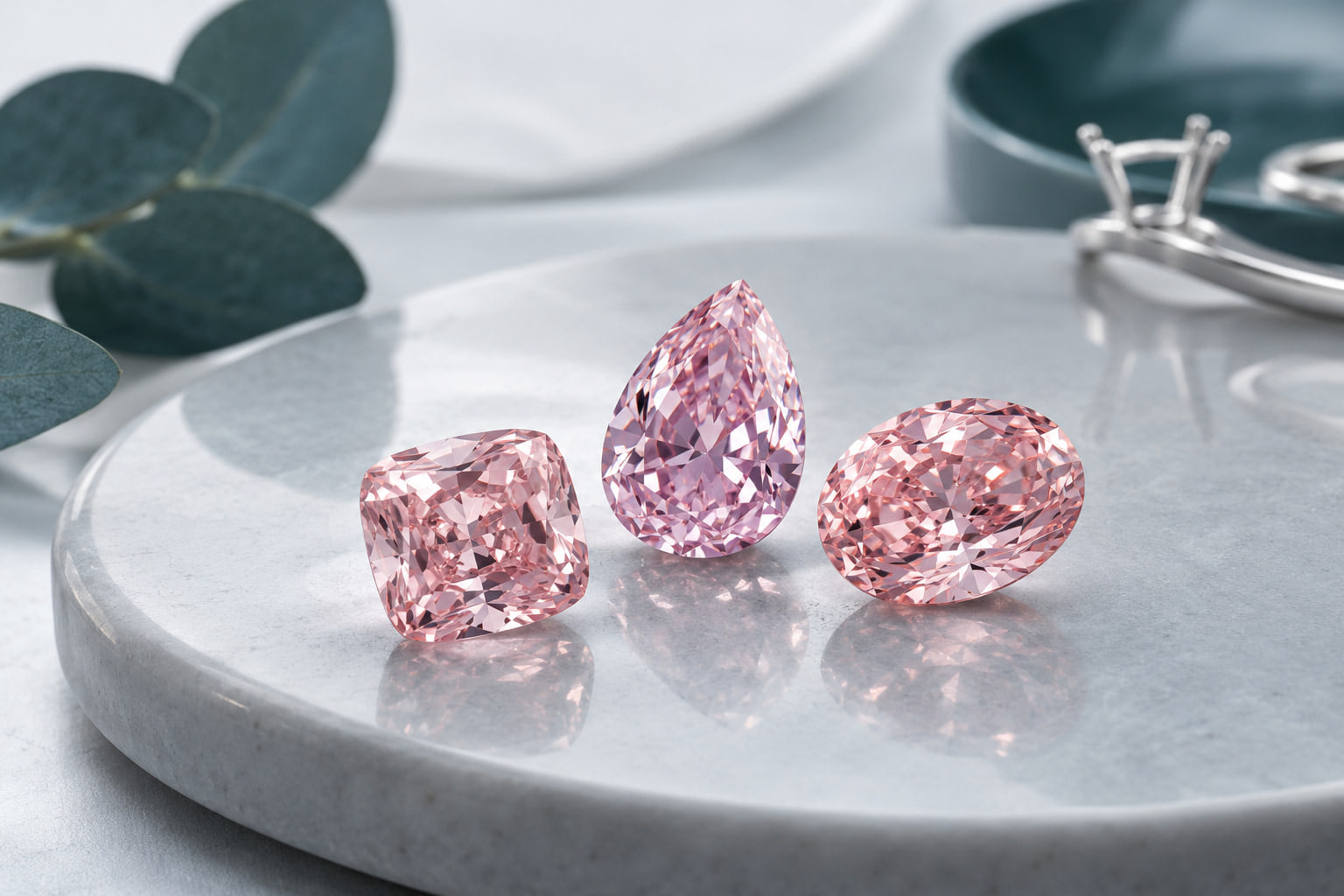
A pink lab grown diamond should be chosen against a defined hue family and an actual design sample, with growth and treatment information confirmed separately. Do not assume that every pink stone has the same color mechanism, or equate laboratory-grown pink with the rarity or value of natural pink diamond. Compare purplish, more neutral and orangy appearances under consistent neutral light, then repeat with the intended metal. For a collection, retain a master family and approve centers and accents at their actual sizes. Identical color wording does not guarantee that a small accent and a large center look coherent together. Verify documents, inspect exact-stone media and set a clear substitution rule. MEITUO can coordinate candidate information, while the buyer approves the palette and the manufacturer approves the setting.
How Are Pink Lab-Grown Diamond Process Claims Checked?
GIA's discussion of pink laboratory-grown diamonds explains irradiation and annealing routes involving nitrogen-vacancy centers. The scientific context helps buyers understand why post-growth disclosure matters. It does not identify every pink stone from its appearance or establish that all pink laboratory-grown material follows one route.
A GIA study of treated orange and orangy pink CVD diamonds describes specific samples involving several processing stages. That is evidence for those examined examples, not a universal recipe or a quality ranking. For an offered stone, ask what was assessed and which document supports the answer.
Separate laboratory-grown origin, growth method and treatment history in the inquiry. A statement that the stone is CVD-grown does not answer whether it was treated after growth. A supplier declaration can be recorded as such, while a laboratory finding should be tied to the actual report and service. Do not turn missing information into an untreated claim.
Keep natural-pink comparisons carefully bounded. The brand may choose a lab-grown pink for its visual palette, but that choice does not confer natural rarity, investment characteristics or resale assurances. Build the product story around the actual stone and design. The pink product category provides a relevant sourcing starting point without establishing a particular mechanism or treatment profile for every possible order.
How Should Buyers Define a Pink Collection Palette?
Start with the direction of the pink, then its apparent lightness and strength. A purplish pink and an orangy pink can both be attractive while serving very different design palettes. Do not ask a supplier to remove modifiers from a document merely because the marketing team prefers the short word pink. Keep the actual laboratory description visible in the buying record.
Use a neutral comparison setup first: same light, background, distance and orientation. Compare exact candidates alongside the retained reference, with controlled camera settings where possible. A photograph taken against rose packaging is a weak neutral color reference. The buyer should know whether a warmer appearance belongs to the stone, the surrounding metal or the image capture.
Then examine the intended product sizes. A large center and small accents may show different apparent color even when their descriptions seem related. Review the complete layout at actual scale rather than approving each stock line separately. A ring can look coherent without every stone appearing identical, but the chosen relationship must be deliberate.
Define the role of accents. They may echo the center softly, provide a stronger border or remain colorless to isolate the pink. The fancy-color melee category is relevant if colored accents are contemplated, subject to actual availability. A buyer should not assume a center-stone shade can automatically be supplied across every tiny calibrated size.
Manage the palette master as a controlled design reference. Record whether it represents the center family, the accent family or a particular mounted combination. If the master is replaced, compare old and new references before changing the approval rule. A slightly warmer reorder should not become the new baseline merely because it is the newest stock. Keep accepted exceptions labeled with their product role. For a two-metal collection, a candidate may be approved only for one variant; preserve that restriction in the stock system so it is not allocated later to the other metal without review. This prevents gradual palette drift while allowing deliberate design evolution.
Neutral Approval VS Metal-Context Approval: Why Use Both?
| Decision | Neutral loose-stone comparison | Intended-metal comparison |
|---|---|---|
| Purpose | Compare candidates with fewer contextual differences | Judge the product the wearer will see |
| Hue-family control | Helps separate purplish and warmer directions | Shows their interaction with the selected frame |
| Photography | Use a shared neutral setup and reference | Use realistic metal samples and coverage |
| Risk | May not predict the finished design alone | May let the metal mask an unpreferred loose shade |
| Record | Accepted stone family | Approved stone-and-metal combination |
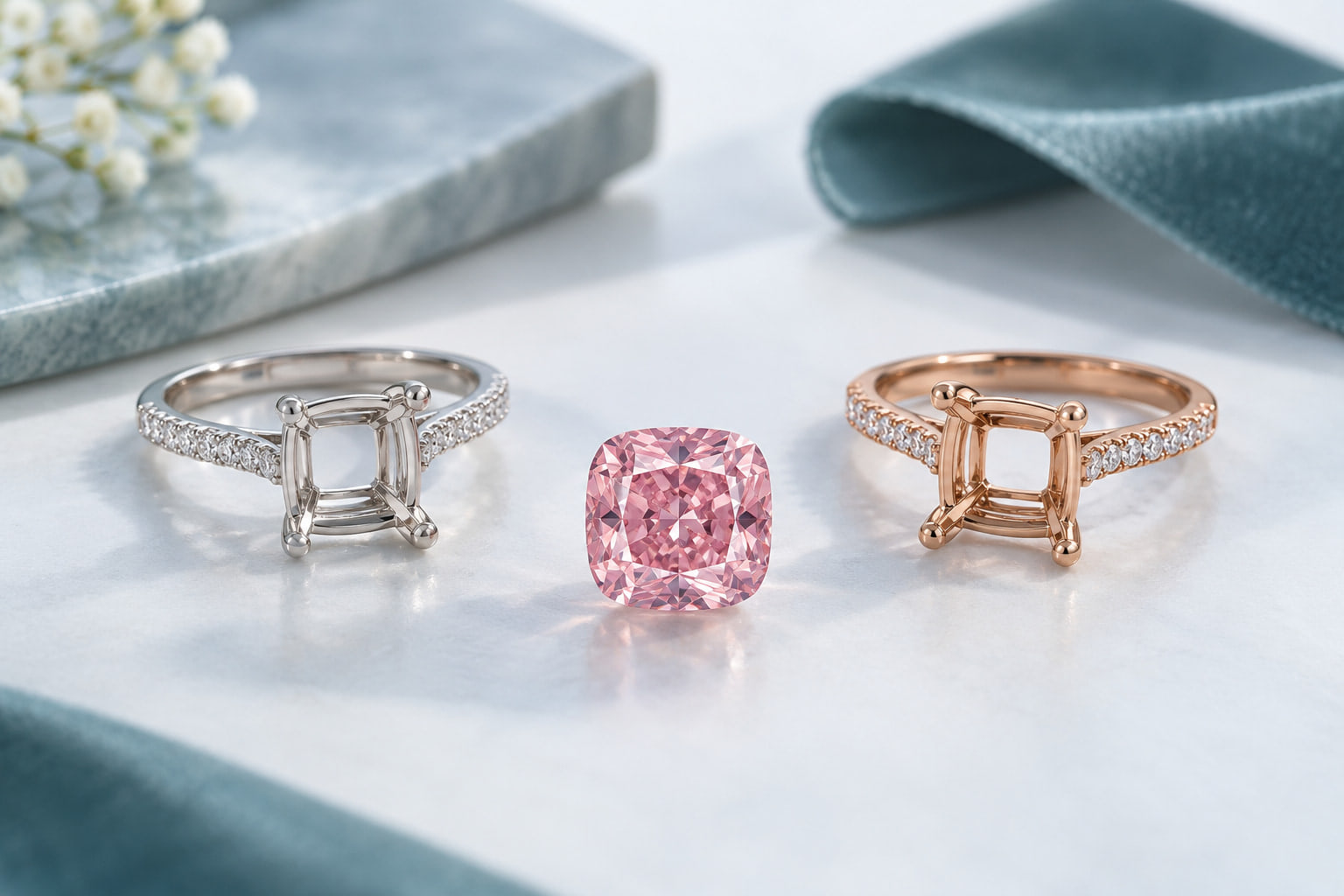
Neither white nor rose metal should be promised to improve every pink stone in a predictable direction. The practical test is the actual candidate beside the actual alloy color and intended coverage. Surface finish and reflected surroundings can also change the impression. Record what the team observes instead of turning one sample into a universal rule.
If the same center family will be offered in two metals, approve both combinations. A photograph of the rose-metal version is not a complete approval for a white-metal variant. For a design-led program, the designer application page can frame the inquiry around the finished palette rather than one loose-stone color label.
How Can a Pink Capsule Use a Master Without Demanding Impossible Sameness?
Hypothetical example: the Blush-and-White Capsule. A brand plans eight rings and eight pairs of earrings. Each ring has one pink center; each earring pair has two smaller pink centers. The initial requirement is therefore eight plus sixteen, or twenty-four pink stones, before considering reserves. The program also needs three different types of approval: ring centers, earring pairs and coherence across the capsule.
The team receives thirty candidates. After neutral comparison, twenty-six belong to its selected restrained purplish-pink family and four look distinctly warmer. These are invented observations and quantities, not market statistics. The warm group may be suitable for another palette, but it should not be mixed into the chosen line without a deliberate design decision.
Among the twenty-six, eight are suitable ring candidates and eighteen are small-stone candidates. The buyer can potentially form nine earring pairs, but pairing still requires direct comparison. If only seven coherent pairs result, sixteen small stones do not automatically mean eight usable pairs. The program needs another approved pair or a revised quantity, even if total piece count seems sufficient.
The team then compares the approved groups with white-metal samples. One ring center falls outside the mounted palette preference despite belonging to the loose family. That center returns to review rather than being explained away through its report wording. MEITUO can coordinate the shortlist and alternatives. Keep the accepted master family, product scale and metal context linked in the reorder record, with no claim that a master guarantees future availability.
What Documents and Handling Information Should a Pink Buyer Collect?
Request an actual colored-stone document suited to the order. GIA lists laboratory-grown colored-diamond services that assess growth type and post-growth treatment within their stated scope. This differs from its Premium or Standard assessment for eligible loose colorless-to-near-colorless material. Read the selected service instead of promising one report format for every pink stone.
IGI says growth and treatment comments are provided upon request. Ask for needed process information before the stone is shipped. Verify the document through the issuer and reconcile the report reference with the parcel and inscription where available. Keep supplier statements clearly distinguished from laboratory findings.
Obtain any relevant handling or repair information for the actual material and treatment profile, then pass it to the manufacturer. Do not extrapolate safe heating or cleaning instructions from the generic word pink. The bench should review the complete jewelry, including metal, setting and other materials, before choosing a process.
At receiving, repeat neutral and metal-context color checks and inspect condition before setting. Record any discrepancy with the exact viewing conditions. A color mismatch should prompt identity and setup reconciliation before a final rejection or acceptance. For a pair, keep both identities and the grouped media. The matching guide helps preserve the difference between individual-document acceptance and a visually coherent set.
What Supplier Questions Are Specific to Pink Collections?
Choose a channel that can show the actual pink palette across the required sizes and explain what process evidence accompanies it. A seller may have attractive individual pink stones without having a coherent capsule or repeatable accent supply. Ask for usable groups rather than a general availability statement.
Set a shade-departure rule before stock becomes scarce. The supplier can offer a warmer family, a stronger appearance or a different size as an alternative, but the quotation should label the change. A buyer can then approve a second palette intentionally instead of discovering a mixed line after production.
US / Palette and accurate description
What Should US Retailers Clarify Before Showing Pink Options?
A US retailer should establish whether the customer wants a restrained blush, a purplish impression or a warmer pink direction, then show actual candidates in the intended metal. Stuller's trade category illustrates a domestic distributor route without establishing pink availability or US-grown origin. Ask any actual seller for specific stock and process evidence rather than treating a category page as a commitment.
Keep the laboratory-grown description and relevant treatment information aligned across the quote, invoice and customer explanation. Do not borrow natural-pink rarity or value language for a new lab-grown product. If the retailer offers two metal choices, obtain approval for each combination instead of reusing one promotional photograph. For a matching pendant or earring follow-up, retain the original hue-family reference and explain that future stock must be reviewed. Confirm reservation and inspection terms before making a promise about an exact shade that the supplier has not secured. Retain separate approval images for each selected metal variant.
CN / Cross-size palette coordination
How Should China Sourcing Preserve a Pink Collection Master?
China sourcing should keep the pink master and size-specific references together. GIA's laboratory-grown review describes varied Chinese production, but does not identify the treatment history or palette consistency of an offered parcel. Ask who controls the actual stones and which document supports each process statement.
For Qingdao coordination, label neutral loose-stone views separately from metal-context views. Request centers and small accents in a shared layout wherever practical, because photographs taken under different setups can hide an unwanted hue shift. If the supplier cannot provide the same family in every size, ask for explicit alternatives rather than an unannounced mixed parcel. Keep pair and set identities visible through consolidation. A treatment-disclosed option can still be suitable, but the buyer needs the actual information before writing product copy. Confirm the commercial unit as approved capsule groups, pairs or individually selected stones so a high total piece count does not disguise incomplete usable combinations.
IN / Growth-to-polished information
What Should Indian Suppliers Clarify About Pink Process and Palette?
Indian pink sourcing conversations may involve a grower, a polished-stock seller or a contact coordinating additional processing. Establish that role rather than inferring it from location. GreenLab lists Surat and Mumbai contact points; those addresses do not establish any offered stone's treatment history or pink availability. Ask who supplies the final polished candidates and associated documents.
For a capsule, request several actual stones beside the master, including the smallest required size. If a seller proposes a processing route to obtain a warmer or stronger pink, keep that proposal distinct from already documented available stock. Confirm the approval sample, process disclosure, final dimensions, documentation and timing before commitment. Do not assume a treatment discussion guarantees an exact shade or coherent pair. The final polished stones need fresh visual and identity review. Preserve the agreed master and mounted context so a later trading contact can understand the collection without substituting a generic pink inventory label.
How Can MEITUO Coordinate a Pink Palette Inquiry?
MEITUO is a sourcing and supply-chain coordination partner in Qingdao, Shandong, China. For pink projects, buyers can ask it to gather actual candidate media, coordinate size-specific palette comparisons and follow up on growth and treatment questions. Its work includes product selection, supplier coordination, quality-requirement confirmation and order follow-up.
The range covers loose centers, melee, side stones, matched pairs and sets, and fancy-color options. Availability of a particular pink shade across centers and calibrated accents must be confirmed for the actual order. MEITUO should not be described as the grower, treatment facility or independent grader. Confirm documents, MOQ, lead time, treatment information and shipping terms per inquiry. Email [email protected] with the hue-family reference, intended metals, product sizes and quantity of usable groups. The jewelry brand application page provides context for a coordinated capsule, while the buyer retains the final palette decision and the manufacturer retains setting and handling approval.
What Should a Pink Collection RFQ Say Before Quoting?
State the preferred pink direction, intended metal and actual product sizes. Attach neutral and mounted references, clearly identifying which is the palette master. Define whether accents should echo, contrast with or remain colorless beside the center. Ask for separate availability by size rather than assuming one pink label applies to the whole capsule.
Request process evidence, exact-stone shared media and usable pair or set quantities. Agree how alternatives are labeled, reserved and reviewed. The RFQ guide can supply the commercial framework after the palette decisions are clear. Keep natural-pink rarity comparisons out of the quote logic; the purchase is for documented lab-grown material selected for a particular design.
Please quote pink laboratory-grown stones for [capsule], comprising [center quantities], [pair quantities] and [accent sizes]. Match hue-family master [ID] and mounted references [IDs] in [metals]. Provide exact-candidate neutral and metal-context media, report references, inscription details where available, and explicit growth and post-growth information with evidence sources. State availability and usable grouping for each size separately. Flag purplish, warmer or stronger alternatives without mixing them into the approved family. Confirm MOQ, lead time, reservation, shipping terms, handling information and inspection conditions. Palette or process substitutions require written approval by [buyer].
FAQ: Pink Lab-Grown Diamonds: Selecting Color for a Collection
Are Pink Lab-Grown Diamonds Always Untreated?
No. Obtain the actual process information. GIA describes irradiation and annealing routes for pink laboratory-grown material, among other findings. A growth-method statement alone does not answer whether post-growth treatment occurred.
Does Pink Lab-Grown Material Share Natural-Pink Rarity Value?
Do not make that equivalence. Describe the actual laboratory-grown product and its design appeal without implying natural rarity, investment characteristics or guaranteed resale outcomes.
Can Purplish and Orangy Pink Stones Share One Collection?
They can if the palette intentionally accommodates them and the product descriptions are accurate. For a uniform shade family, review and separate them rather than mixing them because both use the short word pink.
Does Rose Metal Always Improve a Pink Diamond?
No universal effect should be promised. Compare the actual stone with the intended alloy color and coverage. Keep both neutral loose-stone approval and the specific mounted combination in the record.
Why Might Small Pink Accents Need a Separate Approval?
Their apparent color and readability can differ from a large center. Review the complete actual-scale layout and confirm availability for the required calibrated sizes instead of assuming the center shade scales automatically.
What Should a Pink Capsule Reorder Preserve?
Retain the hue master family, product sizes, intended metals, process documents and paired identities. A new stone must be checked in its role within the capsule, not selected solely by matching color wording.