 English
 Español
 Português
 Deutsch
 Français
 Italiano
 Nederlands
 العربية
 日本語
 한국어
 ไทย
Quick Answer
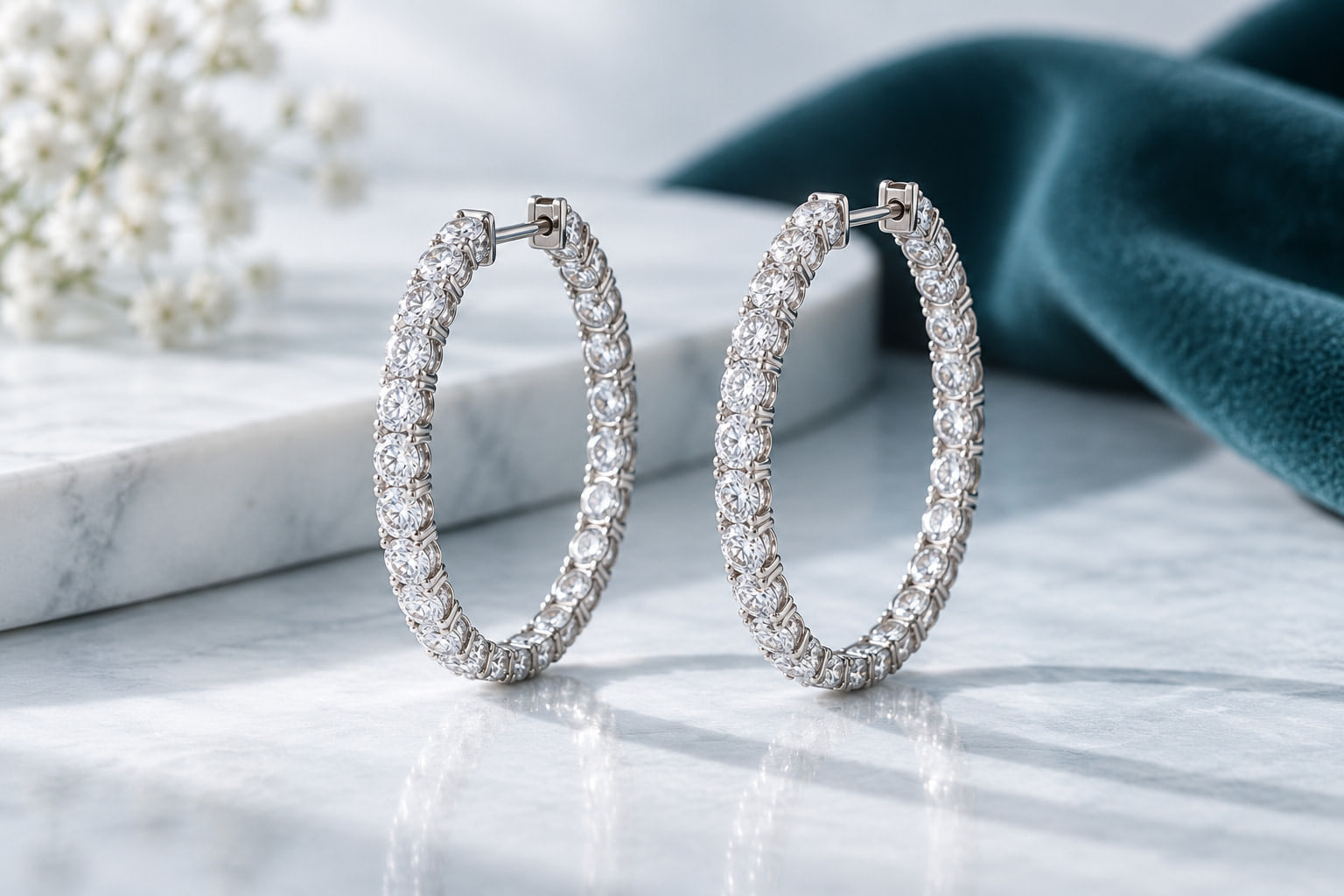
For lab grown diamond hoop earrings with an inside-out layout, specify where the stones face as well as how many are used. The front outer arc and the visible inner surface of the rear arc can work together from the intended viewing direction. Map those positions on separate left and right drawings, then assign stone sizes and quantities to each. Do not infer the layout from total carat weight or hoop diameter. Review a finished prototype for visibility, orientation, movement and individual earring weight before releasing the production parcel. This is a full-size hoop planning task, distinct from choosing a compact huggie's hinge. MEITUO can coordinate loose-stone requirements; the actual jewelry maker must approve construction and finished performance.
What Does Inside-Out Mean for a Diamond Hoop Layout?
In an inside-out design, the viewing direction determines which stone surfaces contribute to the front-facing display. A verified natural-diamond retail example used only to illustrate layout terminology, Helzberg's inside-out hoop description, identifies stones on the front and interior frames. This establishes an example of the commercial term, not a rule that every product uses the same arc lengths or stone count.
Draw the hoop as worn rather than laid flat on a table. Mark the viewer, the front outer arc and the rear inner arc. A catalog front view can make the two rows appear continuous while hiding which metal surface holds each stone. The maker needs that surface distinction to build the right seat direction.
Then define left and right. Depending on the construction, the earrings may be intentionally mirrored or may use the same interchangeable geometry. The buyer should know which arrangement was approved. A hoop can be attractive in isolation yet show the wrong stone-bearing surface when worn on the opposite side.
Use the everyday-jewelry application brief to record the intended view and presentation. If the design is oval, elongated or flattened, identify those dimensions explicitly. A single nominal diameter cannot describe every full-size hoop or establish where the visible stone row should begin and end.
Why Should Front and Rear Arcs Have Separate Stone Schedules?
Create a position list for each arc. Include earring side, arc designation, position number, nominal stone size, permitted dimensional range and any graduation. The schedule should distinguish stones that look similar but sit in different seats. A front row and a rear row may share a size range, but they remain different assembly positions.
| Planning question | Total-weight-only order | Arc-mapped order |
|---|---|---|
| Visible coverage | Unknown distribution around the hoop | Start and end positions marked by view |
| Stone count | Inferred from a weight estimate | Counted separately for each arc and earring |
| Left-right orientation | May remain implicit | Mirroring or interchangeability explicitly approved |
| Graduation | Similar weight can conceal changed progression | Each size assigned to a numbered position |
| Replacement | Generic melee requested | Specific arc position and reference identified |
Do not calculate the final stone count by dividing hoop circumference by stone diameter alone. Seats, spacing, curvature, closures and intentionally unset regions all affect the layout. A simple geometry estimate may screen a concept, but the maker must confirm the actual drawing and sample.
The melee product scope can support calibrated stone discussions after the position map exists. If the maker changes the arc or seat pitch, revise the schedule before ordering. An unchanged total weight does not prove that the revised layout will look or assemble the same.
How Should a Buyer Review Inside-Out Visibility?
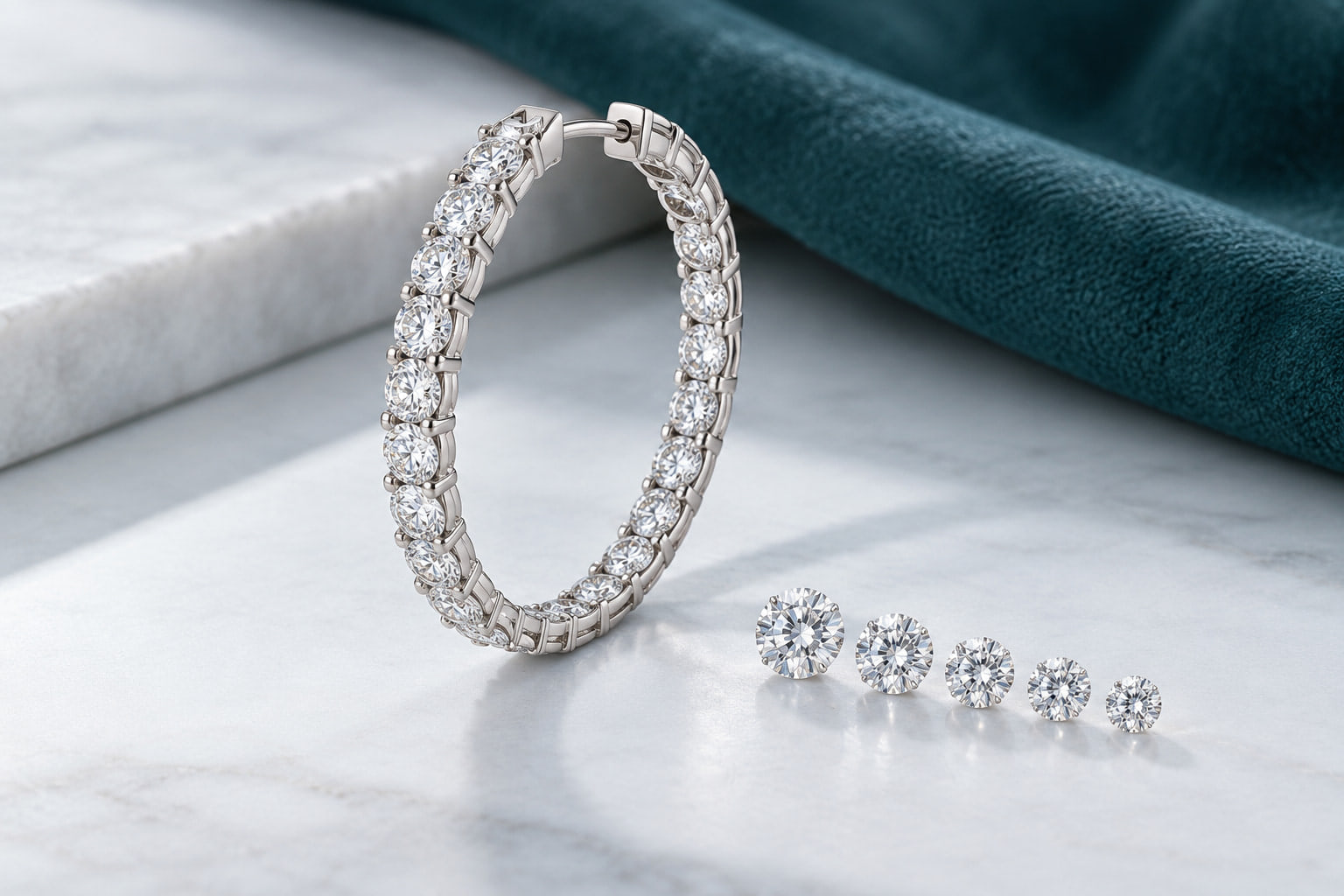
Stand or suspend the sample in the intended wearing orientation and photograph it from the front, a modest three-quarter angle and the side. Mark which view is the primary merchandising reference. The aim is to see whether the front and rear rows create the intended visual continuity, not to demand that every stone remain equally visible from every angle.
Look for abrupt blank regions at the row transition, unintended metal exposure or a rear row that turns away from the viewer. These can be layout issues rather than stone-quality issues. A brighter parcel will not fix a stone-bearing surface that faces the wrong direction. Discuss changes with the maker using the numbered arc map.
Review both earrings together. If the pair is mirrored, check that the visible rows balance at equivalent angles. If it is interchangeable, test the approved presentation on both sides. A pair photographed flat can hide an orientation error that becomes obvious only when it is suspended.
Keep finished weight and movement in the prototype review. Measure each earring on the same basis and observe how it returns after gentle ordinary movement. Do not invent a universal comfortable gram limit or a minimum swing performance. The maker and buyer should assess the actual design and intended use. The component-scope guide separates loose-stone acceptance from those finished-product decisions.
How Can an Arc Map Turn a Hoop Design Into a Stone Order?
Hypothetical example: the 30 mm inside-out capsule. A maker's approved concept uses twelve stones on the front outer arc and twelve on the rear inner arc of each hoop. That is twenty-four stones per earring and forty-eight per pair. For five production pairs, the bill of materials requires 240 stones before reserves. The 30 mm size is an invented design reference, not a claim that every hoop of that diameter needs this count.
The sample uses three size groups. Per pair, there are sixteen stones in group A, sixteen in group B and sixteen in group C. For five pairs, each group requires eighty production stones. The buyer proposes four reserve stones per group, producing eighty-four of each and 252 stones overall. The reserve is a planning choice requiring commercial agreement, not a standard allowance.
During the suspended sample review, the maker finds that two rear positions on one side do not face the intended view. The buyer does not replace those stones with larger goods to hide the issue. The arc orientation is corrected and the sample is reviewed again. If the revised drawing changes the count, the bill of materials must be recalculated before release.
The accepted map names front positions F1 through F12 and rear positions R1 through R12 for each earring. The melee buying guide can then organize parcel requirements. This sequence makes the loose order traceable to a real design rather than a total-weight guess.
What Should Hoop Buyers Clarify Across Supplier Channels?
Inside-out hoops often combine a calibrated parcel with a separate jewelry-making process. The critical handoff is the approved arc schedule. Suppliers should know whether they are quoting stones, mounting components or completed earrings, and the buyer should keep one drawing revision across all three discussions.
USA / display views and manufacturing handoff
How Should a US Hoop Retailer Review the Inside-Out Sample?
A US retailer should review the actual sample in a wearing orientation before commissioning final campaign imagery. The inside-out label describes a layout concept, but the exact visible rows depend on the design. Helzberg's cited retail example supports the front-and-interior terminology; it does not establish the layout for another maker's product.
Ask the US manufacturing or bench partner to mark front and rear arc positions on the drawing. Then agree which suspended views form the acceptance record. A photograph chosen only for maximum sparkle may hide a blank transition or a row that turns away at the intended angle.
Keep the finished earring weight and left-right orientation in the retail stock record where useful for service. If the manufacturer changes the hoop section or findings, request a revised sample even when the total carat weight stays unchanged. The buyer is approving a visible, wearable pair rather than only the weight of a stone parcel.
CHINA / parcel-to-position coordination
How Should China Sourcing Translate an Inside-Out Arc Schedule?
For a China-facing request, send a numbered drawing rather than relying on the term inside-out. A translated commercial name may communicate the general style without showing which surface receives each stone. Mark the viewing direction and identify every front and rear position before the loose-stone quotation is assembled.
MEITUO can coordinate the parcel requirements from Qingdao, keeping size groups and intended positions connected. Its coordination role does not establish the location of growth, cutting or finished hoop production. Ask the actual jewelry maker to confirm the schedule and any proposed change in seat pitch or section width.
For dispatch, retain separate labels for the accepted groups and include the drawing revision in the packing schedule. If a supplier offers a nearby size, route that option back to the maker before acceptance. A small dimensional change repeated around an arc can affect the layout, so a total-weight adjustment alone is not an adequate approval.
INDIA / calibrated parcel and graduation
How Should an Indian Melee Supplier Support Full-Size Hoop Layouts?
An Indian cutter or trader quoting the hoop stones should receive the size-group quantities and appearance reference separately from the finished hoop drawing. Ask it to confirm the actual dimensional ranges in each group rather than supplying one mixed parcel at an approximate total weight. The maker still needs to approve the intended fit.
Where a design graduates along the visible arc, identify which positions share a size and which must progress. A substitution that looks reasonable in a parcel can interrupt the finished sequence. Request that any shortage or alternate size be flagged before the order is packed.
Preserve the accepted parcel references for repeat and service work. If several cutting batches contribute to the run, compare the groups together under the agreed lighting before assembly. For dispatch, keep group identities intact and include the buyer's position schedule. This helps the receiving team distinguish a deliberate graduation from an accidental mixture of sizes.
What Checks Keep a Hoop Run Consistent With the Sample?
At loose-stone receipt, check each size group against its scheduled dimensions and appearance reference. Keep groups separated and label their intended positions. A parcel with the correct total weight can still contain an unsuitable size distribution. Record any proposed replacement group before the maker begins setting.
After assembly, compare the row start and end points with the approved sample. Check visible spacing, graduation and the transition between front and rear arcs. Do this with the hoops suspended in the intended orientation, not only on a flat inspection tray. Keep a pair-view photograph for every materially different production variant.
Ask the actual manufacturer to confirm setting security, closure function and relevant workmanship checks through its quality process. This article does not prescribe a universal load test or cycle count. If the buyer needs a defined validation protocol, agree it for the actual design before production rather than improvising it after delivery.
Preserve the map for service replacements. A stone from the same broad parcel range may not match a particular graduated position. The repeat-order workflow can retain the sample revision, stone schedule and finished weight reference. If the hoop section or arc geometry changes, treat it as a new version and review the mounted result again.
Use a simple exception sheet during production. If position R7 needs a replacement, record its group and the proposed candidate before removing it from the parcel. If several adjacent positions need different sizes, stop and confirm whether the seat geometry has changed. That pattern may indicate a drawing or manufacturing variation rather than random stone variation. The remedy should address the actual cause, so the buyer does not approve a sequence of substitutions that gradually creates a different hoop.
Keep photographs at a consistent scale across the run. A wider camera angle can make a row appear more continuous, while a close crop can hide the opposing arc entirely. The acceptance image should include enough of the hoop to show the intended relationship between both visible rows and the unstoned transition regions.
How Can MEITUO Coordinate Stones for an Inside-Out Hoop Program?
MEITUO is a sourcing and supply-chain coordination partner based in Qingdao, Shandong, China. For inside-out hoops, its useful starting point is the maker's approved arc map, stone-size schedule and appearance reference. MEITUO can support product selection, supplier communication, quality-requirement confirmation and order follow-up around that specific bill of materials.
Its range includes loose center stones, melee, side stones and matched pairs or sets. A graduated hoop can require calibrated parcels with clearly separated size groups rather than a single mixed-weight order. Availability, documents, MOQ, lead time, treatment information and shipping terms must be confirmed per request.
Send the drawing revision and pair quantity to [email protected]. MEITUO does not claim to manufacture hoops, engineer closures or validate finished comfort. The jewelry maker should approve the metal construction and completed sample. Keep the loose-stone coordination scope clear so supplier responses can be compared without assigning unconfirmed manufacturing responsibilities.
What Belongs in an Inside-Out Lab-Grown Diamond Hoop RFQ?
Attach a worn-orientation drawing and a position schedule for both earrings. Identify front and rear surfaces, stone groups, any graduation and the approved unset regions. State whether left and right are mirrored or interchangeable. Include a sample review stage before the full parcel is released.
Define the unit of quantity carefully: stones per arc, stones per earring and pairs per order. Request deviations as separate options. If a supplier cannot meet one size group, it should not silently redistribute total weight across the remaining positions. The drawing and bill of materials must change together.
The RFQ preparation guide provides the commercial structure. The brief below adds the arc-specific details and keeps final construction approval with the maker.
Please coordinate laboratory-grown stones for [number] pairs of inside-out hoop earrings. Approved hoop drawing is [revision], with outer dimensions [values], section width [value] and position map [file]. Front outer and rear inner stone schedules are [counts and sizes], mirrored for left and right as shown. Provide parcel measurements, appearance references and sample terms; identify any proposed size substitutions. Finished hoop manufacture is assigned to [maker]. Confirm MOQ, documents, treatment information, lead time and shipping terms. Production release follows our mounted visibility, pair orientation and weight review; total carat weight alone does not authorize layout changes.
FAQ: Lab-Grown Diamond Hoop Earrings: Inside-Out Stone Layouts
Does Inside-Out Mean Diamonds Cover the Whole Hoop?
Not necessarily. It describes a commercial layout in which front-facing outer and visible interior regions can contribute to the display. Request the actual position map. The name alone does not establish full-circle coverage, count or stone size.
Can Stone Count Be Calculated From Hoop Diameter?
Diameter alone is insufficient. Seats, spacing, section geometry, closure regions and intended unset areas affect the schedule. Use any simple estimate only for concept screening, then obtain the maker's approved drawing and sample before ordering.
Must the Two Hoops Be Mirrored?
The design must establish whether they are mirrored or interchangeable. Review both in the intended wearing position and keep that convention in the order. Do not assume a pair photographed flat will present correctly on both sides.
Is Total Carat Weight Enough to Compare Two Hoop Offers?
No. Compare dimensions, visible coverage, stone counts, size distribution, metal construction and finished sample scope. Two offers with the same total stone weight can create different front-facing layouts and different individual earring weights.
Does This Guide Establish a Comfortable Hoop Weight?
No universal weight limit is established. Measure each completed earring and review the actual prototype for the intended use. Construction and presentation need the maker's assessment, and wearing behavior can vary among individuals.
What Should a Hoop Replacement Stone Match?
Use its exact arc position, dimensional group and appearance reference. A generic melee description may be too broad for a graduated row. After replacement, inspect the visible sequence and the maker's completed setting work rather than accepting the loose stone alone.