 English
 Español
 Português
 Deutsch
 Français
 Italiano
 Nederlands
 العربية
 日本語
 한국어
 ไทย
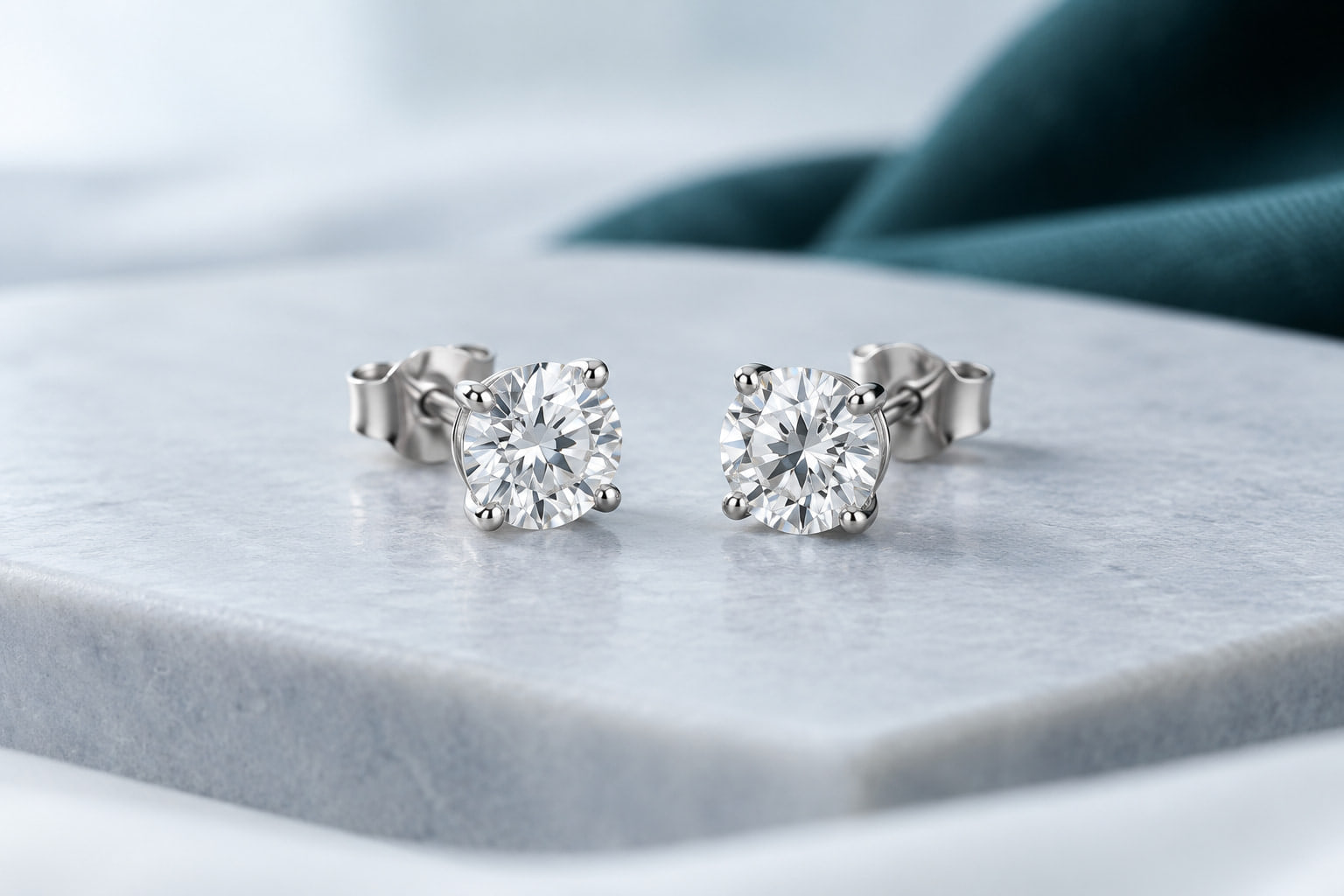
Quick Answer
Buy lab grown diamond stud earrings by approving a matched loose pair and a compatible setting system, then inspecting the completed earrings together. Compare actual face-up dimensions, outline, apparent color and light pattern rather than selecting two stones from weight and grade alone. Specify whether the advertised carat weight means each stone or the pair total. The basket must fit the real stone geometry, and the post and back must belong to a compatible system. A friction, threaded or locking description is not enough to establish interchangeability. Use a prototype to review front-facing balance and handling. When MEITUO coordinates the loose stones, keep finished-earring manufacture and findings approval assigned to the actual jewelry maker.
How Should Lab-Grown Diamond Studs Be Matched Face Up?
Set a visible-size target before a weight target. For round stones, record minimum and maximum diameter for each; for fancy shapes, record length, width and intended orientation. Two stones with the same carat weight can have different spread because their proportions differ. A pair whose diameters visibly disagree may disappoint even when both stones meet the same broad purchasing grade.
Compare the proposed stones side by side in one recording. Keep the background, exposure and orientation consistent, then swap their left-right positions. Look at apparent color, brightness and contrast together. A persistent difference that follows a stone deserves attention; a difference that stays in one position may come from the lighting. This is a practical visual review, not a new laboratory grading procedure.
Define the acceptance unit as one pair. The buyer should be able to reject a poor pairing without declaring either individual stone unusable for another application. Give each member an identifier and preserve the relationship in the packet and invoice schedule. A round-pair inquiry should ask for that joint approval rather than simply two stones within one range.
Finally, inspect both stones at the viewing scale relevant to earrings. Magnified details help examine condition, but the face-up pair decision should not depend entirely on a dramatic close-up. Record which differences are acceptable so the next selection does not repeat a subjective conversation from the beginning.
How Should per-Stone Weight and Total Carat Weight Be Separated?
Put a per-stone line and a pair-total line in the buying sheet. If the target is 1.50 ct total, that is not the same order as two 1.50 ct stones. Retain actual individual weights even when the selling label uses a total. This matters for receiving, replacements and any customer question about the composition of the pair.
| Selection decision | Two independent stones | Approved stud pair |
|---|---|---|
| Weight | Each falls inside a broad range | Individual weights and pair total are both recorded |
| Visible size | Diameter may differ unnoticed | Face-up dimensions are compared jointly |
| Appearance | Separate flattering images | One controlled pair view and position swap |
| Setting fit | Nominal size sent to the maker | Actual dimensions and depth linked to each seat |
| Substitution | Similar grade may be accepted automatically | Replacement needs renewed pair approval |
Use the matched-pair guide to define the relationship between the two stones. A total-weight target can remain commercially useful, but it should not override an agreed visible-size or appearance requirement.
For a graded assortment, assign distinct size families rather than one large band that receiving staff must improvise. Keep the pair code through setting and packing. If the setter rearranges stones to improve matching, record the new pair identities before the finished jewelry enters inventory.
Which Interfaces Matter Beyond the Diamond Pair?
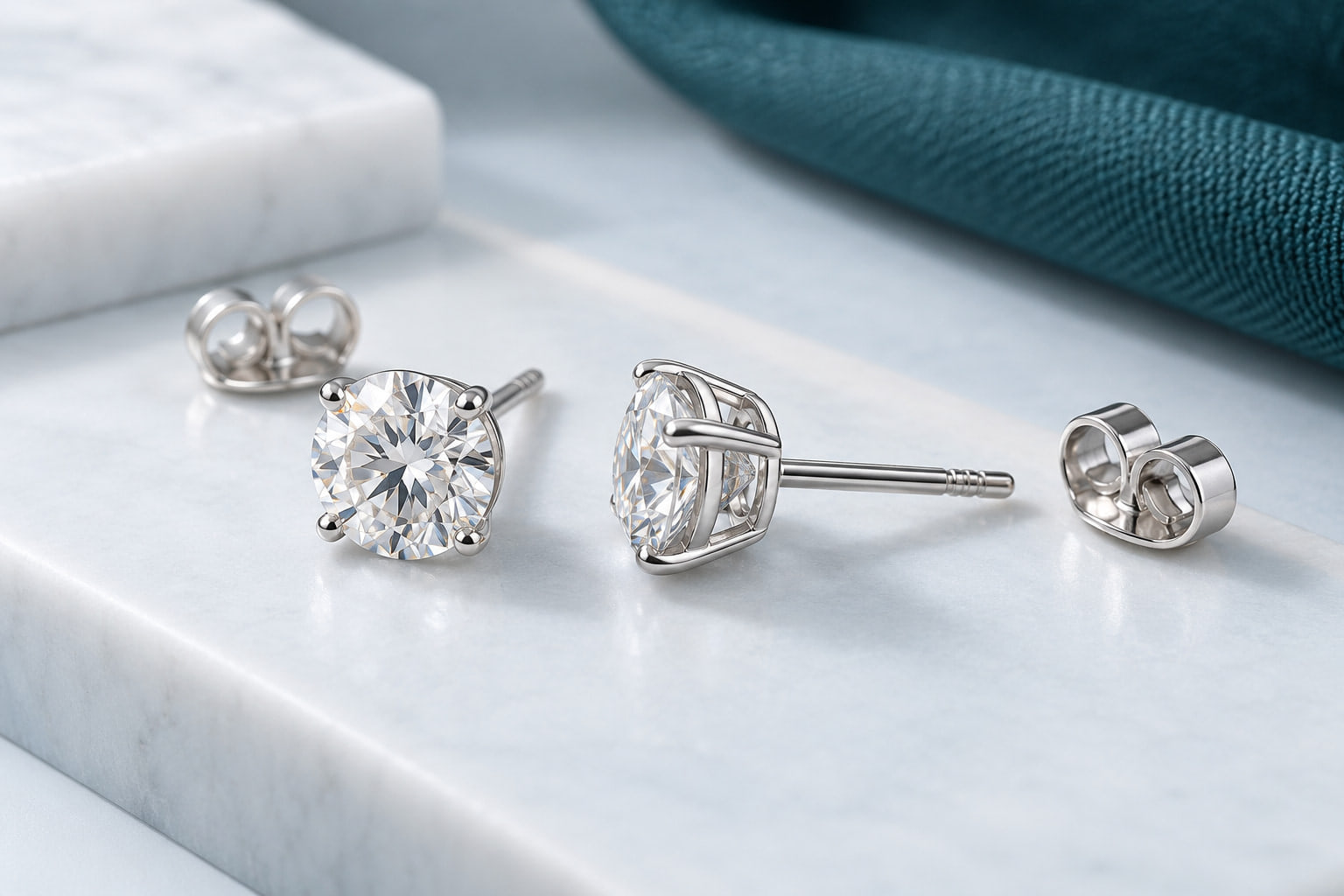
The basket is not merely a style label. A martini-style profile, a conventional basket and a bezel can position the stone and metal differently. Ask the maker to check actual girdle outline, pavilion clearance and seat location. A nominal diameter does not prove that a particular head can accept the stone, especially when two candidates have different depths.
The post and back are another interface. Stuller's earring-back education describes different systems and identifies examples intended for specific posts. The important procurement lesson is compatibility: do not order a generic screw back or locking back and assume it fits every post bearing a similar description.
Record the maker or supplier reference for both components, along with the material specification and assembly drawing where available. Ask the jewelry maker to confirm engagement, alignment and handling on the finished prototype. A buyer should not invent a universal post diameter, retention force or thread standard from a photograph. Those requirements depend on the actual component system and the maker's assessment.
Then review the front-facing result. A larger head, different basket profile or changed backing can affect how the assembled stud presents on the intended wearer or test fixture. Do not guarantee universal comfort or freedom from droop. The component-scope guide helps keep stone approval distinct from findings and finished-product approval.
How Should a 20-Pair Stud Order Be Planned?
Hypothetical example: the everyday stud launch. A retailer plans twenty pairs at approximately 1.50 ct total per pair, requiring forty production stones before reserves. Two candidates for the first pair weigh 0.74 and 0.76 ct, totaling 1.50 ct. Their mean diameters are 5.8 and 5.6 mm. The 0.2 mm difference is about 3.6% of the smaller diameter. These invented measurements illustrate why a correct total weight does not settle visible matching.
The buyer requests a new candidate close to the 5.8 mm appearance and reviews the replacement beside the retained stone. The revised pair totals 1.51 ct and satisfies the approved visible reference. Acceptance depends on the written order scope; the buyer must approve the revised total rather than assume every nominal range permits it. No price or supply result is implied.
The maker then prepares one finished sample pair using identified baskets, posts and backs. Both stones fit their seats, but the initial backs are from a different system than the specified posts. The component mismatch is corrected before production. This is a fictional failure path, not a claim that a named manufacturer supplied defective parts.
After sample approval, the buyer orders the remaining nineteen pairs and one separately priced reserve pair, if available. The total becomes twenty-one pairs or forty-two stones. The reserve remains a pair so it can be used for a complete replacement or reviewed for a single-stone service need. Use the everyday-jewelry brief to connect these quantities with the actual finished-product plan.
What Should Stud Buyers Clarify in Three Supplier Markets?
The stud supply chain can divide stone matching, findings supply and final assembly among different businesses. The buyer needs one pair specification that survives those handoffs. A country's trading role does not establish that the same supplier grows diamonds, makes posts and manufactures the finished earrings.
USA / retailer and bench handoff
How Should a US Stud Retailer Coordinate Trade Stones and Findings?
A US retailer using a trade stone supplier and a local setting maker should nominate one owner for the finished sample approval. The stone buyer may approve a pair while the bench sources the baskets and backs. Without a shared component sheet, those two reasonable decisions can produce an unreviewed assembly.
Ask the US findings supplier for the exact compatible post and back references. Stuller's cited education provides examples of component-specific systems, but its product names should not be applied to unrelated parts. Keep actual references on the work order and confirm that substitutions are disclosed before assembly.
For retail inventory, distinguish pair total from per-earring weight in the selling data. Keep a photograph of the completed sample and a record of the approved pair. If a customer later needs one replacement, compare it with the surviving stud rather than fulfilling the request from grade and weight alone. A service solution should restore the intended pair relationship and compatible findings.
CHINA / pair identity and production routing
How Should China Sourcing Keep Stud Pairs Together?
For sourcing coordinated through China, send a pair schedule rather than a single aggregate stone quantity. Forty stones for twenty stud pairs should be identified as twenty relationships, with the actual dimensions and approval status of each member. This makes it harder for a parcel to be resorted in a way that breaks an accepted pair.
MEITUO can coordinate matching questions from Qingdao and keep the supplier response linked to the buyer's reference. Its location does not establish where the stones were grown or cut, and stone coordination does not make it the manufacturer of the finished earrings. Identify the jewelry maker separately when the order moves into assembly.
Use bilingual component descriptions where useful, but retain the maker's part numbers exactly. A translated term such as screw back is less precise than a verified compatible post/back set. Before dispatch, request the pair map and actual item images so receiving can check the goods without reconstructing the selection from scattered messages.
INDIA / polished-pair selection
How Should an Indian Cutter or Trader Assemble Stud Pairs?
An Indian cutter or trader offering polished goods should receive the visible matching target as well as the weight range. Ask for actual diameters, depth and a joint pair view. A cutter can produce two commercially acceptable individual stones that still need a separate decision about how convincingly they work as earrings.
Where a trader assembles candidates from several sources, ask it to preserve item and document relationships. The final pair photograph should show the actual proposed members, not a representative pair selected for presentation. If one stone is replaced during negotiation, request a renewed joint view before accepting the change.
Keep loose-pair acceptance distinct from any downstream setting offer. A supplier coordinating both should identify who makes the jewelry and who confirms findings compatibility. For dispatch, label each pair together and include the approved measurements. This lets the receiving team detect an accidental mix before the stones are mounted or entered into a finished-stud stock code.
What Should Be Inspected After the Stones Are Set?
Recheck the pair face up after setting. Metal coverage and head alignment can change how the stones appear together. Compare visible diameter, level, orientation and the amount of rim or prong coverage. If a stone looks smaller only after assembly, investigate the head geometry before replacing the stone. Keep the loose-pair approval available for comparison.
Ask the maker to inspect stone retention and the specified post/back function through its normal quality process. The buyer can check the delivered components against the approved references and confirm that both backs can be operated as intended. Avoid ad hoc force tests or destructive bending presented as a universal acceptance method. Any formal test requirement should be agreed with the manufacturer for the actual design.
Record finished earring weights individually when balance matters, using the same measurement basis for both. A difference can originate in the metal or findings rather than the stones. Review the assembled pair in a representative wearing position and agree how the buyer will judge presentation. This review cannot guarantee the same behavior on every wearer.
At packing, keep pair IDs and document references connected. A service replacement should reopen the pair review, particularly when the replacement head or back differs from the original. The repeat-order guide helps preserve the approved version rather than letting similar-looking components enter the range unnoticed.
Retain the approved backing reference even when the visible design stays the same. A later replacement may look similar from the front while changing the handling sequence or post engagement. Record the new component as a revision and inspect both earrings again. This makes service staff aware of which spare backs belong to which finished-stud version.
How Can MEITUO Coordinate Stones for Stud Earrings?
MEITUO is based in Qingdao, Shandong, China and supports sourcing and supply-chain coordination for jewelry brands, wholesalers, retailers and designers. For a stud program, its useful role is to coordinate the matched loose pair around the buyer's visible-size, appearance and document requirements, then support supplier communication and order follow-up.
Its product scope includes loose center stones, melee, side stones and matched pairs or sets. Send per-stone and pair-total requirements, intended basket references and sample approval criteria to [email protected]. Availability, documents, MOQ, lead time, treatment information and shipping terms need confirmation for each order. A loose-stone selection can be refined into an approved pair rather than treated as two unrelated purchases.
MEITUO does not claim to manufacture finished earrings, make posts or backs, or issue independent laboratory reports. The actual jewelry maker should approve the findings system and completed assembly. Keep those responsibilities explicit so a well-matched stone order does not become an unsupported finished-product promise.
What Should a Lab-Grown Diamond Stud RFQ Include?
Provide the pair count, individual weight range, total-weight scope and actual face-up size target. Attach the preferred pair reference and identify which differences are acceptable. If the finished stud design is already chosen, include the maker's drawing and component references rather than only a photograph of the front.
Require a joint candidate view, item-specific measurements and a clear substitution policy. Add a sample-pair milestone before the production quantity is released. The RFQ guide can hold the commercial terms while the pair schedule records the stone relationships.
State whether you are buying loose pairs or finished jewelry from another party. The copyable brief below separates the stone request from setting and findings work and makes renewed pair approval part of any replacement decision.
Please propose matched laboratory-grown diamond pairs for [number] stud-earring pairs. Target visible diameter or outline is [dimensions], with per-stone weight range [range] and pair total [range]. Intended basket and post/back system are [maker, component references or drawing]. Provide each stone’s measurements, item identifiers, joint face-up video, available documents and any relevant treatment information. Confirm sample-pair review, matching criteria, replacements, MOQ, lead time and shipping terms. Quote loose stones separately from third-party setting and findings. No substitution within an approved pair is permitted without renewed approval; final acceptance includes the completed pair’s appearance and component fit.
FAQ: Lab-Grown Diamond Stud Earrings: Pairing and Backings
Does 1.50 Ct Stud Weight Mean Each Earring?
Not necessarily. It may refer to the pair total. The order and product data should identify individual stone weights and total carat weight explicitly. Two 1.50 ct stones create a different weight scope from a pair totaling 1.50 ct.
Must Both Stud Diamonds Weigh Exactly the Same?
Exact equality is not the only matching criterion. A pair can have slightly different weights yet look well balanced. Compare face-up dimensions and appearance within the written specification, and retain both actual weights for documentation and later service.
Are All Screw Backs Interchangeable?
No such assumption is safe for procurement. Use the actual compatible post and back references confirmed by the component supplier or maker. Similar commercial descriptions do not establish identical threads, engagement or fit.
Does a Martini Setting Guarantee Less Droop?
No universal wearing result is established by the name. Basket geometry, stone size, post position, backing and the wearer all affect presentation. Review a finished prototype in a representative position and avoid promising identical behavior on every ear.
Can MEITUO Supply Finished Stud Earrings?
This guide establishes MEITUO's loose-stone sourcing and coordination role, not finished-earring manufacture. Confirm any requested scope separately and identify the actual jewelry maker. The maker should approve the seats, posts, backs and completed assembly.
What Should a Single-Stud Replacement Match?
Review the surviving stud's dimensions, appearance, head and findings system. A matching weight or grade alone may not restore the pair. Keep the original pair file so the new candidate can be assessed against the actual remaining earring.