 English
 Español
 Português
 Deutsch
 Français
 Italiano
 Nederlands
 العربية
 日本語
 한국어
 ไทย
Quick Answer
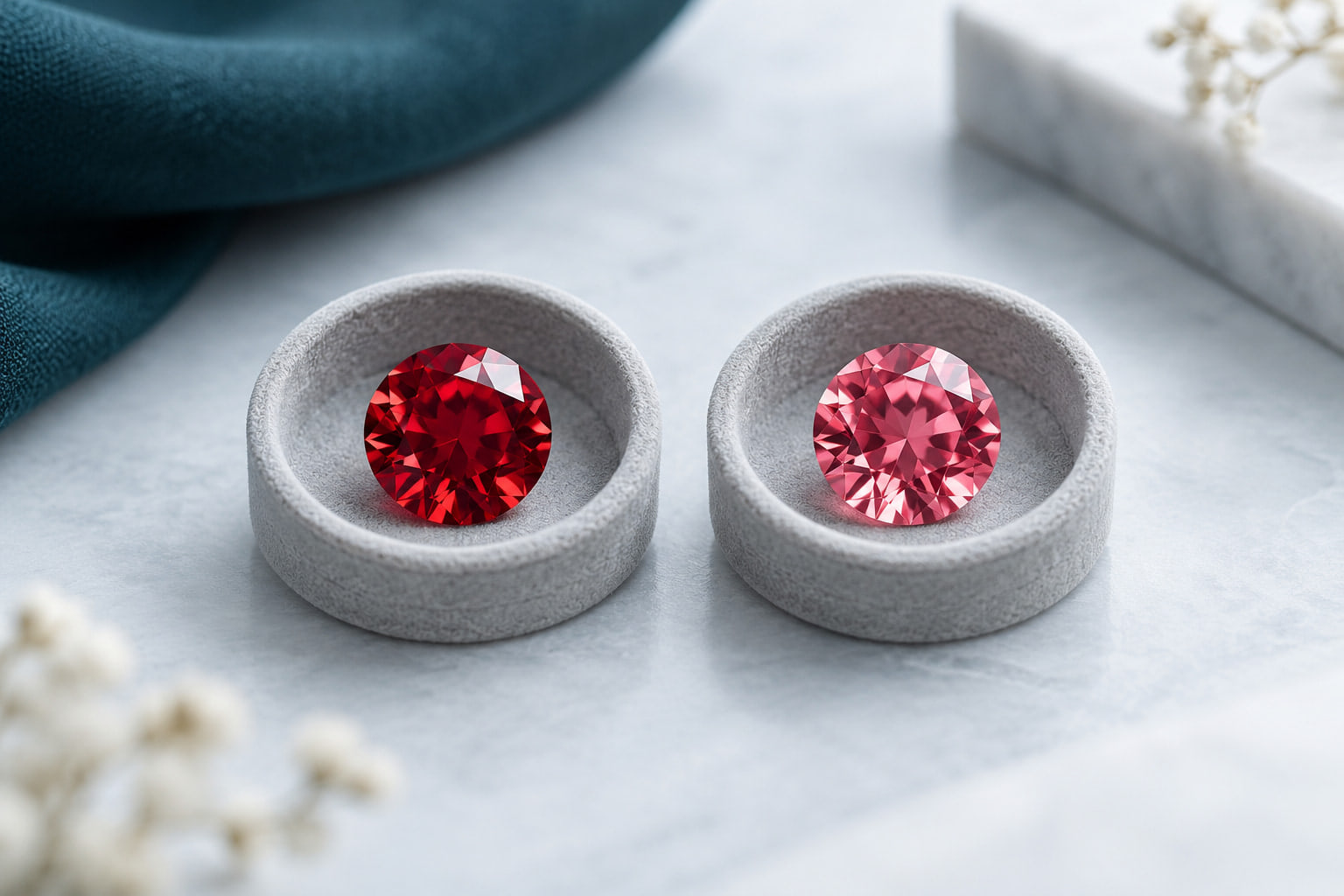
A lab grown red diamond claim needs evidence for both the material and the exact color description before a buyer commits to a custom project. Do not treat a seller's red title as equivalent to an independent report, and do not silently promote reddish pink or another modified description into pure red. GIA explains that post-growth radiation and heating can produce pink and red colors in laboratory-grown material; that does not identify any individual offer. Request actual item identification, exact available report wording, measurements and treatment information, then review the stone under agreed lighting. MEITUO red availability is unconfirmed. Begin with a feasibility inquiry and evidence gate, keeping any natural-red rarity or investment story out of the buying decision.
What Exactly Must a Red Lab-Grown Diamond Claim Establish?
Start with the noun and the qualifier. The offer must identify diamond rather than a red imitation material, and it must establish laboratory-grown origin rather than leave origin ambiguous. Then the color statement needs its own support. A genuine laboratory-grown diamond can still be described inaccurately if the sales title exaggerates its color.
Copy the independent document wording exactly into the review sheet where available. Keep the seller's title next to it. If the two differ, request an explanation rather than choosing the more attractive phrase. A seller can use a brand shade name, but that name should not be presented as the laboratory's conclusion.
| Offer element | Insufficient shortcut | Evidence-led decision |
|---|---|---|
| Material | A red faceted photograph | Item-linked diamond identification |
| Origin | Assume all man-made red stones are lab-grown diamond | Laboratory-grown status established for the actual item |
| Color | Red in the title | Exact available independent description plus actual review |
| Treatment | Infer untreated from price or vividness | Read item-specific evidence and qualified statements |
| Availability | Assume an image is a saleable candidate | Confirm item, current status and seller's offering authority |
This sequence gives a custom buyer a reason to stop early when the evidence is inadequate. The fancy-color inquiry scope can organize a request, but a category page is not evidence for a particular red stone.
How Can Laboratory-Grown Diamonds Become Red?
GIA's growth-process overview notes that pink and red colors can be produced through post-growth processes involving radiation and heating. A GIA laboratory note explains that irradiation and annealing of nitrogen-containing CVD material can create nitrogen-vacancy centers associated with pink-to-red color. These are technical pathways, not a diagnostic conclusion about a sales image.
Do not transfer a natural red diamond's color-origin explanation automatically to a laboratory-grown offer. Similar appearance can occur through different histories. A narrative about natural structural deformation, exceptional rarity or auction results does not prove the mechanism or commercial value of a modern treated laboratory-grown candidate.
Ask the supplier what information is available about growth and post-growth processing, then read the independent document within its actual scope. If the document leaves treatment undetermined, retain that uncertainty. If it identifies treatment, preserve the statement and any relevant handling information. Neither a growth label alone nor a confident salesperson should replace the item-specific record.
For the buyer, the practical consequence is sequencing. Resolve the evidence before commissioning a stone-specific mounting or announcing a red product. A candidate that is attractive but does not support the required description may still be considered as a separate alternative, subject to honest wording and a revised design decision.
What Evidence Should Arrive Before a Red-Stone Deposit?
Require an item identifier, full measurements, current images and available independent documentation before discussing a nonrefundable commitment. Ask who owns or controls the offered item and whether it is physically available for inspection. A supplier reposting another seller's photograph may be useful as a sourcing lead, but that is a different stage from an actual candidate offer.
Match report details with the proposed stone as far as the evidence allows. Check dimensions, weight and identifiers. Use the issuer's own verification route where applicable. A report image cropped to show only color wording cannot establish the whole connection. Request the complete document rather than inferring the missing fields.
Define an evidence gate in the purchase file: material confirmed, origin confirmed, color wording reviewed, treatment information reviewed and appearance inspection pending. Not every project needs the same document service, but every decision should be explicit. The report comparison guide can help frame issuer questions without treating all report formats as identical.
If the offered evidence cannot support the required red claim, pause that candidate. Ask for a separately identified alternative or change the brief deliberately. Do not pay for certainty that the seller has not actually supplied. Any reservation should identify what happens if a subsequent agreed examination contradicts the offer.
How Can an Evidence Gate Prevent Premature Custom Spending?
Hypothetical example: the red centerpiece commission. A designer has an invented project budget of 6,000 currency units. The proposed stone allowance is 3,600, a custom mounting allowance is 1,800 and an examination-and-logistics reserve is 600. These are planning assumptions, not current prices or a quotation from MEITUO. Committing the mounting before verifying the stone would expose 30% of the budget to a design that may need to change.
The supplier's title says red, while the available document describes a pink-dominant modified color. The buyer does not declare the report wrong or silently rename the candidate. The team asks whether the actual stone fits the appearance brief and whether the customer would accept the documented description. If pure-red wording is essential, this candidate fails that requirement before the mounting is commissioned.
Suppose the designer instead considers it as an alternative. The project file receives a new option ID, revised color wording and a separate customer approval. Only after the loose sample is accepted does the mounting maker receive the actual dimensions. The original red inquiry remains distinct from the approved alternative so later staff cannot confuse the two decisions.
If the buyer declines all candidates, the 1,800 mounting allowance has not yet been spent. The example does not promise a particular saving or eliminate examination costs. It shows why an evidence sequence can limit avoidable custom exposure. Use the bespoke application brief to tie design stages to actual stone approval.
How Should a Red Inquiry Be Handled Across Supplier Markets?
The key channel question is who can supply current item evidence and arrange the agreed review. A red reference image, a treatment discussion and a physical saleable candidate are three different things. Keep the project at the feasibility stage until the commercial counterparty can identify what is actually being offered.
USA / custom promise and evidence
How Should a US Custom Buyer Review a Red Claim Before Selling?
A US custom buyer should settle the stone description before presenting it as an available red diamond to a client. The seller's title, laboratory wording and actual appearance should be reviewed together. If the offer supports a differently described color, present that as a separate alternative with accurate wording rather than silently changing the original request.
Keep the deposit schedule tied to the evidence and inspection stages. A client deposit for a defined stone is different from a general design retainer, and the commercial paperwork should identify what is being approved. Coordinate with the US setting maker so stone-specific work begins only after the actual candidate and dimensions are accepted.
For a retail listing, preserve the laboratory-grown qualifier and relevant treatment information. Review the image under ordinary lighting and avoid importing a natural-red rarity or investment narrative into the product story. The purchasing file should make it possible for customer-service staff to identify the exact approved item and its description.
CHINA / feasibility and evidence routing
How Should China Coordination Separate a Red Lead From an Offer?
A China-facing inquiry may begin with a reference photograph or a discussion of possible treatment routes. Neither establishes an available red laboratory-grown diamond. Ask the supplier to distinguish a design reference, a proposed production attempt and an existing identified candidate. Each belongs to a different stage of the buying process.
MEITUO can coordinate those questions from Qingdao and organize the response around the buyer's evidence gate. Keep seller, grower, treatment provider and laboratory roles distinct where relevant. The coordination location does not establish any of those activities, and a general claim about growth technology cannot replace the actual candidate's documents.
If a supplier returns a pink-dominant alternative, retain its exact description and label it as a separate option. Do not use a translation shortcut that turns every red-looking sample into the requested red claim. Confirm item identifiers and current availability before asking the buyer to reserve it or commission a mounting.
INDIA / processing and commercial scope
How Should an Indian Red-Stone Proposal Handle Processing Uncertainty?
When an Indian cutter or trader proposes a red laboratory-grown diamond, clarify whether the item is already polished and examined or still part of a processing plan. A planned color outcome should not be logged as an existing finished candidate. Ask which stage produces the final item evidence and when the buyer can accept or decline it.
If further cutting or processing is proposed, identify what may change in dimensions, appearance and documentation. Do not assume an earlier report continues to describe a modified item without appropriate review. Keep the current physical candidate linked to the commercial offer, especially where several parties coordinate the work.
For a completed stone, request exact report wording and controlled images before negotiation advances. A trader may be able to arrange access without owning the stone, so confirm authority and reservation terms. The buyer's required red claim should remain explicit, with differently described alternatives separated in the quotation rather than substituted during dispatch.
How Should a Verified Candidate Be Inspected and Accepted?
Evidence review does not eliminate the need to see the actual stone. Inspect clean, loose material face up under the agreed broad neutral light, then in the principal intended retail or wearing environment. Include gentle tilts and a consistent background. Do not select only the frame where the stone appears reddest. Record whether the dominant impression meets the approved brief.
Keep ordinary colored flashes separate from the stable face-up appearance. Strong directional lighting can create saturated reflections without establishing the bodycolor description the buyer needs. If camera exposure exaggerates the color, request a controlled retake or physical review. Do not attempt to settle a close color boundary by comparing unrelated images on different screens.
Before setting, confirm the actual outline and depth with the mounting maker. A replacement red-looking stone may differ enough to need a revised seat. Use the loose-stone and finished-jewelry scope guide to identify who owns the acceptance decision and any redesign cost.
Write remedies around specific failures: unsupported material claim, mismatched document, unacceptable appearance or unauthorized substitution. A replacement should pass the same evidence and sample gates. If the buyer accepts a differently described alternative, document that change as a new approval. An informal message saying close enough is a poor basis for later product copy or customer service.
Use a written disposition for each failed gate. A missing document can remain pending with a due date; a document tied to a different item requires correction; a documented color outside a mandatory brief requires rejection or a separately approved alternative. These outcomes should not all be recorded as color issue. Specific reasons make follow-up faster and prevent another team from paying a deposit on a candidate that has already failed the project requirement. Keep the decision owner and review date alongside the item identifier.
What Can MEITUO Support for a Red Feasibility Request?
MEITUO is a sourcing and supply-chain coordination partner based in Qingdao, Shandong, China. It supports jewelry brands, wholesalers, retailers and designers through product selection, supplier coordination, quality-requirement confirmation and order follow-up. A red inquiry should start with an evidence requirement and design brief rather than an assumption of stocked goods.
MEITUO red availability is unconfirmed. Its broader scope includes loose center stones, melee, side stones, matched pairs or sets and fancy-color options, but this does not establish current red inventory, a specific grade or a particular treatment pathway. Actual candidates, documents, MOQ, lead time, treatment information and shipping terms require per-order confirmation.
Send the project requirements to [email protected] and identify whether red wording is mandatory or whether separately described alternatives can be considered. MEITUO can coordinate responses and related companion-stone requirements. It does not grow diamonds, own an independent laboratory or guarantee a red outcome. The buyer should approve the evidence and actual sample before authorizing custom work.
What Should a Lab Grown Red Diamond RFQ Require?
State the exact claim needed and the evidence expected to support it. If the requirement is visual rather than formal wording, say so and attach the approved reference. If a report description must include a particular color conclusion, request that requirement directly without asking the supplier to reinterpret a different document.
Separate feasibility from reservation, then reservation from custom manufacturing. Ask for the actual candidate, review conditions and remedy terms at each stage. Identify who authorizes a substitute and whether an alternative color needs customer approval. A supplier should not be left to decide that reddish pink is commercially equivalent to the original red request.
The RFQ guide helps organize the commercial schedule. The brief below keeps the item evidence and approval sequence visible before the design incurs stone-specific costs.
We are making a feasibility inquiry for a laboratory-grown diamond described as red for [project]. Target dimensions, shape and quantity are [details]. Please identify any actual candidate and supply exact independent color wording, material identification, measurements, report reference and available treatment information. Include current face-up images and continuous video under agreed neutral lighting. Distinguish red from reddish-pink or other modified-color alternatives, and quote alternatives separately. No MEITUO red stock is assumed. Confirm reservation authority, sample examination terms, timing and remedies if evidence or appearance fails our written criteria. Final design approval follows item-specific review.
FAQ: Red Lab-Grown Diamonds: Verifying a Rare Color Claim
Can Laboratory-Grown Diamonds Be Red?
GIA describes post-growth radiation and heating pathways that can produce pink and red colors in laboratory-grown material. That establishes a technical possibility, not the identity or availability of a specific offer. Verify the actual candidate and its exact color evidence.
Is Reddish Pink Interchangeable With Red?
Do not assume so. Retain the document's exact wording and decide whether the actual appearance meets the project. If red wording is a hard requirement, a differently described candidate should be treated as a separate alternative requiring approval.
Does a Red Photograph Prove Diamond Identity?
No. A photograph cannot establish that a faceted red item is diamond, that its origin is laboratory-grown or that its color claim is accurate. Request item-linked identification and supporting documents before a custom commitment.
Does a Red Lab-Grown Stone Share Natural Red Investment Value?
No such conclusion follows from its color or growth origin. Avoid using natural auction results or rarity stories as evidence of a laboratory-grown candidate's resale performance. Buy it for the defined product purpose and evaluate the actual commercial terms.
Can MEITUO Confirm Red Stock From This Article?
No. Red availability is unconfirmed. A feasibility request needs a clear description, dimensions, quantity and evidence requirement. Any actual proposed candidate must receive current availability confirmation and item-specific review.
What Should Happen When a Later Examination Contradicts the Offer?
Keep the stone unset and preserve the document, images and commercial record. Apply the agreed remedy process, which may include further review, replacement or return. Any replacement should pass the same evidence gate, and a differently described alternative needs a new approval.