 English
 Español
 Português
 Deutsch
 Français
 Italiano
 Nederlands
 العربية
 日本語
 한국어
 ไทย
Quick Answer
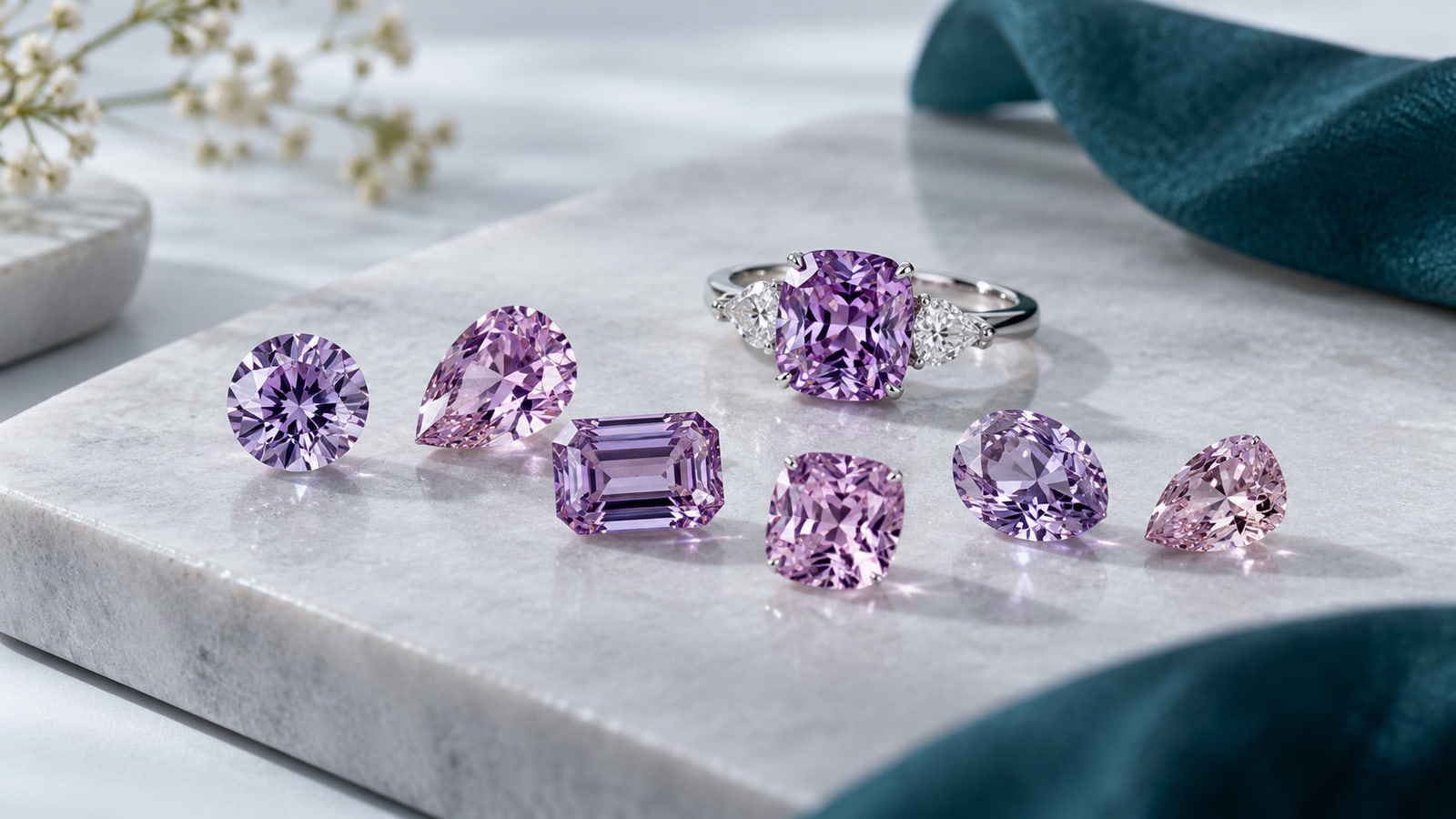
Buy lab grown purple diamonds by defining the desired hue boundary, then checking the actual candidate and its exact document wording. A seller's purple, lavender or violet label may describe a different appearance from a report stating purplish pink or another modified hue. Build a small approved sample palette that includes an acceptable center reference and clear rejection examples. Review candidates together under consistent lighting, keeping bodycolor separate from colored flashes or fluorescence. Laboratory-grown identity and treatment evidence need their own verification; purple appearance is not a diagnostic mechanism. MEITUO purple availability is unconfirmed. Start with feasibility and sample review, and do not promise a repeatable purple assortment until actual candidates and matching requirements have been confirmed.
Why Are Purple, Purplish Pink and Violet Not Interchangeable?
A commercial name can communicate an aesthetic without defining the same color boundary as an independent report. A buyer looking for a cool purple may receive a pink-dominant option that a seller calls lavender. The first task is not to win an argument about the word; it is to establish whether the actual offered stone meets the intended appearance and whether the selling description accurately reflects the evidence.
Keep three fields in the selection sheet: seller's wording, document's exact wording and buyer's appearance decision. Do not overwrite one with another. If the report uses a modified hue, preserve that wording. If the buyer rejects the appearance, record a reason such as too pink for this collection rather than changing the report description to unsuitable purple.
| Reference | What it can communicate | Buyer control |
|---|---|---|
| Seller calls the stone purple | A commercial category or shade impression | Request the actual item and supporting color wording |
| Document states purplish pink | The issuer's description for the examined item | Retain the wording; decide whether pink dominance is acceptable |
| Buyer asks for violet | A desired cool-color direction, still potentially ambiguous | Attach a physical reference and rejection boundary |
| Marketing calls the line lavender | A brand palette name | Keep it distinct from laboratory conclusions |
| Video shows purple flashes | Light behavior at selected moments | Review stable face-up color under controlled conditions |
The fancy-color inquiry should therefore include references and actual wording, not only the color name in a search query.
Can Purple Appearance Identify the Color Mechanism?
No. GIA's 2016 review of CVD-grown material includes purplish pink among reported hues and discusses treatment-related nitrogen-vacancy centers in much of the studied pink-range material. That is evidence about the examined population and its mechanisms, not permission to diagnose every stone marketed as purple from a photograph.
Do not apply the natural purple diamond story to a laboratory-grown candidate. Different material histories can produce related appearances. An article about rare natural stones does not establish the identity, treatment or value of a modern laboratory-grown offer. Keep that distinction in supplier questions and customer-facing copy.
Ask what evidence identifies the offered material and what information addresses treatment. If a supplier claims as-grown purple, request the basis for that item-specific statement. If the evidence is uncertain, record uncertainty rather than translating a qualified comment into an absolute untreated claim. A laboratory can assess features that a buyer cannot establish from a routine color video.
The IGI fancy-colored diamond service description explains the role of laboratory assessment in distinguishing material origin and enhancement. Confirm the applicable service and scope for the actual item. The buyer's palette approval remains a separate design decision, even after the material is examined.
How Should a Buyer Create a Purple Sample Palette?
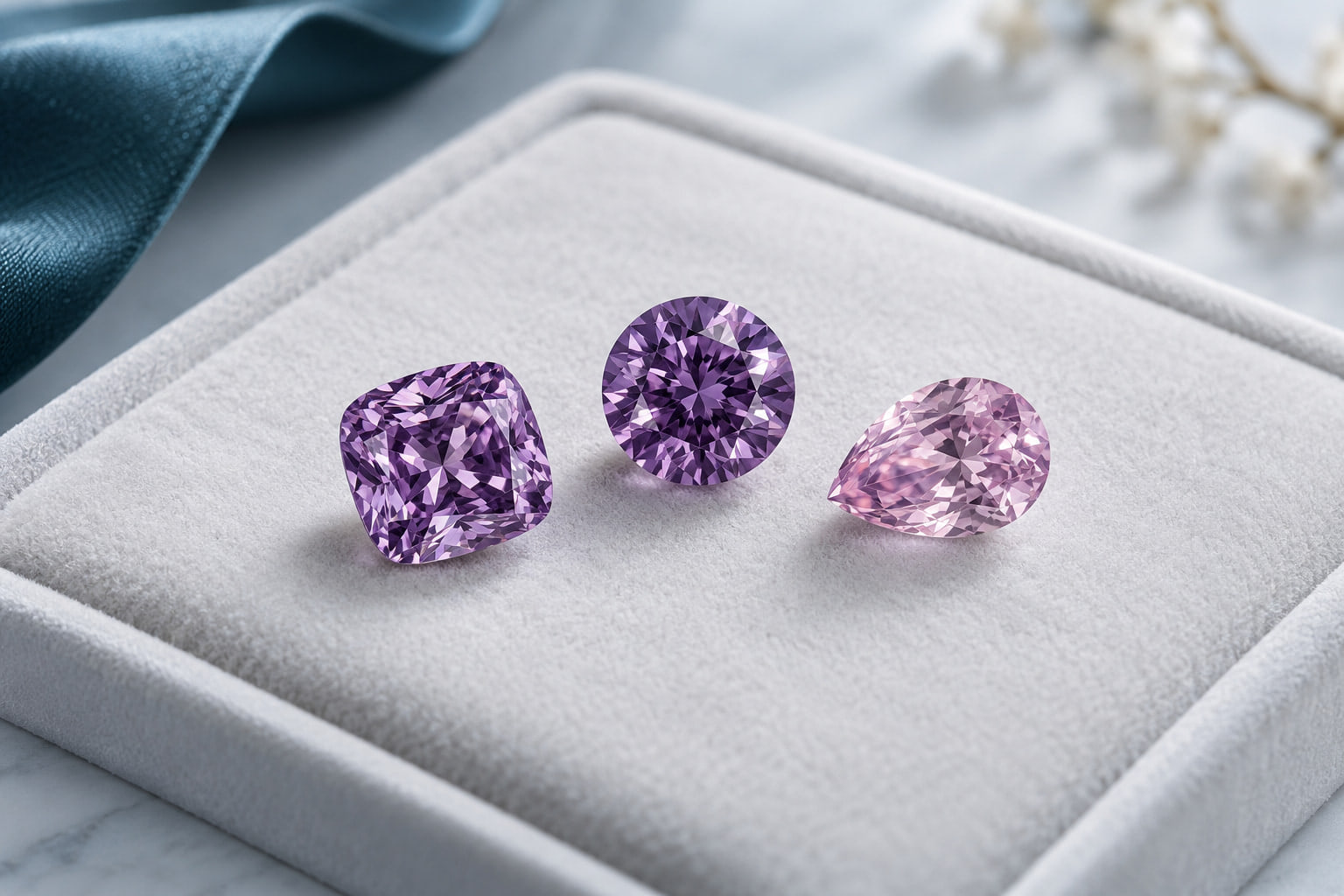
Use a small set with a purpose. Select one preferred reference, one acceptable pinker boundary and one acceptable cooler boundary if those variations suit the design. Add rejection references where useful. These are project controls, not substitute laboratory masterstones or an invented grading system. Label each reference with an internal ID and the reason it was accepted or rejected.
View the palette under a broad neutral source first. Then use the principal lighting expected in the retail or product environment, keeping the same background and orientation. A candidate may remain acceptable in both conditions while looking somewhat different; another may shift the impression beyond the brand's preferred boundary. Record that observation without claiming an unverified physical color-change phenomenon.
Photograph the palette together so exposure differences do not create a false ranking. Where cameras distort the distinction, make the physical comparison primary. Remote screen review can screen candidates, but it may not settle a close purple-versus-pink boundary. Do not promise a universal match across every device or viewing condition.
For brand collection planning, link each approved color subgroup to a product role. A center may allow a broader range than a symmetrical earring pair. A deliberate gradient needs a sequence rather than one uniform-color requirement. The palette should describe that intended relationship instead of forcing every application into the same tolerance.
How Does a Purple Palette Improve an Assortment Decision?
Hypothetical example: the lilac capsule review. A brand needs eight earring pairs and four pendant centers, or twenty stones before reserves. It receives twelve proposed candidates for an initial palette review. Four look too pink for the earring brief; two look too gray; six remain visually suitable. These invented counts illustrate an acceptance process, not a statement about real supply or sourcing yield.
The six acceptable candidates do not automatically make three acceptable pairs. Joint viewing produces two convincing pairs and two unpaired stones. The brand assigns the paired four to earring samples and keeps the unpaired two for individual pendant review. This leaves six pairs and two centers still to source for the planned assortment. Counting accepted individual stones alone would overstate production readiness.
The buyer retains an accepted pair as reference P1 and a rejected pink-dominant reference R1. New candidates are compared with both, so the supplier can see not only the desired direction but also where the boundary lies. The exact report wording remains in the item sheet; it is not changed to the brand's lilac name.
One pendant candidate is then placed against the intended metal finish. If it fits the palette only while loose, the buyer decides whether a different finish, a different candidate or a revised design is appropriate. The pair and set workflow helps preserve these distinct approvals rather than turning all six accepted stones into an undifferentiated parcel.
How Should Purple Inquiries Move Through Different Supplier Channels?
Purple requests often need careful language alignment because a trade category, brand shade and document description may differ. The useful supplier is one that can show the actual proposed candidate and preserve those distinctions. The panels below focus on how each commercial handoff can keep the palette and evidence connected.
USA / shade language and customer expectations
How Should a US Retailer Control Purple Shade Names?
A US retailer can use a brand shade name such as lilac, but it should keep that name separate from the actual material and document description. Before launching the line, review whether the title, specification panel and product images create an expectation that the proposed stones can meet. A supplier's purple category should not become a promise of identical hue across every item.
Give the US distributor or retail buying team the accepted and rejected palette references together. The rejection reference can be especially useful where pink-dominant options repeatedly enter the shortlist. Ask for the actual proposed pair or group rather than separate representative photographs.
Prepare customer-service language that describes reasonable visual variation without rewriting the evidence. If the store sample and online stock differ, preserve each item's identifier and images. A marketing name should help customers understand the design, while the purchase and invoice records retain the actual laboratory-grown identity and item-specific description.
CHINA / palette and wording alignment
How Should China Coordination Translate a Purple Boundary?
For a China-facing inquiry, send the palette as a labeled reference file instead of translating purple, violet and lavender as though each has one universally shared commercial meaning. Mark the preferred reference and explain which pink or gray direction is unacceptable for the intended product. The actual candidate still needs review; the palette is a communication aid rather than a laboratory scale.
MEITUO can coordinate that discussion from Qingdao and request supplier responses against the same sample IDs. Ask the seller to copy available document color wording exactly and retain its own trade description separately. This prevents a translation edit from turning purplish pink into an unsupported pure-purple claim.
If no candidate meets the boundary, keep the request open as unconfirmed feasibility. Do not relabel an available pink-dominant stone simply to close the inquiry. A proposed alternative can be useful, but it should be shown as a separate design option requiring the buyer's approval.
INDIA / assortment and replacement handoffs
How Should an Indian Trader Preserve a Purple Pair Approval?
An Indian trader assembling a purple shortlist should know whether the buyer is selecting individual centers, matching pairs or constructing a gradient. The same group of stones can satisfy one task and fail another. Send the intended position map and ask for candidates shown in those relationships, not only grouped by weight.
If a cutter or processing party becomes involved after the first review, clarify whether the proposed stone will change and when new images or documents will be provided. The earlier palette acceptance should not silently cover a modified candidate. Ask the commercial seller to identify every revision against the original item reference.
For dispatch, preserve the pair or sequence labels and include the accepted image sheet. If one member becomes unavailable, request a new joint review with the replacement. A stone with similar report wording may still look too pink, gray or dark beside the retained partner, and that relational decision belongs to the buyer.
How Should a Purple Pair or Gradient Be Accepted?
Decide the unit of approval. For a pair, both stones should be viewed together face up and at gentle tilt, with consistent orientation. For a gradient, arrange all stones in their final order and label every position. A collection designed around controlled variation can fail if the accepted sequence is mixed during packing or setting.
Compare hue first, then tone, saturation impression and visible pattern. These observations interact, but recording them separately helps explain a rejection. A stone can be the preferred hue yet too dark in the intended position. Another can have a suitable tone but appear too pink beside its partner. Avoid reducing every difference to a vague phrase such as not matching.
At receipt, use the same reference and lighting notes from sample approval. Keep the stones loose until their identity, dimensions and appearance have been checked. If a pair differs from the approved view, document the issue with both stones visible. A separate glamour image of one member does not resolve a relational problem.
Retain the approved position map for future service. The graduated-set scope is relevant when the design uses progression rather than uniformity. A replacement can meet an individual description yet disrupt the sequence, so service replacements need a whole-group review. Record the remaining stones' condition and viewing context before judging the new candidate.
Use separate packet labels for each approved subgroup. If two acceptable pendant colors are intentionally different, do not combine them under the earring-pair code. That small distinction prevents a warehouse operator from making an apparently reasonable substitution that changes the design. A packing photograph can confirm the intended grouping before dispatch.
How Can MEITUO Coordinate a Purple Palette Inquiry?
MEITUO supports sourcing and supply-chain coordination from Qingdao, Shandong, China for jewelry brands, wholesalers, retailers and designers. A purple request should begin with the approved palette references, intended application and exact matching unit. MEITUO can help organize supplier questions and compare responses around those requirements.
Purple availability at MEITUO is unconfirmed. The broader product scope includes loose center stones, melee, side stones, matched pairs or sets and fancy-color options, but it does not establish a stocked purple range. Confirm actual candidates, documents, treatment information, MOQ, lead time and shipping terms for each order. A matched-stone request should identify whether uniformity or an approved gradient is needed.
Send the palette images and rejected-boundary notes to [email protected]. MEITUO supports product selection, supplier coordination, quality-requirement confirmation and order follow-up. It does not issue independent reports or guarantee a particular purple mechanism, shade or repeat supply. The buyer should approve actual samples before assigning stones to the collection.
What Should a Purple Lab-Grown Diamond RFQ Make Explicit?
Specify the desired appearance with a reference and explain which nearby colors fail the brief. State whether a pink-dominant alternative can be considered, whether violet wording is essential to the marketing plan and whether the report wording must meet any defined requirement. Do not ask a supplier to change a document description to fit a brand shade.
Define separate milestones for feasibility, candidate screening, physical palette review and final set approval. A supplier may be able to show one promising stone without confirming the quantity needed for a coordinated line. Keep that distinction visible in the project schedule and open-to-buy plan.
The RFQ guide can structure the commercial request. Attach a position map when ordering pairs or gradients, and use the brief below to keep actual appearance, document language and unconfirmed availability separate.
Please assess feasibility for purple laboratory-grown diamonds for [application and quantity]. Our preferred palette reference is [sample IDs], with acceptable and rejected hue boundaries [details]. Target shape, dimensions and matching unit are [specifications]. Return actual candidate images under [agreed lighting] and copy the exact available report color wording without substituting a marketing shade. Provide laboratory-grown identity, treatment information, document references and current availability status. No purple stock is assumed. Confirm sample review terms, whether paired or grouped viewing is possible, MOQ, timing and replacement procedure. Any pink-dominant or violet-described alternative requires separate approval.
FAQ: Purple Lab-Grown Diamonds: Hue Boundaries and Matching
Is Purplish Pink the Same as Purple?
Do not treat the phrases as interchangeable. Retain the exact document wording and compare the actual appearance with your approved reference. A brand may accept a pink-dominant stone for one design and reject it for another without changing the stone's description.
Can Violet Be Used as a Synonym for Every Purple Stone?
That can create an inaccurate expectation. If a cooler violet direction matters, define it with a reference and verify the offered item. A trade name, a screen impression and an independent color description should remain separate in the selection record.
Does Purple Fluorescence Establish Purple Bodycolor?
No. Fluorescence is light emitted under particular excitation, while the buying brief concerns the stone's appearance under ordinary agreed viewing conditions. A colored diagnostic image is not a neutral bodycolor photograph and should not be used as the palette reference.
Are All Purple-Looking Laboratory-Grown Diamonds Colored the Same Way?
No mechanism should be assigned from appearance alone. Research documents treatment-related mechanisms in some pink-range material including purplish pink, but that does not identify every commercial purple offer. Request item-specific evidence and preserve qualified conclusions accurately.
Can MEITUO Promise a Matched Purple Assortment?
No such availability or matching commitment is established here. Purple supply is unconfirmed. Submit a feasibility inquiry with the palette, dimensions and quantity, then approve actual candidates and the commercial terms before planning a finished assortment around them.
What Is the Best Reference for a Future Replacement?
Retain the approved pair or full sequence reference, exact item records and viewing notes. Review a replacement with the remaining stones. One attractive purple candidate is not enough if its hue or tone disrupts the relationship the original design required.