Preferences are a brief, not a live inventory selection.
A product brief, not just a grade list
Understanding Straight Baguette Lab-Grown Diamond Side Stones
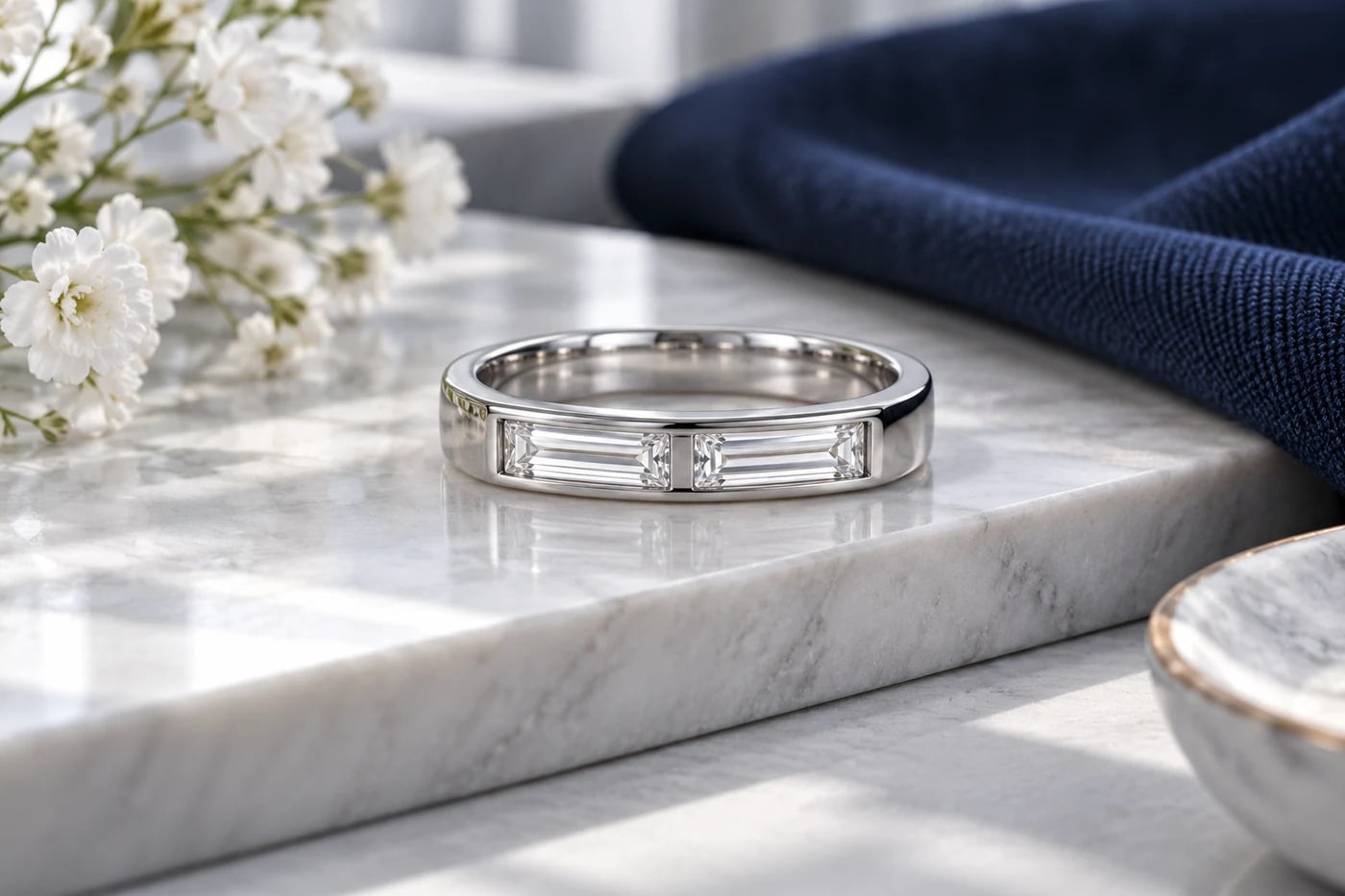
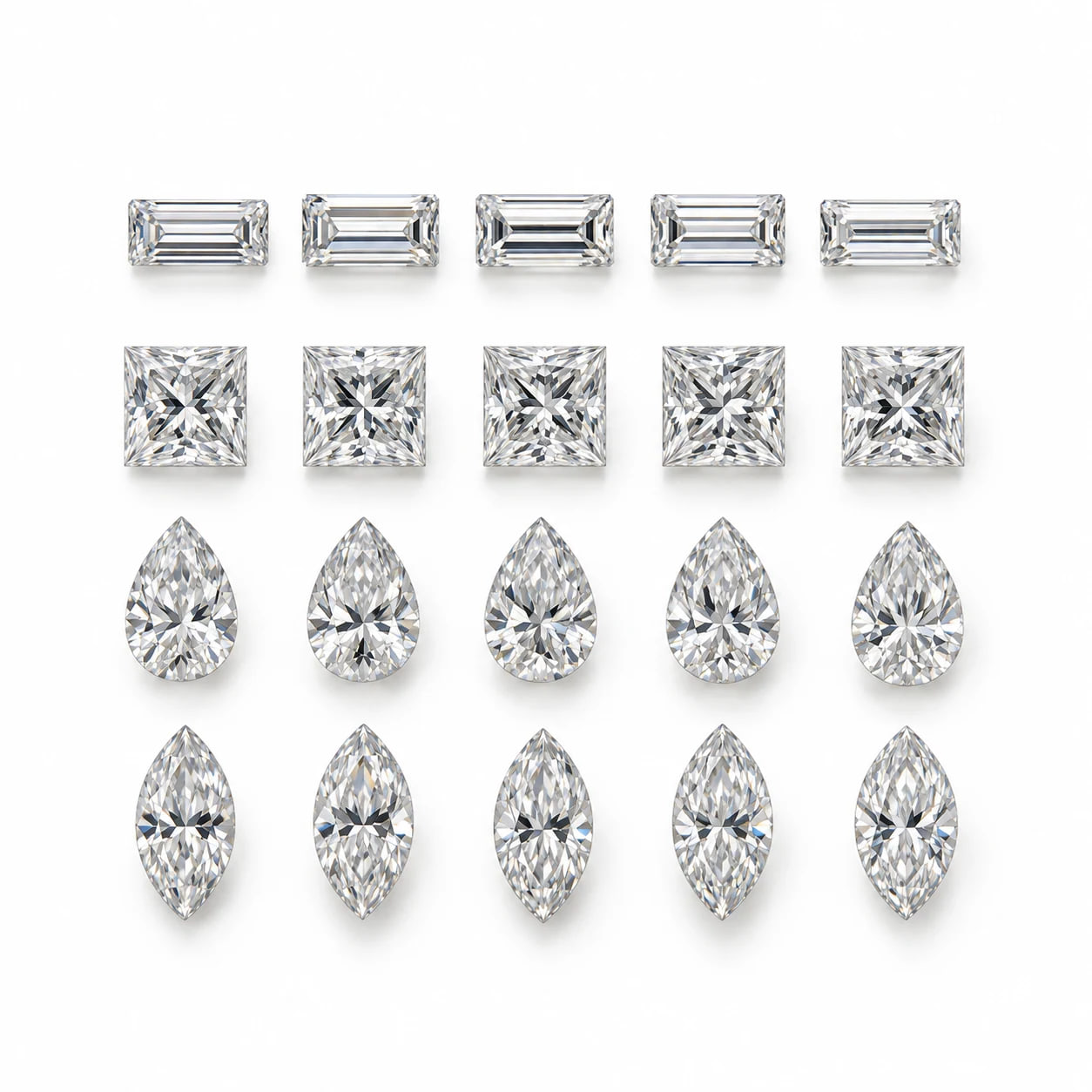
Straight baguette lab-grown diamond side stones bring a defined rectangular outline to a jewelry design. Their parallel long edges distinguish them from tapered baguettes, while the step-cut arrangement gives the buyer a different visual review task from a small brilliant-cut accent. A useful request states length, width, depth, corner treatment and whether the goods are needed as individual stones, a pair or a counted group. Narrow channels and close linear patterns can expose small dimensional differences. Define the setting constraints before comparing quotations, and confirm the proposed outline and supply conditions against the actual goods rather than assuming that a nominal rectangle will fit every mount.
01 / Define the actual requirement
Straight Baguette Lab-Grown Diamond Side Stones Specifications
Separate the product description, sample values and information that must be confirmed for the actual selected goods.
Reference requests and example values; not measurements of an available inventory item.
Material
Laboratory-grown diamond
Product form
Loose straight rectangular baguettes
Outline
Parallel long edges and equal nominal end widths
Cutting style
Step-cut; inspect the actual facet arrangement
Illustrative size request
3.00 × 1.50 mm (L × W); sample size, not confirmed stock
Depth / corner treatment
According to approved setting drawing and proposed selection
Supply arrangement
Each, matched pair or counted same-size group
Packing record
Identify size group, stone count and actual total weight separately
Growth method
Confirm CVD or HPHT for the proposed goods
Documentation
Confirm the available laboratory report or batch documentation
Post-growth treatment
Confirm disclosed treatment information for the proposed goods
Order unit
Each, pair or defined parcel according to the approved brief
MOQ / price / lead time
Confirmed only in the quotation for the agreed specification
Read the actual document and confirm correspondence to the selected goods.
Cutting style
Step-cut; inspect the actual facet arrangement
Depth / corner treatment
According to approved setting drawing and proposed selection
Growth method
Confirm CVD or HPHT for the proposed goods
Documentation
Confirm the available laboratory report or batch documentation
Post-growth treatment
Confirm disclosed treatment information for the proposed goods
IGI and GIA services have their own report formats. Use the actual issuing laboratory's wording rather than adding a blanket quality claim. IGI report background · Current GIA services
Define purchase units, measurements and the approval basis before comparing quotes.
Illustrative size request
3.00 × 1.50 mm (L × W); sample size, not confirmed stock
Supply arrangement
Each, matched pair or counted same-size group
Order unit
Each, pair or defined parcel according to the approved brief
MOQ / price / lead time
Confirmed only in the quotation for the agreed specification
Send channel drawings, seat dimensions, stone counts and the direction of placement.
02 / Choose against the design
How to Choose Straight Baguette Lab-Grown Diamond Side Stones
Use these product-specific checks to make your quotation request more precise.
01 / SELECTION CHECK
Confirm That the Sides Are Parallel
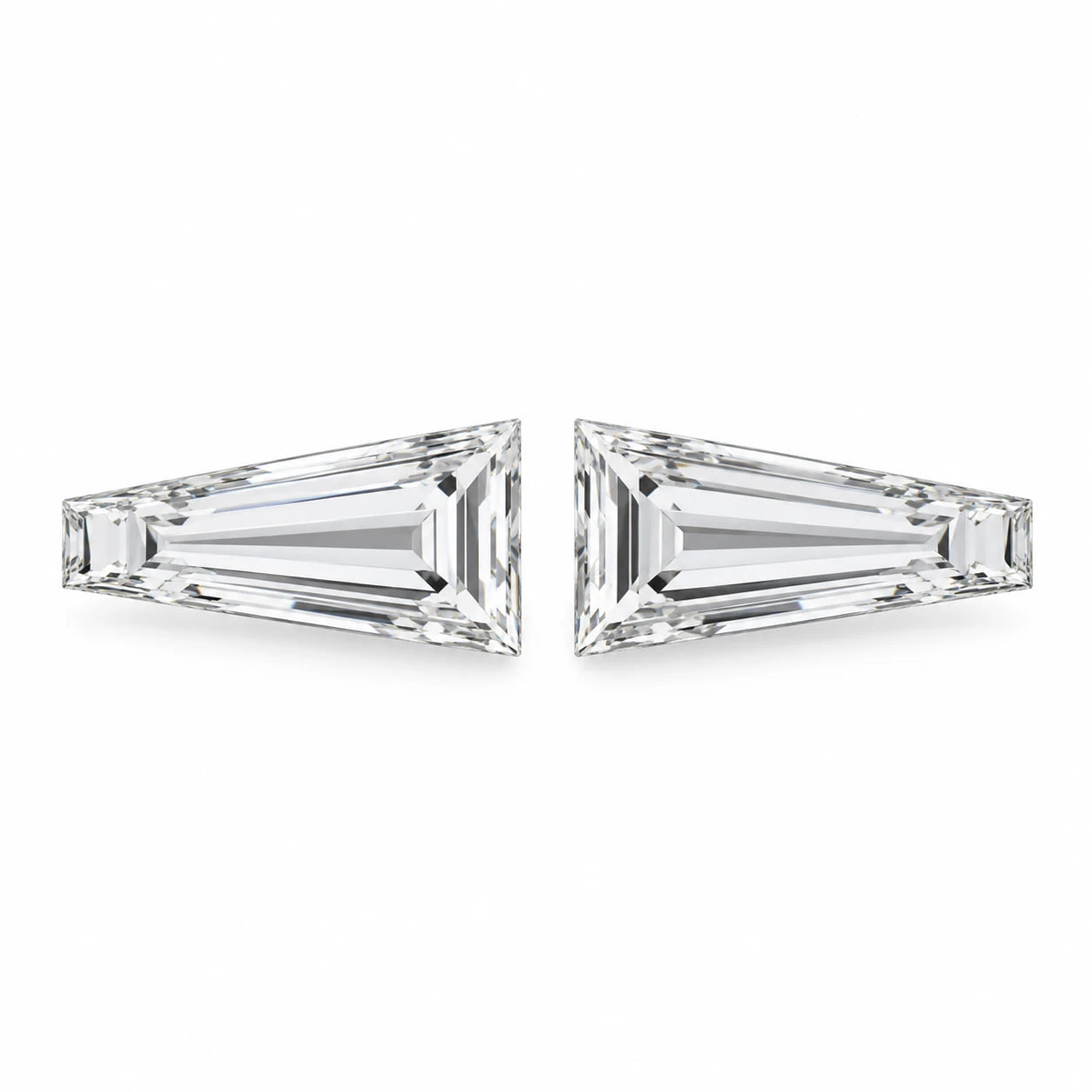
A slightly tapered outline can look similar in a small photograph but may not suit a rectangular channel. Use a face-up contour reference and confirm the relationship of both long edges before approving a straight baguette selection.
02 / SELECTION CHECK
Use the Seat Dimensions
Describe the channel or individual seat with the required length, width and depth information. A nominal weight or a broad description such as small baguette cannot establish whether the stone will sit correctly in your setting.
03 / SELECTION CHECK
Review the Step Pattern in Context
Step-cut appearance can make differences between neighboring stones noticeable. For a close row, review the proposed stones together and explain whether consistent proportions and face-up appearance are part of the acceptance criteria.
04 / SELECTION CHECK
Separate Single Stones From Parcels
One replacement baguette and a counted line of matching baguettes require different quantity records. Make the order unit explicit, then ask for the final stone count and weight documentation to match that unit before delivery is arranged.
03 / Plan from the finished design
Applications for Straight Baguette Lab-Grown Diamond Side Stones
The finished setting or production workflow determines which measurements and matching decisions belong in the enquiry.
APPLICATION 1
Channel-Set Bands
A line of straight baguettes needs geometry that agrees with the channel design. Supply the count, nominal seats and direction of the long edges, and have the setter review the proposed group before the band is finalized.
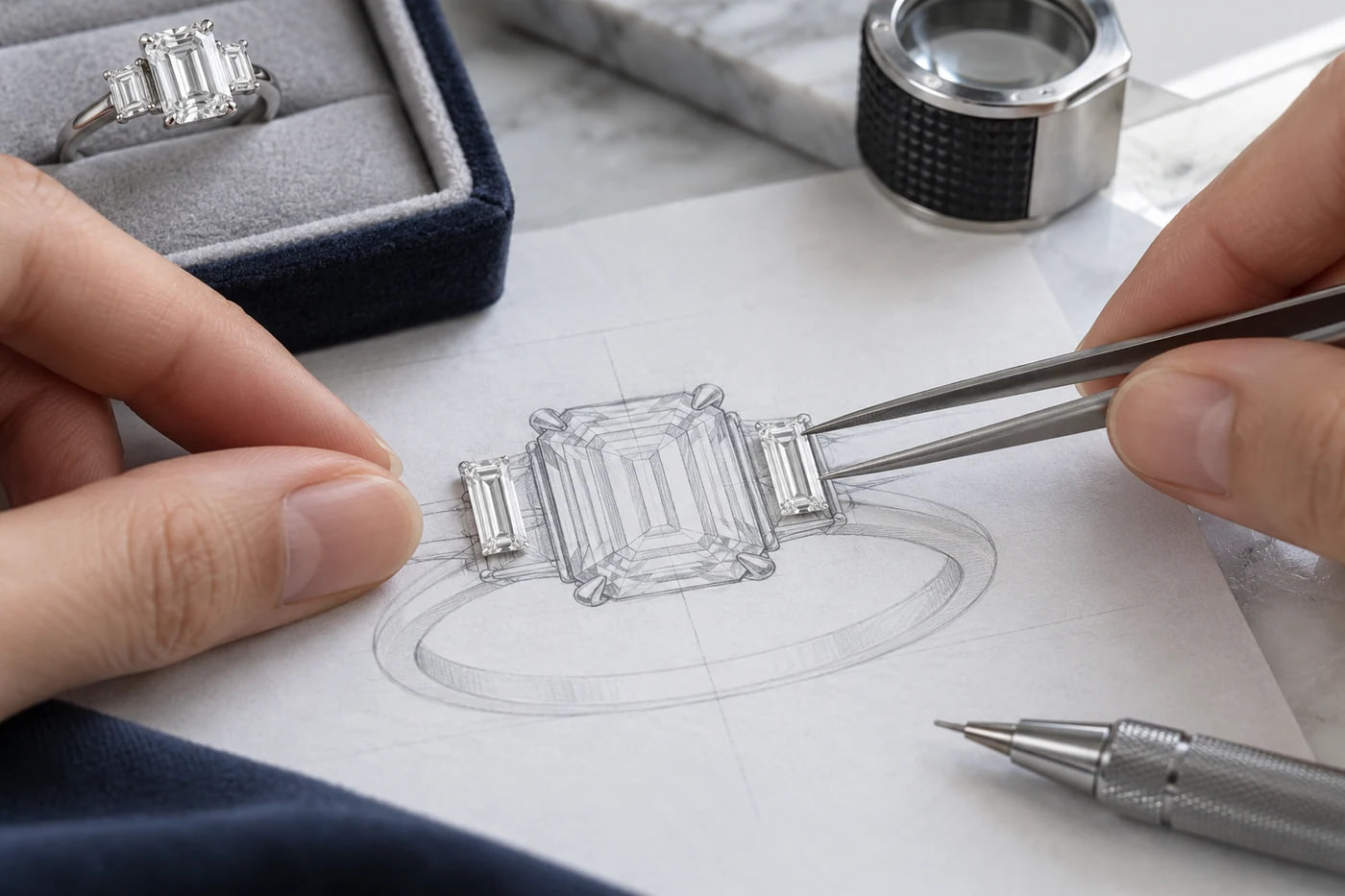
A pair of rectangular side stones should be approved in its actual positions beside the center. Compare parallel edges, length, width and face-up appearance against the mount drawing, and record whether the baguettes run lengthwise or crosswise in the design.
A pair can support a center stone through short linear shoulders. State whether the baguettes run lengthwise or crosswise and how their proportions should relate to the center outline and shank width.
Fit a counted group into a controlled rectangular layout with minimal ambiguity in the sourcing brief.
Include in the RFQ: Send channel drawings, seat dimensions, stone counts and the direction of placement.
02
Repair and Bench Jewellers
Identify a replacement rectangle by measured geometry rather than an approximate carat description.
Include in the RFQ: Provide actual gap dimensions, depth constraints and a clear photo of adjacent stones.
03
Design Brands and Studios
Maintain the intended linear appearance across a sample piece and later production groups.
Include in the RFQ: Keep the approved outline, step pattern and group-inspection reference with the model.
05 / Qualitative procurement scenarios
Market Buying Considerations for Straight Baguette Lab-Grown Diamond Side Stones
Use a specific business scenario to prepare an enquiry. These examples do not assert national preferences, market size or confirmed orders.
Editorial buying scenarios, not national demand rankings or company sales data.
Market
Buying scenario
RFQ focus
United States
Linear band and setting programs
Rectangular seat list, counted groups and batch appearance
United Kingdom
Bench repair and bespoke details
Measured replacement space and neighboring-stone reference
Australia
Small geometric collections
Drawing groups, required counts and approval dates
United States · Linear Band and Setting Programs
A production buyer supplying a US-facing band range can specify straight baguettes as counted dimension groups. The design’s channel geometry should drive the brief, with any sample group approved before a repeat specification is adopted. No claim of national design preference is implied.
United Kingdom · Bench Repair and Bespoke Details
For a repair-led request, the available opening can be more useful than an estimated weight. Give measured length, width and any depth restriction, together with a view of the surrounding stones. A suitable proposal still needs confirmation by the jeweller who will set it.
Australia · Small Geometric Collections
A designer developing a geometric collection can separate identical rectangles from other shapes in the stone list. Record which dimensions are fixed and which can be adjusted during sampling. Confirm availability before setting a delivery commitment for the finished collection.
06 / A practical comparison
Straight Baguette vs Tapered Baguette
Compare the properties that change the purchasing decision, then review the actual selected stones or parcel.
Choose against the actual design, documents and offered goods rather than a blanket better-product claim.
Buying point
Straight baguette
Tapered baguette
Outline
Long edges parallel
Long edges taper toward one end
Width data
One nominal width with agreed acceptance
Both broad and narrow end widths
Orientation
Lengthwise or crosswise in the design
Broad-end and narrow-end direction
Common setting task
Rectangular channels and linear accents
Transitioning center-to-shoulder layouts
Selection record
Count by rectangular dimension group
Match the specified taper and pair layout
08 / Before you source
Straight Baguette Lab-Grown Diamond Side Stones Buying FAQ
How Can I Distinguish a Straight Baguette From a Tapered One?
A straight baguette has parallel long edges and equal nominal end widths. A tapered baguette narrows toward one end. Small catalogue images can hide the difference, so request a clear face-up view and an outline description before selecting stones for a fixed rectangular setting.
Can Straight Baguettes Be Supplied as a Counted Parcel?
Submit the count and dimensions for each size group, and identify whether the stones must work together in a close row. The quote should confirm the proposed group, available selection and how the actual count and total weight will be recorded.
Is Millimeter Size More Useful Than Carat Weight for a Repair?
For an existing opening, actual length, width and depth constraints are essential. Weight remains part of the commercial description but does not establish seat fit. Give the measured space and a reference view of neighboring stones so your setter can assess any proposed replacement.
Do All Straight Baguettes Have Identical Corner Details?
The name does not define every contour or facet detail. Review the corners, girdle outline and proportions of the actual proposal against the drawing. In a tight geometric layout, those details can affect how neighboring stones and metal meet.
Should a Channel Group Have Individual Reports?
State your documentation requirement, but do not assume separate laboratory reports for every small baguette. Confirm the available identity and quality evidence for the proposed group, along with any agreed inspection or sampling method, before making published grading claims.
How Do I Preserve a Repeatable Baguette Specification?
Retain the rectangular drawing, accepted dimensional interval, cutting style and group-appearance reference. A model number alone is insufficient if the next supplier interprets the geometry differently. Reconfirm the offered selection and commercial conditions when placing a replenishment order.
09 / Prepare the next conversation
Build Your Straight Baguette Brief
Start with the fixed requirements and explain where the sourcing selection can vary.
Send channel drawings, seat dimensions, stone counts and the direction of placement.
YOUR PREFERRED REQUIREMENT
Straight Baguette Lab-Grown Diamond Side Stones
Continue to our contact form with your selected specifications and send your requirements directly to our sourcing team.
Open NavigationClose NavigationSearch results: {count}No matching products. Try another shape or category, or email us below.Loading products…Product search is temporarily unavailable. Browse Products or email [email protected].Explore the Diamond Product Catalogue{label} · {count} Product Group{label} · {count} Product Groups{count} product groups{count} of {total} applications across all areas{label} · {count} Applications{count} of {total} partner solutions{count} min read{count} shape{count} shapes{count} resource{count} resources{count} guide{count} guidesCompany News Will Appear Here.No Matching Resources.No company news has been published in this collection yet. Explore our existing buying resources while future updates are prepared.Try another search term or explore all resources.Please include at least 10 characters in your message.Please complete your name and email.Show Diamond Comparison GuideMinimize Diamond Comparison GuideFit to ScreenZoom 2×Image {index} of {total}: {name}Local preview: copy the preview address for use on this device. Social sharing is available on the public website.Copy Preview LinkCopy LinkPreview address copied. It is accessible on this device.Guide link copied.Copy this address from your browser: {url}Share options closed.Sharing cancelled. You can also copy the link.Use Copy Link or one of the other sharing options.
 English
 Español
 Português
 Deutsch
 Français
 Italiano
 Nederlands
 العربية
 日本語
 한국어
 ไทย