 English
 Español
 Português
 Deutsch
 Français
 Italiano
 Nederlands
 العربية
 日本語
 한국어
 ไทย
Measure Both Ends
Length and maximum width alone leave the taper undefined. Identify the broad and narrow end widths on a drawing so the supplier and setter are discussing the same outline, including which end sits beside the center stone.
Image 1 of 3: Face-up studio view
Lab-Grown Diamond Side Stones / Business sourcing
Slender step-cut side stones, tapered and paired to frame a center stone with clear geometric balance.
Preferences are a brief, not a live inventory selection.
A product brief, not just a grade list
Tapered baguette lab-grown diamond side stones connect the center setting to the ring shoulders through a long, narrowing outline. The shape is not the same as a straight baguette: both the wider and narrower end belong in the specification, along with length, depth and the contour reference. For a three-stone ring, the pair must make visual sense together and suit the center stone, rather than merely carry similar weight descriptions. MEITUO treats this as a drawing-led sourcing request. The actual outline, matching criteria, supporting information and available supply route must be reviewed before the design is presented as ready for production.
01 / Define the actual requirement
Separate the product description, sample values and information that must be confirmed for the actual selected goods.
| Material | Laboratory-grown diamond |
|---|---|
| Product form | Loose tapered baguette side stones; each or a specified mirror pair |
| Outline | Long tapered quadrilateral, with broad and narrow ends clearly identified |
| Cut style | Step-cut appearance; exact facet arrangement confirmed with proposed goods |
| Illustrative dimensions | 4.00 mm length × 2.00 mm broad end × 1.00 mm narrow end; sample drawing only |
| Depth and corner treatment | To match the setting drawing and agreed contour |
| Pair orientation | Broad ends toward the center unless your design specifies otherwise |
| Weight record | Record each stone separately and state the pair total when supplied |
| Growth method | Confirm CVD or HPHT for the proposed goods |
| Documentation | Confirm the available laboratory report or batch documentation |
| Post-growth treatment | Confirm disclosed treatment information for the proposed goods |
| Order unit | Each stone or a two-stone matched side pair, as quoted |
| MOQ / price / lead time | Confirmed only in the quotation for the agreed specification |
| Depth and corner treatment | To match the setting drawing and agreed contour |
|---|---|
| Growth method | Confirm CVD or HPHT for the proposed goods |
| Documentation | Confirm the available laboratory report or batch documentation |
| Post-growth treatment | Confirm disclosed treatment information for the proposed goods |
IGI and GIA services have their own report formats. Use the actual issuing laboratory's wording rather than adding a blanket quality claim. IGI report background · Current GIA services
| Weight record | Record each stone separately and state the pair total when supplied |
|---|---|
| Order unit | Each stone or a two-stone matched side pair, as quoted |
| MOQ / price / lead time | Confirmed only in the quotation for the agreed specification |
Provide center dimensions, the side angle and a labelled tapered-outline drawing.
02 / Choose against the design
Use these product-specific checks to make your quotation request more precise.
Length and maximum width alone leave the taper undefined. Identify the broad and narrow end widths on a drawing so the supplier and setter are discussing the same outline, including which end sits beside the center stone.
Place the proposed stones on opposite sides of the center reference. Compare their length, taper, step pattern and face-up appearance together. Similar individual grades do not demonstrate that the left and right sides will read evenly.
The inside edge must work with the center stone’s outline and the planned prongs. Share the center dimensions and the relationship between the three settings rather than sourcing the sides as an isolated pair of attractive small diamonds.
A tapered outline may need a more specific supply search than a common round accent. Confirm the proposed dimensions and repeat route first. A design rendering should not become a production promise before suitable side stones have been reviewed.
03 / Plan from the finished design
The finished setting or production workflow determines which measurements and matching decisions belong in the enquiry.

APPLICATION 1
A tapered baguette pair can create a controlled transition from a center diamond to a narrow shank. Share the center outline, side-stone angle and intended space between settings when requesting the pair.
Brief This Application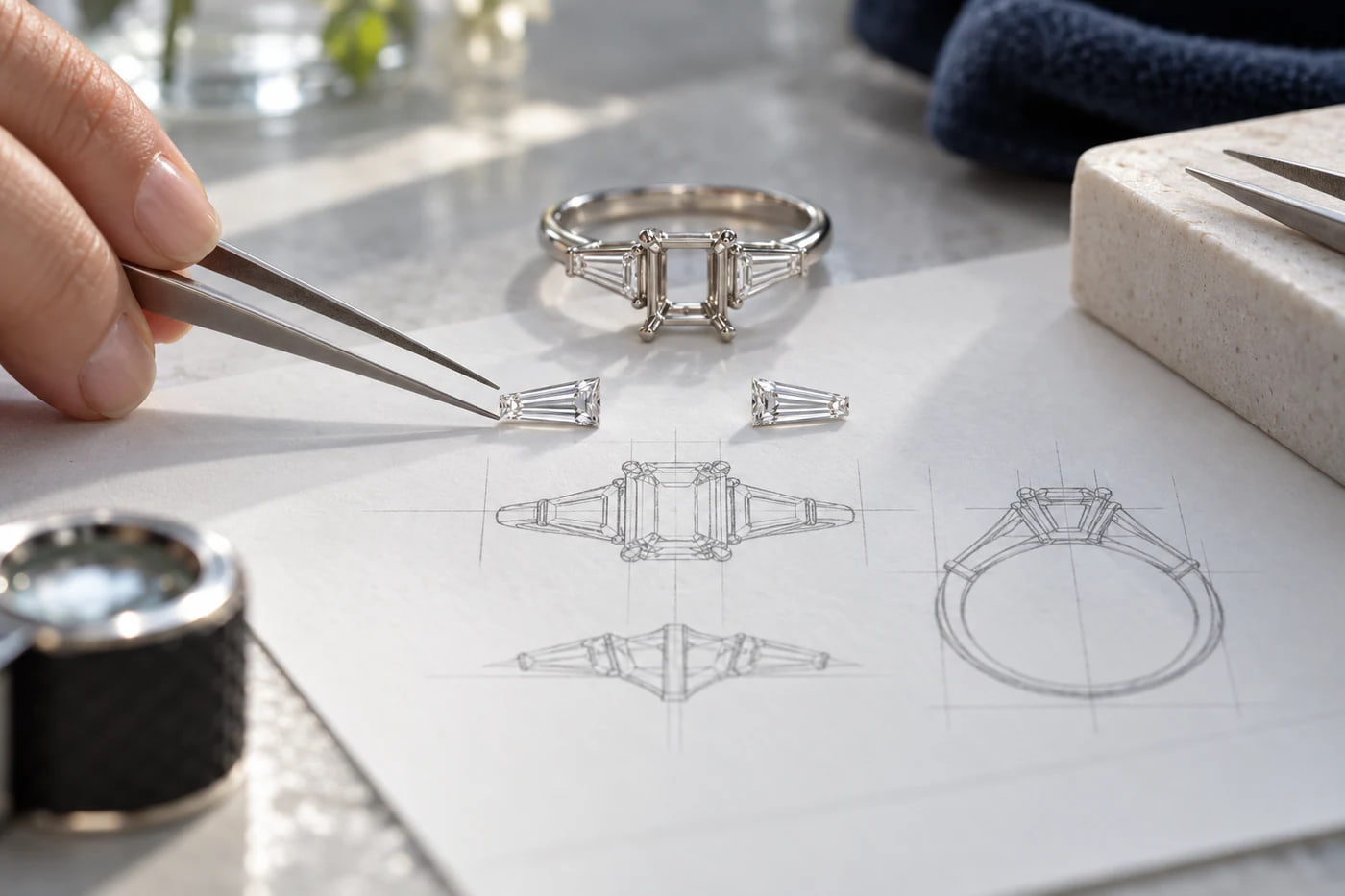
APPLICATION 2
Place the proposed tapered pair on the design around the center reference. Compare both end widths, taper and orientation before fixing the seats, and keep the accepted side-stone dimensions linked to the center and mount record.
Brief This ApplicationADDITIONAL DESIGN USE
For a ring with long geometric shoulders, the taper can be part of the structure. Define the desired fall in width and the orientation of the step facets before comparing available outlines.
Brief This Application04 / Your buying model
Coordinate the side pair with a client-approved center stone and the actual ring architecture.
Include in the RFQ: Provide center dimensions, the side angle and a labelled tapered-outline drawing.
Resolve seat geometry before casting or modifying a mount for a three-stone design.
Include in the RFQ: Identify length, both end widths, depth and the accepted corner treatment.
Keep a recognizable side-stone silhouette across an approved model and its later orders.
Include in the RFQ: Retain the sample pair reference, arrangement and acceptable matching variation.
05 / Qualitative procurement scenarios
Use a specific business scenario to prepare an enquiry. These examples do not assert national preferences, market size or confirmed orders.
| Market | Buying scenario | RFQ focus |
|---|---|---|
| United States | Three-stone bridal ring programs | Center reference, side-pair dimensions and each-stone weights |
| United Kingdom | Client-led bespoke ring commissions | Mount drawing, taper direction and visual pair approval |
| Australia | Made-to-order bridal styles | Approved outline, sample pair and replenishment assumptions |
For a US-facing three-stone ring program, organize the quote as a center-and-side layout. The two tapered stones require their own drawing and matching approval even if the center is already selected. This example describes a sourcing workflow, not a national style ranking.
A jeweller working to a client’s center stone can use a labelled drawing to connect the supplier discussion to the setter’s needs. Show the broad and narrow ends, the angle beside the center and the requested evidence before the mount is finalized.
For a made-to-order ring style, do not rely on a product photograph to define the side pair. Preserve the approved outline and matching criteria with the model record. Confirm the supply route again before promising another production run of the same design.
06 / A practical comparison
Compare the properties that change the purchasing decision, then review the actual selected stones or parcel.
| Buying point | Tapered baguette | Straight baguette |
|---|---|---|
| Long edges | Narrow continuously toward one end | Remain parallel |
| End widths | Broad and narrow ends differ | Ends have the same nominal width |
| Key drawing data | Length, both widths, depth and orientation | Length, width, depth and corner detail |
| Typical layout task | Transition between center and shoulder | Linear or rectangular seat arrangement |
| Pair approval | Compare taper and handed placement | Compare rectangular outline and proportions |
08 / Before you source
Its outline narrows along its length, so the broad and narrow ends have different widths. A straight baguette maintains parallel long edges. Use an outline drawing with both end widths to distinguish them clearly, rather than relying on a product name or one maximum-width measurement.
Submit the two-stone requirement with a center reference and the desired orientation. Matching should cover dimensions, taper, face-up appearance and the setting relationship. Availability and acceptance criteria are confirmed for the proposed pair; the website image is a layout illustration, not a reserved matched pair.
For a fixed side setting, outline dimensions usually provide the essential fit information. Include desired weight if it matters to your commercial plan, but do not substitute it for length, both end widths and depth. Actual per-stone and pair weights should be recorded for the final selection.
Both can have tapering outlines, but those names do not specify a complete geometry. A slender tapered baguette and a broad trapezoid can create different layouts. Show the intended proportions, edge lengths and orientation on a drawing so the proposed stones match your design.
Include the center’s face-up dimensions and a clear outline reference, plus the planned side angle and setting drawing. Those details allow the sourcing discussion to consider the whole three-stone arrangement. Your setter should approve the final fit before the design moves into production.
Do not assume identical outlines or supply terms across separate orders. Keep the approved pair image, drawing and tolerance criteria, and ask for the repeat requirement to be confirmed. Where a shape is only available through directed sourcing, preserve that boundary in your collection planning.
09 / Prepare the next conversation
Start with the fixed requirements and explain where the sourcing selection can vary.
Provide center dimensions, the side angle and a labelled tapered-outline drawing.
YOUR PREFERRED REQUIREMENT
Tapered Baguette Lab-Grown Diamond Side Stones
Continue to our contact form with your selected specifications and send your requirements directly to our sourcing team.
Review your product selection and requirements on our contact form.
Keep the buying brief connected
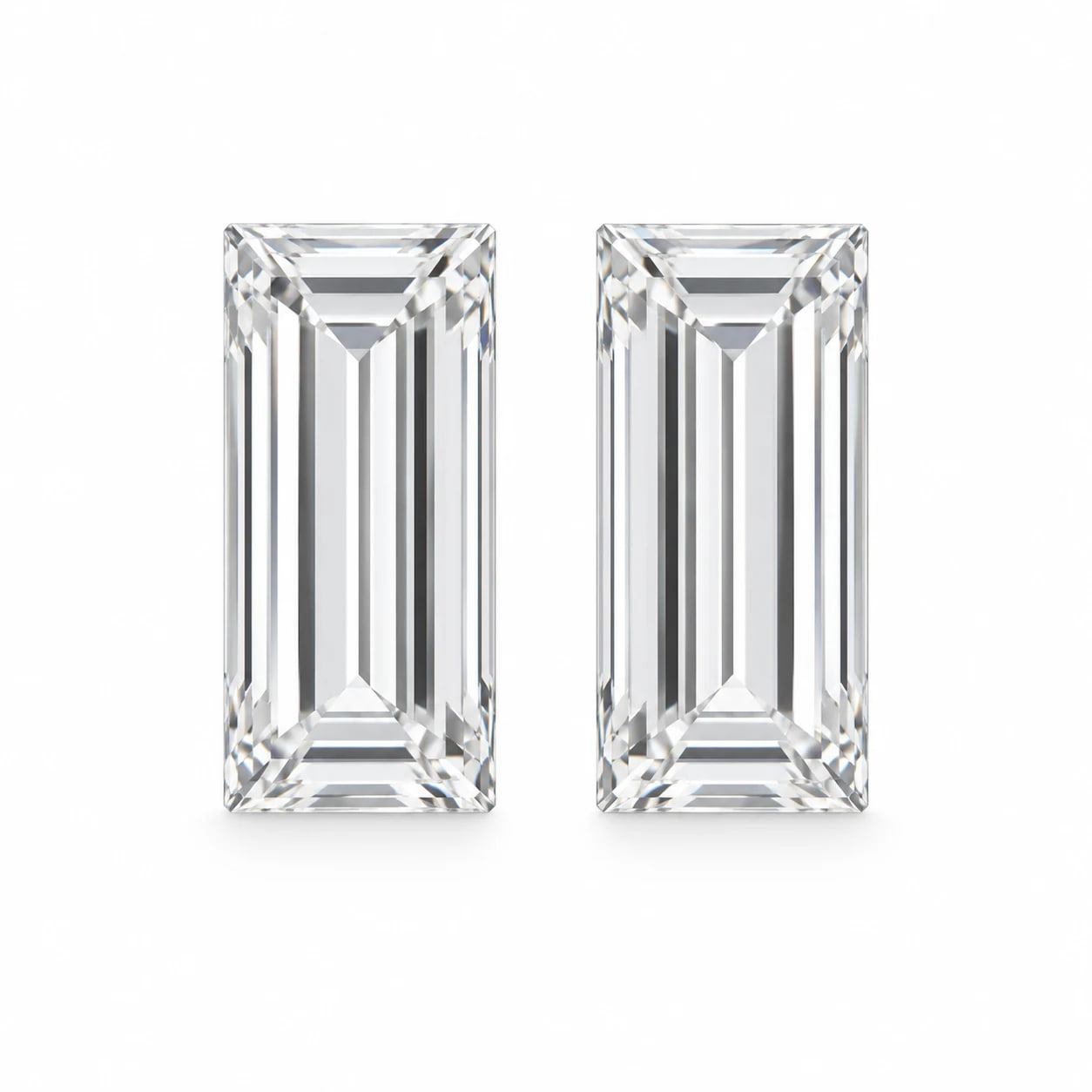
Lab-Grown Diamond Side Stones / SOURCING ON REQUEST
Clean rectangular step-cut diamonds for linear accents, channel layouts and precisely specified side-stone pairs.
Explore Product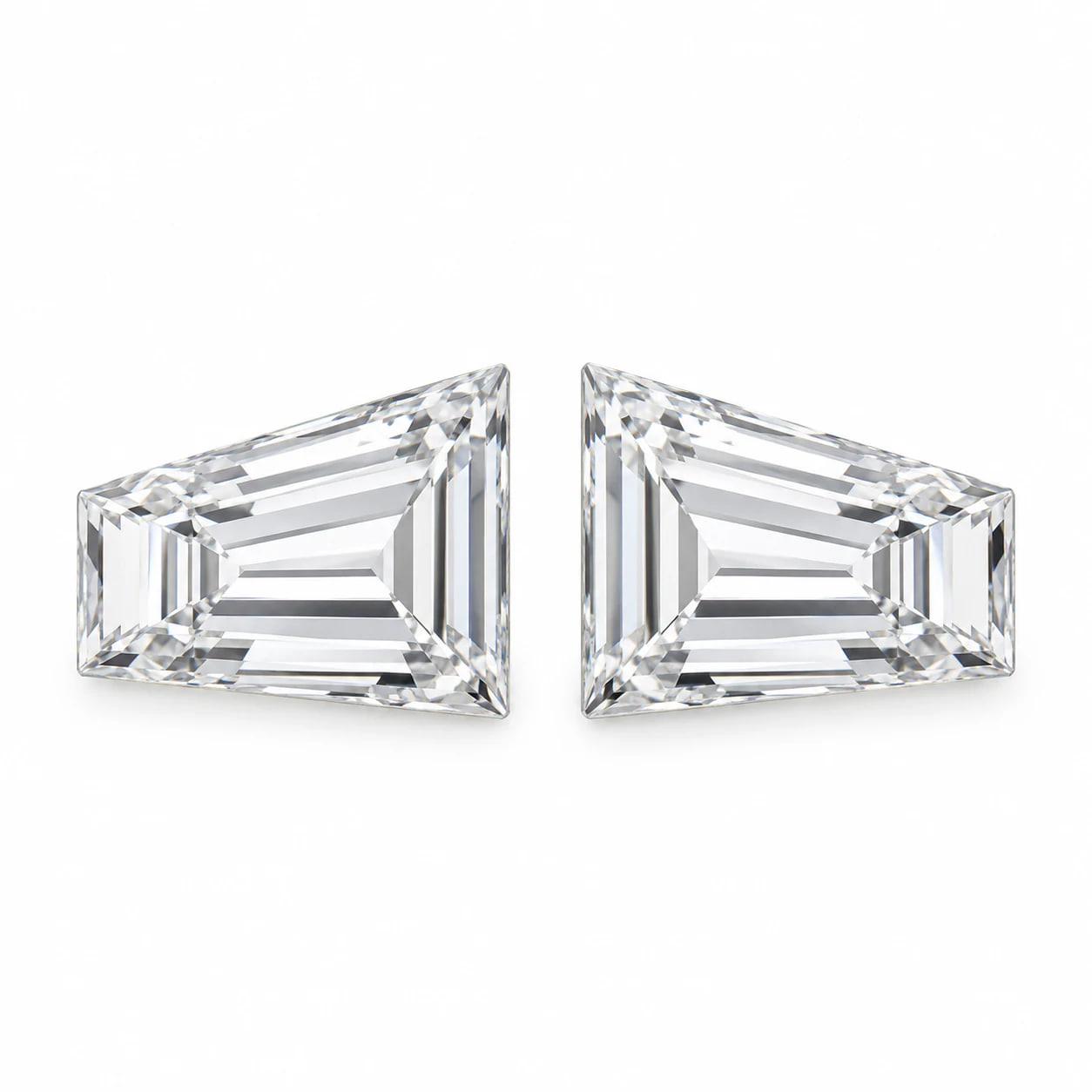
Lab-Grown Diamond Side Stones / SOURCING ON REQUEST
Broad geometric side stones for three-stone designs, sourced from an explicit outline and paired-layout reference.
Explore Product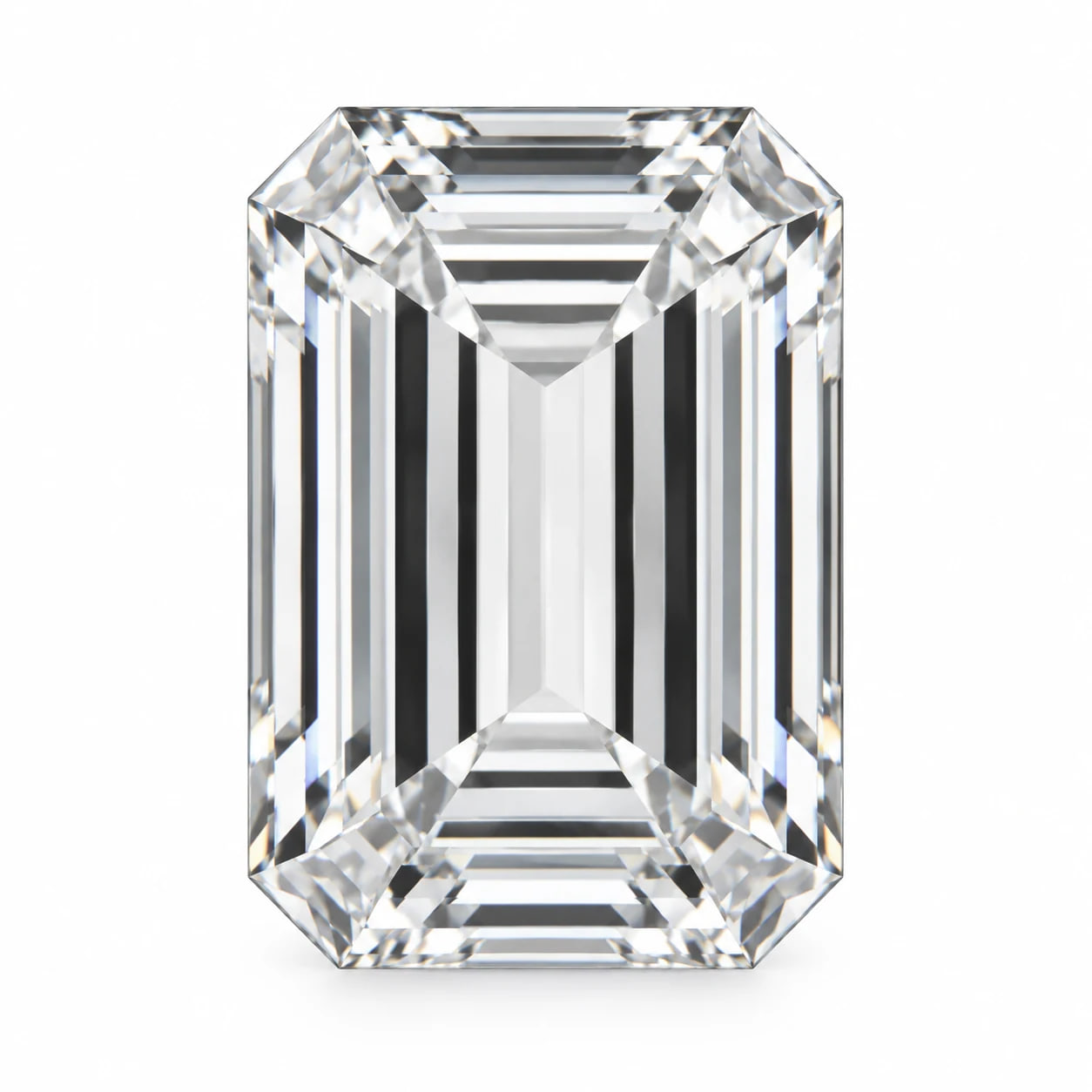
Loose Lab-Grown Diamonds / SOURCING ON REQUEST
Select emerald-cut lab-grown diamonds through step-facet appearance, clipped-corner outline and setting dimensions, with documentation reviewed stone by stone.
Explore Product