Skip to page content

Lab-Grown Diamond Side Stones / Business sourcing

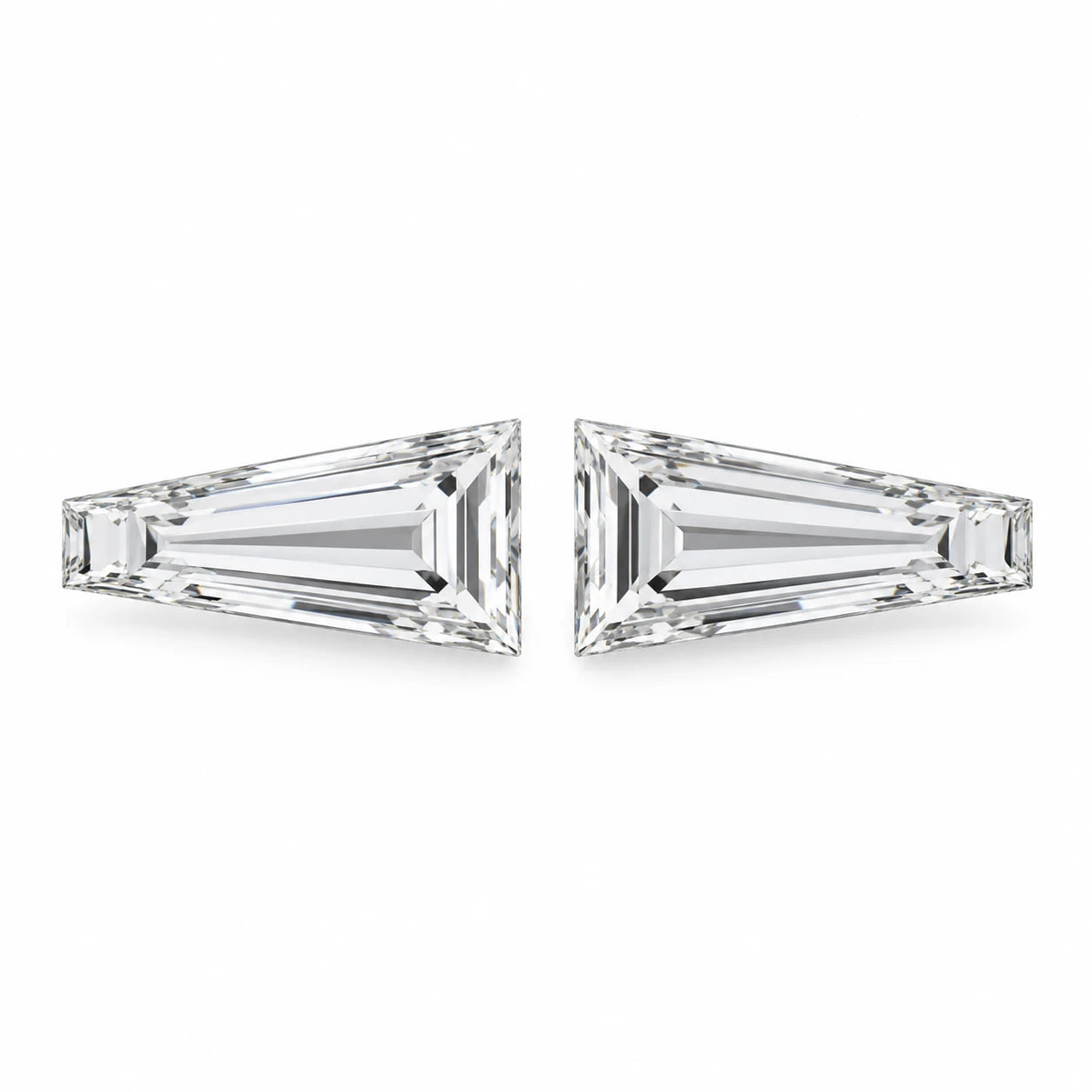
Trapezoid Lab-Grown Diamond Side Stones

Broad geometric side stones for three-stone designs, sourced from an explicit outline and paired-layout reference.

Specialist sourcing / specifications subject to confirmation
Size brief
Supply format
Visual brief

Preferences are a brief, not a live inventory selection.

A product brief, not just a grade list

Understanding Trapezoid Lab-Grown Diamond Side Stones

Trapezoid lab-grown diamond side stones frame a center through a broader geometric area than a slender tapered baguette. The name alone does not settle the edge lengths, taper, corner treatment or cutting style required by the design. A face-up drawing is therefore central to the sourcing request: identify the inner and outer edges, the distance between them, the depth constraint and the placement beside the center. Treat a pair as one visual arrangement while preserving each stone’s measurements and weight. This is a directed sourcing candidate; suitable supply and repeatability must be established for the actual outline before a ring program is committed.

01 / Define the actual requirement

Trapezoid Lab-Grown Diamond Side Stones Specifications

Separate the product description, sample values and information that must be confirmed for the actual selected goods.

Reference requests and example values; not measurements of an available inventory item.
MaterialLaboratory-grown diamond
Product formLoose trapezoid side stones, normally requested as a left/right pair
OutlineBroad trapezoid; identify inner edge, outer edge and side-edge angles
Cutting styleStep-cut or brilliant-style request must be defined explicitly
Illustrative drawing4.00 mm inner edge, 2.50 mm outer edge, 3.00 mm edge separation; sample only
Corner treatment / depthControlled by the approved contour and setting brief
Pair layoutMirrored placement beside the center reference
Weight recordEach-stone weight plus pair total, after actual selection
Growth methodConfirm CVD or HPHT for the proposed goods
DocumentationConfirm the available laboratory report or batch documentation
Post-growth treatmentConfirm disclosed treatment information for the proposed goods
Order unitA defined side-stone pair; availability subject to directed sourcing
MOQ / price / lead timeConfirmed only in the quotation for the agreed specification
Read the actual document and confirm correspondence to the selected goods.
Cutting styleStep-cut or brilliant-style request must be defined explicitly
Corner treatment / depthControlled by the approved contour and setting brief
Growth methodConfirm CVD or HPHT for the proposed goods
DocumentationConfirm the available laboratory report or batch documentation
Post-growth treatmentConfirm disclosed treatment information for the proposed goods

IGI and GIA services have their own report formats. Use the actual issuing laboratory's wording rather than adding a blanket quality claim. IGI report background · Current GIA services

Define purchase units, measurements and the approval basis before comparing quotes.
Pair layoutMirrored placement beside the center reference
Weight recordEach-stone weight plus pair total, after actual selection
Order unitA defined side-stone pair; availability subject to directed sourcing
MOQ / price / lead timeConfirmed only in the quotation for the agreed specification

Submit the entire trio layout, not only a target combined carat weight.

02 / Choose against the design

How to Choose Trapezoid Lab-Grown Diamond Side Stones

Use these product-specific checks to make your quotation request more precise.

01 / SELECTION CHECK

Replace the Name With a Drawing

Trapezoid is a family of outlines, not one standardized seat. Label the long and short parallel edges and show the side angles so the sourcing proposal can be compared with the mount instead of with an ambiguous shape word.
02 / SELECTION CHECK

Identify the Cutting Style

A stepped trapezoid and a brilliant-style trapezoid can create different visual relationships with the center. State the intended facet language and inspect the actual stones, particularly where the center has a clear stepped or brilliant pattern.

03 / SELECTION CHECK

Approve the Pair Beside the Center

Broad sides contribute substantial visual area to a three-stone ring. Compare the left and right shapes together with the center reference, checking their angles, outline, color appearance and the amount of space allocated to each setting.

04 / SELECTION CHECK

Confirm Feasibility Before Finalizing Metal

A drawing can describe a shape that is difficult to source consistently. Review proposed stone options before fixing the seats or promising a repeat model, and distinguish a one-off directed search from a regular supply program.

03 / Plan from the finished design

Applications for Trapezoid Lab-Grown Diamond Side Stones

The finished setting or production workflow determines which measurements and matching decisions belong in the enquiry.

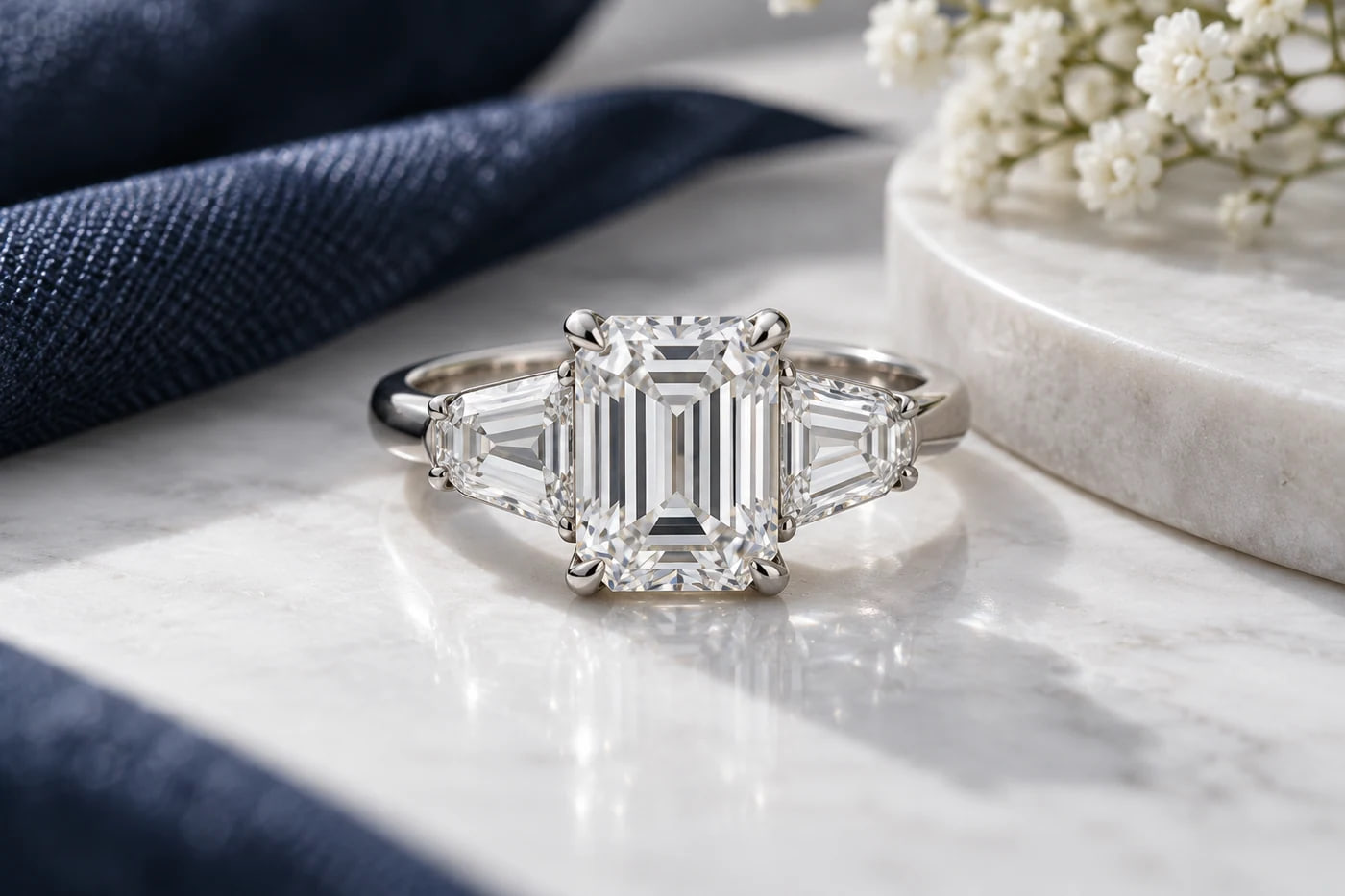
Emerald-center three-stone rings — illustrated downstream use of Trapezoid Lab-Grown Diamond Side Stones

APPLICATION 1

Emerald-Center Three-Stone Rings

A broad step-cut trapezoid pair can continue the geometry of an emerald-cut center. Share the complete face-up arrangement and intended side angle so the selection supports the actual ring architecture.

Brief This Application
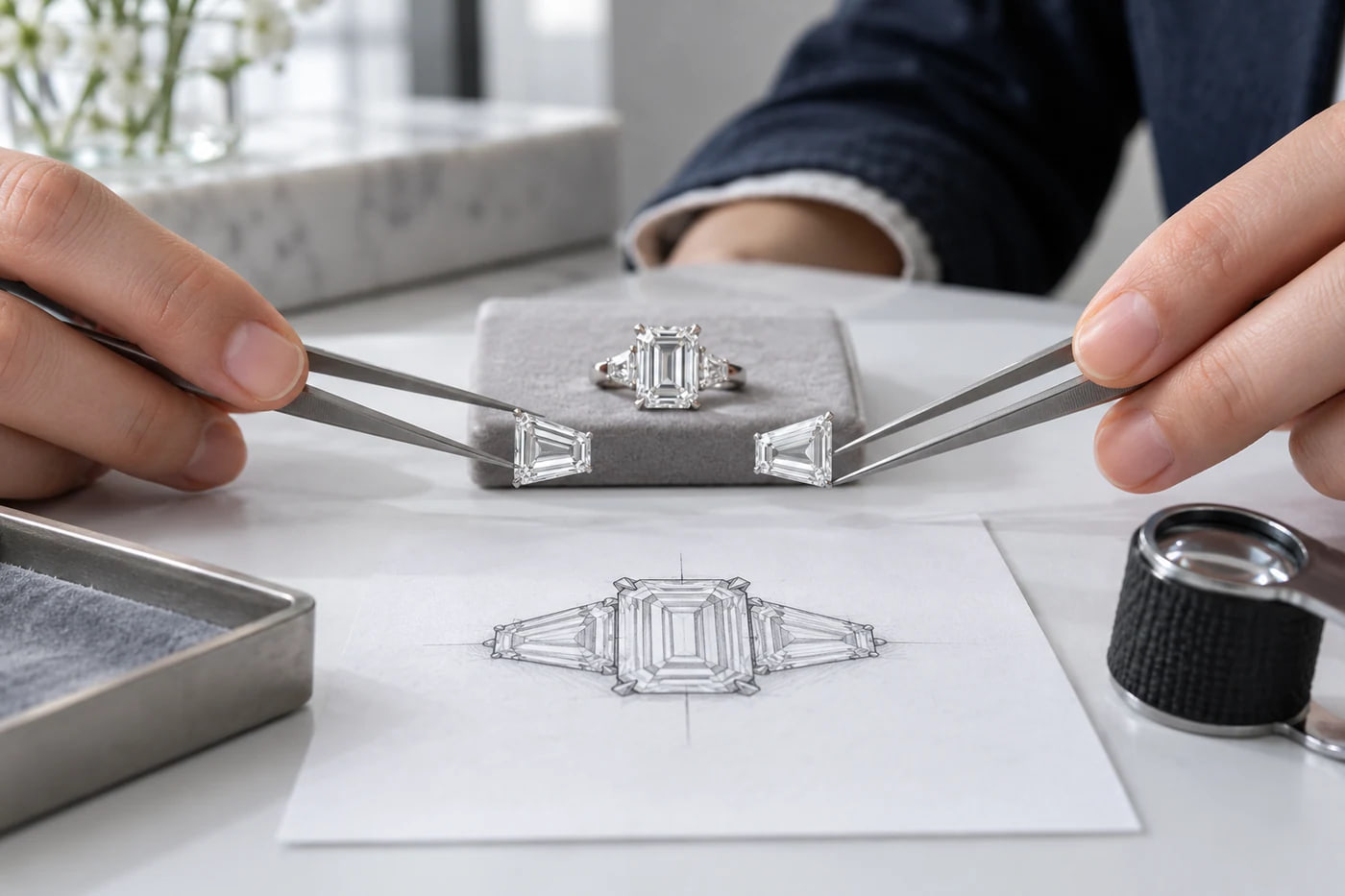
Drawing-led custom layouts — illustrated downstream use of Trapezoid Lab-Grown Diamond Side Stones

APPLICATION 2

Drawing-Led Custom Layouts

A custom trio should be discussed using a labelled outline drawing and a proposed-stone arrangement. Keep the two side measurements distinct even when their intended appearance is visually balanced.

Brief This Application

ADDITIONAL DESIGN USE

Statement Center-Stone Settings

Broader sides may be considered around another center outline when the design calls for geometric framing. The center and side proportions should be approved together, with the setter deciding the required seat and corner details.

Brief This Application

04 / Your buying model

A Sourcing Brief for Your Business

01

Custom Bridal Studios

Resolve the visual area and angle of a broad side pair around an approved center.

Include in the RFQ: Submit the entire trio layout, not only a target combined carat weight.

02

Cad Teams and Setters

Translate the trapezoid outline into practical seats and corner clearances.

Include in the RFQ: Provide edge measurements, depth constraints, cutting style and mirror orientation.

03

Specialist Stone Buyers

Assess an actual pair against a particular project without presenting occasional sourcing as permanent stock.

Include in the RFQ: Identify one-off versus repeat needs and preserve the pair approval evidence.

05 / Qualitative procurement scenarios

Market Buying Considerations for Trapezoid Lab-Grown Diamond Side Stones

Use a specific business scenario to prepare an enquiry. These examples do not assert national preferences, market size or confirmed orders.

Editorial buying scenarios, not national demand rankings or company sales data.
MarketBuying scenarioRFQ focus
United StatesCenter-and-side bridal proposalsTrio proportions, broad-outline drawing and pair record
United KingdomBespoke architectural ring commissionsCut-style reference, edge angles and setter review
AustraliaOne-off statement settingsFeasibility check, sample selection and approval sequence
United States · Center-and-Side Bridal Proposals

For a US-facing jeweller proposing a geometric three-stone design, the sourcing package should show the whole arrangement. A pair with the right total weight may still occupy the wrong visual space. Compare outline evidence and dimensions before finalizing the proposed ring.

United Kingdom · Bespoke Architectural Ring Commissions

For a bespoke commission, communicate whether the trapezoids should extend a step-cut center’s geometry or provide a different contrast. A drawing and visual reference help separate those intentions. Availability and suitability remain project-specific rather than assumed from a catalogue label.

Australia · One-Off Statement Settings

For a one-off statement setting, first establish whether a suitable side pair can be proposed, then align the mount with the approved selection. This buying sequence reduces dependence on an unverified outline and should be agreed before quoting a finished-jewelry completion date.

06 / A practical comparison

Trapezoid vs Tapered Baguette Side Stones

Compare the properties that change the purchasing decision, then review the actual selected stones or parcel.

Choose against the actual design, documents and offered goods rather than a blanket better-product claim.
Buying pointBroad trapezoidSlender tapered baguette
Proportion briefBroad edge area and side anglesLong narrow taper
Essential drawingBoth parallel edges, separation and contourLength and both end widths
Visual roleGeometric framing beside a centerA narrowing transition toward the shoulder
Cut-style choiceSpecify step or brilliant-style facetsConfirm the intended step-cut arrangement
Supply decisionConfirm the exact project outlineConfirm the exact project outline

08 / Before you source

Trapezoid Lab-Grown Diamond Side Stones Buying FAQ

Are Trapezoid Side Stones Standardized by Their Name?

No complete geometry follows from the shape name alone. Edge lengths, angles, corners and depth can differ. Supply a labelled face-up drawing and identify the inside and outside edges so the proposed stones can be assessed against your setting requirements.

Can I Request Either Step-Cut or Brilliant-Style Trapezoids?

State the intended cutting style and provide a visual reference. The sourcing team must confirm what is available for the required outline. Do not treat all trapezoids as visually identical or assign the same cut terminology simply because their broad shapes look similar.

How Should I Record a Trapezoid Pair’s Dimensions?

Record each stone’s actual geometry and relate it to the drawing. Include the parallel edge lengths, their separation and any depth restriction or corner detail. Preserve each-stone weights separately from the pair total rather than reducing the entire description to combined carats.

Can the Side Pair Be Chosen Before the Center?

It can be discussed first, but the final arrangement still needs a center reference and a setting plan. Broad sides influence the overall proportions. Review the trio together before confirming that a particular pair and center combination suits the intended ring.

Are These a Regular Stocked Product Line?

Treat trapezoids as a directed sourcing requirement until the requested outline and supply route are verified. A previous pair or generated product image does not prove continuing inventory. Repeat designs require a fresh availability and consistency discussion before new commitments are made.

What Should I Approve Before a Mount Is Produced?

Approve the actual side pair’s outline, cutting style, dimensions and appearance, then have your setter review the relationship to the center and planned seats. Commercial conditions and supporting records should identify the same proposed goods that informed the approval.

09 / Prepare the next conversation

Build Your Trapezoid Brief

Start with the fixed requirements and explain where the sourcing selection can vary.

Submit the entire trio layout, not only a target combined carat weight.

YOUR PREFERRED REQUIREMENT

Trapezoid Lab-Grown Diamond Side Stones

Continue to our contact form with your selected specifications and send your requirements directly to our sourcing team.

Continue to Inquiry

Review your product selection and requirements on our contact form.

Keep the buying brief connected

Related Products & Sourcing Resources

Source 1 · Source 2 · Source 3

MEITUO PRODUCT FINDER

Find Your Diamond Selection.

Need help finding a match? Email [email protected]