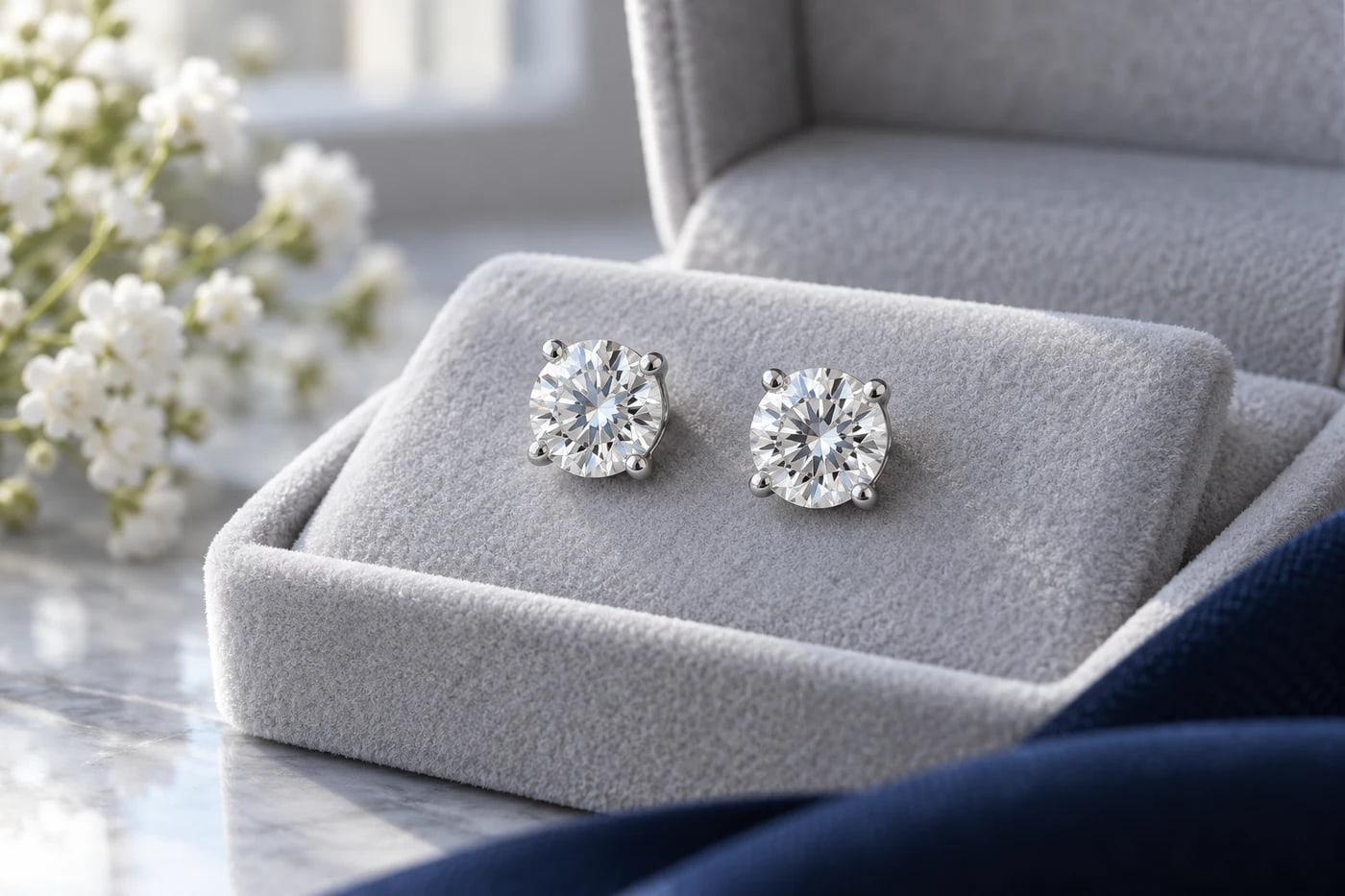
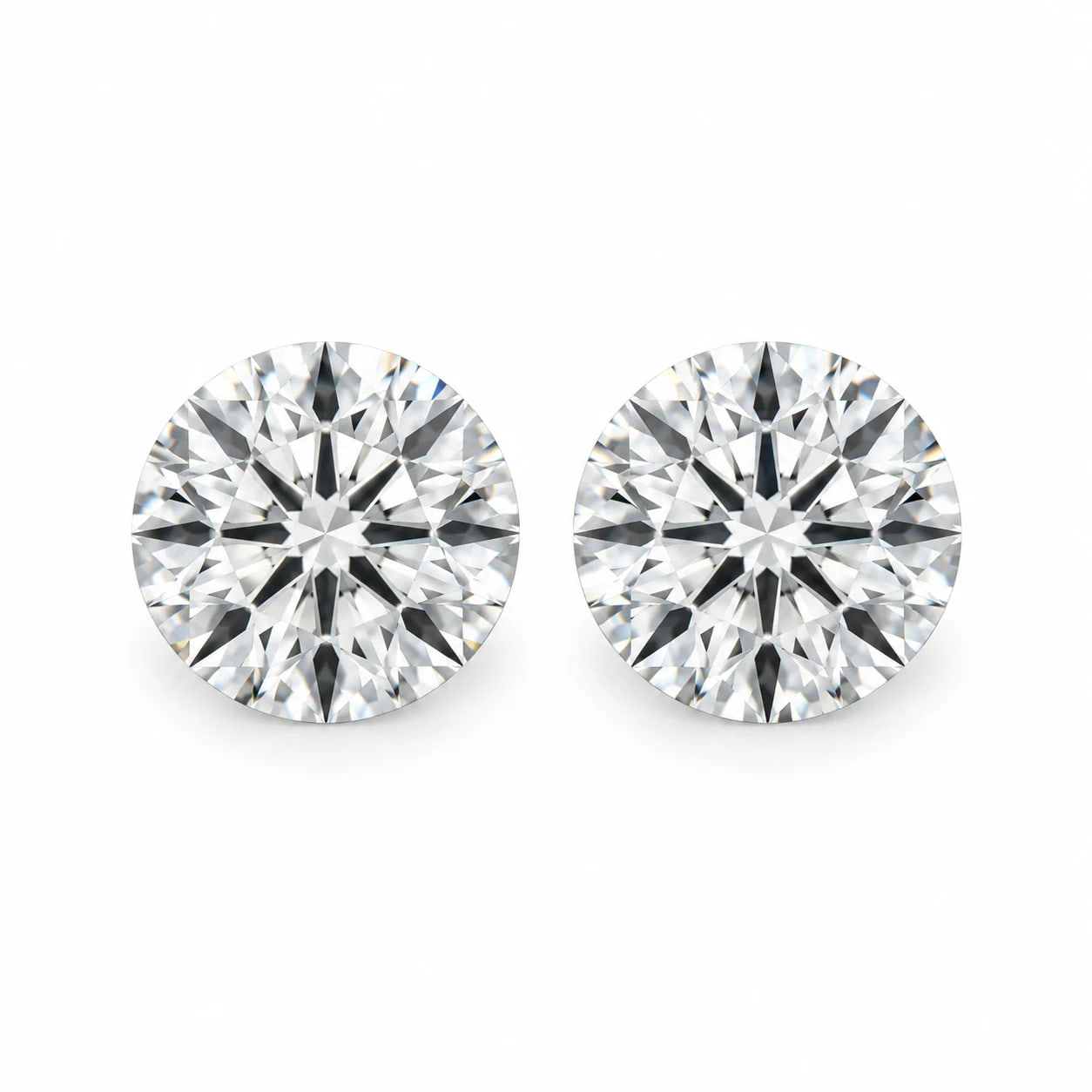
Round brilliant lab-grown diamonds give a jeweller a circular center-stone option that can be compared through diameter as well as carat weight. For a solitaire program, the stone must fit the selected head; for earrings, two apparently similar report labels still need a visual and dimensional match. A useful wholesale brief therefore records minimum and maximum diameter, depth, the actual grading document and the intended supply format. Ask for images under consistent lighting rather than treating a marketing cut description as proof of appearance. MEITUO's sourcing discussion starts with that brief and confirms suitable goods, supporting information and commercial terms for the individual order.
Separate the product description, sample values and information that must be confirmed for the actual selected goods.
Reference requests and example values; not measurements of an available inventory item.
Material
Laboratory-grown diamond; material identity is separate from the shape name.
Shape / cutting style
Round brilliant
Supply status
Sourcing request; actual availability is confirmed against your brief.
Illustrative carat weight
2.00 ct per stone; example only, not a listed inventory item.
Illustrative dimensions
8.10 × 8.07 × 4.96 mm (L × W × D); not measurements of an offered stone.
Proportion / outline
Roundness check: compare minimum and maximum diameter; do not apply an elongated-shape target ratio.
Color & clarity
Request your preferred range; final individual grades are as reported.
Cut / polish / symmetry
Use the fields and terminology on the actual issuing laboratory’s document.
Growth method
CVD or HPHT as documented for the selected diamond; state any method requirement.
Post-growth treatment
Confirm the disclosed treatment information separately from the growth-method label.
Report & correspondence
Agree laboratory, document coverage and any supplied inscription correspondence.
Order unit & matching
Each or a selected pair; state each-stone and total weights, dimensions and acceptance criteria.
MOQ / price / lead time
Confirmed by quotation after specification, quantity, destination and availability review.
Read the actual document and confirm correspondence to the selected goods.
Shape / cutting style
Round brilliant
Cut / polish / symmetry
Use the fields and terminology on the actual issuing laboratory’s document.
Growth method
CVD or HPHT as documented for the selected diamond; state any method requirement.
Post-growth treatment
Confirm the disclosed treatment information separately from the growth-method label.
Report & correspondence
Agree laboratory, document coverage and any supplied inscription correspondence.
IGI and GIA services have their own report formats. Use the actual issuing laboratory's wording rather than adding a blanket quality claim. IGI report background · Current GIA services
Define purchase units, measurements and the approval basis before comparing quotes.
Supply status
Sourcing request; actual availability is confirmed against your brief.
Illustrative carat weight
2.00 ct per stone; example only, not a listed inventory item.
Order unit & matching
Each or a selected pair; state each-stone and total weights, dimensions and acceptance criteria.
MOQ / price / lead time
Confirmed by quotation after specification, quantity, destination and availability review.
Send the mount diameter, depth clearance, weight preference and report requirement; distinguish a replacement stone from a new setting project.
02 / Choose against the design
How to Choose Round Brilliant Lab-Grown Diamonds Wholesale
Use these product-specific checks to make your quotation request more precise.
01 / SELECTION CHECK
Check Diameter Against the Head
Start with the mount or design drawing. Record the allowed diameter and depth, not only a desired carat weight. A heavier round stone is not automatically the right fit for an existing head or an established earring model.
02 / SELECTION CHECK
Separate Cut Data From Branding
Review the cut information actually supplied by the issuing laboratory. Terms such as ideal, super ideal or hearts and arrows need their own supporting evidence; they should not be treated as interchangeable grades across different sellers or report formats.
03 / SELECTION CHECK
Use Consistent Visual Conditions
Compare face-up views and movement under similar lighting. Strong reflections, a dark camera silhouette or studio processing can change what a photograph appears to show. Ask what visual material can be provided for the proposed stone, not only the product category.
04 / SELECTION CHECK
Match an Earring Pair as a Pair
For round studs, compare the diameters, total depth, overall appearance and agreed color range together. State each-stone weight and combined weight separately. Two stones of equal weight can still look unequal when placed next to each other.
03 / Plan from the finished design
Applications for Round Brilliant Lab-Grown Diamonds Wholesale
The finished setting or production workflow determines which measurements and matching decisions belong in the enquiry.
APPLICATION 1
Solitaire Engagement Rings
A circular center works with a range of solitaire concepts, but the sourcing task remains specific: match diameter, height clearance and visual standard to the actual ring head. Include a drawing or existing mount dimensions before comparing proposed stones, especially when replacing a center stone in a retained setting.
A matched stud program requires two stones rather than two isolated purchases. Describe the preferred individual weights, total pair weight and acceptable dimensional difference. Review both stones in the same view so the choice addresses the finished pair instead of relying only on separate grading summaries.
For a repeat pendant design, retain the approved diameter range and setting reference with the buying record. Future sourcing can then be discussed against an established design specification. The aim is consistent fit and appearance across the collection; exact availability still needs confirmation for each order.
Replace or select a circular center for a client design without guessing from carat weight.
Include in the RFQ: Send the mount diameter, depth clearance, weight preference and report requirement; distinguish a replacement stone from a new setting project.
02
Earring Brands & Designers
Build round stud pairs with a consistent visual standard.
Include in the RFQ: List per-stone and pair weights, diameter tolerance, metal and mounting reference, and whether repeated pair selection is expected.
03
Manufacturers & Wholesalers
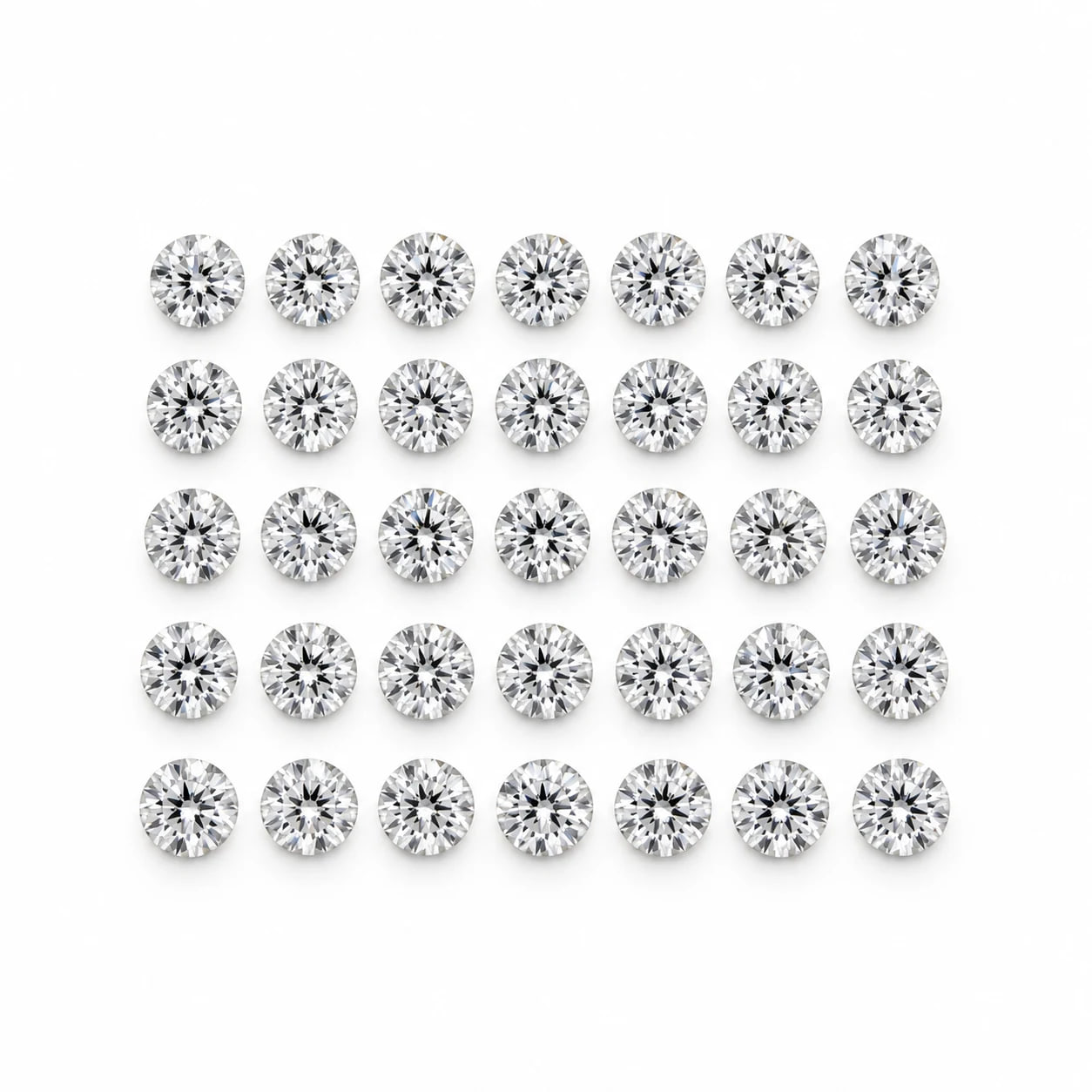
Compare round selections across a defined business order.
Include in the RFQ: Group the request by diameter or weight band, document requirements and order unit; keep every approved stone or pair identifiable in the selection list.
05 / Qualitative procurement scenarios
Market Buying Considerations for Round Brilliant Lab-Grown Diamonds Wholesale
Use a specific business scenario to prepare an enquiry. These examples do not assert national preferences, market size or confirmed orders.
Editorial buying scenarios, not national demand rankings or company sales data.
Market
Buying scenario
RFQ focus
United States
Round bridal and stud assortment
Diameter, report fields and pair-weight terminology
United Kingdom
Independent-jeweller replacement and bespoke work
Existing head dimensions and individual documentation
Australia
Made-to-order solitaire and pendant collections
Design approval sequence and repeat diameter bands
United States · Round Bridal and Stud Assortment
A bridal retailer developing a round solitaire and stud assortment can ask for separate center-stone and matched-pair shortlists. Keep the categories distinct in the RFQ: one stone for a ring, two stones for earrings. This is a procurement scenario for the market, not a claim about national market share or a specific retailer’s orders.
United Kingdom · Independent-Jeweller Replacement and Bespoke Work
A workshop sourcing for a client-owned mount should put millimeter fit ahead of a broad weight request. Ask which measurements and visual references will accompany the selection, and have the setter review the actual stone. The example illustrates one buying use case rather than a general preference attributed to all British buyers.
Australia · Made-to-Order Solitaire and Pendant Collections
A made-to-order business can retain a round setting specification and use it when briefing the next sourcing request. Include approval timing and destination alongside the stone requirements. Any quotation or delivery date remains specific to the proposed goods; this scenario is not a verified measure of Australian demand.
06 / A practical comparison
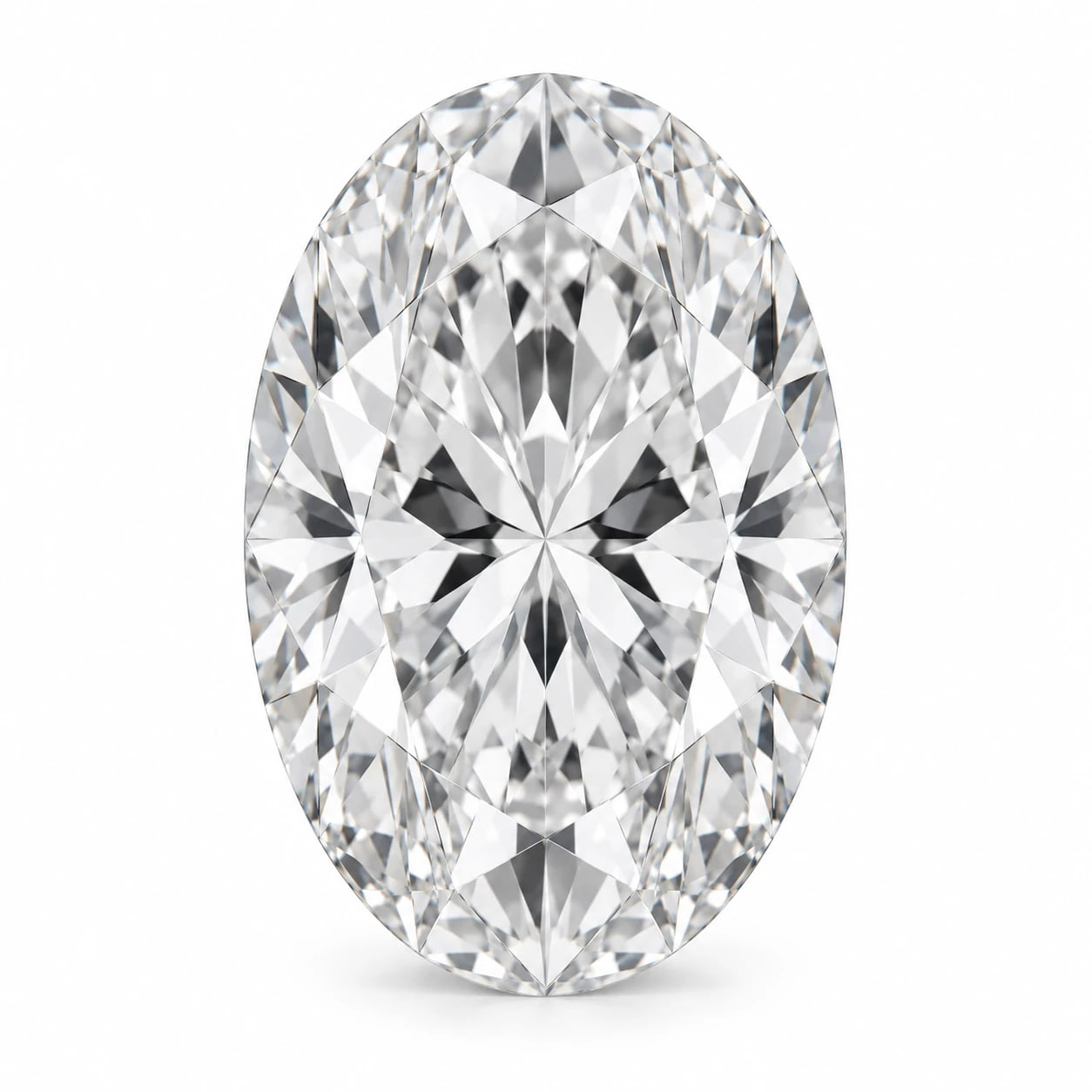
Round Brilliant vs Oval Lab-Grown Diamonds
Compare the properties that change the purchasing decision, then review the actual selected stones or parcel.
Choose against the actual design, documents and offered goods rather than a blanket better-product claim.
Buying consideration
Round brilliant
Oval brilliant
Outline
Circular; compare minimum and maximum diameter.
Elongated; compare length, width and ratio.
Setting brief
Diameter, depth and head dimensions.
Length, width, depth and contour of the mount.
Visual review
Review radial symmetry, proportions and light return.
Review outline symmetry, bow-tie appearance and light return.
Earring pair selection
Match diameter and face-up appearance together.
Match length, width, ratio and face-up appearance together.
Commercial comparison
Price and availability depend on the proposed stones.
Price and availability depend on the proposed stones.
What Should a Round Diamond RFQ Include Besides Carat Weight?
Include minimum and maximum diameter, depth, intended setting, report requirements and quantity. For a pair, state each-stone weight and combined weight separately. These details make comparisons useful and help identify whether proposed goods fit the finished design rather than only the budget band.
Are All Round Lab-Grown Diamonds Hearts and Arrows?
No such claim should be assumed from the round shape alone. If the optical pattern matters to your buying plan, request the relevant supporting images and agree how it will be assessed. A generic product photograph or the word brilliant is not evidence for that specific claim.
Can Equal-Weight Round Diamonds Look Different in Size?
Yes. Face-up dimensions and proportions need to be compared separately from mass. Record the actual diameter range and depth when reviewing a shortlist. If the stone must fit an existing mounting, the setter’s dimensional requirements should be part of the acceptance criteria.
How Should I Specify Round Diamond Stud Pairs?
Specify the desired weight of each stone, total pair weight, diameter range and matching criteria. Ask to review the stones together when visual material is available. A label such as one carat studs is ambiguous unless the quotation states whether that weight is per stone or per pair.
How Are Grading Reports and Growth Treatments Confirmed?
State the required issuing laboratory in the inquiry, then review the actual document for the selected diamond. Check correspondence with the goods and record growth method and post-growth treatment disclosure separately. Laboratory service formats differ, so use the fields actually supplied rather than copying one grading template across every stone.
What Are the Minimum Order Quantity, Price and Lead Time?
Those terms are confirmed after the sourcing requirements and proposed goods have been reviewed. Include the number of stones or pairs, specification, destination and required date in the brief. This page does not promise a universal minimum, a fixed price, stock availability or a delivery date before quotation.
09 / Prepare the next conversation
Build Your Round Brilliant Brief
Start with the fixed requirements and explain where the sourcing selection can vary.
Send the mount diameter, depth clearance, weight preference and report requirement; distinguish a replacement stone from a new setting project.
YOUR PREFERRED REQUIREMENT
Round Brilliant Lab-Grown Diamonds Wholesale
Continue to our contact form with your selected specifications and send your requirements directly to our sourcing team.
Open NavigationClose NavigationSearch results: {count}No matching products. Try another shape or category, or email us below.Loading products…Product search is temporarily unavailable. Browse Products or email [email protected].Explore the Diamond Product Catalogue{label} · {count} Product Group{label} · {count} Product Groups{count} product groups{count} of {total} applications across all areas{label} · {count} Applications{count} of {total} partner solutions{count} min read{count} shape{count} shapes{count} resource{count} resources{count} guide{count} guidesCompany News Will Appear Here.No Matching Resources.No company news has been published in this collection yet. Explore our existing buying resources while future updates are prepared.Try another search term or explore all resources.Please include at least 10 characters in your message.Please complete your name and email.Show Diamond Comparison GuideMinimize Diamond Comparison GuideFit to ScreenZoom 2×Image {index} of {total}: {name}Local preview: copy the preview address for use on this device. Social sharing is available on the public website.Copy Preview LinkCopy LinkPreview address copied. It is accessible on this device.Guide link copied.Copy this address from your browser: {url}Share options closed.Sharing cancelled. You can also copy the link.Use Copy Link or one of the other sharing options.
 English
 Español
 Português
 Deutsch
 Français
 Italiano
 Nederlands
 العربية
 日本語
 한국어
 ไทย