 English
 Español
 Português
 Deutsch
 Français
 Italiano
 Nederlands
 العربية
 日本語
 한국어
 ไทย
Quick Answer
Do lab grown diamonds pass a diamond tester? They can, because they are diamond, but the meaning of the result depends on the instrument. A basic thermal tester does not establish mined versus laboratory-grown origin. Some look-alike materials can also confuse thermal-only testing. Use the instrument within its documented scope, then apply appropriate origin screening or independent laboratory identification when origin matters. The most reliable buying decision combines the correct document scope with observations of the actual item and a written acceptance rule. Keep unresolved points visible before payment or setting. A supplier’s confident description is useful context, but the purchase record should distinguish confirmed facts from information that still needs verification.
Do Lab Grown Diamonds Pass a Diamond Tester, and What Does That Establish?
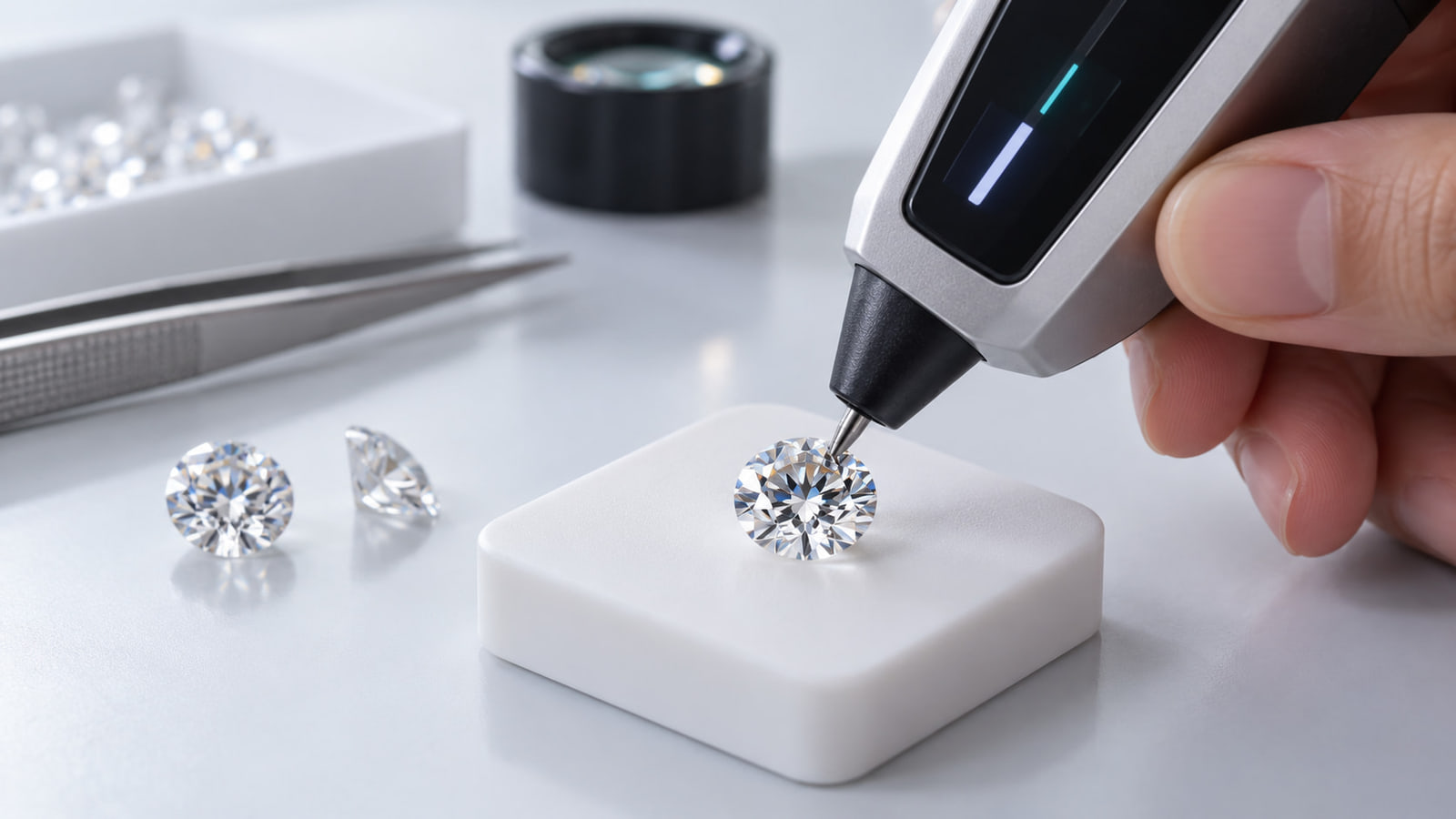
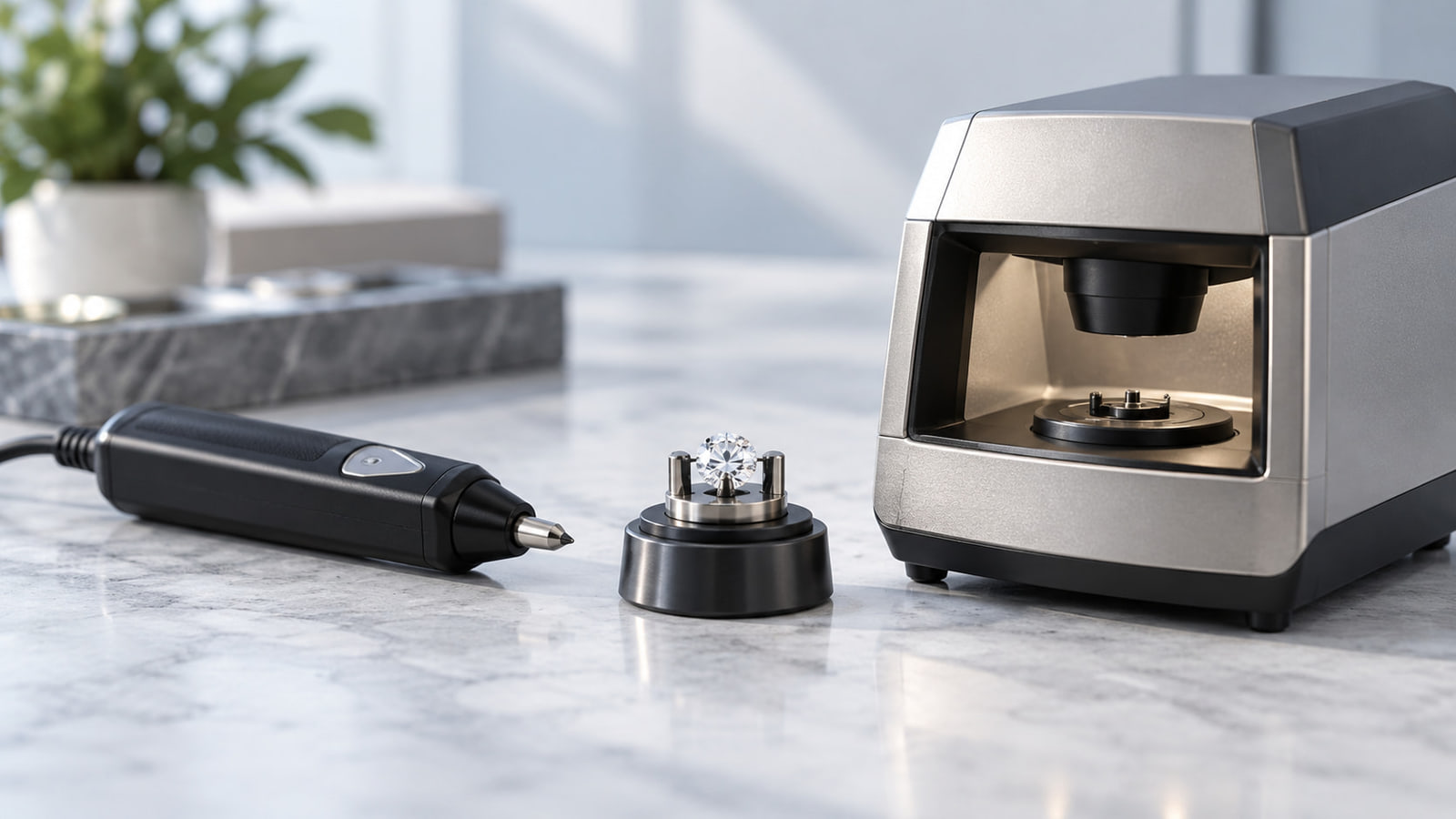
Begin with the question the device is designed to answer. Material screening and origin identification are different jobs. A handheld probe may assess a thermal or electrical response; an origin-screening instrument may refer stones that need further examination. Neither should be described by staff as a universal real-diamond machine. Record the model, mode, size and mounting limitations before writing a receiving procedure around it.
The FTC warns that thermal testers used to distinguish diamond from cubic zirconia may misidentify moissanite. A thermal pass therefore cannot carry all the conclusions a buyer may want to draw. See FTC: Advertising diamonds, gemstones and pearls.
Thermal Material Testing Versus Origin Screening
Compare devices by the question they are designed to answer. Thermal testing may contribute to material screening, while origin screening introduces another decision path and possible referral. The table is a scope comparison, not a recommendation to buy a particular instrument or a claim that every model in a category behaves identically.
| Decision | Basic material tester | Origin-screening workflow |
|---|---|---|
| Question | Response consistent with the device’s material categories | Whether the stone can be passed within origin-screening scope |
| Laboratory-grown | May test as diamond | May require referral or a defined identification result |
| Look-alikes | Thermal-only limitations can matter | Follow instrument material and size coverage |
| Uncertain result | Repeat according to manufacturer procedure | Keep referred stones separate for conclusive examination |
Which Tester Checks Belong in the Buying Brief?
The following selection checks connect the topic to an actual purchase decision. Record the requirement, evidence and unresolved question against the same stock identifier so the supplier and receiving team review the same candidate.
Instrument coverage. Confirm supported sizes, shapes, colors and mounting conditions. Request the current manufacturer instructions kept with the device. Device coverage is a prerequisite; a result outside coverage may not answer the intended question.
Operating conditions. Confirm clean stone, correct contact and required calibration. Request a logged check using the prescribed control procedure. Follow the specified operating checks rather than inventing calibration from another instrument.
Result vocabulary. Confirm pass, refer or other exact displayed outcome. Request the raw result rather than an operator’s guess. Preserve the screen’s exact wording instead of translating every positive signal into natural.
Origin closure. Confirm how referrals receive a final determination. Request a named laboratory route and unresolved-stock location. Plan referral capacity before the order arrives, especially for mixed-size assortments.
Apply the relevant checks to individual loose centers or matched pairs and sets according to the actual order. Preserve the approved reference and flag substitutions for review before they enter the packing list.
For jeweler receiving teams, MEITUO can help request screening scope and item records from suppliers. Define the intended conclusion first; the equipment claim should support that conclusion rather than dictate an unsupported one.
Before purchasing a tester for a receiving workflow, write an intended-use list. Include the smallest and largest stones, colors, shapes and whether they will arrive loose or mounted. Compare that list with the manufacturer’s current documentation. A device suitable for loose centers may not answer the same question for tiny set stones, and a material tester may never have been designed to classify growth origin.
Use controls only as the manufacturer directs and identify who maintains the device. A known control result demonstrates a particular operational check, not the identity of every candidate in a future parcel. Keep maintenance and test logs separate from stock approvals so the team can trace which device and procedure were used for an exceptional result.
Electrical response introduces another property, but a combined instrument is still not a universal substitute for independent origin identification. Avoid training shorthand such as two tests means natural. The staff instruction should use the exact categories and limitations for that model. When a result is unexpected, preserve it and ask a question appropriate to the instrument rather than inventing a growth explanation.
For a mixed jewelry shipment, create a coverage map by component. The center may be accessible while some small stones cannot be tested within the device’s conditions. Mark those limitations clearly. If the buyer’s order requires identification for every component, arrange a method or service that covers that requirement; testing the easiest stone should not silently become approval of the rest.
A useful escalation log states the stock identifier, device, supported mode, raw outcome and checks performed. It then names the next service and the final disposition. This gives a laboratory or supplier more useful information than failed tester, and it prevents a later reader from mistaking an unresolved screening referral for an established material diagnosis.
How Does Tester Review Work in a Real Ordering Sequence?
Hypothetical worked B2B example. A hypothetical receiving team tests a parcel of forty reported centers. Thirty-nine give the expected device response and one is inconsistent. Staff repeat only the checks allowed by the manual, confirm the stone is clean and correctly positioned, and retain the unresolved item separately. They do not automatically call it fake, nor release it because a different inexpensive probe beeps.
The team reviewing the fortieth center should retain the first unusual result and the permitted repeat-check record. If the item is mounted or below the device’s supported size, that limitation may explain why the procedure cannot reach a conclusion. The next action is an appropriate examination, rather than a comparison of how many inexpensive testers produce a beep.
For the thirty-nine other stones, a successful screening step closes only the question it was designed to answer. Their report matching, condition and commercial acceptance remain separate. This makes staff training more precise: one instrument contributes evidence to receiving, while the complete procedure determines whether the parcel can enter inventory and production.
Carry the accepted decision into repeat-order planning; where the product depends on several stones, retain the pair or set approval with the candidate schedule.
How Should Buyers Resolve a Tester Mismatch?
Keep the device instructions beside the receiving station and build the procedure around that specific model. Confirm the permitted sizes, stone colors and mounting conditions before testing the delivery. Use the manufacturer’s prescribed checks and controls. A procedure copied from another probe or from a social video can produce confident but unsupported conclusions even when the operator follows it carefully.
Record the displayed result exactly, along with the device and any limitation. If a contact test behaves unexpectedly, inspect cleanliness, placement and operating conditions within the instructions before repeating. Avoid repeated testing until a desired answer appears. A result obtained outside the supported scope should be recorded as outside scope, not converted into a pass merely because the stone has accompanying paperwork.
Origin screening referrals need a defined closure route. Keep the referred items isolated by stock number and send the actual question to a suitable independent laboratory. Refer is not a final statement of growth origin, and a thermal pass is not a mined-origin declaration. Once identification is complete, attach the conclusion to the held line and release it only if the purchase specification is satisfied.
For the ordering record, connect the findings to the RFQ fields and preserve the relevant side-stone specification when companion stones are included.
What Should Buyers Ask Tester Suppliers in the USA, China and India?
Supplier geography can change communication and handling, but it does not settle tester. Use these localized questions to understand the seller’s role, where the actual stock sits and who can supply the evidence required for this particular order.
USA / trade channels and handoff
What Testing Claim Can a US Trade Seller Substantiate for the Exact Stock Offered?
For a US trade buyer, a seller’s phrase diamond tested should prompt a scope question: tested for what, using which device and on which components? A thermal material check is not the same as an origin determination. Ask for the original result language instead of accepting an informal claim that the parcel tested real.
If the receiving station uses its own instrument, confirm that the model covers the ordered sizes and mounting conditions. Train staff to record exact outcomes and to separate referrals rather than asking them to improvise diagnoses. A demonstration on one accessible center does not establish the identity of all surrounding melee in a finished piece.
Agree who arranges further examination when the delivery and the seller’s evidence appear inconsistent. A US distributor may be able to arrange reselection quickly, but speed should not erase the original result or the device limitation. Keep the affected stock isolated until a suitable conclusion or agreed replacement closes the purchasing question.
Stuller’s trade resource page provides a US channel example, distinct from the operator performing your receiving tests.
CHINA / sourcing coordination
Can a China-Sourced Parcel Arrive With Screening Scope Identified by Lot and Stone Size?
For China-sourced parcels, ask whether a screening claim applies to each stone, a defined lot or only a sample. These scopes should not be confused. If a seller supplies instrument results, request the model and relevant coverage, especially where tiny stones or different colors are combined in one order.
A sourcing coordinator in Qingdao can collect the available screening information and follow up on referrals, but the coordinator is not thereby an independent identification laboratory. For MEITUO orders, make the question explicit: is the buyer requesting material evidence, laboratory-grown origin evidence or documentation of a particular screening procedure? The supplier response should address that question directly.
Before packing, separate any unresolved stock and identify how it will be examined or replaced. Overseas receiving teams need enough information to interpret a reported pass, not just a photograph of a device. Confirm the actual documents and lot identifiers while the seller can still retrieve the candidates for additional work.
For its stated business role and Qingdao base, see MEITUO’s company introduction.
INDIA / manufacturing and export handoff
Who Resolves Referred Stones in an Indian Cutting or Export Order?
When buying from an Indian cutting or trading seller, ask when screening occurs relative to polishing, assortment assembly and final packing. The result must remain linked to the delivered stock. A screening record for a previous lot does not automatically cover a newly assembled export parcel with different reference numbers.
For individually reported centers, keep report matching alongside testing rather than replacing it with a probe demonstration. For small assortments, define the parcel identity and the extent of any testing claim. Ask how referred stones are separated and whether all referrals have a final disposition before the lot is represented as ready.
If the exporter relies on another business for identification, name that handoff in the order file. The buyer should know who answers a technical question and who arranges additional examination when needed. A persuasive sales video of a tester is less useful than a clear statement of coverage, limitations and the actual stock examined.
The GreenLab Surat and Mumbai locations illustrate role separation; ask which party actually screens the final parcel.
How Does MEITUO Support Diamond Tester Screening?
MEITUO is a sourcing and supply-chain coordination partner in Qingdao, Shandong, China, serving jewelry brands, wholesalers, retailers and designers. For diamond tester screening, its useful role is to turn the buyer’s collection requirement into an actionable supplier request: confirm supported sizes, shapes, colors and mounting conditions, organize available evidence and follow up on unresolved selection questions.
Its sourcing scope includes loose center stones, melee, side stones, matched pairs and sets, and fancy-color options. Ask MEITUO to obtain the supplier’s stated screening scope, identify any unresolved referrals and keep those records linked to the proposed stock rather than relying on a tester demonstration. The final acceptance criteria should remain with the buyer’s approved brief and the evidence supplied for the actual order.
MEITUO does not replace an independent grading or identification laboratory. Available stock, documents, treatment information, MOQ, lead time and shipping terms need confirmation per order. Send the intended application and tester requirements to [email protected] so selection and order follow-up can start from specific questions.
What Should a Tester RFQ Specify?
Define whether you need evidence of material identity, laboratory-grown origin or a documented screening process. Those are different requests. If the seller supplies a screening claim, ask for the device, scope and lot coverage, including size limitations. Identify how referred stones are handled and whether the parcel contains any unresolved items. A statement that everything passed should be interpretable.
For a reported center-stone order, require the supplied stones to reconcile with their documents rather than allowing a tester demonstration to replace that step. For melee, state the lot-level assurance and independent identification requirements appropriate to the application. Agree who organizes any additional work when a receiving result conflicts with the seller’s evidence. Keep the exact question visible through referral and final disposition.
Please quote laboratory-grown diamonds for [jewelry application] in [shape and quantity], with [weight range] and [dimensions or tolerance]. Our priority is material and origin evidence, device coverage where supplied, lot screening scope, referral handling and accepted identification documents. Supply available evidence linked to each stock line or clearly identified parcel. State [accepted document service], current stock location, proposed substitutions and any information you cannot confirm. Please separate product and service inclusions, confirm MOQ and lead time for this order, and provide [shipping destination and terms]. We require written approval before substitution or dispatch and a mutually agreed process for discrepancies identified at receiving.
FAQ: Do Lab Grown Diamonds Pass a Diamond Tester, and What Does That Establish
Does a Tester Beep Prove That a Diamond Is Natural?
No. A basic tester response does not establish mined origin. Interpret the result using the specific instrument’s scope. Material testing, origin screening and final laboratory identification are separate tasks, and one audible signal should not be used to claim all three are complete.
Can Moissanite Confuse a Thermal Tester?
The FTC warns that thermal testers used to distinguish diamond from cubic zirconia may not accurately identify moissanite. Check your device’s capabilities. Do not use a thermal-only response as the sole evidence of material identity when that limitation is relevant.
What Does a Refer Result Mean?
Use the meaning defined by the instrument manufacturer. In an origin-screening workflow it commonly indicates that more examination is needed, not a final diagnosis. Keep the item identified and follow the prescribed referral route rather than relabeling it from the word alone.
Should I Keep Retesting Until a Stone Passes?
No. Follow the manufacturer’s permitted checks for cleanliness, placement and operation, and preserve the original result. Repeating tests without a defined procedure can hide uncertainty. If the result remains unresolved or outside coverage, use an appropriate further examination.
Does Testing the Center Identify Every Stone in a Ring?
No. The conclusion covers the components actually examined within the device’s supported conditions. Side stones or melee may require another method or service. Record component coverage clearly so staff do not extend one center-stone result to the entire piece.
Which Testing Information Belongs in a Supplier Inquiry?
State the question to be answered, the stone sizes and mounting condition, and the accepted document or screening scope. Ask about instrument coverage and referral handling where a supplier provides test results. Avoid the ambiguous requirement that everything must test real.