 English
 Español
 Português
 Deutsch
 Français
 Italiano
 Nederlands
 العربية
 日本語
 한국어
 ไทย
Quick Answer
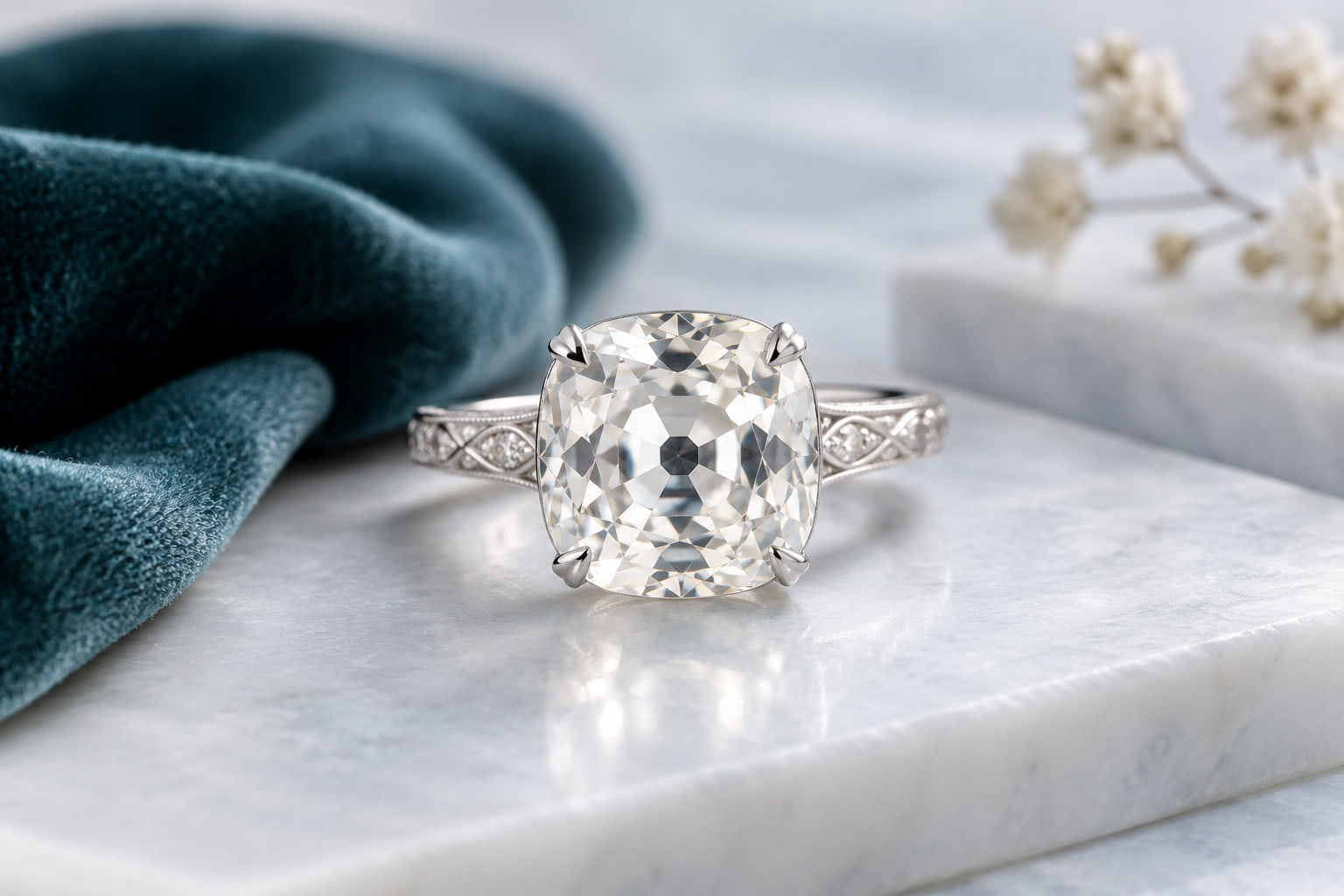
An old mine cut lab grown diamond is a modern laboratory-grown diamond cut to evoke the older cushion-like brilliant style, often associated with a smaller table, higher crown and visible culet. Its appearance does not establish antique age, mined origin or a historical ownership record. Buy it using an approved visual reference and the actual stone's dimensions, facet pattern and profile. Decide how much outline irregularity, culet visibility and broad-facet contrast suit the design. For earrings or multi-stone rings, match the complete appearance rather than weight alone. Keep style approval separate from setting fit and origin documentation. A supplier's old mine label is a starting description, not a complete manufacturing specification or a substitute for examining the proposed stones.
Is an Old-Mine-Cut Lab-Grown Diamond an Antique Stone?
No. Cutting style, material origin and age are separate facts. A newly grown diamond can be fashioned in a historical-looking arrangement. That makes modern vintage-inspired cutting a reasonable description; it does not establish antique provenance. Similarly, placing the stone in a period-style mounting does not turn the assembled item into historical jewelry.
GIA's old mine guide explains the historical style and characteristic proportions. Use it to understand the design references, not to infer that a modern offered stone shares an antique's age or history. An invoice should identify the actual laboratory-grown material and the agreed cutting description. A marketing narrative about old mines is not an origin document for that SKU.
| Buyer question | Modern old-mine-inspired lab-grown stone | Historical antique stone |
|---|---|---|
| Material origin | Laboratory-grown, requiring clear disclosure | Established from evidence about the actual stone |
| Age claim | Do not infer age from the style | Requires separate historical support |
| Repeat selection | Can use a defined contemporary reference | Available individual stones may differ substantially |
| Design approval | Compare actual modern cutting interpretation | Compare actual condition and historical geometry |
| Merchandising language | Vintage-inspired or old-mine-inspired, as appropriate | Antique wording only with adequate evidence |
The distinction protects the buyer's own product story. A brand can celebrate the visual heritage while giving a precise account of the goods it actually supplies.
Which Features Define the Old-Mine-Inspired Appearance?
Build a reference sheet around four relationships: outline, table, crown and culet. The outline may be squarish or somewhat elongated with softened corners. The table affects the face-up pattern. The crown contributes to the side profile. A visible culet can become a deliberate central feature. GIA's historical description includes these features, but a modern request still needs the actual proposed geometry.
Do not turn descriptive words into unsupported universal thresholds. A buyer can decide that a particular sample's table looks appropriately small or its culet too dominant, then use measurements from that approved sample as a project reference. That is a design specification, not a newly invented grading standard. Record the sample identifier so another team can see what approved meant.
Compare face-up videos in diffuse light and restrained directional light. Watch how broad areas brighten and darken as the stone moves. A static photograph can make a culet appear dramatically different depending on the background and viewing angle. Ask for a clean, continuous view that includes the face-up position instead of a sequence assembled only from flattering angles.
The cushion product category can establish the general outline family. It does not establish that every cushion has the old-mine-inspired facet pattern your collection needs. Put the approved reference alongside the category name in every supplier inquiry.
How Does Old-Mine-Inspired Selection Differ From a Modern Cushion Brief?
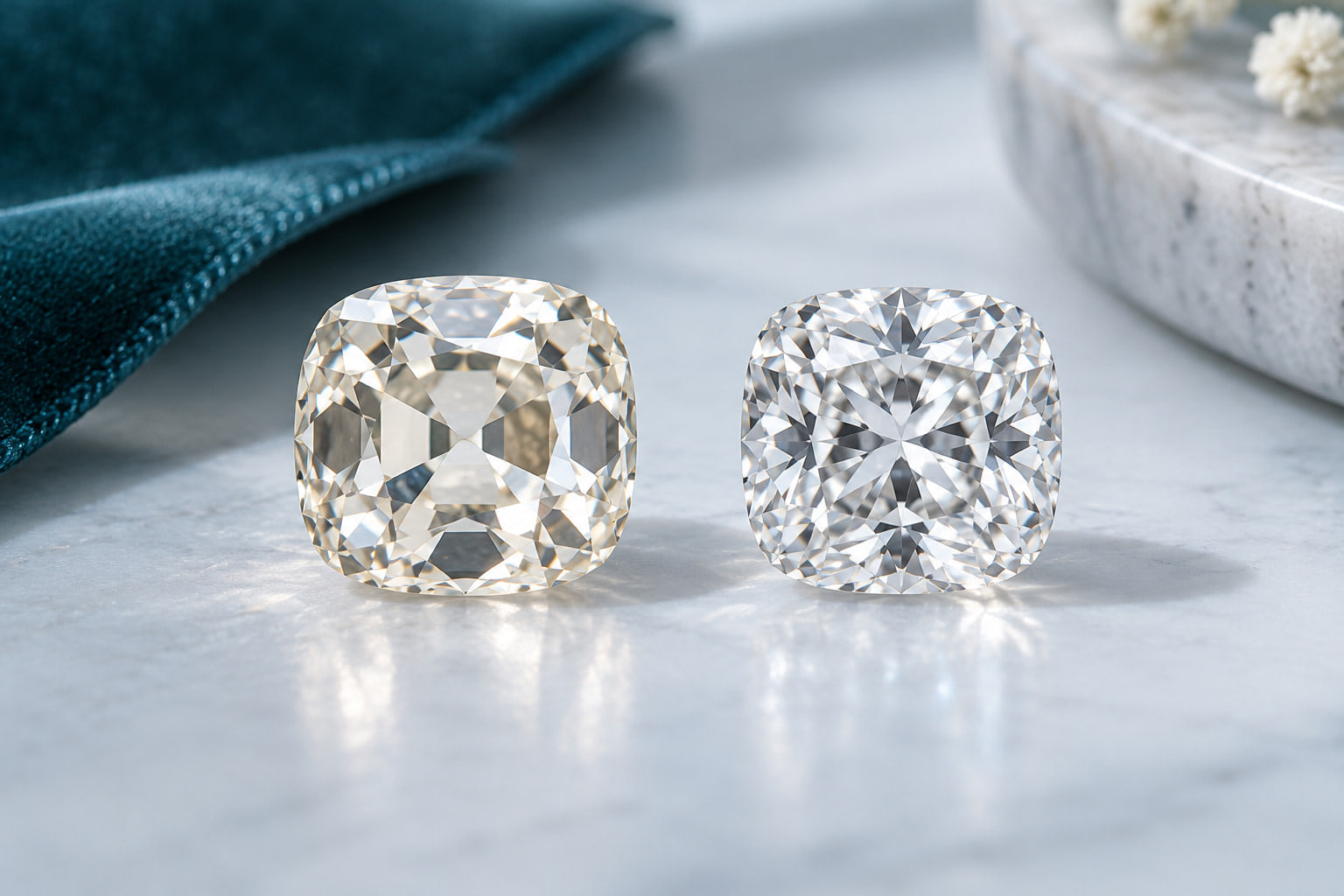
A modern cushion brief often begins with preferred outline and visible return pattern. An old-mine-inspired brief adds an explicit historical design reference: the crown silhouette, central culet appearance and broad facet rhythm may be as important as overall brightness. Treat those as positive requirements if they are central to the collection. Otherwise a well-intentioned supplier may propose a different cushion that looks brighter in a selected photograph but misses the design.
The distinction is not permission to accept accidental problems. A vintage-inspired stone can still have damaged edges, an unintended off-center pattern or an unacceptable dark area. Identify which asymmetries are intentional and which are outside the approved sample. An instruction such as make it imperfect is too vague for either a cutter or a receiving inspector.
Review side profile before finalizing the mounting. A higher crown or deeper body can change head height, prong positions and clearance. The setting maker should use actual measurements rather than assume a generic cushion seat. Keep that fit review alongside the bridal application brief if the stone is intended for an engagement design.
For a collection containing both modern cushions and old-mine-inspired stones, assign distinct style codes. Retain different master images and acceptance criteria. The shared outline family should not cause receiving staff to mix the two groups or substitute one interpretation when another is unavailable.
How Can a Buyer Build a Matched Vintage-Inspired Set?
Hypothetical example: the three-stone heirloom-style design. A buyer approves a modern laboratory-grown center measuring 8.4 by 8.0 mm and wants two companion stones around 5.2 by 5.0 mm. The center's length-to-width ratio is 1.05; each companion target has a ratio of 1.04. These invented figures create a similar outline family, but they do not establish an optical match.
The first pair offered has one large, conspicuous culet and one much smaller culet. In a face-up photograph both sides look similar in diameter, yet the central openings draw different amounts of attention. The buyer rejects the pair-as-a-set and requests two new candidates shown beside the actual center. The acceptance decision concerns the combined design, not whether each stone is saleable individually.
Next, the setter compares heights and pavilion clearance. One proposed side stone fits the face-up map but requires a different seat height. The team either revises the drawing deliberately or selects a better-fitting candidate. It does not lower the stone until the top view looks right without checking contact and retention. The final position map names center C1, left L1 and right R1, with photographs taken in the intended orientations.
For ten rings, the bill of materials contains ten centers and twenty sides, or thirty stones before any reserve. The buyer can order samples first and negotiate the remaining matched sets after approval. That arithmetic is a planning example, not a promise of standardized old-mine-inspired inventory. The matched-set guide helps document the unit of approval.
How Should Old-Mine-Inspired Orders Be Discussed Across Markets?
A buyer needs to know whether the counterparty is selling antique stock, offering newly cut laboratory-grown stones or coordinating a custom interpretation. Those are different commercial propositions even when their photographs look related. Give each supplier the same reference and require a clear statement of material origin and present-day production scope.
USA / collection storytelling
How Should a US Vintage-Inspired Collection Describe Modern Stones?
For a US collection, make the difference between style and provenance visible before the customer reaches the checkout. A laboratory-grown old-mine-inspired center can support a historical design story, but its product description should identify the actual material and present-day nature of the offered stone. Do not rely on a general FAQ to correct an antique implication created by the title.
A buyer working with a US distributor should ask whether the pictured item is the exact modern stone or an antique reference image. The distinction affects both selection and permission to use the image. Request an actual candidate video before finalizing the product page or sending the design to a setting maker.
For a retail range, keep a short visual training sheet showing the approved culet and broad-facet character. Store associates can then explain the intended appearance without presenting it as damage or promising antique value. Use the same style code on the inventory record and the finished-jewelry bill of materials.
CHINA / reference-to-supplier translation
How Should China Coordination Preserve an Old-Mine Reference?
In a China sourcing workflow, send the reference images with an explicit statement that the request concerns newly produced laboratory-grown diamonds. A translated name alone can leave uncertainty about whether the buyer wants an antique stone, a cushion outline or a particular contemporary facet interpretation. Mark the crown, table and culet features on a separate reference sheet.
MEITUO can coordinate that brief from Qingdao while keeping the seller and cutter roles distinct. Ask which party will confirm the actual measurements and provide the candidate photographs. A coordination address should never be presented as proof of growth or cutting location. Keep the item identifier on every returned image so the selection history remains clear.
If several candidates are proposed, review them as separate options instead of choosing from a collage with inconsistent scale. Request the same lighting and orientation for each. After approval, preserve the reference file revision in the order, especially where the English selling description will be prepared by a different team.
INDIA / cutting interpretation and sets
How Should an Indian Cutter or Trader Handle Modern Vintage Matching?
An Indian cutter or trader offering modern old-mine-inspired stones should receive a clear choice between reproducing a reference closely and developing a new interpretation. Those tasks have different approval needs. Ask whether the quotation covers existing polished candidates or a proposed cutting plan, and identify who can answer questions about the actual facet layout.
For a three-stone ring or earring pair, require the proposed stones to be shown together. Separate videos of attractive individual stones do not establish a coherent set. Give the supplier the center reference and the intended orientation of every companion. Agree whether matching is judged from the loose stones or after a representative mounting.
If a trader replaces one member before dispatch, request renewed set approval. The replacement may be commercially equivalent yet visually different in culet size or crown profile. Keep the accepted set map with the invoice and packet references so receiving staff can detect an accidental mix before any stone is mounted.
What Should Receiving Staff Inspect Beyond the Old Mine Label?
Prepare a reference packet that includes the approved top view, side view, video and measurements. Receiving should compare the actual outline, visible culet and crown profile with that packet before the stones are sent to the setter. If a pair or set was approved, keep its members together. A single replacement can disrupt the intended balance even if its weight and color fall within the same order range.
Inspect visible condition separately from intended stylistic variation. Record edge concerns, chips or unexpected surface features and refer them for appropriate review. A historical-looking outline does not make damage part of the specification. Conversely, do not reject an approved central culet merely because an inspector expects a modern pointed pavilion. Train the receiving team on the collection's positive requirements.
For repeat orders, compare new goods with the physical master where practical. Marketing images may be resized, retouched or compressed and can lose useful facet detail. If the supplier changes its cutting interpretation, review a new sample and create a new revision rather than overwriting the old standard. The repeat-order workflow can preserve the earlier reference for service replacements.
Document any permitted variation by position. A deliberately varied cluster may allow several outlines, while a symmetrical earring pair may require closer similarity. One blanket tolerance for every application is less useful than a short, position-specific description of what the buyer actually approved.
Keep rejected candidates in the review log with a short reason, so later sourcing does not repeat the same unsuitable interpretation.
How Can MEITUO Coordinate a Modern Old-Mine-Inspired Selection?
MEITUO works from Qingdao, Shandong, China as a sourcing and supply-chain coordination partner. For an old-mine-inspired project, it can help turn the buyer's preferred reference into a supplier discussion covering outline, crown, table, culet, dimensions and matching expectations. The aim is a reviewable modern stone selection rather than an unsupported antique story.
MEITUO supports loose center stones, melee, side stones and matched pairs or sets, along with product selection, requirement confirmation and order follow-up. A buyer can combine the center inquiry with a side-stone brief, keeping the two roles clear. Availability, documents, MOQ, lead time and shipping terms must be confirmed for each order.
Send the master images and setting envelope to [email protected]. MEITUO does not claim to grow or cut the diamonds, authenticate antique provenance or manufacture the finished ring. The buyer should retain responsibility for final design approval and ensure that customer-facing language describes modern laboratory-grown goods accurately.
What Should an Old Mine Cut Lab Grown Diamond RFQ Specify?
Use an image-led specification with measurable limits. Identify the features that establish the desired character and the features that are merely preferences. Include the actual mounting envelope and whether the stones will be approved individually, as a pair or as a complete set. A total-weight instruction alone cannot communicate culet or crown balance.
Require suppliers to label alternatives as alternatives. If an offered stone has a different facet pattern or outline ratio, it should not disappear inside the original line item. Ask for a clear deviation note, sample terms and the order stage at which the design becomes fixed.
The RFQ guide provides the commercial framework. Add your master-sample identifier and wording policy so vintage-inspired styling remains separate from any unsupported claim of age, mine or historical ownership.
Please propose old-mine-inspired laboratory-grown diamonds for [collection and quantity]. Our approved style reference is [file or sample ID], emphasizing [outline, table, crown and culet preferences]. Target dimensions are [range] and maximum total depth is [value]. Supply actual top, side and pavilion images, continuous video, item measurements and available independent documents. Identify any deliberate asymmetry and all deviations from the reference. Confirm matching feasibility, sample terms, replacements, MOQ and lead time. Describe these goods as modern laboratory-grown stones; no antique origin or historical provenance is requested. Quote any proposed alternative as a separate option requiring approval.
FAQ: Old Mine-Cut Lab-Grown Diamonds: A Design Buyer’s Guide
Is Old Mine the Same as Old European Cut?
No. The historical old mine reference is associated with a cushion-like outline, while old European refers to a rounder historical brilliant style. A modern supplier may use broad vintage language, so specify the actual outline and facet reference instead of relying on either name alone.
Can a Laboratory-Grown Stone Have an Open Culet?
A modern cutting design can include a visible culet facet. Review its size, position and appearance on the actual stone. The feature is part of the cutting architecture; it does not establish that the stone is antique or naturally formed.
Should Every Old-Mine-Inspired Stone Be Asymmetrical?
No. Modern interpretations can be more or less regular. Decide which variation supports the design and record it in the approved reference. Do not accept damage or an unintended pattern merely because the collection uses vintage-inspired language.
Can We Use Modern Cushion Settings Without Modification?
The setting maker should check actual outline, crown and depth before confirming fit. A shared cushion-like silhouette does not establish identical seat geometry. Review the real measurements and retain the stone-specific drawing used for production.
Does a Grading Report Establish Antique Provenance?
A gemological description and a historical provenance claim are different forms of evidence. Do not infer age or past ownership from a cutting-style name on a document. For modern laboratory-grown goods, describe the current material and style directly.
What Should Trigger a New Sample Approval?
A meaningful change in outline, table, crown profile, culet appearance or matching relationship should be reviewed. New dimensions inside the written range may still produce a different visual result. Keep a distinct reference revision when the buyer approves that change.