 English
 Español
 Português
 Deutsch
 Français
 Italiano
 Nederlands
 العربية
 日本語
 한국어
 ไทย
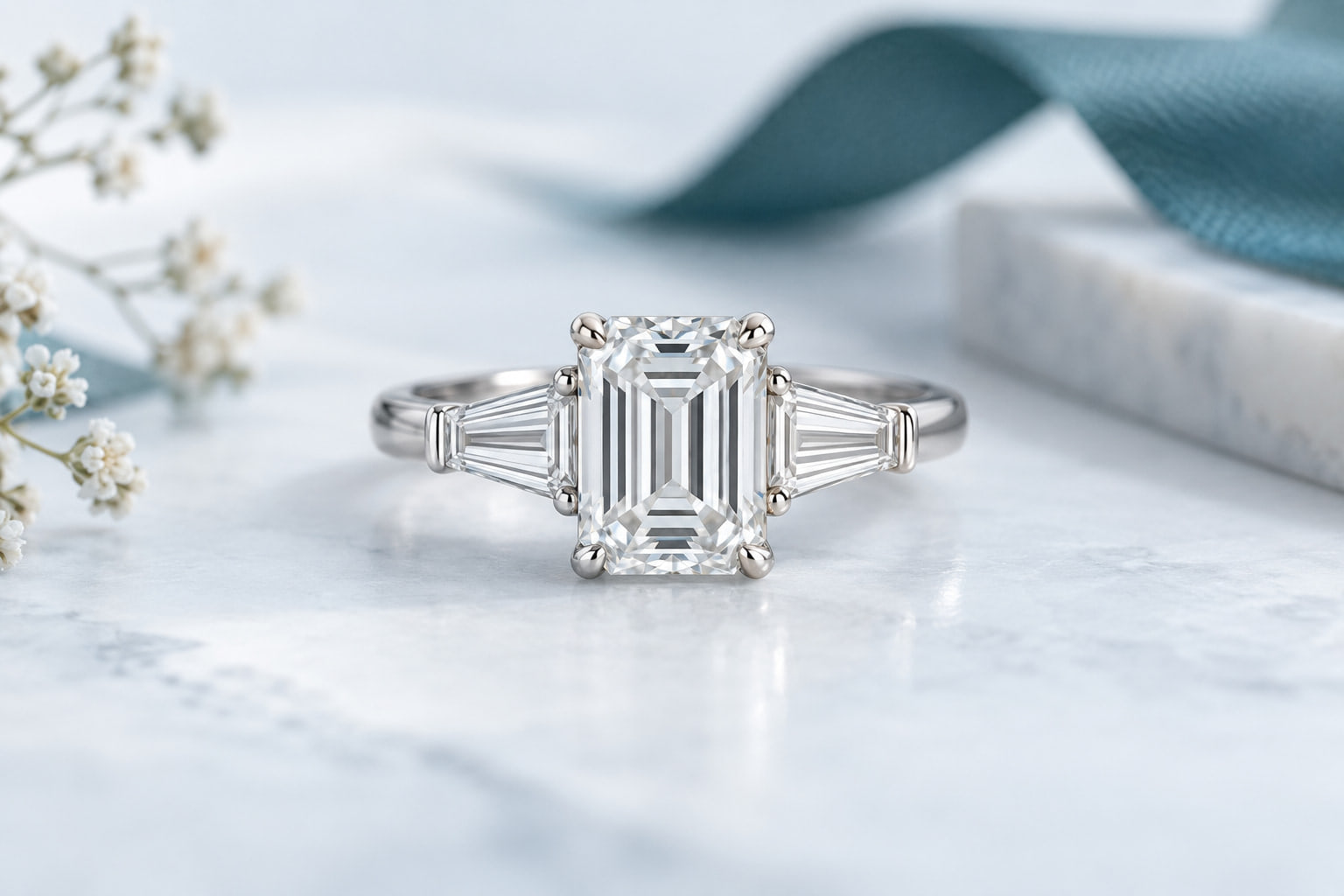
Quick Answer
For a 3 stone lab grown diamond ring, specify the center and both sides as a complete set. Define measured dimensions, side-to-center visual proportions, left-right orientation, facet character and available report basis. Equal side weights do not guarantee a matched pair, and a pleasing flat layout does not establish CAD clearance or wearing height. Compare all three stones together under consistent lighting, approve the actual pair in its intended orientation and keep the set labeled through production. If one stone is replaced, review the whole group again. A sourcing coordinator can organize candidate sets and supplier communication, while the designer and maker confirm seat geometry, protective metal, finished fit and the accepted first article.
How Should Buyers Choose the Side-to-Center Relationship?
Begin with the desired visual hierarchy. The sides may quietly support the center, extend its outline or create three distinct focal points. Each intention can work, but it leads to different dimensions and spacing. State the intention before choosing a side carat target.
Compare face-up width and length, not weight alone. A shallow-looking side and a deeper side can share weight while presenting different outlines. Use measured drawings and a real layout at the expected viewing scale. Record the space occupied by metal, because three loose stones touching on a tray do not represent a finished ring.
Avoid an ideal side-to-center ratio presented as a universal rule. A preference that works for a broad round center may not suit a long oval or an open step cut. Ask the designer to propose two proportion options and explain their effect on finger coverage, shoulder transition and profile.
Use our loose center-stone range alongside side-stone options rather than sourcing the center in isolation. The bridal application brief should include ring size, intended band relationship and wearing height so the visual choice remains connected to the finished product.
Step-Cut Sides VS Brilliant-Cut Sides: Which Relationship Is Intended?
Side shapes carry their own facet language. A step-cut side can reinforce architectural lines, while a brilliant-cut side can create a different sparkle texture. These are design choices, not automatic quality rankings. Review the actual center and sides together instead of choosing from shape names alone.
| Decision | Step-cut side approach | Brilliant-cut side approach | Approval question |
|---|---|---|---|
| Facet relationship | Can emphasize long lines and transparent flashes | Can create a finer or more active sparkle pattern | Is the contrast intentional beside this center? |
| Critical appearance | Transparency and visible features need review | Pattern and brightness distribution need review | Do either sides distract from the intended hierarchy? |
| Outline fit | Long edges and taper can define shoulders | Curves or points may change the transition | Does the group fit the current CAD? |
| Pair matching | Compare parallelism, taper and facet rhythm | Compare outline, pattern and orientation | Does the pair remain balanced when moved together? |
| Replacement | Need matching outline and transparent character | Need matching outline and visible facet character | Is a reserve pair or repeat-selection method available? |
The GIA baguette guide distinguishes straight and tapered outlines, which can materially change a side pair's transition into the shank. A pair should therefore be described by its measured geometry, not only a general step-cut label. Similarly, pear or half-moon sides require clear orientation in the layout.
Compare half-moon sides and tapered baguette sides only where they fit the design objective. An alternative side shape can require a new gallery and seat arrangement, even if the proposed total side weight is unchanged.
How Do You Establish That Two Side Stones Really Match?
Inspect left and right together with their intended inward and outward edges identified. Compare length, width, outline fullness, point or corner condition and depth. Equal reported weights are a useful data point, but not a visual acceptance method. A pair that looks similar separately may reveal a mismatch immediately when placed beside the center.
Use consistent motion and lighting. Rotate the group gently through the same angles and observe whether one side becomes conspicuously different. Some contrast is normal in faceted stones; the question is whether the group remains balanced for the intended design. Do not reject every dark reflection as a permanent defect or accept one flattering video as complete evidence.
Review color appearance across the set, including the intended metal or a representative mount. A center's report does not describe the two sides. Ask what documentation is supplied for each role. The IGI laboratory-grown report description states that growth and treatment comments are available upon request, so confirm the requested scope rather than assume every document contains every field.
Inspect condition before final approval. The GIA care guide distinguishes hardness from resistance to chipping. Corners and points need appropriate seat and protection review by the setter. A visually matched pair still needs to be structurally suitable for the actual mounting.
How Should a Buyer Calculate and Label a Three-Stone Ring Order?
Hypothetical project, the Oval-and-Pear Set: a studio plans forty rings with one oval center and two pear sides each. Production requires forty centers and eighty side stones, organized as forty matched pairs. The buyer requests three additional matched side pairs for repair, bringing the side order to eighty-six stones. Counting the reserve as three single stones would leave the intended pair strategy incomplete.
For one proposed design, the oval measures 10.0 by 7.0 mm and each pear measures 5.0 by 3.0 mm. These are hypothetical dimensions, not carat conversions or ideal proportions. If the sides point outward, the apparent total span depends on their angle, center gaps and metal. It is not simply 7.0 plus 5.0 plus 5.0 mm, because the orientation and setting structure change the projected width.
The studio creates a set card with center identifier, left-side identifier, right-side identifier and orientation sketch. Every media file and packing sleeve uses the same set reference. This keeps forty accepted groups from becoming an untracked collection of forty centers and eighty interchangeable-looking sides.
MEITUO can coordinate matched fancy-shape pairs and center candidates against the brief. Ask for a complete group view and measured schedule before approving the set. Confirm which documents apply to the center, the sides and the reserve rather than extending one report across the whole order.
If a side is unavailable before dispatch, the replacement should be reviewed with its remaining partner and the center. Replacing the whole pair may be more coherent than trying to find one isolated match, but the buyer should decide from actual options and cost. The reserve strategy should record whether pairs remain paired or may be used singly after review.
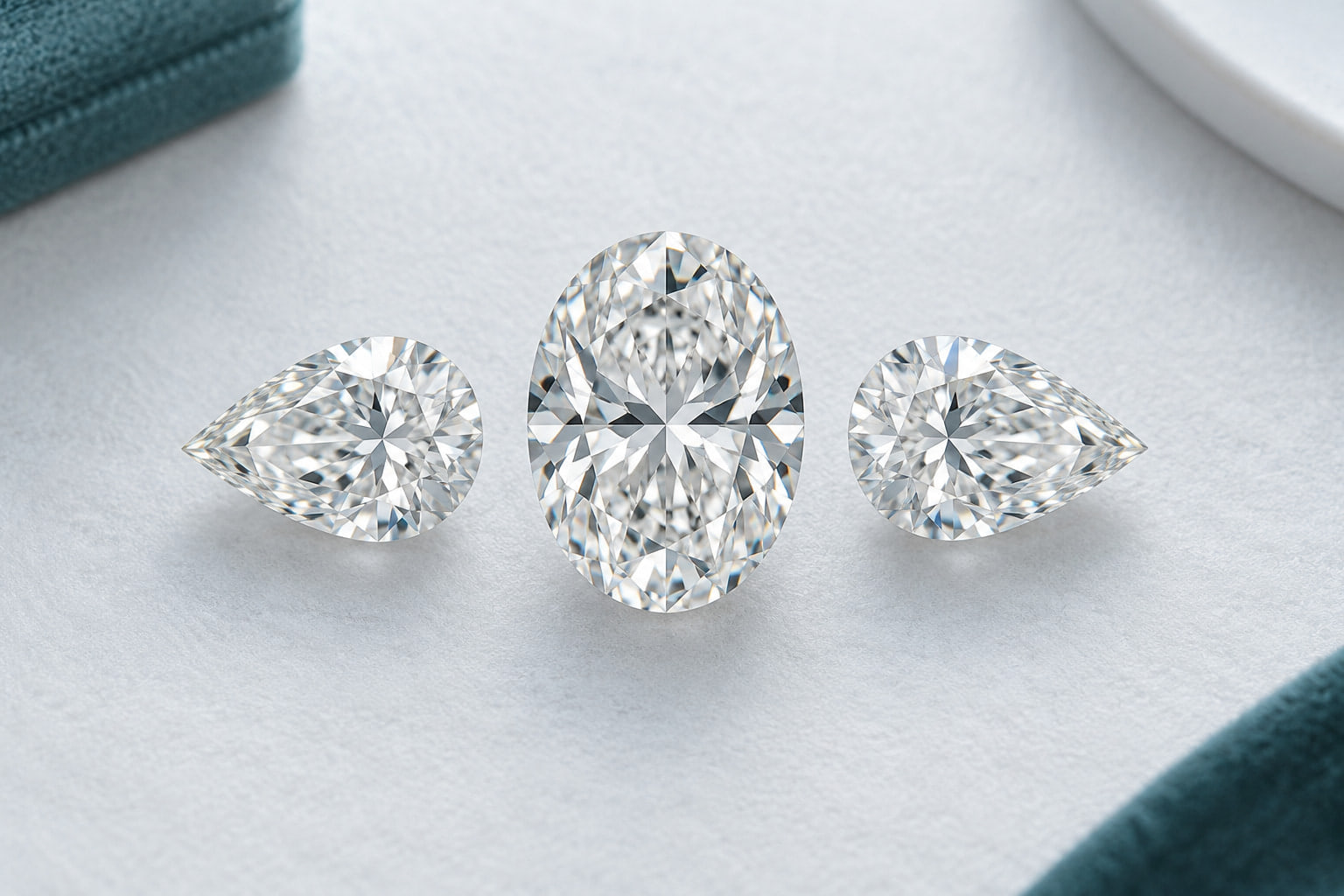
Which Supplier Questions Matter for Complete Three-Stone Sets?
Ask whether the channel can select and reserve complete groups, preserve pair orientation and support a new review when one component changes. A large inventory of individual stones does not by itself establish a matched-set service or a replacement guarantee.
USA / Set holds and substitutions
Can a US Trade Channel Reserve a Center and Matched Side Pair?
A US trade inventory can provide convenient access to individual candidates, but a three-stone project needs coordinated holds. Stuller's laboratory-grown resource page describes loose stones with and without reports. It does not confirm a specific matched-pair service or that all three approved candidates will remain available together. Domestic distribution also does not establish US growth origin.
Ask whether the supplier can reserve the center and pair through the same approval window. Confirm return and mounting conditions before the maker begins work. If one item sells or is withdrawn, require a new complete-group review rather than accepting an isolated replacement with similar labels.
For a retailer working with a local bench, share actual measurements before final CAD approval. Keep center and side references on one set card and preserve that card for later service. A practical domestic channel adds value when it helps maintain group continuity, not when convenient individual listings lead the buyer to overlook the complete visual and manufacturing relationship.
CHINA / Group identity and orientation
How Should a Chinese Coordinator Receive a Complete-Set Brief?
MEITUO's Qingdao sourcing coordination can help organize a center-and-pair search when the buyer provides measured windows and a layout. Mark inward and outward sides explicitly, especially for pears, half-moons and tapered shapes. A shape name alone does not communicate the intended orientation or projected span.
Ask whether the center and sides will be selected from one source or several, and how their appearance will be compared before approval. Separate source routes may be workable, but the complete group still needs a common review. Request consistent media and keep the set identifier connected to the packing record.
If a component changes, ask for a new group view and updated measurements before shipment. For recurring rings, discuss matching reserve pairs and a repeat-selection method using retained references. Coordination can preserve instructions and order follow-up, but it should not be described as independent grading or as confirmation that the designer's CAD is suitable for the actual stones.
INDIA / Pair matching and set continuity
What Should Indian Pair Selection Establish for a Three-Stone Ring?
An Indian channel may separate commercial contact from the operation selecting the stones. Greenlab's official contact page lists Surat and Mumbai contacts, illustrating why buyers should identify who answers technical matching questions. The contact listing does not prove availability of a specific center-and-side combination.
Request a measured pair schedule and complete-group comparison rather than two unrelated side-stone videos. For step-cut sides, inspect outline and transparent character; for brilliant sides, compare visible pattern and orientation. In both cases, approve the relationship with the actual center instead of relying on equal side weights.
Ask whether reserve pairs can be selected alongside the production groups and how each pair remains identified through export. A later replacement should trigger review against its partner and center, not only the original report band. Keep the final set references in the packing schedule so the receiving workshop does not unintentionally exchange sides while checking quantities or preparing trays.
Why Must a Three-Stone Layout Pass CAD and Physical Approval?
A flat layout tests visual proportions but omits the metal required to hold the stones. CAD should incorporate actual dimensions, girdles and depth information where needed. Ask the maker to identify uncertain measurements before finishing the design, rather than use idealized generic stones and solve conflicts at the bench.
Review pavilion clearance and the relationship between neighboring seats. Side stones angled toward the center can look compact from above while creating difficult contact underneath. Check gallery height, prong access and protective metal around pointed or clipped areas. These are maker decisions that need the actual set information.
Set the first article and review it from the top, profile and normal wearing distance. Compare the apparent hierarchy, finger coverage and comfort with the original brief. A broad-looking group may need a different angle or shank transition, and that change can require renewed stone selection.
For serial production, retain the accepted set card, CAD revision and first-article photographs. Use our matched-set buying guide to structure continuity. Require approval for a changed pair, center window or depth range. A new set with similar report labels should not silently inherit the previous physical approval.
When the first article looks unbalanced, separate selection from assembly. Compare the loose-set approval image with the finished ring in the same orientation. If the sides matched before setting but now differ in apparent height, investigate seat angles and metal position before replacing the pair. If the mismatch was already visible in the loose layout, return to the selection criteria.
For a rejected component, keep the full set card and record which stone was removed, why it failed and what replacement was approved. Do not erase the earlier identifier. A clear change history helps the next workshop understand whether the current pair is original, partly replaced or entirely reselected, and it keeps any unused reserve from becoming confused with the approved production set.
How Can MEITUO Help Buyers Source Complete Ring Sets?
MEITUO is a sourcing and supply-chain coordination partner based in Qingdao, Shandong, China. It supports jewelry brands, wholesalers, retailers and designers with product selection, supplier communication, confirmation of quality requirements and order follow-up. For three-stone rings, the useful request describes one complete visual group rather than three unrelated purchases.
The sourcing range includes loose centers, melee, side stones, matched pairs and sets, and fancy-color options. Buyers can discuss center dimensions, side-pair geometry, appearance consistency and a reserve strategy. Actual availability, report scope, treatment information, MOQ and lead time must be confirmed for the proposed order.
Contact [email protected] with the center window, side orientation and set-level acceptance criteria. Ask what can be selected together and which measurements need further confirmation. MEITUO's coordination role does not establish ownership of growth or cutting facilities, independent grading authority or finished-ring manufacturing; the designer and maker should separately approve CAD, setting and the final article.
What Should a Three-Stone Ring Sourcing RFQ Require?
Specify the intended hierarchy, center window, side shape, pair dimensions, depth limits and orientation. Attach a layout and identify whether the design seeks matching facet character or a deliberate contrast. Include the ring size and manufacturing contact so fit questions reach the right person.
Request complete-group media, item identifiers and available documents before approval. Keep reserve pairs separate and state whether they must remain paired. Ask how a missing or replaced component will trigger renewed set review before dispatch.
Quote set-level selection separately from any broader stock offer. The lowest combined price for three stones is not necessarily the cost of a usable approved set. The brief below makes the group relationship explicit while preserving the designer's and maker's responsibilities for the finished ring.
Please quote complete laboratory-grown diamond sets for [three-stone ring design] in [quantity]. Center limits are [shape, dimensions and depth]; side-pair requirements are [shape, dimensions, depth and orientation]. The intended hierarchy and facet relationship are [design objective]. Provide complete-group neutral media, measured pair schedules, item identifiers, available reports and treatment information. Quote [reserve pair quantity] separately and explain whether pairs can remain identified through packing. Require renewed set approval for any substituted component. Confirm availability, MOQ, lead time and shipping terms. Our designer and maker will separately approve CAD, pavilion clearance, setting and the finished first article.
FAQ: 3-Stone Lab-Grown Diamond Rings: Matching the Whole Set
Must the Side Stones Have Equal Carat Weights?
Equal weights can be a useful specification, but they do not establish visual matching. Compare measured outlines, depth, appearance and orientation. The approved design may prioritize a coherent pair over exact weight equality.
Is There an Ideal Side-to-Center Ratio?
No universal ratio is prescribed here. Shape, ring size, spacing and intended hierarchy change the result. Compare actual proportion options at realistic scale and confirm them through CAD and a first article.
Can a Flat Layout Prove the Ring Will Fit?
No. It omits much of the metal and pavilion-clearance problem. The maker needs actual dimensions and must review the complete structure before the first article is approved.
Should a Replacement Side Be Reviewed Alone?
No. Review it with its partner and the center. A replacement matching the original labels can still disrupt the complete set, and sometimes replacing the pair is the more coherent option.
Does the Center Report Cover the Sides?
Not unless the actual document and service explicitly do so. Keep documentation scope clear for the center, sides and reserves. Do not extend one stone's report to an entire set by assumption.
What Reserve Strategy Helps Repeat Collections?
Consider measured matching side pairs, retained group references and a clear policy for using reserves singly or as pairs. Confirm availability and cost rather than promise identical future replacements without a supply plan.